
Sondur Travel Cushion Review: Let me paint you a picture.
It’s hour six of a transatlantic flight. Your back is screaming. Your tailbone feels like it’s sitting directly on a metal rod. The person next to you is asleep, and you’re doing this uncomfortable little shimmy — left cheek, right cheek, lean forward, lean back – trying to find any position that doesn’t feel awful.
Sound familiar?
Or maybe it’s not a plane for you. Maybe it’s your office chair at the end of a long workday. Maybe it’s the stadium bleachers at a game, or a long road trip where the car seat just isn’t cutting it. Whatever the scenario, sitting pain is one of those everyday problems that nobody talks about but almost everybody suffers from.
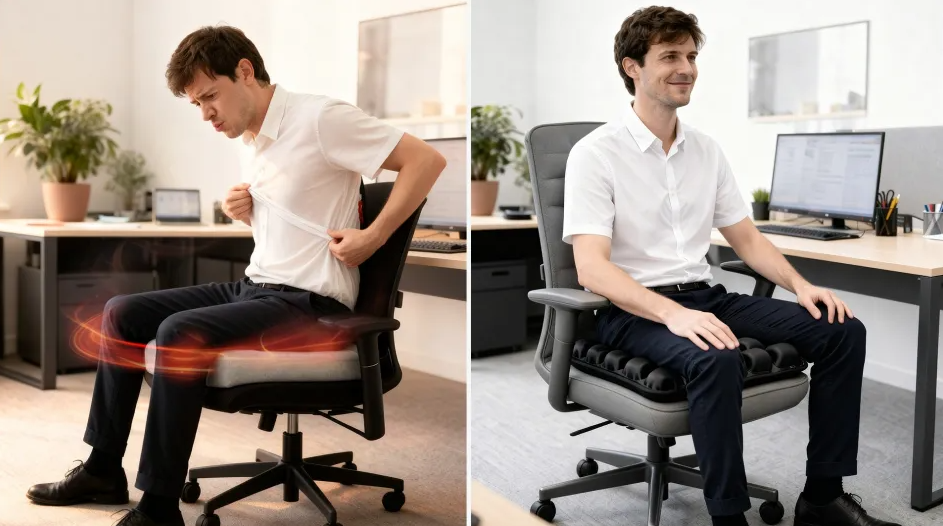
I’ve been dealing with this for years. I work remotely and travel frequently — a combination that means I spend an embarrassing amount of time sitting on seats that were clearly not designed with human anatomy in mind. I’ve tried foam cushions, gel cushions, lumbar pillows, expensive ergonomic chair pads — and for the most part, they all disappointed me in the same way. They work great for the first hour. Then they flatten out, get warm and sweaty, and become completely useless.
That’s what led me to the Sondur Travel Cushion.
I’d seen it pop up online a few times, and the claims seemed almost too bold — hospital-grade air cell technology, 17+ hours of consistent support, works on any seat. I was skeptical. But after enough long-haul flights where I arrived feeling like I’d been beaten up, I decided to give it a proper shot.
In this Sondur Travel Cushion Review, I’m going to walk you through everything I experienced — the good, the frustrating, the surprising, and whether this is actually the best travel cushion for back pain relief in 2026 or just another overhyped gadget.
Let’s get into it.
Quick Verdict – Sondur Travel Cushion
Before I dive into the full breakdown, here’s the short version for those of you who are in a hurry.
Best for:
- Frequent flyers and long-haul travelers who need real sitting relief
- Remote workers and digital nomads who work from different locations daily
- People who suffer from mild to moderate tailbone or lower back pain while sitting
- Office workers who sit for 6+ hours a day
- Stadium and event goers who hate hard bleacher seats
Not ideal for:
- People looking for a medical-grade solution to serious spinal conditions
- Those on an extremely tight budget who need the cheapest possible option
- Anyone who wants a “grab and go” cushion with zero setup
- People who travel ultralight and can’t spare even a small amount of backpack space
Overall Verdict: The Sondur Travel Cushion is one of the most genuinely useful travel accessories I’ve tried in years. It’s not perfect — nothing is — but it solves a real problem in a way that most cushions completely fail to do. If you’ve been frustrated by cushions that go flat halfway through your day, this is absolutely worth your attention.

What Is the Sondur Travel Cushion?
So, what exactly is this thing?
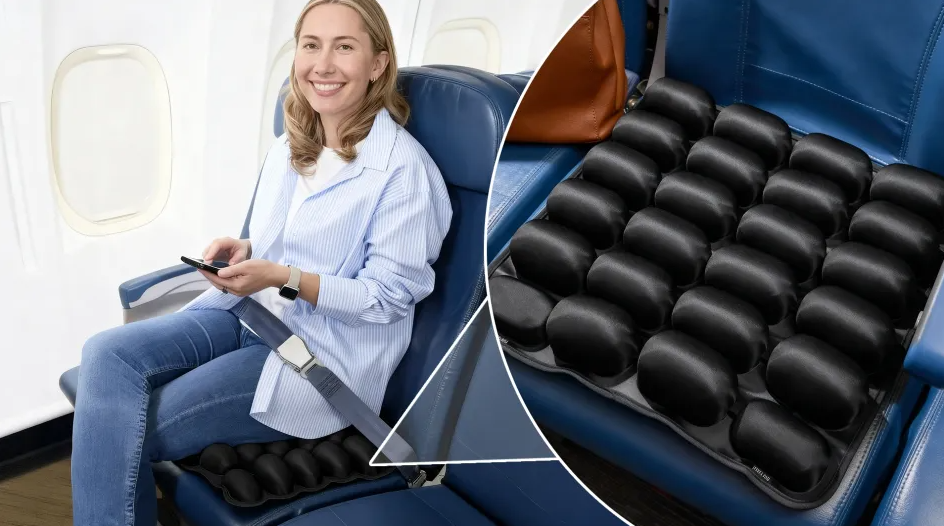
The Sondur Travel Cushion is a portable, inflatable seat cushion built around interconnected air cell technology — the same kind of pressure redistribution system used in hospital-grade cushions prescribed to wheelchair patients to prevent pressure sores.
In plain English: instead of sitting on foam or gel that slowly compresses under your weight, you’re sitting on a network of 24 interconnected air chambers that automatically shift and redistribute pressure as you move. Think of it like sitting on a perfectly calibrated air mattress designed specifically for your sit bones and tailbone.
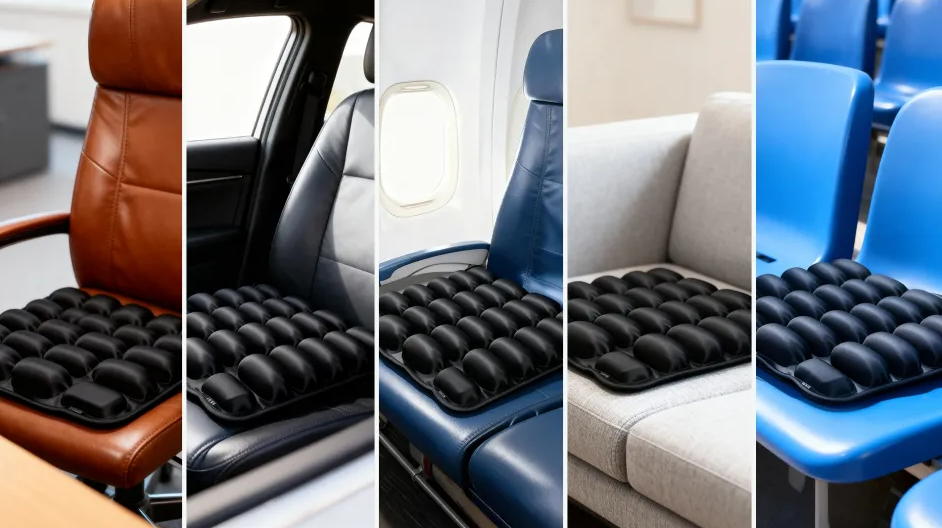
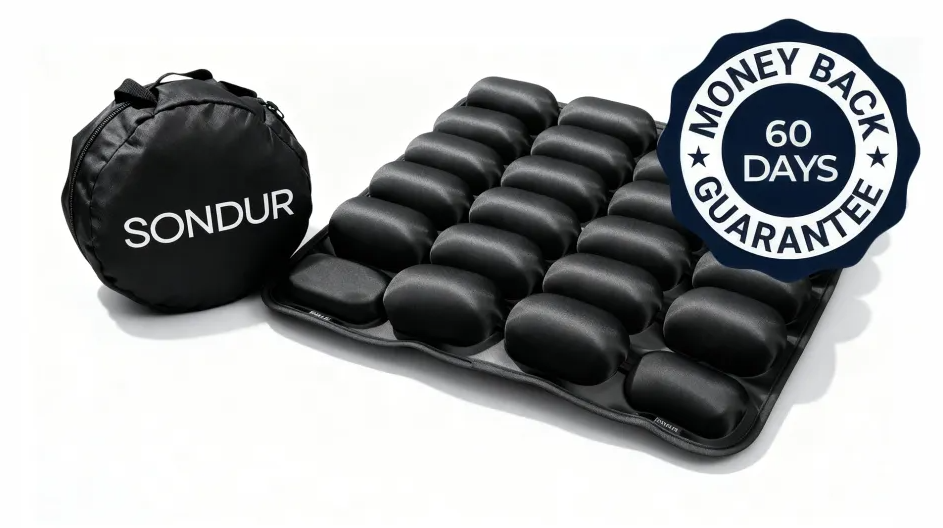
The cushion measures 17.5 by 17.5 inches, which is big enough to fit most standard seats — from airplane economy class to office chairs to car seats to stadium bleachers. It weighs less than one pound and deflates completely so it can roll up small enough to slip into a laptop bag or even a large jacket pocket.
It inflates in 2 to 4 breaths. No pump required. Once inflated, built-in buttons on the side let you add or release air while you’re actually sitting, so you can fine-tune the firmness without getting up.
The material is TPU (thermoplastic polyurethane) — the same stuff used in high-end camping gear and ultralight sleeping pads. It’s waterproof, easy to wipe clean, and built to handle the kind of daily abuse that travel gear inevitably gets.
It’s worth mentioning: Sondur has been featured in Business Insider, The New York Times Wirecutter, Travel + Leisure, and Condé Nast Traveler — which gives it some legitimate editorial credibility beyond just the marketing claims.
Why Do People Buy the Sondur Travel Cushion?
The Problem with Every Other Cushion
Here’s the uncomfortable truth about most seat cushions, foam or gel: they all have the same fatal flaw. They go flat.
Memory foam feels amazing the first time you sit on it. But under sustained body heat and pressure, it compresses. By the midpoint of a long flight, that thick foam pad has essentially become a thin layer of warm, dense material sitting between you and a hard seat. The cushion has basically become part of the problem.

Gel cushions are slightly better at first because they’re cool and they distribute weight a bit more evenly. But once your body heat warms them up — usually after 30 to 60 minutes — they lose their structure and start feeling like a warm, heavy blob.
People buy the Sondur Travel Cushion because they’re tired of this cycle. They’ve tried the alternatives. They want something that actually holds up over a full travel day, not just the first hour.
The Demand for Portable Ergonomics
There’s also a broader trend happening. With more people working remotely and traveling for extended periods, there’s a growing need for portable ergonomic solutions. You can spend $1,500 on a perfect ergonomic office chair — but that chair doesn’t come with you on flights or to the café or to your Airbnb. The Sondur does.
My Real Experience with the Sondur Travel Cushion
I want to be upfront: I put this thing through a genuinely brutal test. I didn’t just sit on it at my desk for a couple of hours and call it a day. I used it through a 17-hour travel day that included a long car ride, a multi-hour airport layover on those notoriously terrible plastic terminal chairs, a cross-country flight in economy class, and then a work session at a hard wooden dining table at my rental.
Unboxing and First Impressions
When it arrived, the first thing I noticed was how compact it was. It came rolled up and the package itself was much smaller than I expected. Pulling it out, the weight surprised me — it genuinely feels like almost nothing.
The material feels solid and well-made. It has that same reassuringly rugged texture as good camping gear, not the cheap, plasticky feel you get from bargain inflatables. The non-slip texture on the bottom is a nice touch — it actually grips chair surfaces instead of sliding around, which is something I hadn’t even thought to look for until it impressed me in practice.
Setup was exactly as described — three breaths and it was fully inflated. The whole process from pulling it out of my bag to sitting on it took under a minute.
The First Hour: Adjustment Period
Sitting on it for the first time felt a bit odd. Almost like floating. My first instinct was actually that I’d over-inflated it — it felt a little too firm and I was tilting slightly forward. But using the deflate button while seated (which is a feature I wasn’t sure would work as easily as advertised — it does), I released a little air and it settled immediately into a much more comfortable shape.
That first 30 minutes involves a bit of a learning curve. You need to dial in your personal inflation preference. Once I found my sweet spot — slightly less than fully inflated, if you’re wondering — it felt genuinely excellent.
Hours 1 Through 8: Consistent Performance
This is where the Sondur started to genuinely surprise me.
On the car ride and through the airport layover, the cushion maintained the same supportive quality it had in the first minute. There was no gradual flattening. No warming up to become uncomfortable. The air in the 24 chambers doesn’t soften with heat the way foam does — it’s just air. Physics means it stays consistent.
At the airport, I was sitting on one of those hard, moulded plastic seats that most of us endure in silence. With the Sondur underneath me, the hard plastic became a non-issue. I was aware I was in an airport chair, but I wasn’t shifting around or counting the minutes until I could stand.
On the flight, I hit what is usually my pain threshold: around hour three. That’s typically when my tailbone starts making itself known. With the Sondur, that didn’t happen. I caught myself noticing that my back wasn’t hurting and actually feeling a little surprised by it.
Hours 8 Through 17: The Real Test
This is where every other cushion I’ve tried has let me down, and where the Sondur genuinely delivered.
By hour 17 of a sitting-heavy day, I was tired — I won’t pretend otherwise, I was exhausted from travel — but the specific lower back and tailbone pain that I would normally be dealing with never materialized. At the final work session on a hard wooden chair, the cushion still felt like it had in the first hour.
No top-up breath needed. No adjustment. Just the same support I started with.
I’ll be honest: I tested whether it held air overnight by leaving it inflated. It was still fully inflated the next morning. The seams are well-constructed.
Temperature and Sweat
One thing I hadn’t fully anticipated was how much better the air cell design is for staying cool. With foam cushions, you get that unpleasant clammy feeling — your body heat gets trapped in the material and comes right back at you. With the Sondur, the grooves between air cells create natural airflow channels. I stayed noticeably cooler and drier even through a long economy class flight where the cabin was warm.
Key Features of the Sondur Travel Cushion
Let’s break down the specific features that make this product work:
24-Chamber Interconnected Air Cell System
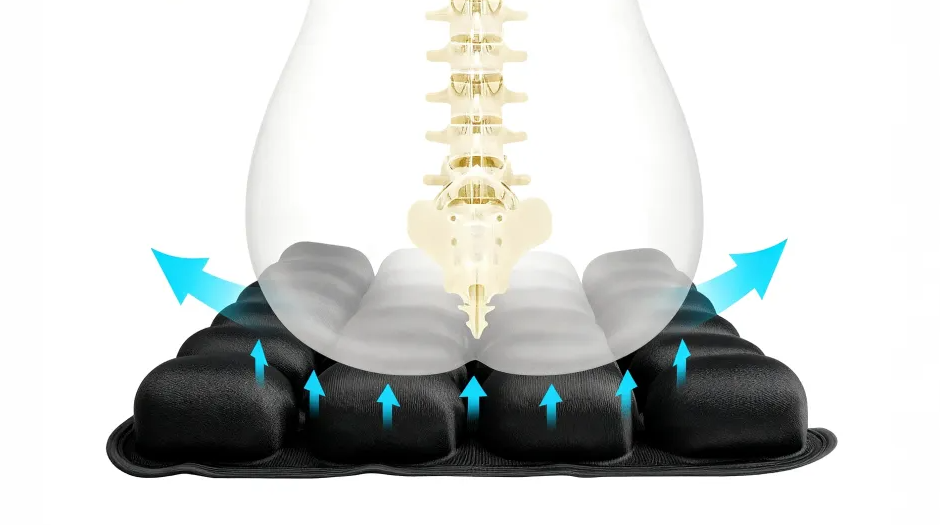
The core technology. Instead of a single air bladder, the cushion has 24 separate but interconnected air cells. When you sit down, the cells underneath your sit bones and tailbone compress, and that air moves laterally into the surrounding cells to support your thighs and lower glutes. The result is a surface that automatically contours to your exact body shape and weight distribution.
This is directly based on ROHO cushion technology — a medical product prescribed by physical therapists and doctors to prevent pressure sores in patients who spend long hours in wheelchairs. It’s been used in clinical settings for decades. Sondur has adapted this proven system into a lightweight, portable consumer product.
Adjustable Firmness (While Seated)
The built-in inflate and deflate buttons let you fine-tune the cushion’s firmness while you’re actually sitting on it. This is a bigger deal than it sounds. Your ideal cushion firmness changes depending on the seat you’re on (a hard plastic chair needs slightly different support than an already-padded seat), your position, and how long you’ve been sitting. Being able to adjust without getting up is genuinely useful.
Lightweight and Compact Design
At under one pound and deflating to a size that fits in a laptop sleeve or backpack water bottle pocket, this is genuinely portable in a way that most seat cushions aren’t. I’ve left foam cushions at home before because they were too bulky to justify packing. I’ve never hesitated to bring the Sondur.
Universal Fit
At 17.5 by 17.5 inches, it fits essentially every standard seat — airplane economy class, car seats, office chairs, dining chairs, stadium seats, waiting room chairs. You’re carrying one solution for every seating scenario you’ll encounter.
Durable TPU Construction
The material is waterproof, abrasion-resistant, and significantly more durable than the budget inflatables you’ll find on Amazon. The reinforced seams show no signs of stress under regular packing and unpacking cycles.
Non-Slip Bottom
This seems like a small thing, but it matters. The textured bottom grips chair surfaces so the cushion doesn’t slide around when you shift your weight. On hard, smooth airport chairs, this alone makes a significant difference.
Easy to Clean
The waterproof surface means spills wipe right off. On a flight, a drink spill is a fact of life. With foam cushions, that means a soggy mess. With the Sondur, it’s a 10-second wipe.
Sondur Travel Cushion vs. Alternatives
One of the most common questions I get is how this compares to other options. Let me break it down clearly.
| Feature | Sondur Travel Cushion | Standard Memory Foam | Gel Cushion | Budget Inflatable |
|---|---|---|---|---|
| Stays supportive 8+ hours | ✅ Yes | ❌ Goes flat | ⚠️ Partially | ❌ Inconsistent |
| Portable/packable | ✅ Excellent | ❌ Bulky | ❌ Heavy | ✅ Yes |
| Adjustable firmness | ✅ Yes | ❌ No | ❌ No | ⚠️ Limited |
| Temperature control | ✅ Stays cool | ❌ Traps heat | ⚠️ Initially cool | ✅ Yes |
| Durability | ✅ High (TPU) | ⚠️ Moderate | ⚠️ Moderate | ❌ Low |
| Waterproof | ✅ Yes | ❌ No | ❌ No | ✅ Yes |
| Setup time | ✅ 2-4 breaths | ✅ Instant | ✅ Instant | ⚠️ Variable |
Sondur vs. Memory Foam Cushions
Memory foam is the most popular option, and it has an obvious appeal — it feels luxurious for the first 20 to 30 minutes. But it has two fatal flaws for travel use: it compresses under sustained pressure, and it’s too bulky to carry conveniently. A quality memory foam travel cushion is typically 2 to 3 times the size and weight of a deflated Sondur. The Sondur wins on portability and long-duration performance.
Sondur vs. Gel Cushions
Gel cushions are great at cooling initially, but they absorb body heat after about an hour and become warm and heavy. They also don’t pack down — a gel cushion that’s thick enough to provide meaningful support is a bulky item to carry. And you can’t adjust the firmness. The Sondur is lighter, packable, and consistent over a full day.
Sondur vs. Cheap Inflatable Cushions
There are $15 to $25 inflatable cushions on Amazon that look superficially similar. The differences are significant: cheaper inflatables typically have a single air chamber (so there’s no pressure redistribution — all you get is a slightly elevated seat), thin material that punctures easily, and valves that leak slowly over several hours. The Sondur uses 24 interconnected chambers, high-quality TPU, and has been tested to hold air through full long-haul flights and beyond without requiring a top-up.
Sondur vs. Expensive Ergonomic Chairs
The obvious point here: an ergonomic office chair stays at your office. The Sondur goes with you everywhere. If you want portable pain relief rather than a stationary solution, the comparison isn’t really fair — they solve different parts of the problem.
Sondur Travel Cushion: Pros and Cons
Pros
- Genuinely long-lasting support — The air cell system maintains consistent cushioning for 17+ hours without needing to be reflated or adjusted
- Highly portable — Under one pound, packs down small, goes in a laptop bag
- Adjustable firmness while seated — You can dial it in perfectly for any seat you’re on
- Stays cool — No more clammy, sweaty feeling that foam creates
- Works on any seat — Plane, car, office, stadium, restaurant, waiting room
- Durable build quality — Premium TPU material with reinforced seams
- Waterproof and easy to clean — Spills wipe off instantly
- 60-day money-back guarantee — Solid coverage to try it risk-free
- Non-slip bottom — Actually stays in place on smooth chairs
- Hospital-grade technology in a portable product — Based on proven clinical pressure redistribution systems
Cons
- Initial learning curve — Finding your ideal inflation level takes a few tries (tip: you almost certainly want slightly less air than you think)
- Not instant “grab and go” — 2 to 4 breaths isn’t much, but it’s slightly more setup than picking up a solid cushion
- Price is higher than budget alternatives — You’re paying for quality, but it won’t be the cheapest option you’ll find
- Not a medical device — For serious spinal or orthopedic conditions, it won’t replace professional treatment or medical-grade equipment
Who Should Buy the Sondur Travel Cushion?
✅ Great For:
Frequent flyers — If you take long-haul flights regularly and arrive feeling beaten up, this is one of the most meaningful upgrades you can make to your travel experience. Economy class seats are genuinely uncomfortable for long durations, and the Sondur addresses this better than anything else I’ve tried.
Remote workers and digital nomads — When your office is a coffee shop, coworking space, or Airbnb kitchen table, you can’t control the quality of the chairs. Being able to carry your ergonomics with you is a game-changer.
Office workers with back or tailbone pain — If you sit for 6 to 8 hours a day and end the day with a stiff or sore lower back, this is worth trying. The 60-day guarantee makes it low risk.
Commuters on long train or bus routes — The same principles that make it useful on flights apply to any long-haul seated journey.
Stadium and event goers — Hard bleachers at concerts, sports events, or theatres are significantly more tolerable with this cushion. It’s lightweight enough to throw in a bag and bring to any event.
People recovering from surgery or with mild tailbone sensitivity — The pressure redistribution technology was designed specifically to reduce pressure on the coccyx and sit bones. If these are areas of chronic discomfort for you, the air cell approach is medically well-grounded as a comfort aid.
❌ Not Ideal For:
People with serious medical spinal conditions — The Sondur is a comfort aid, not a medical device. If you have significant herniated discs, severe sciatica, or other diagnosed spinal pathologies, please work with a medical professional on your seating needs rather than relying on any over-the-counter cushion.
Extreme budget shoppers — If you need the cheapest possible option, this isn’t it. There are foam cushions for a few dollars. But if you’ve already tried cheap options and found them wanting, the Sondur is worth the step up.
Ultralight minimalists who count grams — The Sondur weighs less than a pound deflated, but if you’re running a truly ultralight travel kit and every gram counts, you may decide to leave it behind.
People who want zero setup — If you need a cushion that goes from bag to seat with zero effort, solid foam is still faster. Two to four breaths isn’t much, but it’s not literally instant.
Read it Also:- Muama Ryoko Pro Reviews: Is This Portable WiFi Device Actually Worth Your Money in 2026
Is the Sondur Travel Cushion Legit?
This is a question I see asked a lot online, and it’s a fair one. There are a lot of hyped-up travel products that don’t deliver.
Here’s what I can tell you: the technology behind it is real. ROHO air cell pressure redistribution cushions are legitimate medical devices prescribed by healthcare professionals. Sondur has adapted that technology into a portable consumer product. The engineering is sound.
The company backs it with a 60-day money-back guarantee and a 1-year warranty. Over 62,000 customers have reportedly purchased it. It’s been mentioned editorially by credible travel publications.
My personal experience after a full 17-hour use test confirmed that the core claims — consistent support without going flat, adjustable firmness, stays cool, holds air without leaking — are all accurate.
Is it perfect? No. Is it legitimate? Absolutely yes.
Sondur Travel Cushion Reviews – What Other Users Are Saying
Beyond my own experience, here’s a general picture of what users consistently report:
Positive themes: Most users highlight the long-lasting support as the standout feature. People who’ve tried multiple foam and gel cushions report being genuinely surprised that the Sondur doesn’t go flat mid-journey. The portability and the cooling effect also come up frequently as bonuses they didn’t expect to appreciate as much as they did.
Recurring criticisms: The most common friction point is the initial learning curve on inflation. Several users note that they over-inflated it on first use and found it uncomfortable until they released some air. The solution is straightforward once you know it, but the product could do a better job of setting expectations upfront.
FAQs About Sondur Travel Cushion
What is the Sondur Travel Cushion?
The Sondur Travel Cushion is a portable, inflatable seat cushion with 24 interconnected air cells that redistribute pressure as you sit. It’s based on the same hospital-grade technology used in medical wheelchair cushions and designed to prevent back pain, tailbone pain, and leg numbness during long periods of sitting. It works on any seat — planes, cars, offices, stadiums — and deflates to pack into a bag.
Is the Sondur Travel Cushion good for back pain?
Yes, it’s specifically designed to address the kind of back and tailbone pain that comes from prolonged sitting. By redistributing your weight across 24 air chambers instead of concentrating pressure on your sit bones and coccyx, it significantly reduces the localized pressure that causes pain and numbness. It won’t treat underlying medical conditions, but as a daily comfort aid for sitting pain, it performs genuinely well.
How long does the Sondur Travel Cushion stay inflated?
Based on my own testing, it held full inflation for 17 hours of continuous use across multiple seating environments without requiring a single top-up breath. The TPU construction and reinforced seams appear to prevent the slow leakage that you get with cheaper inflatables. The manufacturer claims it stays fully inflated for hours — my experience confirmed this.
How much does the Sondur Travel Cushion cost?
Pricing can vary depending on promotions, but you can check the current price and availability directly at the official website. The company frequently offers discounted pricing, and there’s a 60-day money-back guarantee plus a 1-year warranty included.
Is the Sondur Travel Cushion worth buying?
Based on my experience, yes — particularly if you’ve already tried and been disappointed by foam or gel cushions. The core problem with most cushions is that they compress under sustained use. The Sondur’s air cell design doesn’t have that problem. If you travel frequently, work long hours sitting, or regularly deal with sitting pain, it’s one of the most practical comfort upgrades you can make.
Is the Sondur Travel Cushion legit or a scam?
It’s legitimate. The underlying technology — air cell pressure redistribution — is well-established in medical settings. The product has genuine user reviews, editorial coverage from credible travel media, and a money-back guarantee. My own real-world testing confirmed the core claims. It’s not a scam.
What are some alternatives to the Sondur Travel Cushion?
The main alternatives are memory foam seat cushions (portable but go flat with heat), gel cushions (cool initially but warm up and get heavy), and other inflatable cushions. Most alternatives either lack the multi-chamber pressure redistribution design or don’t pack down portably enough for serious travel. For a comparison guide, see our post on the best portable seat cushions for travel and office use.
Can you use the Sondur Travel Cushion on a plane?
Yes, absolutely. It’s specifically marketed as a travel product and sized to fit economy class airplane seats. It deflates to go in your carry-on and inflates quickly once you’re seated. The non-slip bottom keeps it in place even on the smooth surfaces of airline seat covers.
Does the Sondur Travel Cushion help with tailbone pain?
Yes, this is one of its primary use cases. The 24-chamber air cell system is designed to reduce concentrated pressure on the coccyx (tailbone) by allowing the cells directly underneath to compress and redistribute weight to surrounding cells. In my testing, chronic tailbone discomfort that normally appears after 3 hours of sitting didn’t materialize at all during a 17-hour day of use.
How do you inflate the Sondur Travel Cushion?
You simply open the valve and blow into it. It takes 2 to 4 breaths to fully inflate. From there, built-in buttons let you add or release air while you’re seated to fine-tune the firmness. No pump required.
How do you clean the Sondur Travel Cushion?
The waterproof TPU surface cleans with a damp cloth or wipe. Spills and surface dirt wipe off without soaking into the material.
What size is the Sondur Travel Cushion?
It measures 17.5 by 17.5 inches when inflated, which is sized to fit most standard seats including economy airplane seats, standard office chairs, car seats, and typical stadium bleachers.
Sondur Travel Cushion reviews consumer reports – what do users say?
Consistent across user feedback: the standout benefit is that the cushion maintains its supportive quality over many hours without going flat, which is the main complaint about foam and gel alternatives. The portability and cooling effect are also frequently mentioned positives. The most common negative is that first-time users tend to over-inflate it and need a few minutes to find the right firmness level.
Final Verdict: Is the Sondur Travel Cushion Worth It?
Here’s where I land after genuinely testing this product over multiple long travel days.
The Sondur Travel Cushion is the first portable seat cushion I’ve used that actually delivers what most cushions promise. It doesn’t go flat. It doesn’t trap heat. It’s truly packable. And the adjustable firmness feature means you can adapt it to whatever seat you happen to be in, rather than hoping the cushion’s default support level happens to work for you.
The air cell technology isn’t marketing fluff — it’s based on decades of clinical use in hospital and rehabilitation settings. The fact that it’s now available in a portable, affordable consumer form is genuinely useful.
Is it a miracle product? No. You still need to spend 30 minutes finding your ideal inflation level. It’s not completely free of setup. And it won’t fix serious medical conditions.
But if your specific problem is: “I sit for long periods of time and I end up in pain and I can’t find a cushion that actually holds up for the whole day” — the Sondur Travel Cushion answers that problem better than anything else I’ve found.
The 60-day money-back guarantee means you can try it without real financial risk. If it doesn’t work for you, you can return it. Given that this is one of the most common travel discomfort issues people deal with, I think it’s genuinely worth finding out for yourself.
Ready to give it a shot? Check out the Sondur Travel Cushion at the official website and see if there are any current promotions running — they frequently offer introductory discounts. Your back (and tailbone) will thank you.