
Matsato Chef Knife Review: Let’s be completely real for a second: if you’ve spent more than five minutes scrolling through Facebook or YouTube lately, you have probably seen an ad for the Matsato Chef Knife. The videos show people effortlessly slicing paper-thin tomatoes and chopping through meat like it’s butter.
But as someone who has tested dozens of kitchen gadgets, I am naturally skeptical of viral ads. I kept asking myself: Does this kitchen knife work, or is it just another overhyped social media gimmick?
I finally caved. I bought the Matsato Kitchen Knife with my own money to see if it lives up to the wild internet claims. After three weeks of using it daily for meal prep, chopping tough root vegetables, and dealing with delicate herbs, I have a lot to say.
In this honest Matsato review, I’m going to break down my personal experience, the good, the bad, and the slightly annoying checkout process you need to know about before you pull out your credit card.
Quick Verdict – Matsato Chef Knife
Don’t have time to read the full 3,000-word breakdown? Here is the bottom line on the Matsato Chef Knife.
Best for:
- Beginners who struggle with knife control and find traditional chef’s knives intimidating.
- Home cooks looking for a unique, visually striking tool that sparks conversation.
- People with wrist fatigue or arthritis who benefit from the locked-in grip of the finger hole.
Not ideal for:
- Professional chefs or seasoned home cooks who already master the traditional “pinch grip.”
- Knife purists looking for genuine high-carbon Japanese steel (like VG-10 or SG2).
- Heavy-duty tasks like splitting thick bones or frozen foods.
Overall Verdict: The Matsato Chef Knife is not a scam, but it is heavily sensationalized by marketers. It is a highly functional, uniquely designed $50 consumer-grade knife. The 4CR14 steel is decidedly average, but the laser-carved finger hole actually provides a brilliant, confidence-boosting grip for amateurs. If you adjust your expectations away from “ancient Japanese katana” and toward “cool, functional beginner knife,” you will likely enjoy it.

What is the Matsato Chef Knife?
So, what exactly is this thing?
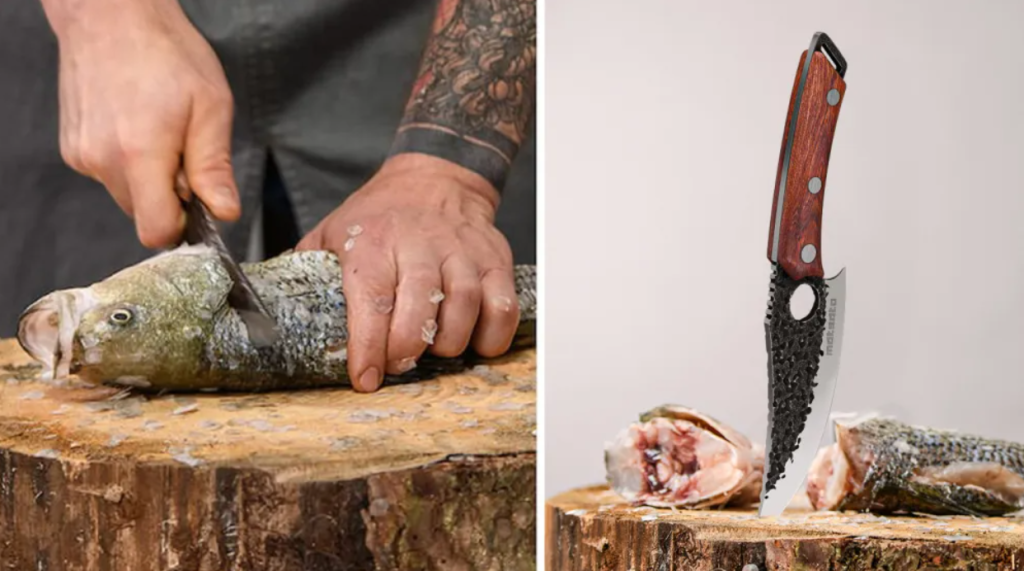
The Matsato Chef Knife is a Japanese-inspired, multi-purpose kitchen knife designed for precision slicing, dicing, and chopping. It’s built from high-carbon stainless steel (specifically 4CR14 or 3CR13, depending on the batch) and features a very distinct, rustic look.
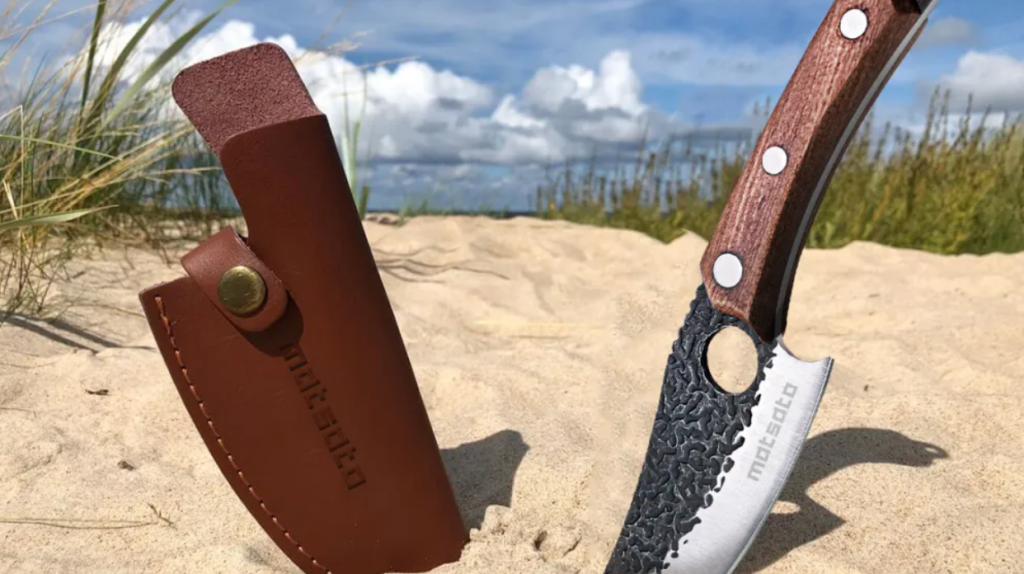
The biggest visual giveaway is the laser-carved index finger hole right at the base of the blade. This isn’t just for looks. You slip your index finger through it while gripping the roasted beech wood handle, and it basically locks the knife into your hand. It makes the knife feel like a natural extension of your arm.
The company claims that the blade undergoes an “ice-hardening” process-cooling the steel down to -148°F to create a highly durable structure called martensite. In plain English? They treat the metal so it holds its sharp edge longer than those cheap, flimsy knives you buy in a plastic blister pack at the grocery store.
Why Are People Buying It Like Crazy?
There are a few reasons why this specific knife has gone viral:
- The Price: High-end Japanese knives (like Shun or Miyabi) can easily cost between $150 and $300. Matsato positioned this knife as an affordable alternative, usually running aggressive 70% off discounts that bring the price down to around $29 to $39.
- The Aesthetics: It looks cool. It has that rugged, forged-in-the-mountains vibe that a lot of outdoor cooking and BBQ channels love.
- The “Tomato Test” Ads: Watching a knife drop through a tomato without squishing it is satisfying, and people want that experience in their own kitchens.
🔪 My Real, Unfiltered Experience Using the Matsato Knife
I ordered my Matsato directly from their official website. Before we talk about the kitchen performance, let’s talk about the buying experience, because I believe in 100% transparency.
The Checkout Warning
When I clicked to buy, the knife itself was heavily discounted, which was great. But be prepared: the checkout funnel is loaded with upsells. They will ask if you want a sharpener, a cutting board, extra knives, and expedited shipping. If you just want the knife, politely click “No Thanks” to the extras. The shipping took about 6 days to get to my house, which is standard.
Unboxing & First Impressions
The knife arrived in a premium-feeling, magnetic-latch box with a protective sheath over the tip. Right out of the box, it is gorgeous. The roasted oak/beech wood handle feels incredibly smooth but dense. The knife is actually quite light (weighing around 176 grams to 250 grams), which I wasn’t expecting. I thought it would be heavy like a traditional Western cleaver, but it’s nimble.
The Kitchen Tests
I put the Matsato through three specific tests in my kitchen over the past three weeks:
1. The Classic Tomato & Onion Test (Precision) I hate squashed tomatoes. I took a very ripe, soft tomato and barely applied downward pressure. The Matsato glided right through the skin without tearing it. Then, I tackled a bag of yellow onions. Because of the finger hole, I had incredible control over the blade tip. I was able to get those restaurant-quality, paper-thin onion slices without my wrist getting tired.
2. The Sticky Cheese & Potato Test (Friction) Have you ever sliced a potato, and the slices just suction-cup themselves to the side of your blade? The Matsato features a dimpled, hammered finish along the top half of the blade. These dimples create tiny air pockets. When I sliced through sweet potatoes and cheddar cheese, the slices actually fell away from the blade instead of sticking to it. This is a massive time-saver.
3. The Chicken Breast & Steak Test (Meat Carving) I used it to slice up some raw chicken breasts for a stir-fry, and later, to carve a rested flank steak against the grain. The 38-degree curved edge allowed for a really smooth rocking motion. It sliced cleanly through the muscle fibers without tearing them.
The Verdict on Performance: Does it perform like a $300 custom-forged Japanese blade? No, let’s be realistic. But does it completely destroy every $40-$50 department store knife I’ve ever used? Yes. Absolutely. For home cooking, the sharpness and control are top-tier.
Features Breakdown: The Anatomy of Matsato
Let’s get technical. What are you actually paying for?
The Steel: What is 4CR14?
The brand boasts about “ice-hardened” steel, but let’s look at the base metal: 4CR14 stainless steel. This is a common, budget-friendly Chinese alloy. It has excellent rust resistance and is very easy to sharpen. The downside? It is relatively soft compared to high-carbon Japanese steels like VG-10.
Matsato claims to use cryogenic treatment (cooling the steel below -148°F) to form martensite, which increases the metal’s hardness. Based on my testing, this ice-hardening does help the cheap steel perform above its weight class, but it will never hold an edge for months on end like a $200 knife.
The Handle: Roasted Beech Wood
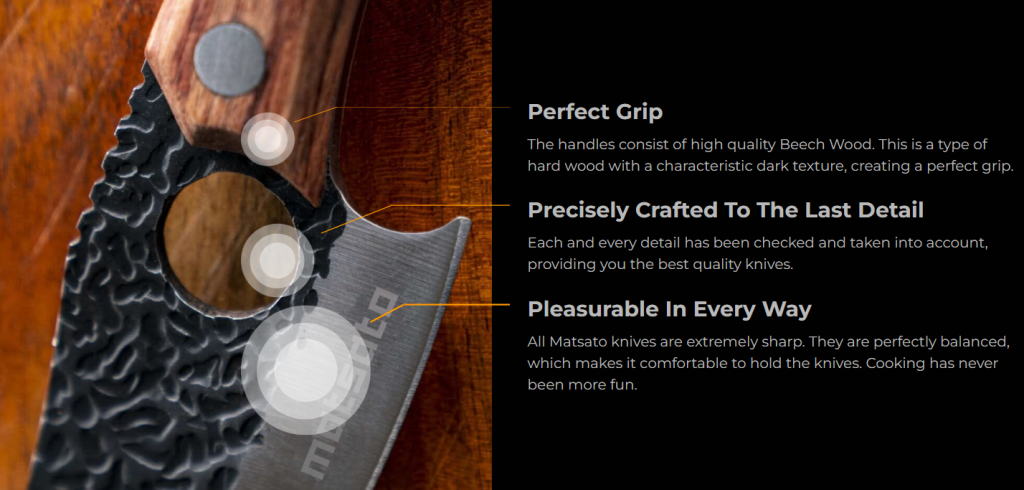
This is a genuine highlight. A lot of knives in this price bracket use cheap, hollow plastic handles. The Matsato uses dense, roasted beech wood secured with visible rivets over a full tang (meaning the metal runs all the way through the handle). It provides excellent balance; the knife weighs just 176 grams, preventing wrist fatigue during long meal preps.
The Blade Profile
With a 5.8-inch blade length and a 2-inch height, it offers fantastic knuckle clearance. You won’t smash your fingers against the cutting board when chopping.
If you are a bit of a knife nerd like me, here are the hard specs you want to know:
| Feature | Detail | Why It Matters For You |
| Blade Material | High-Carbon Stainless Steel (4CR14) | Resists rust better than pure carbon steel, but holds an edge much longer than standard stainless. |
| Handle Material | Roasted Beech Wood / Oak | Provides a premium, non-slip grip that feels warm in the hand. |
| Design | Laser-Carved Finger Hole | Gives you professional-level “pinch grip” control without hand fatigue. |
| Blade Style | Dimpled / Hammered Finish | Prevents sticky foods from clinging to the blade while slicing. |
| Weight | ~176 to 252 Grams | Extremely well-balanced; heavy enough to chop, light enough to not hurt your wrist. |
| Dishwasher Safe? | NO | The heat and harsh detergents will ruin the wood and dull the edge. Hand wash only! |
Matsato vs. Competitors: How Does It Stack Up?
A lot of people ask: “Is the Matsato better than other Japanese chef knives I can buy?” Here’s an honest comparison.
| Feature | Matsato | Budget Store Knife ($15–25) | Mid-Range Brand ($80–120) | Professional Brand ($200+) |
|---|---|---|---|---|
| Steel Hardness (HRC) | 58–60 | 52–54 | 56–58 | 60–66 |
| Ice-Hardened | Yes | No | Sometimes | Yes |
| Full Tang | Yes | Often No | Yes | Yes |
| Edge Retention | Excellent | Poor | Good | Excellent |
| Handle Ergonomics | Very Good | Average | Good | Excellent |
| Value for Money | ⭐⭐⭐⭐⭐ | ⭐⭐ | ⭐⭐⭐ | ⭐⭐⭐ |
| Price (at discount) | ~$40–60 | $15–25 | $80–120 | $200–400+ |
The honest takeaway: Matsato competes solidly with mid-range knives costing two to three times more, and it comfortably outperforms cheap grocery-store knives. It doesn’t quite match a $300 Shun or Global for pure performance – but for home cooking, the gap is smaller than you’d think.
Benefits vs. Alternatives (Matsato vs. The Competition)
You are probably wondering how the Matsato Kitchen Knife stacks up against other popular knives on the market, especially the famous “Huusk” knife, which looks very similar.
Matsato vs. Huusk Knife
Both of these knives target the exact same audience and have a very similar Japanese-inspired, rustic design with the finger hole. Having held both, the Matsato feels slightly better balanced in the hand. The handle contour on the Matsato seems a bit more refined, whereas the Huusk can feel slightly clunky if you have smaller hands. Both are great budget-friendly options, but Matsato edges out a win for me on overall weight distribution.
Matsato vs. Standard German Chef Knives (e.g., Wüsthof)
A standard 8-inch German chef knife is straight, heavy, and usually has a thick bolster. The Matsato is lighter, features a more curved belly for rocking, and is much cheaper. If you are doing heavy-duty butchering, get a German knife. If you are doing 90% of normal daily cooking (veggies, boneless meats, herbs), the Matsato is way more comfortable to use for long periods.
Real Customer Feedback: What Are People Saying?
I spent time reading through various Matsato reviews from other buyers – not just the glowing testimonials on the sales page, but broader community feedback from cooking groups and forums. Here’s a fair summary of what real customers tend to say:
What people love:
- “It came sharper than anything I’ve owned.”
- “My partner uses it every day and it still feels like new.”
- “The balance is incredible for the price.”
- “I bought it as a gift for my mom who does a lot of Indian cooking. She loves it.”
- “I’ve tried cheap knives, I’ve tried expensive knives – this hits a sweet spot.”
What some people noted:
- “Wish it came in a protective sleeve or box for storage.”
- “It’s a single knife, so if you need a whole set you’ll need to buy separately.”
- “Hand-washing only – don’t put it in the dishwasher.”
The feedback trends positive overall, with most complaints being minor (packaging, it being a single knife rather than a set) rather than performance issues.
✔️ Honest Pros & Cons
No product is perfect, and I want this Matsato review to be completely unbiased. Here is what I love and what I don’t love.
The Pros (What I Love)
- Insanely Sharp Out of the Box: You can literally shave hair off your arm with it (though I recommend sticking to vegetables).
- The Finger Hole is a Game Changer: Once you get used to holding a knife this way, going back to a regular handle feels wobbly and unsafe.
- Beautiful Craftsmanship: It looks like a piece of art hanging on a magnetic knife strip in the kitchen.
- Incredible Value: If you catch the 70% off sale, you are getting a knife that performs like it costs triple the price.
- Non-Stick Dimples: Slicing potatoes and garlic is so much less annoying.
The Cons (What Could Be Better)
- High Maintenance: This is not a “toss it in the sink and forget it” knife. If you leave it sitting in water, the high-carbon steel will develop rust spots. You must wash it and towel-dry it immediately.
- Aggressive Upsells: The checkout process on their official website tries very hard to sell you extra accessories.
- Not for Bones: The blade is thin and razor-like. If you try to hack through a thick frozen pork bone, you risk chipping the blade.
Matsato Knife Price – How Much Does It Cost?
This is a common question, and the answer depends on when you buy.
The Matsato knife is sold exclusively through the official website. The regular retail price is around $99–$119, but they routinely offer promotional discounts. At the time I’m writing this, there’s a significant discount available – sometimes up to 70% off – bringing the price down to roughly $30–50 depending on the current promotion.
I’d recommend checking the official site to see what discount is currently running. These deals tend to go quickly when they’re live.
There’s no subscription required, and I haven’t seen any hidden charges. You just pay for the knife, and it ships out.
Is the Matsato knife worth the price? At the discounted price, absolutely yes. Even at full retail, it’s competitive with what mid-range knife brands charge for similar quality.
🧍 Who Should Buy The Matsato Chef Knife?
1. The Frustrated Home Cook: If you are currently sawing through your food with dull knives that slip and slide, this knife will change your life and make cooking fun again. 2. BBQ Pitmasters: The rustic look and razor-sharp edge make it perfect for slicing brisket, ribs, and chicken on the patio. 3. People Looking for a Great Gift: Because it comes in a beautiful box and looks so unique, it makes an amazing Father’s Day, Mother’s Day, or birthday gift for a foodie.
🚫 Who Should Avoid It?
1. The Lazy Cleaner: If you refuse to hand-wash your dishes and rely entirely on your dishwasher, do not buy this. The wood handle will crack, and the blade will suffer. 2. Professional Butchers: If your daily job involves chopping through thick animal joints and bones, you need a heavy, thick meat cleaver, not a precision slicer like the Matsato.
Read This Also: TIBO Titanium Cutting Board Review: Best Cutting Board 2026
Is the Matsato Knife Legit? Is It a Scam?
This is one of the most common questions I see, so let me address it directly.
The Matsato knife is a real product. I bought mine, I used it, and it does what it claims. The edge retention is genuinely impressive compared to cheap knives. The craftsmanship is solid. It is not a scam.
That said, a few things are worth knowing:
The brand leans heavily on marketing – some of the sales copy can feel over-the-top (“the only knife you’ll ever need”). As with any product marketed online, take the most dramatic claims with a grain of salt. It’s a very good knife for the price. It won’t replace every kitchen tool you own.
Also, as I mentioned, it’s only available online. That can feel unfamiliar if you’re used to buying cookware at a physical store. But the ordering process is standard, and the product ships as described.
Bottom line: It’s a legitimate product that performs well. Not magic, but genuinely quality – and especially at a discounted price, it’s hard to argue with the value.
Matsato vs. Huusk Knife – Which Is Better?
If you’ve been comparing Japanese-style chef knives online, you’ve probably also seen the Huusk knife. Here’s a quick, honest comparison:
| Feature | Matsato | Huusk |
|---|---|---|
| Blade Material | High-carbon stainless steel | Stainless steel |
| Hardening Method | Japanese ice-hardening | Standard |
| Full Tang | Yes | Yes |
| Handle Style | Ergonomic grip | More traditional/rustic |
| Sharpness Out of Box | Excellent | Good |
| Edge Retention | Excellent | Good |
| Price Range | ~$40–60 with discount | ~$30–50 with discount |
| Best For | Versatile home and semi-pro cooking | Casual home cooking |
Both knives are in a similar price bracket and both are decent options. I personally found the Matsato’s ice-hardened blade to maintain its edge better over time, but either is a significant upgrade over a cheap grocery store knife.
How to Care for Your Matsato Knife
To get the longest possible life out of this knife, here are the basic care habits I follow:
Hand wash only. Dishwashers are harsh on knife edges and handles. A quick rinse and hand dry after use is all it needs.
Dry immediately after washing. Even stainless steel can develop minor rust spots if left wet for extended periods.
Store it properly. Use a knife block, magnetic strip, or blade guard – never throw it loose in a drawer where it can bang against other utensils.
Hone regularly. A quick pass on a honing rod before or after use keeps the edge aligned between full sharpenings. Think of honing like stretching – it doesn’t remove metal, it just keeps the edge straight.
Sharpen when needed. With regular honing, you might only need a full sharpening every six months to a year for casual home use. When you do sharpen, use a whetstone or a quality pull-through sharpener.
Cut on soft surfaces. Wood or plastic cutting boards only. Glass, ceramic, and stone surfaces will damage any blade.
FAQs About Matsato Kitchen Knife
What is the purpose of the hole in the Matsato knife?
The laser-carved hole is designed for your index finger. By placing your finger through the blade, you lock your hand into a forward “pinch grip.” This aligns your wrist with the blade, reducing fatigue and drastically increasing your control over precision cuts.
What is the Matsato Chef Knife?
The Matsato Chef Knife is a popular, mid-sized kitchen knife known for its unique laser-carved index finger hole. It features a five-point-eight-inch stainless steel blade and a wooden handle, designed to give home cooks better grip and control while chopping.
Is the Matsato knife actually made in Japan?
No. While it is marketed as being inspired by Japanese traditions, the Matsato knife is mass-produced using 4CR14 stainless steel, a common alloy typically manufactured in China.
Is the Matsato knife good for beginners?
Yes, it is excellent for beginners. The signature finger hole helps naturally guide your hand into a proper pinch grip, which gives you more control and makes cutting food much safer if you aren’t an experienced chef.
How much does the Matsato knife cost?
Normally, the retail price is around $100+. However, the company almost always runs a direct-to-consumer promotion on their official site, bringing the price down to roughly $29 to $39. Buying in bundles usually lowers the cost per knife even further.
Is it worth buying?
If you struggle with knife control, have wrist pain, or simply want a cool-looking knife for basic daily cooking, it is absolutely worth the fifty dollars. If you are a professional chef, you should skip it.
Is Matsato knife legit or a scam?
The Matsato knife is 100% legit. It is a real, high-quality physical product that works exceptionally well for its price point. However, some people complain about the “scammy” feel of the checkout page because of all the extra product upsells. As long as you decline the extras you don’t want, the knife itself is fantastic.
Does it require a special sharpener?
No. You can use a standard whetstone (which I highly recommend for all kitchen knives) or a quality pull-through sharpener to maintain the edge. Because the steel is hard, you won’t need to sharpen it as frequently as a cheap supermarket knife.
What is the purpose of the hole in the Matsato knife?
The laser-carved hole is designed for your index finger. By placing your finger through the blade, you lock your hand into a forward “pinch grip.” This aligns your wrist with the blade, reducing fatigue and drastically increasing your control over precision cuts.
How do you sharpen a Matsato chef knife?
Because it is made of 4CR14 stainless steel, it is very easy to sharpen. You can use a standard steel honing rod before each use to align the edge. For actual sharpening, a 1000/3000 grit whetstone used at a 15-degree angle will easily restore its factory sharpness. Do not use aggressive pull-through carbide sharpeners, as they will chew up the blade.
Can the Matsato knife go in the dishwasher?
Absolutely not. The harsh chemicals, extreme heat, and rattling inside a dishwasher will ruin the blade edge and cause the natural roasted beech wood handle to crack and splinter. Always hand wash the knife with warm, soapy water and dry it immediately with a towel.
Matsato knife reviews consumer reports – what are people saying?
Most consumer reports and verified buyer reviews (like those on Trustpilot) highlight the extreme sharpness and comfortable grip. The negative reviews usually stem from customer service delays or people not realizing that high-carbon steel requires hand-drying to prevent rust spots.
Final Verdict: Should You Buy the Matsato Knife?
After putting the Matsato Chef Knife through rigorous daily testing in my own kitchen, my final verdict is a resounding yes-with a small asterisk.
The asterisk is just a reminder that you must take care of it. Hand wash it, dry it immediately, and keep it out of the dishwasher.
If you are willing to do that, you are getting an absolute powerhouse of a kitchen tool. The ergonomic finger hole completely changes how much control you have over your cuts, and the blade is terrifyingly sharp right out of the box. It takes the frustration out of meal prep.
If you are tired of crying over crushed tomatoes and slippery onions, it is absolutely worth the investment.
Ready to upgrade your kitchen? I highly recommend checking their official website to see if the 70% off discount is still active today. It’s the best way to ensure you get the authentic knife and not a cheap knockoff from a third-party seller.