
Dealing with acne can feel overwhelming, especially when you’re standing in the skincare aisle faced with hundreds of products promising clear skin. If you’ve been researching acne solutions, you’ve likely come across three names repeatedly: CeraVe, La Roche Posay, and Paula’s Choice.
These three brands dominate conversations in dermatology offices, skincare forums, and beauty communities worldwide. But which one actually delivers results for acne-prone skin?
In this comprehensive guide, we’ll break down everything you need to know about these popular skincare brands. You’ll discover their key acne-fighting products, active ingredients, price points, and which brand might work best for your specific skin concerns. Whether you’re dealing with hormonal breakouts, cystic acne, or occasional blemishes, this comparison will help you make an informed decision.
Understanding Acne-Prone Skin: What You Need to Know Before Choosing Products
Before comparing specific brands, it’s essential to understand what acne-prone skin actually needs.
What Causes Acne Breakouts?
Acne develops when several factors combine:
- Excess oil (sebum) production clogs pores
- Dead skin cells accumulate and block follicles
- Bacteria (particularly C. acnes) multiply in clogged pores
- Inflammation triggers redness and swelling
Key Ingredients That Fight Acne
When evaluating skincare brands for acne, look for these proven ingredients:
- Salicylic Acid: Penetrates pores to dissolve oil and debris
- Benzoyl Peroxide: Kills acne-causing bacteria
- Niacinamide: Reduces inflammation and regulates oil production
- Retinoids: Increase cell turnover and prevent clogged pores
- Ceramides: Repair and strengthen the skin barrier
- Hyaluronic Acid: Provides hydration without clogging pores
Understanding these ingredients will help you evaluate which brand offers the best solutions for your skin.
CeraVe for Acne: Dermatologist-Developed Affordable Skincare
CeraVe has become a household name in skincare, known for its gentle, science-backed formulations that don’t break the bank.
Brand Overview: What Makes CeraVe Stand Out
CeraVe was developed with dermatologists and focuses on restoring and maintaining the skin’s natural barrier. The brand’s signature ingredient is ceramides, which are essential lipids that keep skin healthy and protected.
Key Brand Features:
- Dermatologist-developed formulations
- Non-comedogenic (won’t clog pores)
- Fragrance-free options
- Affordable pricing
- Available at drugstores nationwide
Best CeraVe Products for Acne-Prone Skin
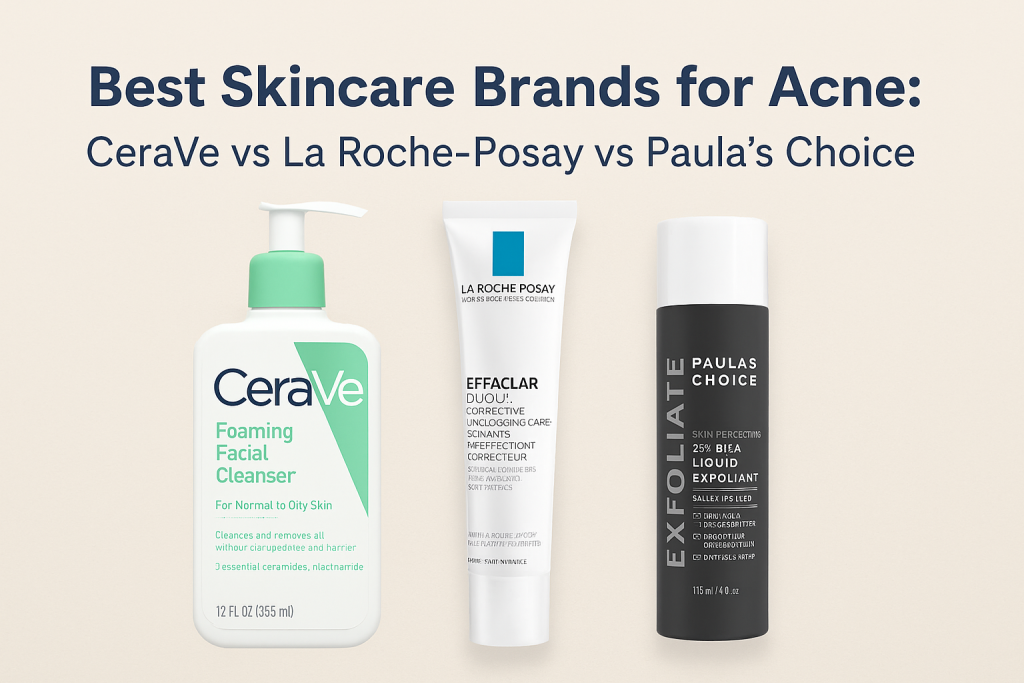
CeraVe Foaming Facial Cleanser
This lightweight cleanser removes excess oil without stripping the skin. It contains ceramides and hyaluronic acid to maintain hydration while cleansing.
Best for: Oily and combination acne-prone skin
Price Range: $12-$16 for 12 oz
CeraVe SA Cleanser for Rough and Bumpy Skin
Formulated with salicylic acid, this cleanser gently exfoliates to unclog pores and smooth skin texture.
Key Ingredients:
- Salicylic acid (BHA)
- Ceramides
- Hyaluronic acid
- Niacinamide
Best for: Mild to moderate acne, textured skin
CeraVe Resurfacing Retinol Serum
This serum combines encapsulated retinol with licorice root extract to reduce post-acne marks while preventing new breakouts.
Best for: Acne scars, hyperpigmentation, aging concerns
Pros and Cons of CeraVe for Acne
Advantages:
- Extremely affordable compared to competitors
- Gentle formulations suitable for sensitive skin
- Widely available at drugstores
- Focuses on barrier repair alongside acne treatment
- No harsh fragrances or irritating ingredients
Limitations:
- Lower concentrations of active ingredients compared to specialty brands
- May take longer to see results for severe acne
- Limited range of acne-specific products
- Some users find formulas too basic for targeted concerns
La Roche Posay for Acne: French Pharmacy Skincare Excellence
La Roche Posay represents European dermatological skincare at its finest, combining thermal spring water with targeted active ingredients.
Brand Overview: The French Pharmacy Approach
Founded in 1975, La Roche Posay is recommended by dermatologists worldwide. The brand formulates products with their signature thermal spring water, which has soothing and antioxidant properties.
Key Brand Features:
- Developed with dermatologists
- Thermal spring water in formulations
- Focuses on sensitive and reactive skin
- European pharmaceutical heritage
- Clinical testing for safety and efficacy
Best La Roche Posay Products for Acne-Prone Skin
La Roche Posay Effaclar Duo (+)
This cult-favorite treatment targets multiple causes of acne simultaneously. It contains micro-exfoliating LHA, niacinamide, and salicylic acid.
Key Benefits:
- Reduces blemishes and prevents new ones
- Minimizes the appearance of pores
- Fades post-acne marks
- Non-drying formula
Price Range: $24-$36 for 1.35 oz
Effaclar Medicated Gel Cleanser
A purifying foaming gel with 2% salicylic acid that deeply cleanses without over-drying.
Best for: Daily cleansing for oily, acne-prone skin
Effaclar Clarifying Solution
This toner combines salicylic acid, glycolic acid, and La Roche Posay thermal spring water to refine pores and smooth texture.
Best for: Post-cleansing treatment step, textured skin
Pros and Cons of La Roche Posay for Acne
Advantages:
- Well-balanced formulations for sensitive acne-prone skin
- Thermal spring water provides additional soothing benefits
- Strong clinical research backing products
- Effective for various acne types and severities
- Popular Effaclar line specifically targets acne
Limitations:
- Higher price point than CeraVe
- Less widely available in some areas
- Some products contain fragrance
- May require purchasing multiple products for complete routine
Paula’s Choice for Acne: Evidence-Based Skincare Solutions
Paula’s Choice has built a reputation for transparent, science-focused skincare that prioritizes effective ingredients over marketing hype.
Brand Overview: Research-Driven Formulations
Founded by beauty industry expert Paula Begoun, this brand emphasizes ingredient research and formulation transparency. Paula’s Choice avoids fragrances, dyes, and irritants while focusing on proven active ingredients.
Key Brand Features:
- Research-backed ingredient selection
- No fragrance, dyes, or irritants
- Detailed ingredient explanations
- Various concentrations of active ingredients
- Direct-to-consumer model (online focused)
Best Paula’s Choice Products for Acne-Prone Skin
Skin Perfecting 2% BHA Liquid Exfoliant
This iconic product revolutionized chemical exfoliation in skincare. The lightweight liquid contains 2% salicylic acid that penetrates pores to dissolve debris.
Why It’s Popular:
- Gentle enough for daily use
- Visibly reduces blackheads and whiteheads
- Smooths skin texture
- Minimizes pore appearance
- Suitable for all skin types
Price Range: $32-$35 for 4 oz
Clear Regular Strength Daily Skin Clearing Treatment with 2.5% Benzoyl Peroxide
A lightweight benzoyl peroxide treatment that fights acne-causing bacteria without excessive dryness.
Best for: Active breakouts, bacterial acne
Clinical Niacinamide 20% Treatment
A high-concentration niacinamide serum that targets multiple acne concerns including oil production, inflammation, and pore size.
Best for: Oily skin, enlarged pores, redness
Pros and Cons of Paula’s Choice for Acne
Advantages:
- High-quality, research-backed formulations
- Multiple concentrations available for customization
- Fragrance-free and non-irritating
- Extensive product education and ingredient information
- Excellent customer service and samples
Limitations:
- Premium pricing (most expensive of the three)
- Primarily online availability
- Can be overwhelming to choose from extensive range
- International shipping may be limited
Head-to-Head Comparison: CeraVe vs La Roche Posay vs Paula’s Choice
Product Range and Variety
| Brand | Acne-Specific Products | Overall Range | Customization Options |
|---|---|---|---|
| CeraVe | Limited (5-7 products) | Moderate | Low |
| La Roche Posay | Extensive Effaclar line (15+ products) | Large | Moderate |
| Paula’s Choice | Multiple targeted lines (20+ products) | Very Large | High |
Price Comparison
Budget-Friendly: CeraVe
- Cleanser: $12-$16
- Treatment: $15-$20
- Complete routine: $40-$60
Mid-Range: La Roche Posay
- Cleanser: $15-$20
- Treatment: $24-$36
- Complete routine: $70-$100
Premium: Paula’s Choice
- Cleanser: $20-$25
- Treatment: $30-$35
- Complete routine: $100-$130
Ingredient Quality and Concentration
CeraVe: Lower active ingredient concentrations, focus on barrier support
La Roche Posay: Balanced actives with soothing thermal water
Paula’s Choice: Higher concentrations, multiple strength options available
Accessibility and Availability
Most Accessible: CeraVe (Target, Walmart, CVS, Walgreens, Amazon)
Moderately Accessible: La Roche Posay (CVS, Walgreens, Ulta, Amazon)
Least Accessible: Paula’s Choice (primarily online, select retailers)
Which Brand Should You Choose? Personalized Recommendations
Choose CeraVe If:
- You’re on a tight budget but want dermatologist-approved products
- You have sensitive skin that reacts to many products
- You’re new to active ingredients and want gentle formulations
- You prefer shopping at drugstores
- You have mild to moderate acne concerns
- Barrier repair is your primary focus
Ideal Skin Type: Sensitive, dry to combination, mild acne
Choose La Roche Posay If:
- You have reactive or sensitive acne-prone skin
- You want a dedicated acne line with multiple targeted products
- You appreciate European pharmaceutical skincare
- You’re willing to invest moderately in your skincare
- You have moderate to severe acne
- You want clinically tested formulations
Ideal Skin Type: Sensitive to normal, oily, moderate to severe acne
Choose Paula’s Choice If:
- You prioritize ingredient research and transparency
- You want customizable concentrations of active ingredients
- You have specific concerns beyond basic acne (aging, hyperpigmentation)
- Budget is less of a concern than results
- You prefer fragrance-free, minimal formulations
- You’re comfortable building a personalized routine
Ideal Skin Type: All types, particularly oily or combination, various acne severities
Building an Effective Acne Skincare Routine
Regardless of which brand you choose, follow this basic routine structure:
Morning Routine
- Gentle Cleanser: Remove overnight oil and debris
- Treatment (Optional): Light exfoliant or targeted serum
- Moisturizer: Hydrate without clogging pores
- Sunscreen (Essential): Protect skin and prevent post-acne darkening
Evening Routine
- Cleanser: Remove makeup, sunscreen, and daily buildup
- Exfoliant: 2-3 times per week (salicylic acid or gentle retinoid)
- Treatment: Targeted acne treatment or serum
- Moisturizer: Repair barrier overnight
Sample Routines by Brand
CeraVe Routine:
- AM: Foaming Cleanser → Moisturizing Lotion → Sunscreen
- PM: SA Cleanser → Resurfacing Retinol Serum → PM Facial Moisturizing Lotion
La Roche Posay Routine:
- AM: Effaclar Gel Cleanser → Effaclar Duo (+) → Toleriane Moisturizer → Sunscreen
- PM: Effaclar Gel Cleanser → Effaclar Clarifying Solution → Effaclar Duo (+) → Night Moisturizer
Paula’s Choice Routine:
- AM: Clear Pore Normalizing Cleanser → Niacinamide Treatment → Moisturizer → Sunscreen
- PM: Clear Cleanser → 2% BHA Liquid → Clear BP Treatment → Moisturizer
Common Mistakes to Avoid When Using Acne Products
Over-Exfoliating
Using too many active ingredients at once can damage your skin barrier, leading to more breakouts.
Solution: Introduce one new active ingredient at a time, starting 2-3 times per week.
Skipping Moisturizer
Many people with oily skin skip moisturizer, thinking it will cause more breakouts.
Solution: Use a lightweight, non-comedogenic moisturizer to maintain barrier health.
Not Using Sunscreen
Acne treatments increase sun sensitivity, and UV exposure worsens post-acne marks.
Solution: Apply broad-spectrum SPF 30+ daily, even when indoors.
Expecting Immediate Results
Skincare takes time to show results, typically 6-12 weeks.
Solution: Be patient and consistent with your routine before switching products.
Using Too Many Products at Once
Complicated routines increase the risk of irritation and make it harder to identify what works.
Solution: Keep it simple: cleanser, treatment, moisturizer, sunscreen.
Combining Brands: Can You Mix and Match?
You don’t have to commit to just one brand. Many skincare enthusiasts create hybrid routines using the best products from each brand.
Smart Combinations
Budget-Conscious Approach:
- CeraVe Cleanser and Moisturizer (affordable basics)
- Paula’s Choice 2% BHA Exfoliant (splurge on treatment)
Sensitive Skin Approach:
- La Roche Posay Cleanser (gentle yet effective)
- CeraVe Moisturizer (barrier support)
- Paula’s Choice occasional treatment (when needed)
Maximum Results Approach:
- Paula’s Choice Cleanser and Treatments (effective actives)
- La Roche Posay or CeraVe Moisturizer (affordable hydration)
What to Consider When Mixing Brands
- Ensure products don’t duplicate active ingredients
- Watch for potential irritation from combining too many actives
- Maintain a consistent pH balance in your routine
- Choose complementary rather than competing formulations
Real Results: What Users Report
CeraVe User Experiences
Positive Feedback:
- Gentle enough for daily use
- Improves overall skin health
- Affordable for long-term use
- Good for maintaining clear skin after acne clears
Common Concerns:
- Slower results for active breakouts
- May not be strong enough for severe acne
- Some users experience minimal improvement
La Roche Posay User Experiences
Positive Feedback:
- Effaclar Duo (+) shows visible results within 2-4 weeks
- Suitable for sensitive, reactive skin
- Reduces both active acne and post-acne marks
- Professional-grade results
Common Concerns:
- Higher price point
- Some products contain fragrance
- Availability varies by location
Paula’s Choice User Experiences
Positive Feedback:
- 2% BHA Liquid Exfoliant is life-changing for many users
- Visible pore refinement and texture improvement
- Excellent for stubborn blackheads
- High-quality ingredients
Common Concerns:
- Most expensive option
- Can be drying if overused
- Takes time to determine which concentration works best
When to See a Dermatologist
While over-the-counter products work for many people, some situations require professional help:
- Severe cystic acne that doesn’t respond to OTC treatments
- Acne causing significant scarring
- Painful nodules or deep blemishes
- Hormonal acne patterns (jawline, chin)
- Acne affecting mental health and confidence
- Persistent acne after 12 weeks of consistent treatment
A dermatologist can prescribe stronger treatments like prescription retinoids, antibiotics, or hormonal therapies.
Sustainability and Ethics: Brand Values
CeraVe
- Owned by L’Oréal
- Some recyclable packaging
- Cruelty-free (no animal testing on finished products)
- Focus on accessible skincare
La Roche Posay
- Owned by L’Oréal
- Commitment to reducing environmental impact
- Dermatological safety testing (may involve testing protocols)
- Sustainable water management practices
Paula’s Choice
- Independent company
- Cruelty-free and vegan options available
- Recyclable packaging initiatives
- Focus on ingredient transparency
- Carbon-neutral shipping options
If ethical considerations are important to you, research each brand’s current policies before purchasing.
Conclusion: Making Your Final Decision
Choosing between CeraVe, La Roche Posay, and Paula’s Choice ultimately depends on your skin type, budget, and specific acne concerns.
Choose CeraVe for gentle, affordable, barrier-supporting skincare that works well for mild acne and sensitive skin.
Choose La Roche Posay for clinically tested, dermatologist-recommended products that balance effectiveness with sensitivity, ideal for moderate to severe acne.
Choose Paula’s Choice for research-backed, customizable formulations with higher concentrations of actives, perfect for those who want maximum results and ingredient transparency.
Remember, consistency matters more than the brand you choose. Give any routine at least 8-12 weeks before deciding if it works for you.
Your Next Steps
- Identify your skin type and primary acne concerns
- Start with a simple three-step routine (cleanser, treatment, moisturizer)
- Introduce one new product at a time
- Track your progress with photos
- Adjust based on your skin’s response
Clear skin is achievable with the right approach. Start with one of these trusted brands, stay consistent, and be patient with the process.
FAQs About Best Skincare Brands for Acne
Can I use products from all three brands together in one routine?
Yes, you can absolutely mix products from CeraVe, La Roche Posay, and Paula’s Choice in the same routine. Many people create hybrid routines using affordable basics from CeraVe (like cleansers and moisturizers) while incorporating targeted treatments from Paula’s Choice or La Roche Posay. The key is to ensure you’re not over-using active ingredients or creating conflicts between products. Always introduce new products one at a time and monitor how your skin responds before adding more to your routine.
How long does it typically take to see improvement in acne when using these brands?
Most people begin seeing initial improvements within 4-6 weeks of consistent use, with more significant results appearing around the 8-12 week mark. However, the timeline varies depending on your acne severity, skin type, and the specific products used. Salicylic acid products often show quicker results for surface-level breakouts (2-4 weeks), while retinoid products may take longer (8-12 weeks) but provide more comprehensive long-term benefits. Be patient and consistent with your routine, as prematurely switching products can prevent you from seeing their full benefits.
Do I need to buy an entire product line from one brand, or can I just use one or two key products?
You don’t need to purchase complete product lines from any of these brands. In fact, a minimalist approach often works better for acne-prone skin. Start with the essentials: a gentle cleanser, one targeted treatment (like a salicylic acid exfoliant or benzoyl peroxide spot treatment), a lightweight moisturizer, and sunscreen. You can build from there based on your specific needs. Many effective routines combine a budget-friendly cleanser from CeraVe with a treatment product from Paula’s Choice and a moisturizer from La Roche Posay.
Are these brands suitable for sensitive skin that’s also acne-prone?
Yes, all three brands are generally suitable for sensitive, acne-prone skin, though they approach it differently. CeraVe focuses heavily on barrier support with gentle formulations, making it excellent for very sensitive skin. La Roche Posay incorporates soothing thermal spring water and is specifically formulated for reactive skin types. Paula’s Choice avoids fragrances and irritants while offering various concentration levels, allowing you to start with gentler options. If you have sensitive skin, introduce products slowly, patch test new items, and start with lower concentrations of active ingredients before progressing to stronger formulations.
Which brand is most effective for hormonal acne along the jawline and chin?
For hormonal acne, which often appears as deep, painful cysts along the jawline and chin, Paula’s Choice typically offers the most targeted approach with products like their Clinical Niacinamide 20% Treatment and various strength BHA exfoliants. La Roche Posay’s Effaclar Duo (+) also receives positive feedback for hormonal breakouts due to its multi-action formula. However, it’s important to note that stubborn hormonal acne often requires more than topical treatments. If over-the-counter products don’t show improvement after 12 weeks, consider consulting a dermatologist about prescription options like spironolactone, oral contraceptives, or prescription retinoids, which address hormonal acne at its source.