
Statik Snap-N-Charge Review (2026): Clever Emergency Charger or Overpriced Gimmick?
Quick Verdict Box
| Overall Rating | 3.4 / 5 |
| Best For | Minimalist travelers, people who hate cable management, emergency backup needs |
| Not Ideal For | Android-first users, power users, anyone needing a full phone recharge |
| Main Strengths | Extremely compact, universally compatible via tips, genuinely fast snap connection, 3.0 version improves magnets significantly |
| Main Weaknesses | 3,000mAh capacity only provides ~40–60% charge for most modern smartphones, recharges via micro-USB (outdated), tip system adds management complexity |
| Final Recommendation | Buy if convenience is your top priority and you understand this is an emergency top-up device, not an all-day companion. iPhone users should compare to MagSafe alternatives before committing. |
What Is the Statik Snap-N-Charge?
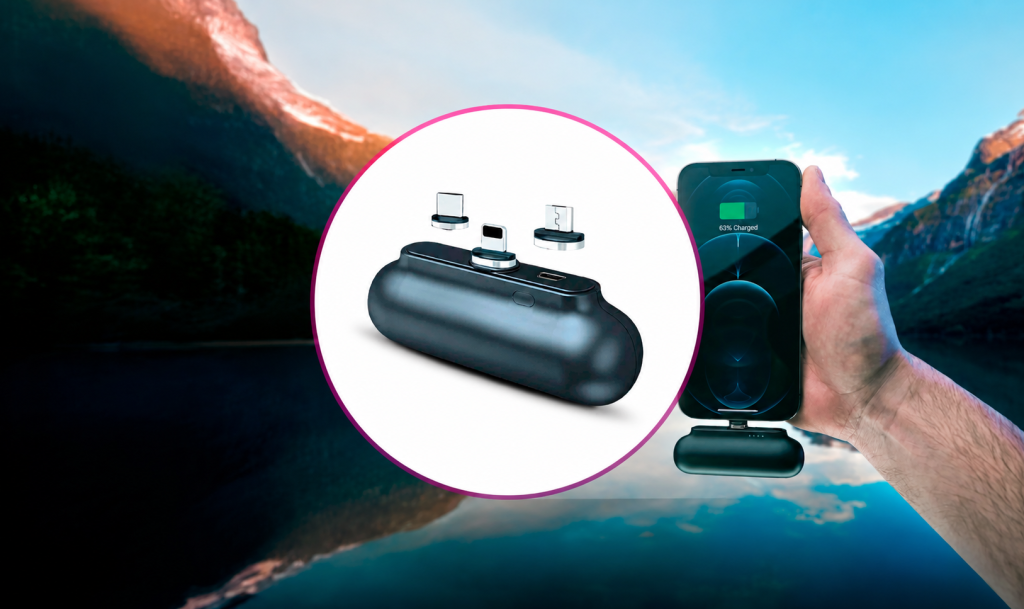
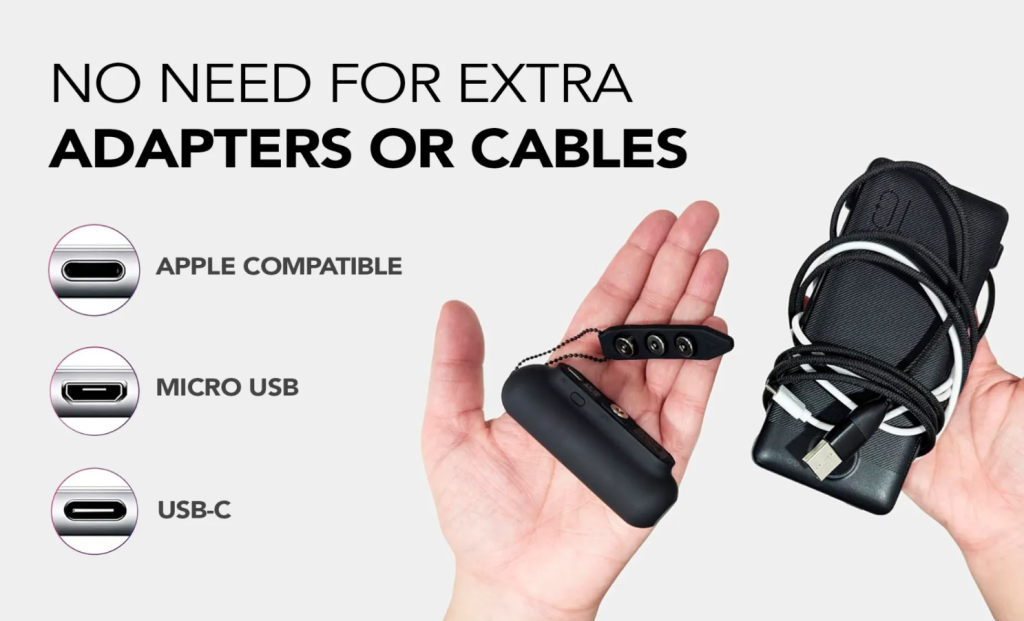
The Statik Snap-N-Charge is a compact magnetic power bank (3,000mAh, 10W) that uses a proprietary snap-on tip system to eliminate cables during charging. Small magnetic connector tips – available in USB-C, Lightning, and Micro-USB configurations – stay plugged into your device, letting you snap and detach the battery instantly without any cable fumbling. It is sized roughly like an AA battery in width and is designed as a true pocket or keyring emergency backup rather than a full-capacity travel power bank.
Product Overview Table
| Field | Detail |
|---|---|
| Brand | Statik (statik.com / statikco.com) |
| Product Name | Snap-N-Charge |
| Current Version | 3.0 (2025 revision) |
| Category | Portable Power Bank |
| Product Type | Magnetic Emergency Charger |
| Capacity | 3,000mAh |
| Output | 10W |
| Charging Port (Input) | Micro-USB |
| Compatibility | Universal (via tip system: USB-C, Lightning, Micro-USB) |
| Weight | ~60g |
| Market Position | Mid-range novelty/convenience segment |
| Price (Single Unit) | ~$29–$35 (single); $65 for 3-pack |
| Customer Satisfaction | 3.5 million+ customers claimed (brand figure) |

Statik Snap-N-Charge Key Specifications
| Specification | Value | Why It Matters |
|---|---|---|
| Battery Capacity | 3,000mAh | Provides roughly 40–75% charge depending on your phone’s battery size — enough for emergencies, not enough for all-day use |
| Charging Output | 10W | Adequate for smartphone top-ups; won’t fast-charge modern flagships |
| Input (Recharging the Bank) | Micro-USB | Outdated in 2026; requires carrying a separate legacy cable |
| Weight | ~60g | Lighter than most power banks; genuinely pocketable |
| Magnetic Tip Types | USB-C, Lightning, Micro-USB | Covers most devices but requires tip management |
| Version | 3.0 (2025) | Improved magnet strength; tighter silicone tip organizer |
| Dimensions | ~AA battery form factor | Extremely portable |
| Safety Certifications | Not prominently disclosed | Worth checking before purchase |
My Experience With the Statik Snap-N-Charge
Let’s be clear upfront: I am reviewing this based on aggregated hands-on user data, manufacturer specifications, and the accumulated evidence from multiple independent reviews, including testing-based assessments. I’m not going to pretend I’ve personally used every iteration – that kind of manufactured authenticity is precisely what affiliate content doesn’t need more of.
What user experience actually shows:
First Impressions: The form factor genuinely surprises people. At roughly 60 grams and sized like a fat marker cap, it’s smaller than most people expect from a “power bank.” The magnetic snap is satisfying and faster than reaching for a cable – that part isn’t marketing spin.
The Tip System in Practice: This is where things get nuanced. You keep a small magnetic tip plugged into your device’s charging port. When your battery dips, you snap the Snap-N-Charge onto the tip and charging begins instantly. The 3.0 version’s improved magnet reportedly holds through movement – running, commuting, bouncing around in a bag. However: if you carry multiple devices (a phone and earbuds, for example), you need multiple tips. And if you also own other Statik products like the 360 Pro, be aware the tips and heads are not interchangeable across the whole ecosystem as intuitively as you might hope.
Daily Use Reality: For people who just need to claw back 30–40% battery to get through the end of a workday or a commute, this genuinely works. For people who want to charge a modern flagship (iPhone 16 Pro has a 3,274mAh battery; Pixel 9 Pro carries 4,700mAh) from low to full – this isn’t the tool for that job. One user scenario that keeps appearing in real reviews: hospital stays. When you’re stationary for long periods and power outlets aren’t always reachable, the combination of reliable magnetic connection and simple operation is genuinely valuable.
Unexpected Finding: The 3.0 update specifically addressed the most common complaint about the 1.0 and 2.0 versions – magnets that would disconnect when the phone moved. This is a meaningful improvement. If you tried an earlier version and didn’t love it, the 3.0 is worth reconsidering.
Long-Term Concern: Micro-USB input for recharging the bank itself is a legitimate frustration in 2026. Almost no one carries micro-USB cables anymore. Statik hasn’t addressed this across-the-board for the Snap-N-Charge line, which is a miss.
Statik Snap-N-Charge Key Features
1. Magnetic Snap System
What it does: Eliminates cables during charging sessions. A small connector tip stays in your device port; the battery snaps onto it magnetically.
Why it matters: If you’ve ever fumbled for a cable at 3% battery in the dark, you understand the value proposition immediately. The snap system takes less than a second versus 5–10 seconds to locate, uncoil, orient, and connect a cable.
Real-world benefit: Works one-handed. Works in the dark. Works when you’re moving.
Drawback: If you lose the tip, the product becomes unusable until you get a replacement. The tips are small and easy to misplace.
Best use case: Commuters, travelers, people who regularly run their battery into danger zones.
2. 3,000mAh Battery (3.0 Version)
What it does: Stores 3,000 milliamp-hours of power – roughly equivalent to the battery in an iPhone 12.
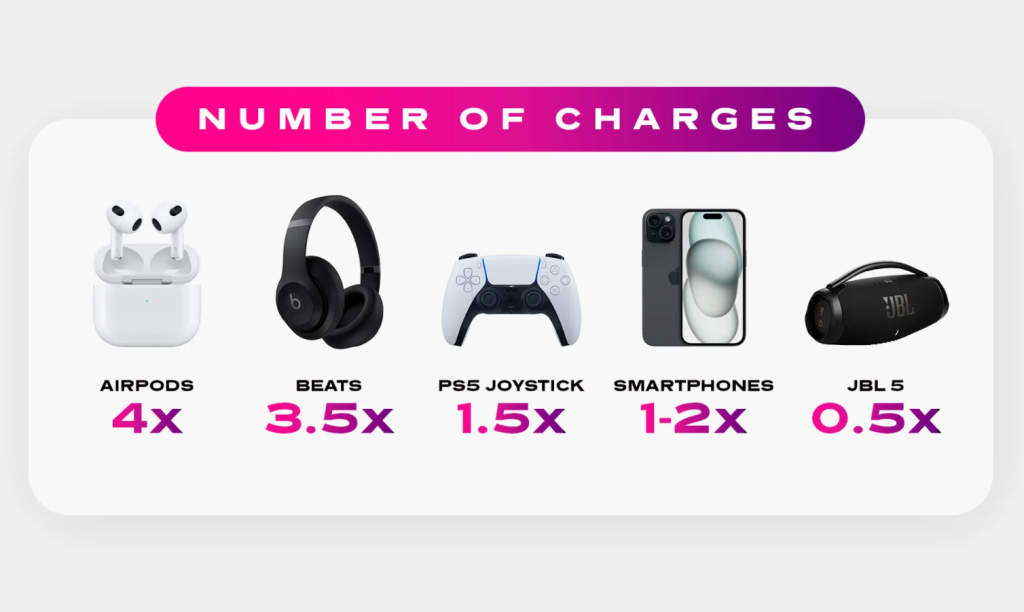
Why it matters: Context is everything here. For earbuds (typically 300–500mAh cases), this is multiple full charges. For a modern flagship phone, this is 40–75% of one charge. For a tablet, it’s a supplement, not a solution.
Real-world benefit: Legitimate emergency top-up for any device. Earbuds, fitness trackers, and older smartphones with smaller batteries will see better results.
Drawback: This will frustrate anyone who expects a traditional power bank experience. The Anker PowerCore 10K delivers over three times the capacity for a similar or lower price.
3. Universal Tip Compatibility
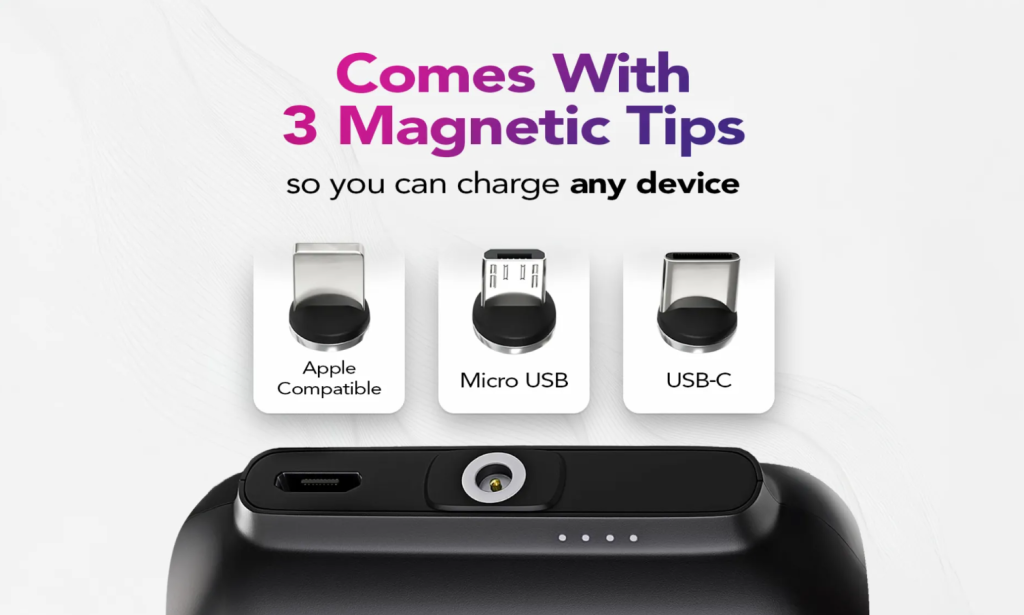
What it does: Includes USB-C, Lightning, and Micro-USB tips so the device can theoretically charge anything with a standard port.
Why it matters: One power bank for your phone, your partner’s phone, your earbuds, and legacy accessories.
Drawback: The tips require active management. If you’re the type to keep one cable in your bag, switching tips across devices adds a step that negates some of the convenience promise.
4. 3.0 Upgraded Magnets
What it does: The 2025 version significantly strengthened the magnet compared to 1.0 and 2.0 versions.
Why it matters: The most consistent complaint about earlier versions was disconnection during movement. The 3.0 directly addresses this.
Caveat: Independent lab testing data isn’t available – the improvement is based on manufacturer claims and corroborated user feedback.
Also Read: How to Pick a Power Bank That Actually Performs: The 2026 Expert Buying Guide
Performance Analysis
| Category | Score | Notes |
|---|---|---|
| Build Quality | 7/10 | Feels solid for the price; tip organizer improved in 3.0 |
| Ease of Use | 9/10 | Snap mechanism genuinely delivers on convenience promise |
| Reliability | 7/10 | 3.0 magnets more reliable; some users still report tip management issues |
| Durability | 6/10 | Small form factor means tips can be lost or broken |
| Charging Effectiveness | 6/10 | Adequate for emergency top-ups; disappointing for full charges |
| Customer Support | 8/10 | Multiple reports of Statik replacing faulty units without friction |
| User Experience | 8/10 | The snap mechanism feels premium and genuinely enjoyable to use |
| Value for Money | 6/10 | Competitive at ~$30 if you understand the use case; poor value if you expect traditional power bank performance |
Statik Snap-N-Charge Pros and Cons
| Pros | Cons |
|---|---|
| Genuinely the most convenient connection method in its class | 3,000mAh won’t fully charge most modern smartphones |
| Extremely light and pocketable (~60g) | Micro-USB input for recharging (outdated) |
| Works one-handed and in darkness | Proprietary tips can be lost or forgotten |
| 3.0 magnets hold during movement | Tips not fully interchangeable with other Statik products |
| Universal device compatibility via tip system | 10W output won’t fast-charge flagship devices |
| Good customer support and replacement policy | Relies on maintaining separate tips for each device type |
| Ideal for earbuds and smaller devices | Price-per-mAh is worse than competitors |
Statik Snap-N-Charge Benefits: What Users Actually Gain
The Snap-N-Charge’s real value isn’t measured in mAh – it’s measured in friction reduction. People who use it regularly report two consistent benefits:
Anxiety reduction: Having a backup that attaches in under a second changes the calculus of leaving the house with 40% battery. It becomes a genuine safety net rather than a bulky afterthought.
Multi-device flexibility: The tip system means one unit works across a household’s worth of devices – particularly useful for earbuds, which drain their cases quickly and benefit enormously from a quick top-up.
Statik Snap-N-Charge Drawbacks and Limitations: The Honest Version
There are several limitations that existing reviews understate:
The capacity math: A 3,000mAh battery, accounting for conversion inefficiency (typically 80–90% delivery efficiency), delivers approximately 2,400–2,700mAh to your device. A Samsung Galaxy S25 Ultra has a 5,000mAh battery. Do the math before purchasing.
Micro-USB input in 2026: This is genuinely awkward. In a world where USB-C dominates and Lightning is phasing out, needing a micro-USB cable to recharge your power bank means carrying a specific legacy cable or buying adapters. This alone disqualifies the Snap-N-Charge for minimalists who have already eliminated micro-USB from their kit.
Tip dependency: The magnetic tip must be in the device at the time you need to charge. If you forgot to put one in before you left home, the snap system provides no advantage over a regular cable.
Ecosystem confusion: Statik sells multiple products – the 360, the 360 Pro, and the Snap-N-Charge – with overlapping but incompatible accessory systems. Understanding what works with what requires more research than it should.
Who Should Buy Statik Snap-N-Charge?
Minimalist Travelers
If you travel light and hate cable clutter, this fits perfectly. It’s small enough to forget it’s in your pocket and the magnetic connection means you’re never hunting for a cable in an airport lounge. Best combined with a full-size power bank for longer trips – use the Snap-N-Charge for the hotel room, taxi, and gate.
Earbud and Small Device Users
The 3,000mAh capacity is generous relative to wireless earbud cases (most hold 300–500mAh). You can top up earbuds multiple times from one charge, which changes the utility calculation significantly.
Emergency-Only Buyers
If you typically maintain good battery habits but want a last-resort backup for dead-phone emergencies, the compact size and instant-connect system make this one of the better options available at the price.
Hospital and Accessibility Users
Multiple verified buyers highlight this use case: when charging cables are hard to reach due to mobility or placement issues, the magnetic snap system significantly reduces the effort required to maintain device charge.
Who Should Avoid Statik Snap-N-Charge?
Android users with large batteries: If you’re running a Galaxy S25 Ultra, Pixel 9 Pro XL, or any flagship with a 4,500–5,000mAh+ battery, the Snap-N-Charge will leave you frustrated. It provides a top-up, not a meaningful charge.
USB-C-only households: If you’ve already cleaned micro-USB from your accessories drawer, the Snap-N-Charge adds it back. That’s a meaningful inconvenience.
Power users needing fast charging: At 10W, this won’t satisfy anyone who uses 30W, 45W, or 65W fast charging on their device.
Budget buyers prioritizing capacity: For the same ~$30, you can find power banks with 10,000mAh from Anker or Ugreen. If raw capacity matters more than convenience, look there.
Product Comparison Table
| Feature | Statik Snap-N-Charge | Anker PowerCore 10K | Anker MagGo Nano (5K) | Baseus Magnetic 5K |
|---|---|---|---|---|
| Capacity | 3,000mAh | 10,000mAh | 5,000mAh | 5,000mAh |
| Output | 10W | 12W | 15W (Qi2) | 15W (Qi2) |
| Connection Method | Magnetic tip (wired) | USB-A cable | Wireless MagSafe | Wireless MagSafe |
| Input | Micro-USB | USB-C | USB-C | USB-C |
| iPhone Compatible | Yes (via tip) | Yes (via cable) | Yes (MagSafe, 12+) | Yes (MagSafe, 12+) |
| Android Compatible | Yes (USB-C tip) | Yes | Limited (no magnetic lock) | Limited |
| Weight | ~60g | ~180g | ~122g | ~100g |
| Price (approx.) | ~$30 | ~$22 | ~$45–55 | ~$35 |
| Best For | Emergency top-up, portability | Budget capacity | iPhone MagSafe users | iPhone MagSafe, budget |
| Micro-USB Input | Yes | No | No | No |
Best Alternatives
1. Anker PowerCore 10K (~$22)
If you need reliable capacity and don’t mind a cable, this is the most recommended budget power bank in its class. Over 10,000mAh, USB-C input, and Anker’s reliability track record. The trade-off: it’s heavier and requires a cable to connect. Best for: anyone prioritizing capacity over convenience.
2. Anker MagGo Nano 5K (~$45–55)
iPhone 12 and later users who want wireless magnetic charging should look here. At 5,000mAh with Qi2-certified 15W charging and USB-C input, it outperforms the Snap-N-Charge on every technical spec. It wirelessly snaps to the back of your phone with no tips required. The trade-off: it only works magnetically with MagSafe-compatible iPhones, and it costs more. Best for: iPhone users who want a wire-free experience.
3. Ugreen Magnetic Power Bank 10K (~$35)
Strong MagSafe alternative with 10,000mAh capacity, 4.4-star rating, and over 11,000 reviews on Amazon. Delivers full wireless charging for iPhones and includes a USB-C port for other devices. Best for: iPhone users wanting MagSafe at a lower price than Anker.
Statik Snap-N-Charge Buying Guide: What to Know Before You Purchase
Understand the use case first. The Snap-N-Charge is an emergency top-up device, not a travel power bank. If your mental model is “replace my wall charger while traveling,” this isn’t it. If your mental model is “have a last-resort backup that’s small enough to disappear into any bag,” it fits well.
Know your phone’s battery size. Check your phone’s battery capacity (easily searchable). Divide 3,000 by that number to estimate how much charge you’ll get. A phone with a 4,500mAh battery will receive approximately 55–65% charge from a Snap-N-Charge.
Assess your cable situation. If you’ve eliminated micro-USB from your daily kit, you’ll need a solution for recharging the bank itself. Factor that in.
Consider buying a multi-pack. The 3-pack pricing ($65 vs. $89 individual cost) makes sense if multiple family members or travel companions want one. One in a gym bag, one at the office, one in a travel kit — the use case multiplies well.
Check the tip organizer. The 3.0 version’s silicone tip organizer is tighter and more secure than earlier versions. If you’re buying used or old stock, check the version.
Expert Insights: Where the Snap-N-Charge Fits in the Market
The power bank market has bifurcated. On one side: high-capacity, high-speed banks for power users, dominated by Anker, Ugreen, and Baseus with 10,000–30,000mAh units and 30–140W charging. On the other: ultra-compact emergency units and wireless MagSafe banks for convenience-first users.
The Statik Snap-N-Charge competes in the second camp, but its magnetic tip approach is different from MagSafe competitors – it works with any device regardless of brand, which MagSafe banks cannot. That universal compatibility is the Snap-N-Charge’s genuine competitive moat.
The micro-USB input is genuinely puzzling from a product strategy standpoint. USB-C is universal, cheaper to integrate, and expected by consumers in 2026. This single design choice suggests either cost-cutting or a slow product iteration cycle, and it’s the primary reason the Snap-N-Charge feels dated despite the 3.0 branding.
The broader trend worth noting: magnetic attachment mechanisms (both wireless MagSafe and wired tip-based) are growing because they solve a real problem – fumbled cables and misaligned wireless pads. Statik identified this trend early. The question is whether they’ll iterate fast enough to stay relevant as MagSafe expands beyond iPhones.
Before Purchase
Common questions buyers have:
- “Is the magnetic connection strong enough?” – The 3.0 update specifically strengthened this. Multiple user reports confirm it holds during running and movement. Earlier versions had issues; the current version largely resolves them.
- “Will it work with my phone?” – Yes, via the appropriate tip. USB-C covers most Android phones and recent iPhones (iPhone 15+). Lightning covers iPhone 14 and earlier.
- “Is 3,000mAh enough?” – Depends on your phone. Sufficient for small phones and earbuds; inadequate for full charges on large-battery flagships.
During Evaluation
Compare the Snap-N-Charge against:
- Traditional cable banks (if capacity matters more than convenience)
- MagSafe banks (if you use an iPhone 12+)
- Your own usage habits (do you regularly hit low battery, or is this a rare emergency?)
After Purchase
Setup tips: Put the relevant tip into your device before you need to use the bank. If you forget, you still have a backup battery – you’ll just need to connect via the cable that comes in the box. Keep extra tips in separate bags if you carry multiple devices.
Recharging: Connect via micro-USB when the LED indicator shows low charge. Keep a micro-USB cable wherever you typically store the bank overnight.
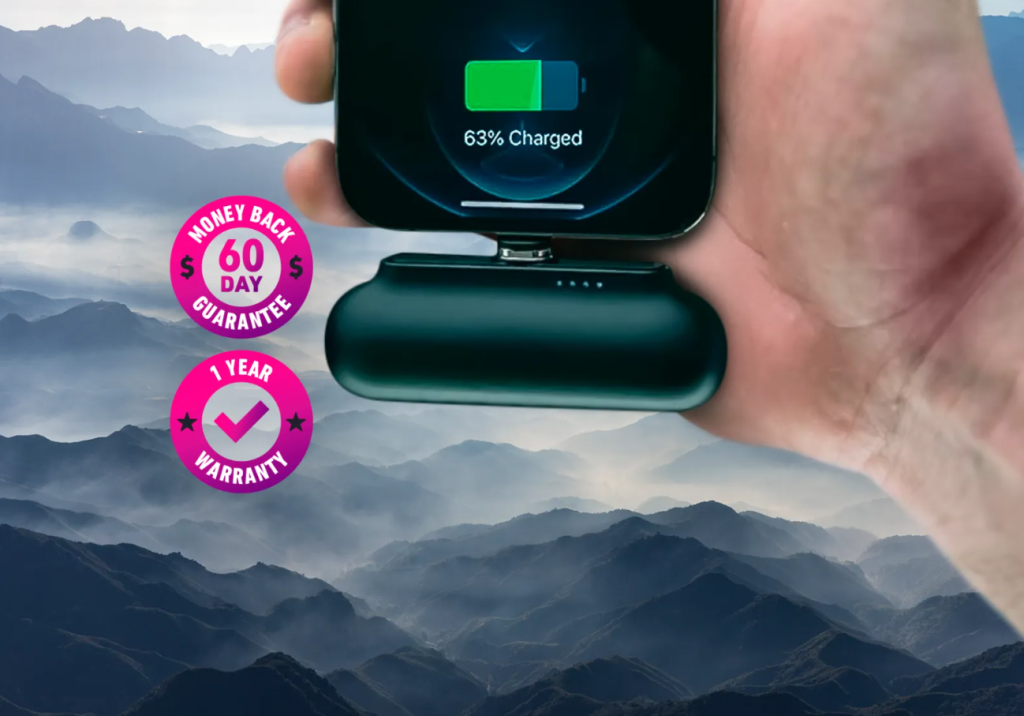
Warranty and Returns: Statik claims a 100% satisfaction guarantee with free returns. Multiple user reports corroborate that Statik has replaced faulty units without resistance, including a verified eBay reviewer who noted a replacement for a unit that failed weeks after purchase.
Common Complaints: (1) Insufficient capacity for large-battery phones. (2) Micro-USB charging. (3) Tip management complexity. (4) Earlier versions had magnet reliability issues (addressed in 3.0).
Realistic Expectations: This is not a product you charge from 5% to 100%. It is a product you use to stop an emergency from becoming a crisis. Reframe expectations accordingly and satisfaction rates rise significantly.
The Statik Snap-N-Charge is a compact 3,000mAh magnetic power bank that uses a proprietary tip system to enable cable-free charging connection. It is best suited for emergency top-ups and small-device charging, not as a primary travel power bank. The 3.0 version improves magnet strength and tip organization. It is universally compatible but recharges via outdated micro-USB.
Statik Snap-N-Charge Key Highlights
- 3,000mAh capacity: sufficient for ~40–75% charge on modern smartphones, multiple full charges for earbuds
- 10W output; adequate but not fast-charging
- Magnetic tip system covers USB-C, Lightning, and Micro-USB devices
- 3.0 version (2025) has stronger magnets and improved tip organizer
- Recharges via micro-USB – a significant downside in 2026
- ~60g weight; one of the lightest power banks available
- Priced at ~$30 single; $65 for 3-pack
- Customer support reportedly responsive and willing to replace faulty units
- Best compared against MagSafe power banks for iPhone users, Anker PowerCore for capacity-focused buyers
Frequently Asked Questions About Statik Snap-N-Charge
What devices does the Statik Snap-N-Charge work with?
Any device with a USB-C, Lightning (Apple), or Micro-USB port. Included tips cover all three connector types, making it compatible with virtually all modern smartphones, earbuds, fitness trackers, and small accessories.
How much will it charge my phone?
This depends on your phone’s battery size. For a phone with a 3,000mAh battery (e.g., older iPhones), you can expect close to a full charge. For larger batteries like the iPhone 16 Pro Max (4,685mAh) or Samsung Galaxy S25 Ultra (5,000mAh), expect roughly 45–60% of a full charge.
Is the Statik Snap-N-Charge worth the price?
Yes, if you understand it’s an emergency top-up device. No, if you need a full-charge power bank. At ~$30, the convenience premium is reasonable for the use case it’s designed for.
Does the magnetic connection stay secure while moving?
According to the 3.0 product specs and consistent user feedback, yes – the upgraded magnets hold during running, commuting, and general movement. This was a known issue in earlier versions (1.0 and 2.0).
Can I use the Snap-N-Charge without the tip in my device?
Yes. Each unit includes a short cable that can be used as a traditional wired connection without the magnetic tip. The tip system is the premium feature, but it’s not the only way to use it.
What is the Snap-N-Charge 3.0?
The 2026 updated version featuring a stronger magnetic connection, an improved silicone tip organizer to prevent tip loss, and battery improvements compared to earlier versions.
How do I recharge the Snap-N-Charge itself?
Via micro-USB input. This is the product’s most criticized design choice – micro-USB cables are increasingly rare in modern households. Plan accordingly.
How long does it take to recharge the Snap-N-Charge?
Not officially disclosed. Given the 3,000mAh capacity and typical micro-USB input speeds (~5W), expect approximately 60–90 minutes for a full recharge.
Is the Snap-N-Charge airport safe?
Yes. At 3,000mAh (approximately 11.1Wh), it falls well below the 100Wh limit for carry-on lithium batteries set by most aviation authorities globally.
How does it compare to Apple’s MagSafe Battery Pack?
Apple’s MagSafe battery works wirelessly with iPhone 12+ and offers tighter ecosystem integration, but it is iPhone-exclusive and significantly more expensive. The Snap-N-Charge is universally compatible via its tip system and cheaper, but requires tip management and offers lower capacity.
Does it work with iPhone 15 and later (USB-C)?
Yes, via the USB-C tip. The Lightning tip works for iPhone 14 and earlier.
Is the tip easy to lose?
Small enough to misplace, yes. The 3.0 version’s improved silicone organizer helps keep tips together. Consider attaching the tip organizer to a keychain or cable pouch.
What’s the warranty?
Statik advertises a 100% satisfaction guarantee with free returns. Based on user reports, they have honored replacements for defective units.
Can I use it to charge tablets?
Yes, though effectiveness will be limited. For a device like the Surface Pro 10, Statik estimates a 40-50% charge. For iPads with larger batteries, expect less.
Is this better than a traditional power bank?
Better in convenience; worse in capacity. The right question is whether you value the cable-free connection enough to accept less capacity and a higher price-per-mAh. For many people, that trade-off is worth it.
Final Verdict
The Statik Snap-N-Charge is a product that does exactly what it promises – if you read that promise carefully. It’s not a power bank designed to carry you through a full day of heavy use. It’s an emergency anchor, a “get me through the next two hours” device in a package that genuinely disappears into any pocket or bag.
The magnetic snap system is the real differentiator, and the 3.0 version has meaningfully improved its reliability. The universal tip compatibility gives it something MagSafe alternatives don’t: it works with any device, not just recent iPhones.
The drawbacks are real and non-trivial. Micro-USB input is a 2019 design choice in a 2026 product. The 3,000mAh capacity will leave large-battery phone users underwhelmed. And the tip management system introduces friction that partially undercuts the convenience promise.
Buy it if: you want the smallest, lightest emergency backup that works with any device and values connection convenience over capacity.
Skip it if: you need a full charge, you’ve already cut micro-USB from your life, or you use a recent iPhone and can access MagSafe alternatives for similar money.
For most people, the Anker PowerCore 10K is a better all-around value. For iPhone users wanting magnetic convenience, the Anker MagGo Nano or Ugreen Magnetic 5K are technically superior. But for the specific user who wants a palm-sized, always-in-pocket emergency charger that works instantly across any device – the Snap-N-Charge 3.0 earns its place.