
Are you struggling to maintain a consistent meditation practice? Do you feel overwhelmed by the dozens of mindfulness apps available today?
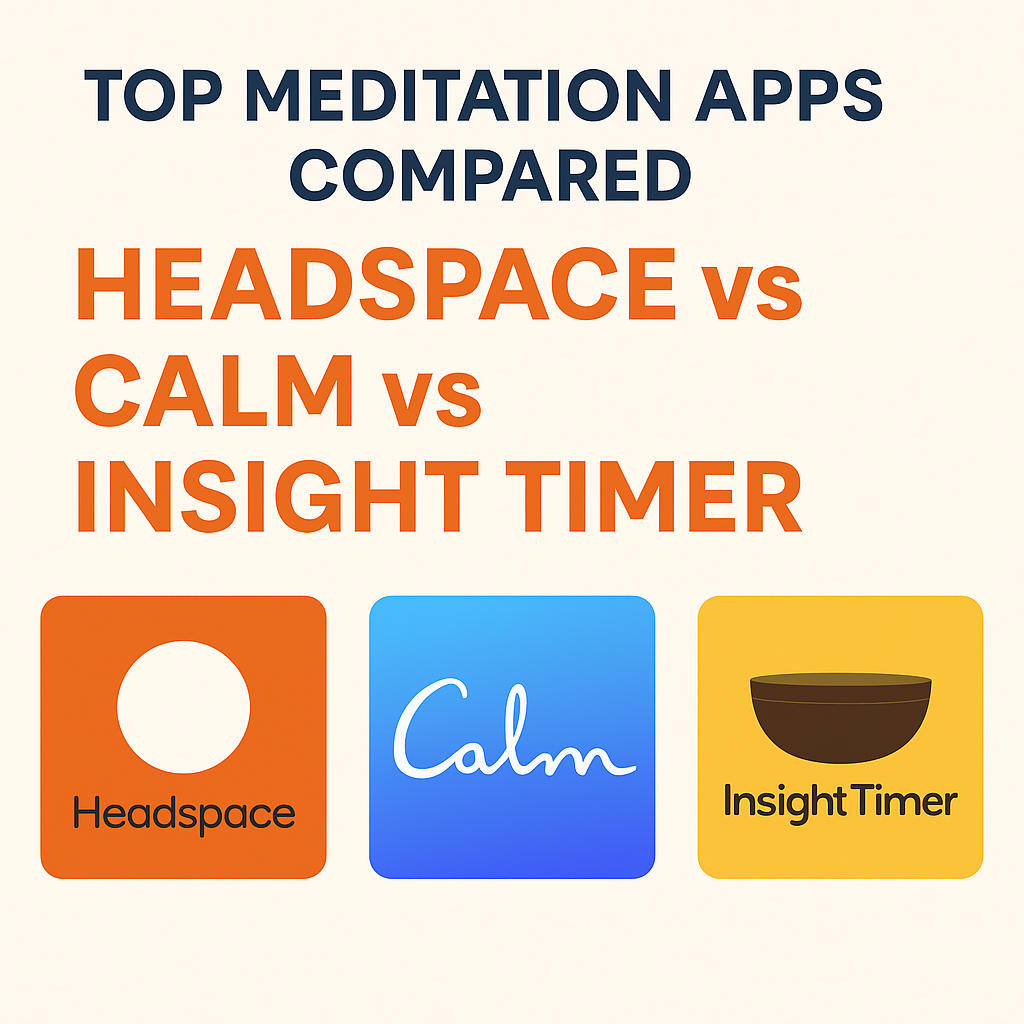
You’re not alone. With over 10,000 meditation and wellness apps flooding the digital marketplace, choosing the right meditation app can feel more stressful than the practice itself. The good news is that three apps have risen above the rest: Headspace, Calm, and Insight Timer.
In this comprehensive comparison guide, you’ll discover the key differences between these leading meditation platforms, their unique features, pricing structures, and most importantly, which app aligns best with your personal wellness goals. Whether you’re a complete beginner seeking guided sessions or an experienced practitioner looking for variety, this detailed review will help you make an informed decision.
Let’s dive into the world of digital mindfulness and find your perfect meditation companion.
Understanding Meditation Apps: Why They Matter for Your Wellness Journey
Meditation apps have revolutionized how millions of people access mindfulness practices. These digital platforms bring ancient meditation techniques directly to your smartphone, making mental wellness accessible anytime, anywhere.
Research shows that regular meditation can reduce stress by up to 30%, improve sleep quality, enhance focus, and boost overall emotional wellbeing. However, the challenge lies in consistency. That’s where meditation apps excel by providing structure, guidance, and accountability.
The three apps we’re comparing today represent different philosophies and approaches to digital meditation. Understanding these differences will help you select the platform that resonates with your lifestyle and goals.
Headspace: The Science-Backed Meditation Platform
What Makes Headspace Unique
Headspace, co-founded by former Buddhist monk Andy Puddicombe in 2010, pioneered the modern meditation app movement. The platform emphasizes evidence-based meditation practices supported by scientific research.
The app’s signature feature is its structured, course-based approach that guides users from foundational basics through advanced techniques. Headspace feels like having a personal meditation teacher in your pocket.
Key Features of Headspace
Core Meditation Programs:
- Basics course: Perfect for beginners learning meditation fundamentals
- Themed courses: Stress management, sleep, focus, anxiety, and relationships
- Daily meditation sessions ranging from 3 to 20 minutes
- SOS exercises for moments of acute stress or panic
Additional Wellness Content:
- Sleep sounds and sleepcasts (bedtime stories for adults)
- Focus music designed to enhance productivity
- Move Mode: Guided exercises combining movement and mindfulness
- Mindful workouts and yoga sessions
User Experience:
- Clean, intuitive interface with playful animations
- Progress tracking and streak counters
- Personalized recommendations based on your goals
- Available on iOS, Android, and web platforms
Headspace Pricing Structure
Headspace offers several subscription options designed for different budgets:
- Free Version: Limited content including basics and select meditations
- Monthly Subscription: $12.99 per month
- Annual Subscription: $69.99 per year (saves approximately 55%)
- Family Plan: $99.99 per year for up to 6 accounts
- Student Discount: Available with verification
Many health insurance providers now offer Headspace as a covered benefit, so check with your insurer before purchasing.
Who Should Choose Headspace
Headspace works exceptionally well for:
- Complete beginners who need structured guidance
- People who prefer science-backed approaches
- Users seeking variety beyond just meditation (sleep, movement, focus)
- Anyone who responds well to gamification and progress tracking
- Corporate teams (Headspace offers business subscriptions)
Headspace Pros and Cons
Advantages:
- Highly structured learning path ideal for beginners
- Backed by clinical research and partnerships with universities
- Excellent animation and production quality
- Strong focus on practical application in daily life
- Great customer support and regular content updates
Disadvantages:
- Higher price point compared to competitors
- Limited free content after trial period
- Less variety for advanced practitioners
- Fewer guest teachers compared to other platforms
Calm: The Premium Sleep and Relaxation App
What Sets Calm Apart
Calm launched in 2012 and quickly became known as the go-to app for sleep improvement. While offering comprehensive meditation features, Calm truly shines in its sleep-focused content and celebrity collaborations.
The app won Apple’s App of the Year in 2017 and has since expanded into a full-spectrum mental wellness platform with content for anxiety reduction, stress management, and personal growth.
Key Features of Calm
Meditation Library:
- Daily Calm: A new 10-minute meditation every day
- Masterclass sessions: 7 to 21-day programs on specific topics
- Guided meditations from 3 to 25 minutes
- Unguided timed meditations with ambient sounds
- Breathing exercises and body scan meditations
Sleep Stories:
- Over 200 bedtime stories narrated by celebrities
- Voices include Matthew McConaughey, Stephen Fry, and Harry Styles
- Sleep music and soundscapes specifically engineered for rest
- Exclusive content updated weekly
Additional Content:
- Daily Movement: Gentle stretching and mindful movement
- Music section: Focus, relaxation, and sleep playlists
- Calm Body: Full-length workouts and yoga classes
- Wisdom section: Inspirational stories and personal growth content
User Interface:
- Beautiful nature scenes and calming visuals
- Customizable home screen
- Integration with Apple Health and Google Fit
- Offline download capability for premium subscribers
Calm Pricing Options
Calm’s pricing structure is straightforward:
- Free Version: Limited meditations, one Daily Calm, and select sleep stories
- Monthly Plan: $14.99 per month
- Annual Plan: $69.99 per year
- Lifetime Subscription: $399.99 one-time payment
- Family Plan: Not currently available
Calm frequently offers promotional pricing, especially during holidays or wellness-focused periods.
Who Should Choose Calm
Calm is the ideal choice for:
- People struggling with sleep issues or insomnia
- Users who enjoy celebrity voices and premium production
- Anyone seeking beautiful, immersive app design
- Those interested in personal growth content beyond meditation
- Individuals who prefer shorter, flexible session lengths
Calm Pros and Cons
Advantages:
- Unmatched sleep content library
- Celebrity narrators add entertainment value
- Stunning visual design and user experience
- Great variety beyond traditional meditation
- Strong brand recognition and reliability
Disadvantages:
- Most expensive monthly subscription
- No family plan option
- Less structured for complete beginners
- Some content feels commercial rather than authentic
- Limited teacher diversity
Insight Timer: The Free Community-Driven Platform
What Makes Insight Timer Different
Insight Timer launched in 2009 and takes a radically different approach from its competitors. Instead of curated, proprietary content, Insight Timer operates as a platform connecting users with thousands of independent meditation teachers worldwide.
With over 130,000 free guided meditations, Insight Timer is the largest free meditation library on the planet. The app emphasizes community, diversity of teaching styles, and accessibility.
Key Features of Insight Timer
Massive Free Library:
- 130,000+ free guided meditations
- 15,000+ teachers from diverse traditions and backgrounds
- Meditations in over 100 languages
- Topics covering every aspect of mindfulness and spirituality
- New content added daily by community teachers
Community Features:
- Global meditation timer showing who’s meditating with you worldwide
- Friends and messaging capability
- Groups focused on specific interests or locations
- Live events and streams from teachers
- Discussion forums and circles
Customization Options:
- Meditation timer with interval bells
- Extensive ambient sounds and music library
- Customizable background sounds
- Statistics and milestone tracking
- Personal journal integration
Learning Programs:
- Teacher-led courses (mix of free and paid)
- Structured pathways for specific goals
- Daily insight quotes and teachings
Insight Timer Pricing
Insight Timer’s approach to pricing is revolutionary:
- Free Version: Access to 130,000+ meditations, timer, and basic features (no payment required)
- Member Plus: $9.99 per month or $59.99 per year
Member Plus Benefits:
- Offline listening
- Advanced player controls
- Repeat favorite meditations
- Skip forward/backward
- High-quality audio
- Support independent teachers
Who Should Choose Insight Timer
Insight Timer is perfect for:
- Budget-conscious users who want quality content free
- Experienced practitioners seeking teacher variety
- People interested in exploring different meditation traditions
- Users who value community connection
- Anyone wanting to support independent teachers
Insight Timer Pros and Cons
Advantages:
- Unbeatable free content library
- Incredible teacher and style diversity
- Strong community features
- Most affordable premium option
- No commitment required to access core features
- Supports meditation teachers financially
Disadvantages:
- Can feel overwhelming with too many choices
- Inconsistent audio quality across teachers
- Less structured learning path for beginners
- Interface can feel cluttered
- Some free content includes promotional elements
Head-to-Head Comparison: Headspace vs Calm vs Insight Timer
Feature Comparison Table
| Feature | Headspace | Calm | Insight Timer |
|---|---|---|---|
| Free Content | Limited basics | Limited selection | 130,000+ meditations |
| Monthly Price | $12.99 | $14.99 | $9.99 (optional) |
| Annual Price | $69.99 | $69.99 | $59.99 (optional) |
| Beginner Friendly | Excellent | Good | Moderate |
| Sleep Content | Good | Excellent | Very Good |
| Teacher Variety | Limited | Limited | Extensive |
| Courses/Programs | Structured | Themed | Mix of free/paid |
| Community Features | Basic | Minimal | Extensive |
| Offline Access | Premium only | Premium only | Member Plus |
| Languages | 8+ languages | Limited | 100+ languages |
| Scientific Backing | Strong | Moderate | Varies by teacher |
| Production Quality | Very High | Very High | Varies |
Best for Beginners: The Clear Winner
Winner: Headspace
For absolute beginners, Headspace provides the most structured, hand-holding experience. The Basics course methodically teaches fundamental techniques without overwhelming users with choices. The app explains what meditation is, why it matters, and how to build a sustainable practice.
Calm comes in second with its Daily Calm feature providing a gentle introduction, while Insight Timer’s vast library can paralyze beginners with decision fatigue.
Best for Sleep: Sweet Dreams Winner
Winner: Calm
When it comes to sleep-specific content, Calm dominates the category. The Sleep Stories feature, narrated by soothing celebrity voices, has helped millions fall asleep faster. The platform’s focus on creating drowsy, peaceful content shows in every detail.
Headspace offers solid sleep content through Sleepcasts, and Insight Timer has thousands of sleep meditations, but neither matches Calm’s specialized expertise in this area.
Best Value for Money
Winner: Insight Timer
With 130,000+ free meditations, Insight Timer offers unparalleled value. Even without paying anything, users access more content than they could consume in multiple lifetimes. The optional Member Plus subscription at $59.99 annually is simply icing on the cake.
For users who want premium experiences with all features unlocked, Headspace and Calm tie at $69.99 per year, both offering excellent value despite the higher price point.
Best for Variety and Exploration
Winner: Insight Timer
No platform comes close to Insight Timer’s diversity. With teachers from Buddhist, Hindu, secular, Christian, and countless other traditions, users can explore meditation’s full spectrum. This variety helps practitioners find teachers who truly resonate with them.
Headspace and Calm offer quality over quantity, with carefully curated content that maintains consistent standards but limited exploration opportunities.
Best User Experience and Design
Winner: Calm
Calm wins the design award with its gorgeous nature scenes, smooth animations, and intuitive interface. Every interaction feels thoughtfully crafted. The app feels premium and luxurious, matching its positioning in the market.
Headspace follows closely with its playful, friendly design. Insight Timer’s interface, while functional, shows its community-platform roots with a busier, less polished feel.
Making Your Decision: Which Meditation App Is Right for You?
Choose Headspace If:
You’re new to meditation and want structured guidance that builds progressively. You appreciate science-backed approaches and enjoy gamification elements like streaks and progress tracking. You’re willing to invest in a premium experience with consistent quality. You want meditation plus complementary wellness features like mindful movement and focus music.
Best for: Beginners, busy professionals, science-minded individuals, workplace wellness programs.
Choose Calm If:
Sleep improvement is your primary goal. You enjoy premium production values and celebrity content. Beautiful design and user experience matter to you. You prefer shorter, flexible meditation sessions. You’re interested in personal growth content beyond meditation basics.
Best for: Sleep-challenged individuals, premium experience seekers, those who love audiobook-style content, users wanting all-in-one wellness.
Choose Insight Timer If:
You want extensive free content without commitment. You’re an experienced meditator seeking variety. Community connection enhances your practice. You appreciate diverse teaching styles and traditions. Budget is a significant consideration. You want to support independent meditation teachers.
Best for: Budget-conscious users, experienced practitioners, spiritual explorers, community-oriented meditators, multilingual users.
Tips for Maximizing Your Meditation App Experience
Start Small and Build Consistency
Don’t feel pressured to meditate for 30 minutes daily from day one. Start with just 3 to 5 minutes and gradually increase duration as the habit solidifies. Consistency matters more than duration.
Experiment During Free Trials
All three apps offer free trials of their premium features. Use this time intentionally to explore different teachers, styles, and session lengths. Take notes on what resonates with you.
Create Environmental Cues
Set up your meditation space before opening the app. Light a candle, sit on a dedicated cushion, or wear specific comfortable clothing. These environmental cues signal to your brain that it’s meditation time.
Schedule Your Practice
Treat meditation like any important appointment. Set calendar reminders and choose a consistent time, whether that’s first thing in the morning, during lunch, or before bed.
Mix and Match Content Types
Don’t limit yourself to one meditation style. Alternate between guided sessions, breathing exercises, and silent sitting. This variety keeps your practice fresh and develops different skills.
Join Challenges and Programs
Both Headspace and Calm offer structured challenges and programs. Insight Timer has community groups and events. Participating creates accountability and motivation.
Track Your Progress
Use the built-in statistics and journaling features. Noticing improvements in mood, sleep, or stress levels reinforces your commitment to the practice.
The Science Behind Meditation Apps: Do They Actually Work?
Research-Backed Benefits
Multiple peer-reviewed studies have examined meditation app effectiveness. Research published in journals like JAMA Internal Medicine and the Journal of Medical Internet Research shows that app-based meditation can:
- Reduce perceived stress levels by 20 to 30%
- Improve sleep quality and reduce insomnia symptoms
- Decrease symptoms of anxiety and depression
- Enhance attention span and working memory
- Lower blood pressure in hypertensive individuals
- Reduce inflammation markers in the body
A 2019 study specifically examining Headspace found that just 10 days of use significantly reduced stress and increased positive mood states. Similar research on mindfulness apps generally shows consistent benefits across platforms.
Why Apps Work for Meditation
Meditation apps succeed because they address common barriers to practice:
Accessibility: No need to attend classes or find teachers locally. Meditation is available whenever and wherever you need it.
Guidance: Expert instruction helps beginners avoid common mistakes and discouragement. Proper technique makes meditation more effective.
Variety: Different moods and needs require different approaches. Apps provide options for whatever you’re experiencing.
Accountability: Streaks, reminders, and progress tracking create gentle motivation to maintain consistency.
Affordability: Compared to in-person classes or retreats, apps provide professional guidance at a fraction of the cost.
Important Considerations
While meditation apps offer genuine benefits, they’re not replacements for professional mental health treatment. If you’re experiencing severe anxiety, depression, or trauma, work with a licensed therapist alongside any meditation practice.
Apps work best when combined with other healthy lifestyle factors like adequate sleep, regular exercise, social connection, and proper nutrition.
Alternative and Complementary Meditation Apps Worth Considering
While Headspace, Calm, and Insight Timer dominate the market, several other apps deserve mention:
Ten Percent Happier
Created by ABC news anchor Dan Harris after experiencing a panic attack on live television, this app focuses on skeptical beginners. It features well-known meditation teachers like Joseph Goldstein and Sharon Salzberg. The app emphasizes practical meditation for real-world stress without any “woo-woo” elements.
Price: $99.99 per year
Waking Up
Created by neuroscientist and philosopher Sam Harris, Waking Up takes a deeply philosophical approach to meditation. The app explores consciousness, free will, and the nature of self through meditation and theory lessons.
Price: $99.99 per year (free for those who can’t afford it)
Simple Habit
Designed for busy people, Simple Habit offers 5-minute meditations tailored to specific situations like commuting, walking, or before meetings. The app features diverse teachers and focuses on on-the-go mindfulness.
Price: $11.99 per month or $89.99 per year
Balance
Using adaptive technology, Balance creates personalized meditation programs that evolve based on your feedback and progress. The app asks daily questions to adjust recommendations.
Price: Free for the first year, then $11.99 per month or $69.99 per year
Conclusion: Finding Your Path to Mindfulness
Choosing between Headspace, Calm, and Insight Timer ultimately depends on your personal preferences, budget, and meditation goals. There’s no universally “best” app because each serves different needs brilliantly.
Quick Recommendation Guide:
- For structured learning: Headspace
- For sleep improvement: Calm
- For free content and variety: Insight Timer
- For premium experience: Calm
- For value: Insight Timer
- For beginners: Headspace
- For experienced practitioners: Insight Timer
The good news is that all three apps offer free trials or free versions, allowing you to test-drive before committing. Many successful meditators use multiple apps, choosing different platforms for different purposes throughout their journey.
Remember, the best meditation app is the one you’ll actually use consistently. Start with one, give it at least two weeks of daily practice, and notice how you feel. Your mind, body, and overall wellbeing will thank you.
Ready to begin your meditation journey? Download one of these apps today and take the first step toward a calmer, more centered you. The peace you’re seeking is just a few mindful breaths away.
FAQs About Top Meditation Apps Compared
Can I use meditation apps if I’ve never meditated before?
Absolutely! Meditation apps are specifically designed with beginners in mind. Headspace, Calm, and Insight Timer all offer introductory content that teaches basic techniques from scratch. You don’t need any prior experience, special equipment, or flexibility. Simply download the app, find a quiet spot, and follow the guided instructions. Most beginners find apps less intimidating than joining in-person classes. Start with short 3 to 5 minute sessions and gradually build from there. The apps will guide you through proper posture, breathing techniques, and what to expect during meditation.
How long does it take to see benefits from using meditation apps?
Many users report feeling calmer and more relaxed after even a single meditation session. However, significant and lasting changes typically emerge after 2 to 4 weeks of consistent daily practice. Research shows that meditating for just 10 minutes daily for 8 weeks can create measurable changes in brain structure, particularly in areas related to memory, stress regulation, and empathy. Sleep improvements may occur within the first week, while benefits like reduced anxiety and improved focus typically become noticeable after 3 to 4 weeks. The key is consistency rather than duration. Short daily practice beats occasional long sessions every time.
Are meditation apps worth paying for when free options exist?
This depends on your priorities and budget. Insight Timer proves you can access world-class meditation content completely free. However, paid subscriptions to Headspace and Calm offer benefits that justify the cost for many users: structured learning paths, higher production quality, offline access, sleep-specific content, and consistent user experience. Think of it like the gym—you can exercise free at home or in parks, but many people benefit from the structure, equipment, and motivation a paid gym provides. Try the free versions first, then upgrade if you find yourself using the app daily and wanting more features.
Can I cancel my meditation app subscription anytime?
Yes, all three apps allow you to cancel subscriptions at any time without penalties. If you subscribe through the App Store or Google Play, you cancel through those platforms rather than within the app itself. When you cancel, you typically retain access until the end of your current billing period. Both Headspace and Calm offer refunds within certain timeframes if you’re unsatisfied. Before purchasing an annual subscription, test the monthly option first to ensure the app meets your needs. Many apps also offer extended free trials during promotional periods, giving you more time to evaluate before committing financially.
Will meditation apps work if I have trouble focusing or sitting still?
Yes! Difficulty focusing is exactly why meditation practice helps, and apps are designed for restless minds. Everyone’s mind wanders during meditation—it’s not a sign of failure but a normal part of the process. Apps like Headspace specifically address fidgeting and distraction with short sessions and practical tips. If sitting still feels impossible, try walking meditations, body scan exercises, or movement-based mindfulness available in all three apps. Start with just 3 minutes, and remember that meditation isn’t about achieving perfect stillness but about noticing when your mind wanders and gently bringing attention back. The “restless mind” isn’t a disqualification—it’s the starting point for everyone who meditates.