
Do you find yourself hunching over your desk, phone, or laptop for hours each day? You’re not alone. Studies suggest that nearly 80% of office workers experience posture-related discomfort at some point in their careers.
Poor posture isn’t just about looking slouched. It can lead to persistent neck pain, shoulder tension, lower back discomfort, and even headaches. The modern lifestyle, with its endless screen time and sedentary habits, has made posture correction devices more popular than ever.
But with so many options flooding the market, how do you choose the right one?
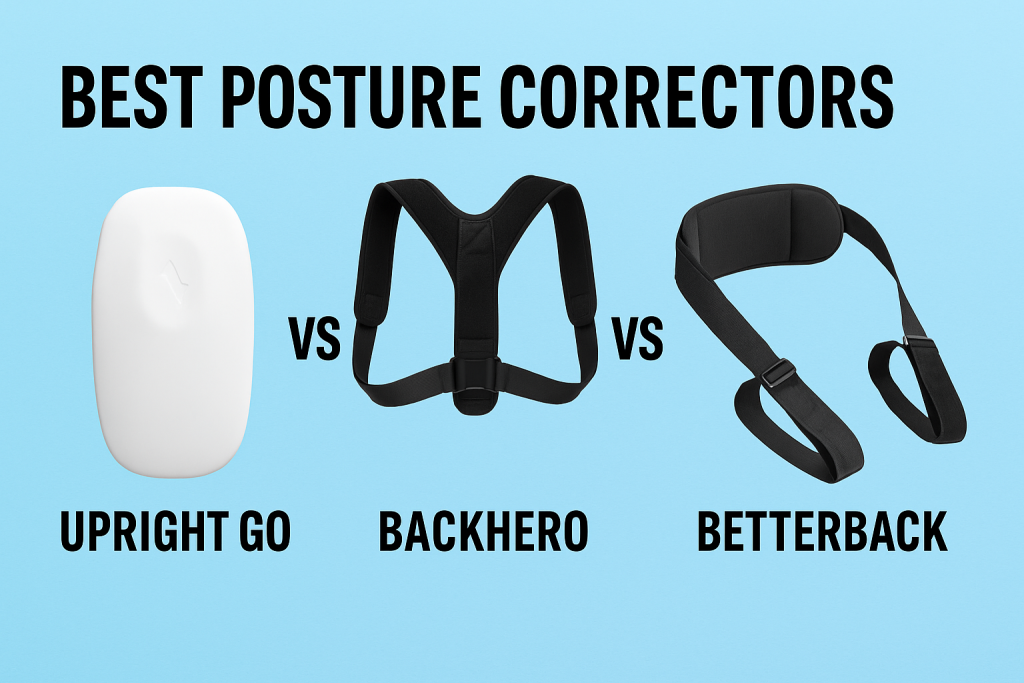
In this comprehensive guide, we’ll compare three leading posture correction solutions: Upright Go, BackHero, and BetterBack. We’ll examine their features, effectiveness, user feedback, and value for money to help you make an informed decision.
By the end of this article, you’ll know exactly which posture corrector aligns with your lifestyle, budget, and correction goals.
Understanding Posture Correction: The Basics
Before diving into product comparisons, let’s establish what posture correction actually means and why it matters.
What Is Posture Correction?
Posture correction involves training your body to maintain proper spinal alignment while sitting, standing, or moving. Good posture means:
- Your ears align with your shoulders
- Your shoulders sit back and relaxed
- Your spine maintains its natural curves
- Your hips remain level
- Your knees point straight ahead
Common Posture Problems People Face
Modern lifestyles contribute to several posture issues:
- Forward head posture (text neck): Head jutting forward from excessive phone use
- Rounded shoulders: Shoulders rolling inward from computer work
- Anterior pelvic tilt: Lower back arching excessively
- Slouching: General slumping while seated
How Posture Correctors Work
Posture correctors use different approaches:
- Physical support: Braces and straps that physically pull shoulders back
- Biofeedback devices: Smart sensors that alert you when you slouch
- Ergonomic aids: Products that improve sitting mechanics
Each approach has advantages depending on your specific needs and preferences.
Upright Go: The Smart Biofeedback Solution
What Is Upright Go?
Upright Go is a small, wearable posture training device that attaches to your upper back. Unlike traditional braces, it uses gentle vibrations and smartphone connectivity to train you toward better posture habits.
The device comes in two versions: Upright Go 2 and Upright Go S, both offering real-time posture tracking.
Key Features of Upright Go
Smart Vibration Feedback The device gently vibrates when you slouch, creating immediate awareness without being intrusive during meetings or calls.
Mobile App Integration Track your daily posture statistics, set goals, and monitor improvement over time through an intuitive smartphone application.
Training Programs Customizable training sessions help you gradually build better posture habits, starting with short intervals and progressing to longer periods.
Compact and Discreet At just 1.5 inches tall, the device remains virtually invisible under clothing, making it suitable for professional environments.
Upright Go Specifications
| Feature | Details |
|---|---|
| Weight | 10 grams |
| Battery Life | Up to 40 hours (tracking mode) |
| Connectivity | Bluetooth |
| Compatibility | iOS and Android |
| Wearing Time | Start with 30 minutes, build to full day |
| Adhesive Pads | Reusable, need replacement every 7-10 days |
Pros of Upright Go
- Discreet design that works with any outfit
- Creates lasting behavioral change through awareness training
- No restrictive straps or uncomfortable bracing
- Detailed progress tracking and analytics
- Suitable for office, home, and travel use
- Multiple sensitivity settings for personalization
Cons of Upright Go
- Requires ongoing adhesive pad purchases
- Battery needs regular charging
- Learning curve with app setup
- May not provide immediate physical support for severe issues
- Relies on smartphone for full functionality
- Higher upfront cost compared to basic braces
Who Should Choose Upright Go?
Upright Go works best for:
- Tech-savvy individuals who appreciate data tracking
- People with mild to moderate posture concerns
- Office workers seeking discreet correction
- Those who want to build long-term habits rather than rely on physical support
- Users comfortable with smartphone apps and wearable technology
Real User Experiences
Many users report noticeable improvements within 2-3 weeks of consistent use. The gentle vibration reminder helps create mindfulness about posture without feeling punitive.
However, some users mention the adhesive pads can become an ongoing expense, and the device requires discipline to wear consistently.
BackHero: The Supportive Brace Approach
What Is BackHero?
BackHero is a wearable posture corrector brace designed to physically pull your shoulders back into proper alignment. It uses adjustable straps and a back panel to provide continuous support throughout the day.
This approach focuses on immediate physical correction rather than gradual training.
Key Features of BackHero
Adjustable Strap System Customizable tension allows you to gradually increase correction as your muscles adapt and strengthen.
Breathable Materials The brace uses lightweight, moisture-wicking fabric to prevent discomfort during extended wear.
Upper Back Support Panel A reinforced panel provides targeted support to the thoracic spine region where most posture issues originate.
Universal Sizing One-size-fits-most design with extensive adjustability for different body types and sizes.
BackHero Specifications
| Feature | Details |
|---|---|
| Material | Neoprene and elastic blend |
| Size Range | Chest circumference 28-48 inches |
| Recommended Wear Time | 20-30 minutes initially, up to 2-3 hours |
| Care Instructions | Hand wash, air dry |
| Warranty | 30-day money-back guarantee |
| Price Range | Budget-friendly ($20-$40) |
Pros of BackHero
- Affordable entry point for posture correction
- Immediate physical support and alignment
- No batteries, charging, or technology required
- Can be worn over or under clothing
- Helps retrain muscle memory over time
- No ongoing costs or replacement parts
Cons of BackHero
- May be visible under tight-fitting clothes
- Can feel restrictive during initial use
- Potential for muscle dependency if worn too long
- May cause discomfort in underarm areas
- Less discreet than electronic alternatives
- No progress tracking or data collection
Who Should Choose BackHero?
BackHero suits:
- Budget-conscious shoppers seeking affordable solutions
- People who prefer physical support over technology
- Those with moderate posture issues requiring immediate correction
- Users who don’t want to manage apps or charging
- Individuals seeking a simple, straightforward approach
Real User Experiences
Users appreciate the immediate feedback from physical correction. Many notice they naturally sit straighter even when not wearing the brace after several weeks of use.
Some users find the underarm straps uncomfortable during extended wear and recommend starting with shorter sessions to build tolerance.
BetterBack: The Ergonomic Sitting Solution
What Is BetterBack?
BetterBack takes a completely different approach to posture correction. Rather than attaching to your body, it’s a therapy device that wraps around your lower back and knees, creating optimal sitting posture through mechanical positioning.
This unique design focuses on correcting posture at its foundation: how you sit.
Key Features of BetterBack
Knee and Back Support System The device connects your knees to your lower back, naturally tilting your pelvis forward into proper alignment.
Portable Design Lightweight and foldable, BetterBack travels easily between office, home, and even airplane seats.
No Power Required Completely mechanical system with no batteries, charging, or technology to manage.
Natural Posture Positioning Forces your body into ergonomically correct sitting without conscious effort or reminders.
BetterBack Specifications
| Feature | Details |
|---|---|
| Weight | Approximately 1.5 pounds |
| Material | Padded fabric and adjustable straps |
| Setup Time | Under 30 seconds |
| Suitable For | Most chair types and floor sitting |
| Portability | Folds flat for storage |
| Price Range | Mid-range ($50-$80) |
Pros of BetterBack
- Addresses root cause by correcting sitting mechanics
- Works immediately without training period
- Highly portable for multiple locations
- No technology, batteries, or apps required
- Useful for meditation, floor sitting, and cross-legged positions
- One-time purchase with no ongoing costs
- Relieves lower back pressure while sitting
Cons of BetterBack
- Only works while actively using the device
- Requires consistent setup each time you sit
- Not suitable for standing posture correction
- May feel awkward initially
- Cannot be worn discreetly during meetings
- Limited to sitting situations only
Who Should Choose BetterBack?
BetterBack is ideal for:
- People whose posture problems stem primarily from sitting
- Remote workers who sit for extended periods
- Those seeking immediate relief from sitting-related back pain
- Users who want a non-wearable solution
- Individuals who practice meditation or floor sitting
- People who dislike body-worn devices
Real User Experiences
Many users report immediate relief from lower back discomfort when using BetterBack. The device naturally encourages better sitting habits without conscious effort.
Some users mention it takes a few sessions to get comfortable with the setup, and it’s not practical for situations requiring frequent standing and sitting.
Head-to-Head Comparison: Which Posture Corrector Wins?
Now let’s directly compare these three popular options across key factors that matter most to buyers.
Comparison Table: At a Glance
| Feature | Upright Go | BackHero | BetterBack |
|---|---|---|---|
| Type | Smart wearable | Support brace | Ergonomic device |
| Price Range | $$$ (High) | $ (Low) | $$ (Medium) |
| Technology | Yes (Bluetooth, app) | No | No |
| Discretion | Highly discreet | Moderately visible | Not discreet |
| Immediate Effect | Vibration reminder | Physical support | Mechanical positioning |
| Long-term Training | Excellent | Good | Limited |
| Portability | Excellent | Good | Excellent |
| Best For | Upper back, shoulders | Upper back, shoulders | Lower back, sitting |
| Ongoing Costs | Adhesive pads | None | None |
| Setup Complexity | Moderate | Simple | Simple |
Effectiveness Comparison
For Upper Back and Shoulder Posture: Upright Go and BackHero both target this area effectively. Upright Go trains awareness, while BackHero provides immediate physical correction.
For Lower Back Support: BetterBack specifically addresses lower back alignment during sitting, making it the clear winner for this concern.
For Long-Term Habit Formation: Upright Go’s biofeedback approach creates lasting behavioral change more effectively than devices that provide continuous physical support.
For Immediate Results: BackHero and BetterBack offer instant correction, while Upright Go requires consistent use over time to see maximum benefit.
Comfort and Wearability
Upright Go: Most comfortable for all-day wear once you get used to the adhesive. No restrictive feeling.
BackHero: May feel restrictive initially. Comfort improves as muscles adapt. Not recommended for all-day wear.
BetterBack: Comfortable during use but requires active setup. Cannot be worn continuously throughout the day.
Value for Money Analysis
Best Budget Option: BackHero offers solid basic correction at the lowest price point, ideal for testing if posture correction works for you.
Best Premium Investment: Upright Go justifies its higher cost with technology, data tracking, and long-term habit formation.
Best Mid-Range Value: BetterBack provides immediate results without ongoing costs, offering good value for sitting-focused correction.
Lifestyle Compatibility
For Office Workers: Upright Go (discreet during video calls and meetings)
For Remote Workers: BetterBack (comfortable for long sitting sessions at home)
For Active Users: BackHero (works during movement and various activities)
For Travelers: Upright Go or BetterBack (both highly portable)
Choosing the Right Posture Corrector for Your Needs
Making the right choice depends on your specific situation, budget, and posture correction goals.
Consider Your Primary Posture Problem
If you have forward head posture and rounded shoulders: Upright Go or BackHero will be most effective, as they specifically target upper body alignment.
If your main issue is lower back pain from sitting: BetterBack directly addresses sitting mechanics and pelvic alignment.
If you have multiple posture concerns: Consider starting with Upright Go for comprehensive awareness training, or using a combination approach.
Consider Your Budget
Tight Budget (Under $40): BackHero provides effective basic correction without breaking the bank. It’s a great entry point to test if posture correction helps you.
Moderate Budget ($40-$80): BetterBack offers specialized sitting support with no ongoing costs, making it a solid mid-range investment.
Premium Budget (Over $80): Upright Go delivers advanced technology, habit formation, and long-term value despite the higher upfront cost.
Consider Your Lifestyle and Habits
Mostly sedentary desk work: BetterBack or Upright Go work well for extended sitting periods.
Varied work positions (sitting, standing, moving): Upright Go offers the most versatility across different positions and activities.
Prefer simple, low-tech solutions: BackHero or BetterBack require no apps, charging, or technical setup.
Enjoy tracking progress and data: Upright Go’s app provides detailed insights and motivation through visible progress.
Consider Your Commitment Level
High commitment to building new habits: Upright Go rewards consistent use with lasting behavioral change.
Want immediate results without much effort: BackHero or BetterBack provide instant correction without requiring habit formation.
Prefer gradual improvement: All three options can work, but Upright Go and BackHero specifically designed for progressive strengthening.
Special Considerations
For people who dislike wearables: BetterBack doesn’t attach to your body, making it ideal for those uncomfortable with braces or sensors.
For people with sensitive skin: Upright Go’s adhesive may cause irritation for some users. BackHero’s fabric may be more suitable.
For professionals in client-facing roles: Upright Go remains invisible under business attire, maintaining professional appearance.
Tips for Maximizing Your Posture Corrector Results
Regardless of which device you choose, these strategies will help you get the most benefit from your investment.
Start Gradually
Don’t wear any posture corrector all day immediately. Begin with 20-30 minute sessions and gradually increase duration as your muscles adapt and strengthen.
Your body needs time to adjust to proper alignment, especially if you’ve maintained poor posture for years.
Combine With Strengthening Exercises
Posture correctors work best when paired with exercises that strengthen supporting muscles:
- Shoulder blade squeezes (scapular retractions)
- Wall angels for shoulder mobility
- Chin tucks for neck alignment
- Core strengthening planks
- Hip flexor stretches
These exercises address the underlying weakness that contributes to poor posture.
Create Ergonomic Workspaces
Even the best posture corrector can’t overcome a poorly designed workspace. Optimize your environment:
- Position your monitor at eye level
- Keep your keyboard and mouse at elbow height
- Use a chair with proper lumbar support
- Place your feet flat on the floor
- Position frequently used items within easy reach
Set Regular Reminders
If using Upright Go, schedule training sessions throughout your day. For physical devices, set calendar reminders to wear them consistently.
Consistency matters more than duration when building new postural habits.
Be Patient With Progress
Posture improvement takes time. Most users notice initial changes within 2-4 weeks, but significant transformation may require 2-3 months of consistent use.
Track your progress with photos or the Upright Go app to stay motivated as you improve.
Listen to Your Body
Mild muscle fatigue is normal as your body adapts. However, sharp pain or significant discomfort indicates you should adjust how you’re using the device.
Consult with a healthcare professional if you experience persistent pain or have existing spine conditions.
Real User Success Stories
Understanding how real people experience these products provides valuable insight beyond specifications and features.
Upright Go Success Story
Sarah, a 32-year-old graphic designer, struggled with neck pain from hours at her computer. After two months with Upright Go, she reports: “The vibration reminders helped me become aware of my slouching. Now I catch myself automatically before the device even vibrates. My neck pain is significantly reduced.”
BackHero Success Story
Michael, a 45-year-old accountant, wanted an affordable solution for his rounded shoulders. He shares: “BackHero felt weird at first, but after wearing it 30 minutes daily for three weeks, I noticed I naturally pulled my shoulders back even without the brace. Great value for the price.”
BetterBack Success Story
Jennifer, a 38-year-old writer who works from home, needed relief from sitting-related lower back pain. She notes: “BetterBack transformed my work-from-home setup. I use it during my longest writing sessions, and my lower back feels so much better by the end of the day. Worth every penny.”
Common Mistakes to Avoid When Using Posture Correctors
Learn from others’ mistakes to optimize your experience and results.
Mistake 1: Wearing Too Long Initially
Many users wear their posture corrector all day from day one, leading to muscle fatigue and soreness. This often causes people to give up entirely.
Solution: Start with short 20-30 minute sessions and gradually increase over several weeks.
Mistake 2: Relying Solely on the Device
Posture correctors are tools, not complete solutions. They work best as part of a comprehensive approach including exercise and ergonomic adjustments.
Solution: Combine your device with strengthening exercises and workspace improvements.
Mistake 3: Choosing Based on Price Alone
The cheapest option isn’t always the best value, and the most expensive isn’t necessarily the most effective for your specific needs.
Solution: Consider your unique situation, lifestyle, and posture concerns when choosing, not just the price tag.
Mistake 4: Expecting Overnight Results
Posture problems developed over years won’t disappear in days. Unrealistic expectations lead to disappointment and abandonment.
Solution: Set reasonable timelines (8-12 weeks) and track small improvements along the way.
Mistake 5: Inconsistent Usage
Wearing your posture corrector sporadically won’t create lasting change. Habit formation requires consistency.
Solution: Schedule specific times daily for wearing your device and set reminders to maintain consistency.
Frequently Asked Questions About Posture Correctors
Can I wear a posture corrector while sleeping?
Generally, posture correctors are not designed for sleeping and may cause discomfort or restrict natural movement during rest. BetterBack and BackHero should never be worn while sleeping. While Upright Go could technically stay on, it’s not recommended as it may lose adhesion and won’t track sleep posture effectively.
Focus on sleeping posture through proper pillow support and mattress selection instead.
How long does it take to see results from using a posture corrector?
Most users notice initial awareness improvements within the first week of consistent use. Physical changes in posture typically become visible after 2-4 weeks. Significant, lasting improvement usually requires 8-12 weeks of regular use combined with strengthening exercises.
Results vary based on the severity of your posture issues, consistency of use, and whether you’re also addressing underlying muscle imbalances.
Will my muscles become dependent on a posture corrector?
When used correctly, posture correctors should train your muscles rather than replace their function. The key is gradual progression and not wearing them all day indefinitely.
Upright Go specifically trains awareness rather than providing physical support, minimizing dependency risk. For physical devices like BackHero, limit sessions to 2-3 hours daily and combine with strengthening exercises to build independent muscle support.
Can posture correctors help with existing back pain?
Posture correctors can help reduce certain types of posture-related discomfort by promoting better alignment. Many users report decreased tension and strain when using these devices consistently.
However, they’re not medical treatments for diagnosed conditions. If you have chronic back pain, herniated discs, or other medical issues, consult a healthcare professional before using any posture correction device.
Are expensive posture correctors worth it compared to budget options?
The value depends on your specific needs and goals. Budget options like BackHero effectively provide basic physical correction, making them great starting points.
Premium options like Upright Go offer additional features including technology integration, progress tracking, and habit formation tools that justify higher costs for users who value these benefits.
Consider what features matter most to you: immediate physical support (budget options work well) or long-term behavioral change with data tracking (premium options provide more value).
Conclusion: Making Your Final Decision
Choosing between Upright Go, BackHero, and BetterBack ultimately depends on your unique needs, budget, and posture correction goals.
Choose Upright Go if you:
- Want technology-assisted habit formation
- Prefer discreet, all-day wearability
- Value progress tracking and data
- Have mild to moderate upper body posture concerns
- Are willing to invest more for long-term behavioral change
Choose BackHero if you:
- Need an affordable entry into posture correction
- Prefer immediate physical support
- Want a no-tech, straightforward solution
- Have moderate upper back and shoulder concerns
- Don’t mind visible correction during use
Choose BetterBack if you:
- Struggle primarily with sitting-related posture problems
- Need lower back support during desk work
- Prefer a non-wearable solution
- Want immediate mechanical correction
- Work from home or have a private workspace
Remember, the best posture corrector is the one you’ll actually use consistently. Start with the option that best fits your lifestyle and budget, then commit to using it regularly for at least 8-12 weeks while incorporating strengthening exercises and ergonomic improvements.
Good posture isn’t achieved overnight, but with the right tool and consistent effort, you can transform your alignment, reduce discomfort, and improve your overall wellbeing.
Ready to take the first step toward better posture? Choose your device and start your journey today. Your future self will thank you.
FAQs About Best Posture Correctors
Can I use a posture corrector if I have scoliosis or other spinal conditions?
While posture correctors can help with general alignment awareness, they are not designed to treat medical conditions like scoliosis, kyphosis, or lordosis. If you have a diagnosed spinal condition, consult your healthcare provider or physical therapist before using any posture correction device. They may recommend medical-grade braces or specific therapeutic exercises tailored to your condition instead of consumer posture correctors.
Do posture correctors work for children and teenagers?
Posture correctors designed for adults may not be appropriate for growing children and adolescents. Young people’s bodies are still developing, and improper use could potentially interfere with natural growth patterns. If you’re concerned about your child’s posture, consult a pediatrician or pediatric physical therapist who can recommend age-appropriate interventions. Some manufacturers offer youth-specific sizing, but professional guidance remains essential.
How do I clean and maintain my posture corrector for longevity?
Maintenance varies by device type. For BackHero and similar fabric braces, hand wash with mild soap in cool water, then air dry completely before next use. Never machine wash or use harsh detergents. For Upright Go, gently clean the sensor with a soft, slightly damp cloth, avoiding any moisture in charging ports. Replace adhesive pads every 7-10 days for optimal stickiness. For BetterBack, spot clean padded areas and wipe down straps regularly. Proper care extends device life significantly.
Can I use multiple types of posture correctors together for better results?
Combining devices can be effective if approached strategically. For example, using BetterBack during long sitting sessions and Upright Go during standing or moving activities addresses different posture aspects. However, avoid wearing two upper body devices simultaneously, as this may provide excessive correction and prevent natural muscle engagement. Consider rotating devices based on activity rather than wearing multiple at once. A physical therapist can help design a comprehensive correction plan if needed.
Will I need to use a posture corrector forever, or can I stop eventually?
The goal of posture correction is to retrain your neuromuscular patterns so you maintain good posture independently. Most users can gradually reduce reliance on their device after 3-6 months of consistent use once new habits form and supporting muscles strengthen. Think of it like training wheels on a bicycle—temporary support while you build the necessary skills. However, occasional use during particularly long sitting sessions or stressful periods can provide helpful reinforcement even after you’ve achieved your posture goals.