
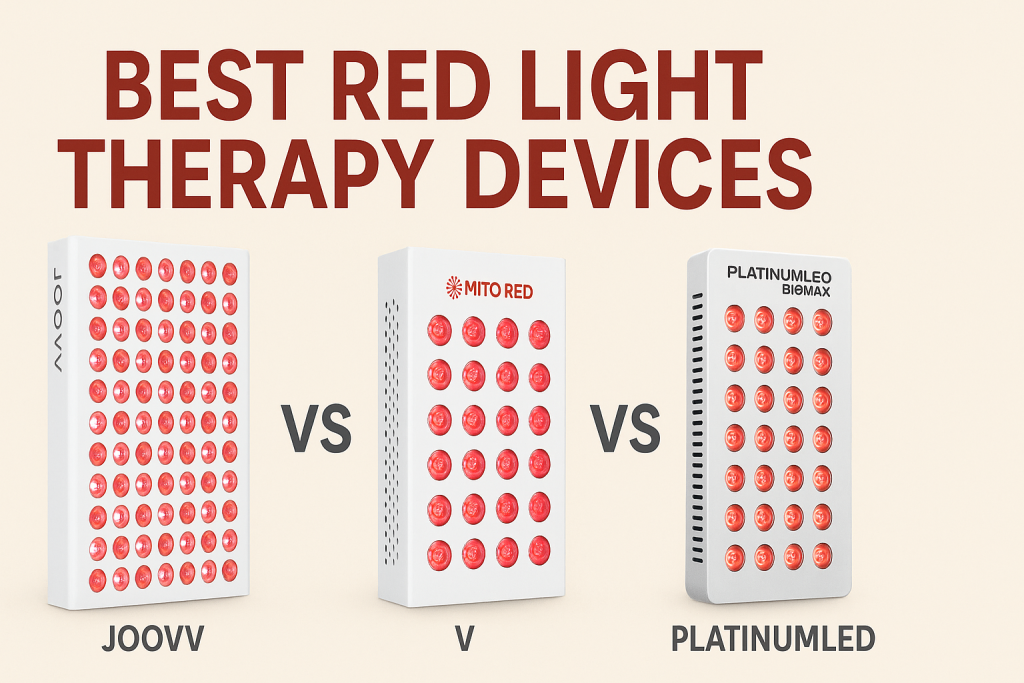
Are you overwhelmed by the growing number of red light therapy devices flooding the market? You’re not alone. With wellness enthusiasts and health-conscious individuals increasingly turning to photobiomodulation therapy, choosing between premium brands like Joovv, Mito Red, and PlatinumLED can feel like navigating a maze.
Red light therapy, also known as low-level light therapy or photobiomodulation, has gained significant attention for its potential wellness applications. Whether you’re exploring light therapy for skin health, muscle recovery, or general wellness support, investing in the right device matters.
In this comprehensive guide, we’ll break down everything you need to know about these three leading red light therapy brands. You’ll discover detailed comparisons of features, pricing, build quality, wavelength specifications, and real-world performance. By the end, you’ll have the clarity to make an informed decision that aligns with your wellness goals and budget.
Let’s dive into the world of therapeutic light devices and find your perfect match.
What Is Red Light Therapy and How Does It Work?
Red light therapy uses specific wavelengths of light to interact with your cells. This non-invasive wellness approach has been studied for various applications in the health and wellness space.
Understanding Photobiomodulation
Photobiomodulation refers to the process where light energy is absorbed by your cells. The technology typically uses wavelengths in the red (630-680nm) and near-infrared (800-880nm) spectrum.
Here’s how the process generally works:
- Light penetrates the skin at specific depths
- Cellular structures absorb the photons
- This absorption may support various cellular processes
- The body’s natural functions continue their regular operations
Key Wavelengths Explained
Different wavelengths serve different purposes in light therapy devices:
Red Light (630-660nm):
- Penetrates surface layers
- Commonly used in skin-focused applications
- Visible to the human eye
Near-Infrared Light (810-850nm):
- Penetrates deeper into tissue
- Invisible to the naked eye
- Often used for muscle and joint applications
Understanding these basics helps you evaluate which device specifications matter most for your intended use.
Why Compare Joovv, Mito Red, and PlatinumLED?
These three brands have established themselves as leaders in the home red light therapy market. Each company brings unique strengths to the table, making them worthy of detailed comparison.
Market Position and Reputation
Joovv pioneered the home red light therapy movement and maintains a premium position in the market. The brand is recognized for innovation and comprehensive warranty coverage.
Mito Red positions itself as a value-oriented alternative, offering competitive specifications at lower price points. The company has built a loyal following among budget-conscious wellness enthusiasts.
PlatinumLED strikes a middle ground, balancing quality construction with reasonable pricing. The brand emphasizes customer service and product versatility.
What Makes These Brands Stand Out
All three manufacturers share several important qualities:
- FDA-registered facilities
- Third-party testing claims
- Multi-year warranty programs
- Direct-to-consumer sales models
- Active customer support teams
The differences lie in pricing strategies, design philosophies, and specific technical implementations.
Detailed Brand Overview: Joovv Red Light Therapy
Joovv has been a household name in red light therapy since its founding. The company focuses on modular design and premium construction quality.
Joovv Product Line
The Joovv product lineup includes several options:
Joovv Mini: Compact portable unit for targeted treatment Joovv Go: Travel-friendly device for on-the-go use Joovv Solo: Full-body standalone panel Joovv Elite: Modular system that can be connected and expanded
Technical Specifications
Joovv devices typically feature:
- Dual wavelength technology (660nm red and 850nm near-infrared)
- High irradiance levels at recommended distances
- Modular connectivity for expanded coverage
- Ambient mode for reduced intensity
- Digital control systems with timers
Pricing Structure
Joovv positions itself at the premium end of the spectrum:
- Entry-level devices: $500-$700
- Mid-range panels: $1,200-$2,000
- Full-body systems: $2,500-$4,000+
- Modular expansions: Additional costs for multiple units
Pros and Cons of Joovv
Advantages:
- Strong brand reputation and history
- Modular design allows expansion
- Comprehensive warranty coverage
- Excellent customer support
- Recovery mode feature
Considerations:
- Higher price point than competitors
- Larger footprint requires more space
- Some users report louder cooling fans
Detailed Brand Overview: Mito Red Light Therapy
Mito Red has carved out its niche by offering feature-rich devices at competitive prices. The brand appeals to value-seekers who don’t want to compromise on quality.
Mito Red Product Line
Mito Red offers several popular models:
MitoMini: Compact device for facial and targeted areas MitoPRO 300: Small to medium panel option MitoPRO 750: Mid-sized panel for half-body treatment MitoPRO 1500: Large full-body panel MitoADAPT Series: Newer line with enhanced features
Technical Specifications
Mito Red devices generally include:
- Dual chip technology with red and near-infrared wavelengths
- Competitive irradiance measurements
- Built-in timers and programmable settings
- Lower EMF claims
- Quiet operation
Pricing Structure
Mito Red emphasizes value positioning:
- Small devices: $300-$450
- Medium panels: $600-$900
- Large panels: $1,200-$1,600
- Frequent promotional pricing and discounts
Pros and Cons of Mito Red
Advantages:
- Excellent price-to-feature ratio
- Lower EMF reported by users
- Quieter cooling systems
- Strong irradiance measurements
- Regular sales and promotions
Considerations:
- Less established brand history
- Non-modular design limits expansion
- Warranty terms shorter than some competitors
Detailed Brand Overview: PlatinumLED Therapy Lights
PlatinumLED (formerly known as Platinum Therapy Lights) has built its reputation on durability and customer satisfaction. The brand offers a balanced approach to pricing and features.
PlatinumLED Product Line
PlatinumLED’s BIOMAX series includes:
BIOMAX 300: Compact panel for targeted use BIOMAX 450: Small to medium coverage area BIOMAX 600: Medium-sized full-body option BIOMAX 900: Large panel for comprehensive coverage
Technical Specifications
PlatinumLED devices feature:
- Multi-wavelength technology (some models include additional wavelengths)
- SaunaMAX option for heat-resistant environments
- Adjustable stands and mounting options
- Pulse mode capabilities
- Energy-efficient LED design
Pricing Structure
PlatinumLED sits in the middle pricing tier:
- Entry panels: $450-$700
- Mid-range options: $900-$1,400
- Large panels: $1,600-$2,200
- Bundle discounts available
Pros and Cons of PlatinumLED
Advantages:
- Five-wavelength technology on some models
- Strong build quality
- Three-year warranty
- 60-day trial period
- SaunaMAX heat-resistant option
Considerations:
- Mid-range pricing may not appeal to budget shoppers
- Fewer modular options than Joovv
- Less brand recognition than Joovv
Head-to-Head Comparison: Key Features
Let’s compare these three brands across critical decision-making factors.
Wavelength Options Comparison
| Brand | Red Light | Near-Infrared | Additional Wavelengths |
|---|---|---|---|
| Joovv | 660nm | 850nm | No |
| Mito Red | 660nm | 850nm | No |
| PlatinumLED | 660nm | 850nm | Yes (630nm, 810nm, 830nm on BIOMAX) |
PlatinumLED offers the most wavelength variety, while Joovv and Mito Red stick with the two most studied wavelengths.
Irradiance and Power Density
Irradiance measures light intensity at specific distances. Higher numbers mean more powerful light delivery:
At 6 inches:
- Joovv: Approximately 100-150 mW/cm²
- Mito Red: Approximately 120-160 mW/cm²
- PlatinumLED: Approximately 100-140 mW/cm²
At 12 inches:
- Joovv: Approximately 40-60 mW/cm²
- Mito Red: Approximately 45-70 mW/cm²
- PlatinumLED: Approximately 40-55 mW/cm²
Mito Red tends to show slightly higher irradiance numbers in independent testing, though all three brands deliver therapeutic ranges.
Coverage Area Comparison
Treatment coverage affects how quickly you can complete sessions:
Small Panels:
- Joovv Mini: ~75 square inches
- Mito Red MitoPRO 300: ~200 square inches
- PlatinumLED BIOMAX 300: ~180 square inches
Large Panels:
- Joovv Elite: ~600 square inches (single panel)
- Mito Red MitoPRO 1500: ~700 square inches
- PlatinumLED BIOMAX 900: ~750 square inches
Larger coverage areas allow for more efficient full-body treatment sessions.
Build Quality and Durability
All three brands use commercial-grade components:
Joovv:
- Powder-coated steel frames
- Medical-grade LEDs
- Advanced thermal management
- Modular connection system
Mito Red:
- Aluminum construction
- High-quality LED chips
- Efficient cooling design
- Protective acrylic shields
PlatinumLED:
- Reinforced panel construction
- Heat-resistant materials (SaunaMAX)
- Sturdy mounting hardware
- Impact-resistant design
Each manufacturer offers solid construction suitable for daily home use.
EMF Levels
Electromagnetic field (EMF) exposure is a concern for some users:
- Joovv: Standard EMF levels, within safety guidelines
- Mito Red: Advertises “ultra-low EMF” technology
- PlatinumLED: Low EMF reported, within standard ranges
Mito Red specifically markets its low EMF features, which may appeal to EMF-sensitive individuals.
Price Comparison: Which Offers the Best Value?
Budget considerations often drive purchasing decisions. Here’s how these brands stack up on value.
Entry-Level Options ($300-$700)
For those starting their red light therapy journey:
Best Budget Pick: Mito Red MitoPRO 300 (~$400)
- Excellent coverage for the price
- Strong irradiance numbers
- Basic features without premium costs
Premium Entry Option: Joovv Mini (~$600)
- Brand recognition and support
- Modular expansion potential
- Higher upfront investment
Middle Ground: PlatinumLED BIOMAX 300 (~$500)
- Five-wavelength technology
- Solid coverage area
- Balanced pricing
Mid-Range Options ($700-$1,500)
This price range offers the sweet spot for many buyers:
Best Value: Mito Red MitoPRO 750 (~$900)
- Large coverage area
- Competitive features
- Lower cost per square inch
Premium Choice: Joovv Solo (~$1,400)
- Full-body coverage
- Modular capabilities
- Established brand trust
Versatile Option: PlatinumLED BIOMAX 600 (~$1,200)
- Multi-wavelength benefits
- Good coverage
- Three-year warranty
Premium Options ($1,500+)
For serious wellness investments:
Budget-Conscious Large Panel: Mito Red MitoPRO 1500 (~$1,600)
- Largest coverage in price range
- Professional-grade specs
- Significant savings vs. competitors
Modular System: Joovv Elite Configuration ($2,500+)
- Expandable design
- Maximum coverage potential
- Premium support and warranty
Advanced Technology: PlatinumLED BIOMAX 900 (~$2,000)
- Five-wavelength technology
- Professional-grade construction
- Comprehensive warranty
Cost Per Square Inch Analysis
Value-conscious buyers should consider coverage efficiency:
| Brand/Model | Price | Coverage | Cost/sq inch |
|---|---|---|---|
| Mito Red MitoPRO 1500 | $1,600 | 700 sq in | $2.29 |
| PlatinumLED BIOMAX 900 | $2,000 | 750 sq in | $2.67 |
| Joovv Elite | $2,500 | 600 sq in | $4.17 |
Mito Red consistently offers the lowest cost per square inch of coverage.
Warranty and Customer Support Comparison
After-purchase support matters when investing in wellness equipment.
Warranty Terms
Joovv:
- Two-year comprehensive warranty
- Optional extended warranty available
- Covers manufacturing defects
- Free shipping on warranty replacements
Mito Red:
- Two-year warranty on most models
- Three-year warranty on some newer models
- Manufacturing defect coverage
- Responsive warranty claim process
PlatinumLED:
- Three-year warranty (industry-leading)
- 60-day money-back guarantee
- Manufacturing defect protection
- Free return shipping on defects
PlatinumLED’s three-year warranty provides the longest coverage period.
Customer Service Experience
Based on user feedback and industry reputation:
Joovv:
- Established support team
- Phone and email support
- Educational resources
- Active social media presence
Mito Red:
- Growing support infrastructure
- Email-based primary support
- FAQ resources
- Generally positive user reports
PlatinumLED:
- Responsive customer service
- Phone and email options
- Detailed product guidance
- Strong satisfaction ratings
All three brands maintain acceptable customer support standards, with Joovv and PlatinumLED showing slight edges in established support systems.
User Experience and Real-World Performance
What do actual users say about these devices?
Ease of Setup and Use
Joovv: Users report straightforward assembly with clear instructions. The modular system requires more initial setup but offers flexibility. Door mounting and floor stands work well.
Mito Red: Most buyers find setup simple and quick. The devices arrive mostly assembled. Wall mounting is straightforward. Controls are intuitive.
PlatinumLED: Assembly receives positive feedback for simplicity. Multiple mounting options accommodate different spaces. The pulse mode feature requires a learning curve.
Daily Usage Patterns
Typical user experiences include:
- Session lengths: 10-20 minutes per area
- Frequency: 3-7 times per week
- Distance: 6-12 inches from device
- Time investment: Manageable for most schedules
All three brands support these common usage patterns effectively.
Noise Levels
Cooling fans vary by brand:
- Joovv: Some users note louder fan noise, especially on larger units
- Mito Red: Generally praised for quiet operation
- PlatinumLED: Moderate noise levels, acceptable for most users
Mito Red receives the most consistent praise for quiet performance.
Portability and Storage
Compact Models: All three brands offer portable options suitable for travel or small spaces. Weight ranges from 5-15 pounds for smaller units.
Large Panels: Full-size panels require dedicated space. Weight ranges from 30-50 pounds. Consider permanent mounting or dedicated floor stands.
Which Device Is Right for Your Needs?
Let’s break down recommendations based on specific use cases and priorities.
Best for Budget-Conscious Buyers
Winner: Mito Red
If maximizing value is your primary concern, Mito Red delivers the most features and coverage per dollar spent. The MitoPRO series offers competitive specifications at prices typically 20-40% below comparable Joovv models.
Consider Mito Red if:
- You want the most coverage for your investment
- You’re willing to sacrifice some brand prestige for savings
- You prioritize technical specifications over brand name
- You’re comfortable with a newer market player
Best for Premium Quality Seekers
Winner: Joovv
For those who prioritize brand reputation, modular expandability, and established customer support, Joovv justifies its premium pricing.
Choose Joovv if:
- Budget is less important than peace of mind
- You want expansion options for the future
- Brand heritage matters to you
- You value extensive customer support resources
Best for Balanced Value
Winner: PlatinumLED
PlatinumLED occupies the middle ground with excellent warranty terms, multi-wavelength technology, and fair pricing.
Select PlatinumLED if:
- You want more wavelength options
- The three-year warranty appeals to you
- You need a sauna-safe option
- You prefer balanced features without extreme pricing
Best for Small Spaces
Winner: Mito Red MitoPRO 300
Compact yet powerful, this model provides excellent coverage in a space-efficient package at an attractive price point.
Best for Full-Body Treatment
Winner: Mito Red MitoPRO 1500
The combination of large coverage area and competitive pricing makes this the best value for comprehensive full-body sessions.
Best for Modular Expansion
Winner: Joovv Elite System
If you plan to start small and expand over time, Joovv’s modular system offers unmatched flexibility.
Important Considerations Before Buying
Before making your final decision, consider these essential factors.
Space Requirements
Measure your intended treatment area:
- Small panels: 2×2 feet of wall or floor space
- Medium panels: 3×2 feet of dedicated area
- Large panels: 4×3 feet of committed space
- Multiple panels: Significantly more room
Ensure your space accommodates both the device and proper treatment distance (6-24 inches).
Electrical Requirements
All three brands operate on standard household current:
- Voltage: 110-120V in North America
- Power consumption: 100-300 watts depending on panel size
- Dedicated circuit: Recommended for large multi-panel setups
- Energy costs: Minimal impact on monthly bills
Treatment Goals and Expectations
Be realistic about red light therapy applications:
Red light therapy devices are wellness tools, not medical devices. They should not be used to diagnose, treat, cure, or prevent any disease. Always consult healthcare professionals for medical concerns.
Time Commitment
Consistent use requires dedication:
- Daily sessions: 10-20 minutes
- Consistency: Regular use over weeks and months
- Patience: Results take time to potentially appear
- Lifestyle integration: Must fit your routine
Only invest if you can commit to regular use.
Return Policies and Trial Periods
Take advantage of risk-free trials:
- Joovv: Varies by retailer, check specific policies
- Mito Red: 60-day satisfaction guarantee
- PlatinumLED: 60-day money-back guarantee
These trial periods allow you to test devices in your own environment.
Frequently Asked Questions About Red Light Therapy Devices
Can I use red light therapy every day?
Most manufacturers recommend daily use for optimal results. Sessions typically last 10-20 minutes per treatment area. Consistency matters more than session length. Listen to your body and adjust frequency as needed. There’s no evidence suggesting daily use causes harm when following manufacturer guidelines.
Do these devices actually work?
Red light therapy has been studied in various research settings with mixed results across different applications. Individual experiences vary significantly. These devices are wellness tools, not medical treatments. Setting realistic expectations is important. Results, if any, typically require consistent use over several weeks or months.
Which wavelength is better: 660nm or 850nm?
Both wavelengths serve different purposes. Red light (660nm) works well for surface-level applications and is visible to the eye. Near-infrared (850nm) penetrates deeper and is invisible. Most experts recommend devices with both wavelengths for versatility. The best choice depends on your specific wellness goals and intended use areas.
How long does it take to see results from red light therapy?
Individual experiences vary widely. Some users report noticing changes within 2-4 weeks of consistent use. Others may require 2-3 months of regular sessions. Factors affecting timelines include frequency of use, session duration, device quality, and individual biology. Consistency and patience are essential for evaluating personal results.
Are there any side effects from red light therapy?
Red light therapy is generally considered safe when used according to manufacturer instructions. Some users report mild temporary effects like slight redness or warmth immediately after sessions. Eye protection may be recommended for very bright devices. Individuals with specific health conditions should consult healthcare providers before beginning any new wellness routine.
Conclusion: Making Your Final Decision
Choosing between Joovv, Mito Red, and PlatinumLED ultimately depends on your personal priorities, budget, and wellness goals.
Quick Recap
Choose Joovv if: You want the most established brand with modular expansion capabilities and don’t mind premium pricing.
Choose Mito Red if: You prioritize maximum value, want the most coverage per dollar, and appreciate quiet operation with low EMF features.
Choose PlatinumLED if: You desire balanced features, prefer multi-wavelength technology, and value the security of a three-year warranty.
All three manufacturers produce quality red light therapy devices suitable for home use. Your choice should align with your specific needs, available space, and budget constraints.
Take Action Today
Ready to start your red light therapy journey? Here’s what to do next:
- Determine your budget range
- Measure your available space
- Identify your primary wellness focus areas
- Review the comparison table above
- Take advantage of money-back guarantees
- Commit to consistent use for best results
Remember that any wellness investment requires patience and consistent application. Red light therapy devices represent a long-term commitment to your wellness routine.
Have questions about specific models or features? Visit the manufacturer websites directly for the most current pricing, specifications, and promotional offers. Most brands offer helpful customer service teams ready to answer your questions before purchase.
Your wellness journey is personal and unique. Choose the device that feels right for your lifestyle, space, and goals. Here’s to taking the next step in your wellness exploration!
FAQs About Best Red Light Therapy Devices
Is it worth buying a red light therapy device for home use, or should I visit a clinic instead?
Home devices offer significant long-term value if you plan to use red light therapy regularly. Clinic sessions typically cost $25-$75 per visit, meaning a home device pays for itself after 20-40 sessions. Home use provides convenience, privacy, and flexibility in scheduling. However, professional clinics may offer more powerful equipment and expert guidance. Consider your commitment level and budget when deciding between home ownership and clinic visits.
Can I combine red light therapy with other wellness practices like exercise or skincare routines?
Yes, red light therapy can complement many wellness practices. Some users incorporate sessions before or after workouts as part of their recovery routine. Others integrate red light therapy into their skincare regimen. However, timing and combinations matter. Avoid applying thick skincare products immediately before light therapy sessions, as they may block light penetration. Space out different wellness practices appropriately and consult healthcare providers about specific combinations.
What’s the real difference between a $400 device and a $2,500 device?
Price differences reflect several factors including coverage area, build quality, brand reputation, warranty terms, and additional features. Expensive devices typically offer larger treatment areas, more durable construction, established customer support, and modular expansion options. Budget devices often provide similar wavelengths and irradiance but in smaller packages with basic features. The best value depends on your coverage needs and usage intentions rather than price alone.
Do I need to wear eye protection during red light therapy sessions?
Manufacturer recommendations vary by device brightness and proximity. Some high-powered devices suggest closing your eyes or using provided goggles during facial treatments. Most users don’t require eye protection for body treatments when the device isn’t directly aimed at the face. Red and near-infrared wavelengths are different from UV light and don’t carry the same eye risks. Follow your specific device manufacturer’s guidelines for safety.
Can multiple family members use the same red light therapy device?
Absolutely! Red light therapy devices are designed for shared household use. Unlike some wellness equipment, there are no hygiene concerns with sharing red light panels since there’s no physical contact. Multiple users can benefit from a single device investment. Consider larger panels if several household members plan regular use to reduce wait times. This shared use aspect significantly improves the value proposition of home devices.
Final Thoughts (not a conclusion)
I like red light therapy. I think it gives small but real benefits. Devices have gotten powerful in last few years.
You don’t need to spend 3,000 dollars to get results, unless you enjoy spending big. And some people do, so fair enough.
I think companies will keep lowering prices because competition is increasing. Which is good for normal folks who just want better skin or less pain in their knees.
I sometimes think about how weird it is that humans stand in front of glowing red panels every night, like some sci-fi movie. But if it works, who cares.
Anyway, people will keep arguing online, and brands will keep saying their device is better. And you and me will just look for something that fits budget and gives decent results.
Red light therapy isn’t perfect, but its one of the few wellness things that doesn’t feel like scam, at least not fully.