

SafeSleeve Air-Tube Headphones Review: Have you ever finished a long day of Zoom calls or podcast listening and noticed a weird, dull ache behind your ears? Or maybe a slight ringing?
I used to wear my wireless earbuds for 6 to 8 hours a day. Between taking client calls, going to the gym, and listening to audiobooks, they practically lived in my ears. But after a while, I started getting these persistent afternoon headaches. That’s when I fell down the rabbit hole of EMF (Electromagnetic Field) radiation.
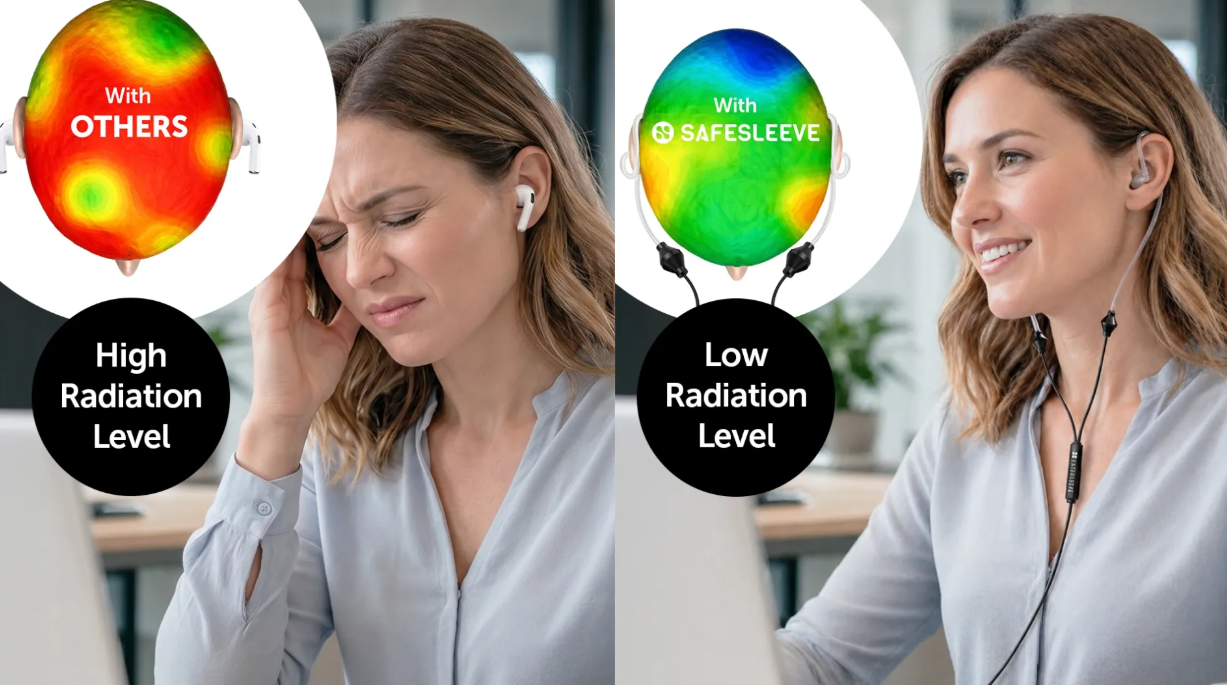
I learned that traditional wireless and wired headphones push electronics-and radiation-millimeters away from your brain. So, I started looking for a safer alternative and kept seeing the same name pop up: SafeSleeve Air-Tube Headphones.
But are they just a gimmick, or do they actually protect your brain while delivering decent sound?
In this honest SafeSleeve Air-Tube Headphones review, I’m going to share my real, 30-day experience using them. I’ll cover everything from sound quality and comfort to the actual science behind how they block radiation. If you are wondering if it’s time to ditch your Bluetooth earbuds, keep reading.
Quick Summary
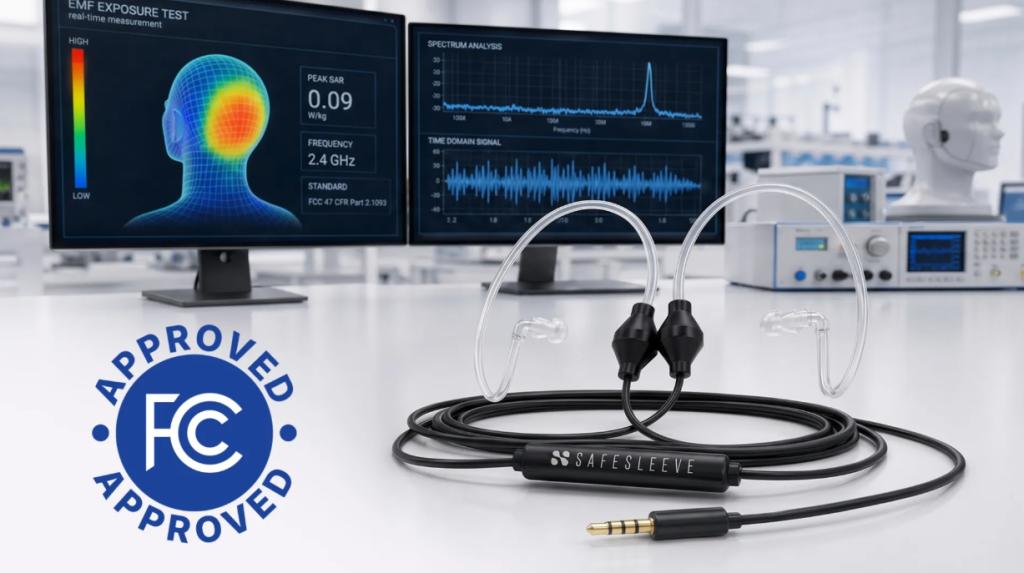
SafeSleeve Anti-Radiation Air-Tube Headphones are wired earphones that use hollow silicone tubes to carry sound to your ears instead of electronic speaker drivers placed inside the ear canal. According to SafeSleeve, this design reduces RF (radio frequency) radiation exposure at the ear by up to 99% and ELF (extremely low frequency) radiation by up to 92%, based on testing by an independent FCC-accredited laboratory.
They are priced at $34.99 for a single pair (marked down from $39.99), with multi-pack options available. The product carries a 30-day money-back guarantee and is backed by a named professional endorser – Dr. Michelle Jorgensen, DDS, BCTN, TNC.
This review separates what the manufacturer claims from what the available evidence shows, so you can make an informed decision.

Quick Verdict: SafeSleeve Anti-Radiation Air-Tube Headphones
If you are short on time and just want the bottom line, here is my honest takeaway after a month of daily use.
Overall Verdict: The SafeSleeve Air-Tube Headphones are arguably the best anti-radiation headphones on the market in 2026. By removing the wires and speakers from the earbud itself and replacing them with hollow silicone tubes, they successfully stop up to 99% of EMF radiation from entering your head. The sound is surprisingly crisp, though it leans more toward an “acoustic” profile rather than heavy, thumping bass.
Best for:
- People who suffer from headaches, tinnitus, or “Bluetooth fatigue” after wearing wireless earbuds.
- Pregnant women, children, and anyone looking to minimize everyday radiation exposure.
- Biohackers and wellness enthusiasts prioritizing long-term brain health.
- Office workers who are on calls all day.
Not ideal for:
- Audiophiles looking for studio-quality, heavy-bass music.
- People who hate cords (these are wired, and the tubes can tangle if you just shove them in your pocket).
- High-intensity athletes (the tubes can bounce around if you are doing intense sprints).
What Are SafeSleeve Air-Tube Headphones?
SafeSleeve is a California-based brand founded in 2011, originally known for making EMF-shielding phone cases. Over time, the company expanded into a broader line of protective accessories – including laptop sleeves, EMF protection blankets, and lap pads – and eventually moved into the audio space with these air-tube headphones.
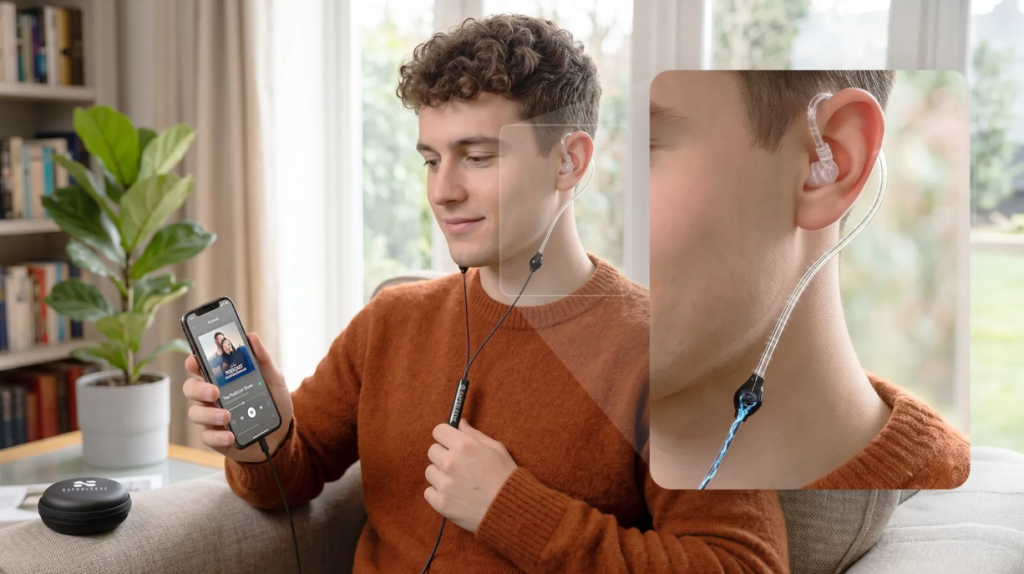
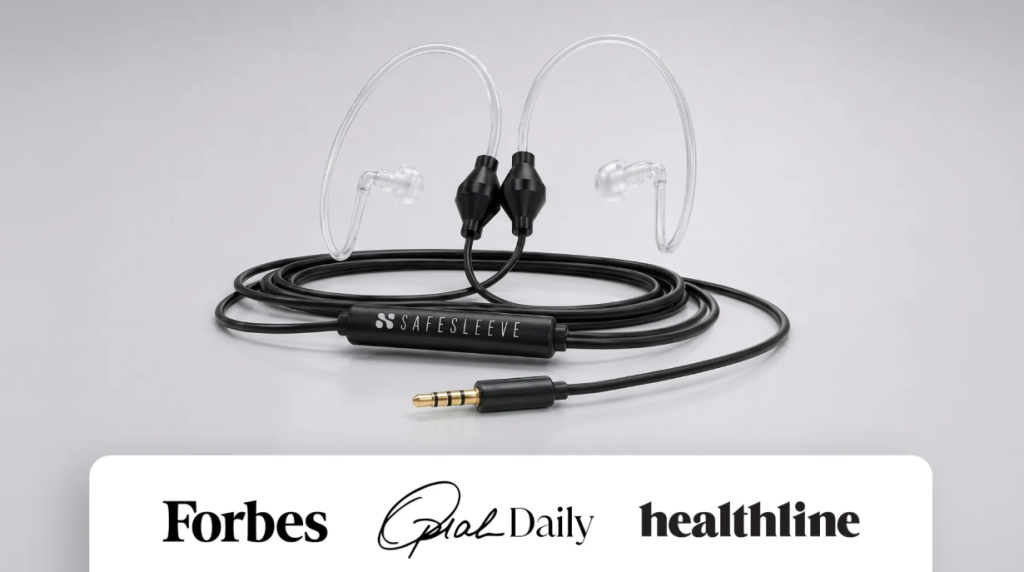
The full product name is SafeSleeve Anti-Radiation Air-Tube Headphones with Microphone. They are wired in-ear headphones specifically designed for people who want to minimize the proximity of live electronics to their ears and head during everyday audio use – whether that’s music listening, phone calls, podcast playback, or virtual assistant interaction.
The brand operates primarily through a dedicated website at getairtube.com, along with a flagship brand site at safesleevecases.com. Products are also listed on Amazon through the SafeSleeve store. Fulfillment is handled through a partner distributor, GiddyUp, based in Ventura, California – a detail the brand discloses in its published Privacy Policy.
SafeSleeve entered the headphone market as a natural extension of its existing product philosophy: reducing the amount of electromagnetic radiation that reaches the body from electronic devices. The phone cases came first; the headphones apply the same underlying logic to the audio context.
Key brand facts at a glance:
| Detail | Information |
|---|---|
| Brand | SafeSleeve LLC (Carlsbad, CA) |
| Founded | 2011 |
| Product Type | Wired air-tube earphones with microphone |
| Connection | 3.5mm jack |
| USB-C Adapter | Included |
| Doctor Endorsement | Dr. Michelle Jorgensen, DDS, BCTN, TNC |
| Brand Recognition | 2026 Oprah Daily O-ward (for “Best Protective iPhone Case”) |
| Lab Testing | FCC-accredited independent lab (brand-cited) |
| Starting Price | $34.99 |
| Guarantee | 30-day money-back |
| Support | [email protected] / +1 (844) 422-9966 |
A Note on the “Doctor-Endorsed” Language
SafeSleeve features the endorsement of Dr. Michelle Jorgensen, DDS, BCTN, TNC prominently in its marketing. It is worth being specific about what those credentials represent.
DDS stands for Doctor of Dental Surgery – a standard dental qualification. BCTN stands for Board Certified in Total Nutrition, and TNC stands for Traditional Naturopathic Consultant. Dr. Jorgensen publicly states that she uses these headphones personally and recommends them to patients daily. Her endorsement is a personal professional recommendation from an individual with integrative health training. It is not equivalent to a clinical trial result, an FDA approval, or an endorsement by a medical specialty board focused on electromagnetic safety.
That said, it is a named, credentialed, verifiable endorsement – which is meaningfully more than most competitors in this category provide.
A Note on the “Oprah Daily 2026 O-ward” Language
SafeSleeve displays a 2026 Oprah Daily Self-Care O-ward badge on the Air-Tube Headphones page. According to the brand’s own published blog, this award was given to SafeSleeve for “Best Protective iPhone Case” – a recognition of the brand’s phone case product, not the Air-Tube Headphones specifically. The badge is displayed as brand-wide recognition. It is not a safety certification, and it was not awarded specifically for the headphones. Buyers should understand this context before treating the badge as independent validation of the headphones’ performance.
Why Do People Buy EMF-Blocking Headphones? (My Real Experience)
“Is Bluetooth actually dangerous?” This is the million-dollar question.
While regulatory agencies say low-level EMFs are fine, hundreds of independent doctors and scientists are now warning us about the cumulative effects of putting EMF-emitting devices inside our heads all day.
Before I bought my SafeSleeve Anti-Radiation Air-Tube Headphones, I was experiencing:
- Warm ears: My ears literally felt hot after a 2-hour phone call.
- Tension headaches: Right at the base of my skull.
- Sleep disruption: I felt “wired but tired” at night.
I wanted a way to listen to my music and take business calls without frying my brain. That’s the exact problem SafeSleeve aims to solve.
How Does Air-Tube Technology Work?
To understand what makes these headphones different, it helps to understand how standard earphones work – and where the physics diverges.
Standard wired earphones: A conventional pair of wired earphones carries an electrical signal all the way from your phone, through the full length of the cable, to a miniature speaker driver positioned directly inside your ear canal. That driver requires live electrical current to convert the audio signal into sound. As long as the driver is in your ear, active electronics are operating in direct proximity to your head – and wherever electrical current flows, electromagnetic fields are generated.
Air-tube headphones: SafeSleeve’s design repositions the electronic speaker driver further down the cable, away from the ear. Sound is then carried the remaining distance to your ear through a hollow silicone tube. There are no live electronics inside the ear canal itself. The sound travels as acoustic waves through air – the same physical principle that allows sound to travel through any hollow passage – before reaching your eardrum.
This physical separation is the core mechanism behind SafeSleeve’s EMF reduction claim. Moving the active electronics away from the ear means electromagnetic field generation does not occur at close proximity to the ear canal.
The Two Types of Radiation Addressed
SafeSleeve specifically references two categories of electromagnetic radiation in its lab testing documentation:
RF (Radio Frequency) radiation: This is the type of electromagnetic radiation most commonly discussed in the context of wireless devices – it’s what phones, Wi-Fi routers, and Bluetooth devices emit. Standard wired earphones also generate RF emissions through their electronic components, though at lower intensities than wireless devices. SafeSleeve’s brand-cited lab test shows up to 99% RF reduction.
ELF (Extremely Low Frequency) radiation: This type of electromagnetic field is generated by the flow of electrical current through conductors – including cables and electronic components. Even wired earphones with no wireless capability generate ELF fields wherever current flows. SafeSleeve’s brand-cited lab test shows up to 92% ELF reduction.
The air-tube design addresses both by physically removing the active electronic components from proximity to the ear.
Does This Actually Reduce EMF Exposure?
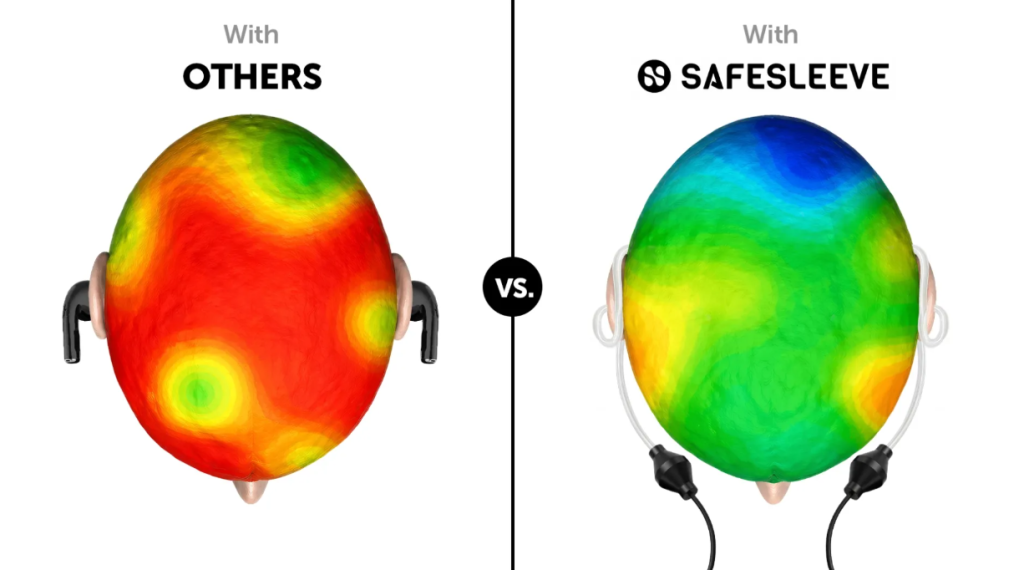
The physics of the air-tube design does support reduced electromagnetic emissions at the ear compared to standard in-ear electronics. That is not in serious dispute. The more nuanced question – which this review covers in the next section – is whether the baseline EMF levels produced by standard wired earphones at the ear are sufficient to warrant health concern in the first place.
How Air-Tube Design Compares to Bluetooth Earbuds for EMF
It is worth briefly addressing the comparison with wireless earbuds, since many buyers are weighing air-tube options against Bluetooth alternatives. Bluetooth earbuds continuously emit RF radiation from a transmitter positioned inside or directly at the ear canal while in use. Air-tube headphones eliminate the in-ear electronics entirely. From a pure proximity-of-electronics standpoint, air-tube wired designs produce lower electromagnetic emissions at the ear than Bluetooth earbuds. However, mainstream health organizations currently consider Bluetooth at its regulated power levels safe. The comparison remains relevant primarily for buyers applying a precautionary approach.
SafeSleeve’s EMF Claims: What the Brand Says vs. What the Evidence Shows
It is important to clearly separate marketing language from independently verifiable facts. The table below does exactly that.
| SafeSleeve Claim | What It Means | What It Doesn’t Mean |
|---|---|---|
| “Up to 99% RF radiation reduction” | Brand-cited FCC-accredited lab test of SafeSleeve’s shielding technology. Results are published at safesleevecases.com/pages/lab-tested | Not FCC endorsement of the product. Lab conditions differ from real-world use. |
| “Up to 92% ELF radiation reduction” | Same FCC-accredited lab test, for extremely low frequency emissions | Reduction figures represent peak tested performance under controlled conditions |
| “Doctor-Endorsed” | Dr. Michelle Jorgensen, DDS, BCTN, TNC provides a named personal professional recommendation | Not a clinical trial result or endorsement by a medical board |
| “2026 Oprah O-ward Winner” | Oprah Daily awarded SafeSleeve “Best Protective iPhone Case” (brand-wide recognition, displayed on headphone page) | Award was not specifically for the Air-Tube Headphones; not a safety certification |
| “FCC-Accredited Lab” | The lab used holds FCC accreditation | “FCC-accredited” refers to the lab’s status, not FCC approval of the product’s claims |
| “American Company” | Brand states it is a US company, based in California | FTC-compliant “Made in USA” manufacturing designation not confirmed on brand materials |
Bottom line on claims: SafeSleeve provides more documented transparency than most competitors in the air-tube headphone category. The lab test exists and is publicly accessible. The doctor endorsement comes from a named, credentialed individual. Where gaps remain – chiefly in real-world performance versus lab performance – those same gaps exist across the entire product category.
The Science Behind EMF and Headphone Radiation
This is where honest reviews matter most. The question of whether EMF exposure from headphones and other electronic devices poses a health risk is genuinely contested in the scientific community. Here is a fair summary of both positions, with no editorial preference for either.
What Major Health Organizations Currently Say
The World Health Organization (WHO), the U.S. Food and Drug Administration (FDA), and the International Commission on Non-Ionizing Radiation Protection (ICNIRP) maintain that non-ionizing radiofrequency radiation emitted by consumer electronic devices – including wired headphones, Bluetooth earbuds, and mobile phones – is considered too low-powered to pose a significant health risk to humans when within guideline-compliant exposure levels.
The ICNIRP updated its guidelines in 2020. These guidelines set RF exposure limits based on a review of available peer-reviewed evidence. Both the WHO and ICNIRP state that no established health risk has been identified at legally compliant exposure levels.
The specific absorption rate (SAR) – a standard measure of how much RF energy is absorbed by the body – is tracked by regulatory agencies. Consumer earphones, including Bluetooth models, typically fall well below the FCC’s 1.6 W/kg limit and the ICNIRP’s 2.0 W/kg limit.
The most clearly established risk from headphone use of any type, according to mainstream health bodies, is noise-induced hearing loss from excessive volume. That risk has nothing to do with EMF.
What Dissenting Scientific Groups Argue
Not all credentialed scientific voices agree with the ICNIRP/WHO position. This is not a fringe debate – it involves credentialed researchers publishing in peer-reviewed journals.
The International Commission on the Biological Effects of Electromagnetic Fields (ICBE-EMF) published significant critical work in late 2025 arguing that the WHO-commissioned systematic reviews used to justify current safety guidelines contain serious methodological weaknesses. Their analysis contends that the WHO reviews’ conclusions of no established risk are not adequately supported by the underlying evidence, and that conflicts of interest between ICNIRP and industry warrant scrutiny.
Dr. John Frank, a physician and epidemiologist at the University of Edinburgh and ICBE-EMF Chairperson, stated in a 2025 press release that the WHO-commissioned reviews are “simply inadequate to conclude that wireless radiation is safe” and that presenting them as evidence of safety would mislead the public.
Separately, a 2025 paper published in Frontiers in Public Health examined the role of military and industrial interests in shaping RF research and safety standards, raising questions about the independence of the guideline-setting process.
The International Agency for Research on Cancer (IARC), a WHO body, classified RF-EMF as “possibly carcinogenic” (Group 2B) back in 2011. This classification has not been reversed. Group 2B means there is limited evidence in humans and less-than-sufficient evidence in animals – it does not mean the link has been established, but it acknowledges the evidence base warrants continued attention.
The BioInitiative Working Group and related independent researchers have argued for years that current safety standards are insufficient because they focus primarily on thermal (heat-based) effects of RF radiation and do not adequately account for potential non-thermal biological effects at lower exposure levels.
A 2025 review published through NCBI noted that evaluations of the same scientific evidence by different teams of researchers – ICNIRP on one side, groups like BioInitiative and ICBE-EMF on the other — are reaching different conclusions, and that this scientific disagreement is genuine rather than manufactured.
Why This Scientific Debate Matters for SafeSleeve Buyers
The air-tube design does reduce electromagnetic emissions at the ear – the physics supports that. The question the scientific debate raises is whether those reductions matter from a health standpoint.
If you find the ICNIRP/WHO position convincing, the reductions offered by air-tube headphones may seem unnecessary. Standard wired earphones and Bluetooth earbuds are considered safe at current exposure levels, and no mainstream health authority recommends switching to air-tube designs for health reasons.
If you find the arguments of ICBE-EMF, BioInitiative, and related researchers more compelling – or if you simply prefer to apply the precautionary principle while the science is unresolved – then air-tube headphones offer a rationally coherent way to reduce proximity-based exposure from wired audio.
This review does not adjudicate the scientific debate. Both positions are represented by credentialed researchers. We simply note that buying SafeSleeve headphones is a response to an unresolved scientific question, not a confirmed medical necessity – and that the unresolved nature of that question is precisely what makes the precautionary principle relevant for some buyers.
What About EMF and Wired Cables Specifically?
One nuance worth flagging: even with air-tube headphones, the lower portion of the cable – the section between the device and the air tube – still carries electrical current and still generates ELF fields. The reduction in exposure is primarily at the ear itself. Some third-party reviewers recommend using ferrite beads on the lower cable portion to address this, though that is a supplementary step, not part of the SafeSleeve product design.
Product Specifications and What’s in the Box
Technical Specs
| Specification | Detail |
|---|---|
| Design | Air-tube in-ear (hollow silicone tube delivery) |
| Connection Type | 3.5mm stereo jack |
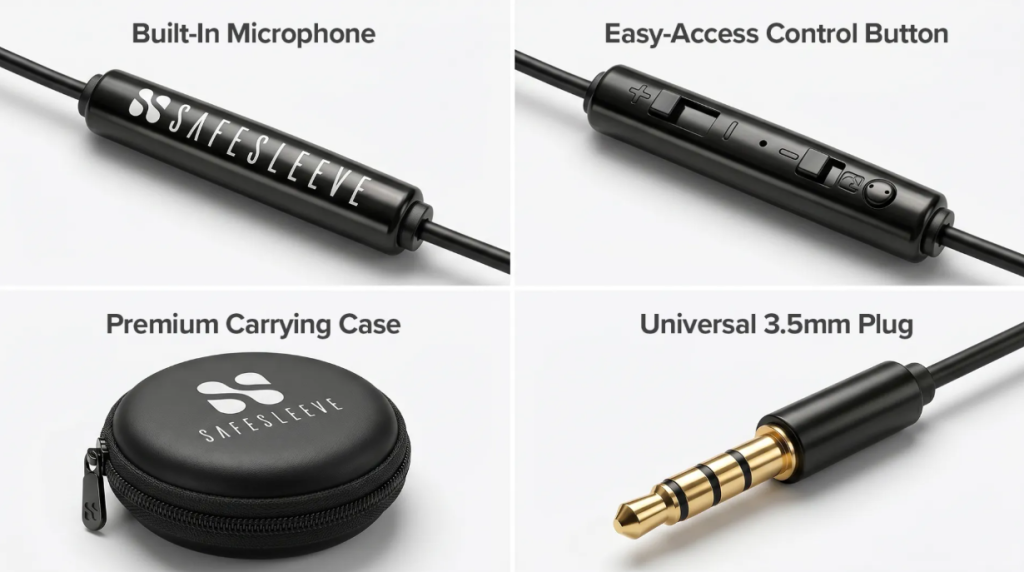
| Microphone | Built-in inline mic |
| Controls | Single-button inline control (answer/end calls, play/pause, voice assistant) |
| Volume | Inline volume slider |
| Earpiece Sizes | 3 silicone tip sizes included |
| Colors | Typically available in white |
| Compatibility | iPhone, Android, tablet, laptop (USB-C adapter included) |
| Included Accessories | 3 earpiece sizes, USB-C adapter, zippered carrying case |
What You Get in the Box
- 1 pair of SafeSleeve Air-Tube Headphones
- 3 silicone ear tip sizes (small, medium, large)
- USB-C to 3.5mm adapter (for newer devices without a headphone jack)
- Zippered carrying case for tangle-free storage
The carrying case is a detail multiple reviewers specifically call out as a quality addition. The hollow silicone tubes that form the core of the air-tube design are somewhat delicate compared to standard earphone cables, and the zippered case makes proper storage easy. It also doubles as the shipping container, which the brand notes reduces waste from disposable packaging.
How to Use Them
Setup is straightforward and takes less than a minute for most users. You select the correct ear tip size – they push and twist to attach and remove – and insert the earbuds so that the air tube section wraps naturally over the outer ear for additional stability. The over-ear wrap design is different from standard earbuds and occasionally surprises first-time users, but reviewers generally describe it as more secure once they’ve adjusted.
Connect the 3.5mm plug to your device’s headphone port, or use the included USB-C adapter for newer phones and laptops. For iPhones that use Lightning connectors, the Lightning-to-3.5mm adapter that ships with many iPhones works with these headphones; that adapter is not included in the SafeSleeve box, so have it available if needed.
The inline control button follows a standard single-click / double-click / hold pattern: one click answers/ends calls or plays/pauses audio; two clicks skips to the next track; holding activates Siri, Google Assistant, or other voice assistants. Volume is adjusted via a slider on the inline control section.

Sound Quality: What Third-Party Reviewers Found
Third-party reviewers who have specifically evaluated SafeSleeve’s Air-Tube Headphones describe the sound quality as good to very good for the price tier, with notably strong bass performance. EMF Academy’s 2026 category roundup rated SafeSleeve as the best budget pick in the air-tube headphone category, with the reviewer describing the sound quality as “fantastic for the price,” noting particularly strong bass performance.
Radiation Health Risks described the SafeSleeve headphones as offering “exceptional sound quality” and “superior bass” within the air-tube world.
One acoustic characteristic worth being clear about: sound traveling through a hollow silicone tube does create a slightly different listening profile compared to a direct electronic driver in the ear canal. This is inherent to the air-tube design category – it affects all air-tube headphones, not just SafeSleeve. At least one independent reviewer noted that buyers who prioritize top-quality audio and EQ control may find themselves a little disappointed, while those prioritizing EMF reduction find the headphones more than suitable for their listening needs.
The majority of buyers in available third-party feedback describe the acoustic difference as neutral to positive, once past a brief adjustment period. This is particularly true for everyday listening content like podcasts, calls, and casual music playback.
One independent reviewer noted that the audio quality from SafeSleeve Air-Tube Headphones was a genuine surprise – clear sound with decent bass response – and that the built-in microphone worked well for calls, though the inline control button placement took a few tries to learn.
The Inline Microphone
The built-in microphone is reported to be of adequate quality for phone calls, voice assistant commands (Siri, Google Assistant), voice over IP, and basic voice recording. Reviewers note that the microphone sound quality is notably better than that of lesser air-tube headsets in the same price range. This is not a studio-quality microphone, but it handles everyday voice communication tasks competently.
Pricing and Buying Options
SafeSleeve Air-Tube Headphones are available in single-unit and multi-pack configurations. Multi-pack pricing significantly reduces the per-unit cost, making the bulk options compelling for households with multiple users, or for buyers who want backup pairs.
| Package | Total Price | Per-Unit Price | Notes |
|---|---|---|---|
| 1 Pair | $34.99 | $34.99 | (Marked down from $39.99) |
| Buy 2, Get 1 Free | $79.98 | ~$26.66 | Good for couples or two regular users |
| Buy 3, Get 2 Free | $119.97 | ~$23.99 | Best value per unit; five pairs total |
At $34.99 for a single pair, SafeSleeve is positioned at the low-to-mid end of the air-tube headphone category. For context, competing options in this space range from basic models around $20 (with limited documentation of EMF claims) to DefenderShield’s premium over-ear model at approximately $179.99. SafeSleeve sits in a comfortable sweet spot – low enough risk for a first-time air-tube buyer, high enough brand credibility to warrant the investment.
Payment options: Afterpay, Klarna, and Affirm are available at checkout for buyers who prefer to spread the cost across installments.
Shipping: Multi-pack orders include free shipping. Single-pair shipping terms should be confirmed at checkout, as these details can change. The brand states a fulfillment window of 24–48 hours with standard US delivery taking 3–5 business days.
Where to buy: The primary purchase point is the official website at getairtube.com, which carries the most current pricing, promotions, and multi-pack deals. The product is also listed on Amazon through the SafeSleeve store. Pricing and promotional terms – including multi-pack deals and free shipping thresholds – may differ between purchase channels, so it is worth comparing before ordering.
Is there a subscription or recurring charge?
There is no subscription associated with this product. It is a one-time purchase. Always verify this directly at the brand website, as promotional offers occasionally include auto-enrollment if not reviewed carefully.
Refund Policy and Return Process
SafeSleeve offers a 30-day money-back guarantee on the Air-Tube Headphones. This is a meaningful policy for this type of product because the acoustic experience of air-tube audio does take some adjustment, and whether the listening experience suits individual preferences is something you can only truly evaluate by using the headphones yourself.
How to start a return:
- Visit getairtube.com/returns
- Enter your Order Number and Email Address
- Follow the return instructions provided
Customer support is reachable at:
- Email: [email protected]
- Phone: +1 (844) 422-9966
The 30-day clock runs from the date of purchase. Buyers who want to evaluate the sound quality before committing should make a note of their purchase date and initiate the return before the window closes if they decide the product is not for them.
Terms of sale, including specific conditions for the money-back guarantee (such as whether the return window applies to opened products and who bears return shipping costs), should always be verified directly at the brand website before purchasing. Return policy terms can change, and the details in this review reflect what was publicly documented at the time of writing.
Customer Feedback: What Real Buyers Are Saying
The brand reports over 7,500 five-star reviews, though this figure is self-reported through the brand’s own website and has not been independently audited by this publication. The feedback patterns below represent recurring themes from available third-party reviews and publicly accessible buyer comments across multiple platforms.
Common Positive Themes
Sound quality surprises buyers. This is the most frequently cited positive across available reviews. Many buyers approach air-tube headphones expecting a sound quality compromise in exchange for the EMF-reduction design, and the SafeSleeve product exceeds those expectations – particularly on bass.
Build quality is generally solid. The materials feel durable. The carrying case is noted as a genuinely useful inclusion. Multiple buyers specifically mention keeping the headphones long-term rather than treating them as a temporary trial.
The microphone works well for everyday use. Phone calls, Siri, Google Assistant, voice recording – reviewers describe the microphone as competent for all of these. One independent reviewer noted it outperforms other air-tube headset microphones in the same price range.
The brand’s documentation earns trust. A recurring theme among buyers who researched multiple air-tube options before purchasing is that SafeSleeve’s public lab test documentation and named doctor endorsement made the purchase decision easier compared to competitors offering vaguer claims.
Multi-pack value is frequently mentioned positively. Buyers who purchase the multi-pack options note the effective per-unit price as significantly stronger than single-unit competitors.
Common Neutral or Mixed Themes
Fit adjustment takes time. The over-ear wrap style of the air tube is different from standard earbuds. Some buyers need to experiment with ear tip size and insertion angle to find a secure, comfortable fit. This is not a consistent negative but a common adjustment note.
Sound is different from standard earphones. Not universally better or worse – just acoustically distinct. Most buyers describe adapting within one to two listening sessions. A small minority prefer not to adapt and return within the guarantee window.
iPhone users need an adapter. The 3.5mm connection requires a Lightning-to-3.5mm adapter for current iPhones (not included; the USB-C adapter in the box covers Android and laptops). Buyers who don’t already own a Lightning adapter should factor this into planning.
Silicone tube care. Some reviewers note that the hollow silicone tubes should be stored properly – the zippered case addresses this – and that kinked or bent tubes can affect audio quality. This is an inherent characteristic of air-tube technology across all brands, not specific to SafeSleeve.
Common Negative Themes
Not audiophile-grade sound. Buyers who purchase primarily for premium audio and approach the product as a headphone first report disappointment compared to high-end conventional earphones or premium air-tube options like DefenderShield’s over-ear model. The SafeSleeve product is priced and positioned as a value option, and its audio performance reflects that positioning.
EMF reduction cannot be verified at home. Several buyers note that without an EMF meter, there is no way to personally verify the claimed reduction figures. This is true across the entire category — the lab test exists, but individual buyers cannot replicate it without specialized equipment.
Mixed feedback on long-term durability. A minority of reviews mention durability concerns with the silicone tube section over extended use. The carrying case mitigates this for most buyers who store the headphones properly.
Summary of Buyer Sentiment
One independent reviewer with hands-on experience put it directly: “If health and protection from EMFs is your priority, the SafeSleeve air-tube headphones are more than suitable for your listening needs. If top-quality audiophile audio is your primary criterion, you may be a little disappointed.” That characterization aligns closely with the broader pattern of available buyer feedback.
Pros and Cons
Pros
Design and Technology
- Air-tube mechanism physically removes active electronics from inside the ear canal – the core benefit is real and physics-backed
- No Bluetooth transmitter means no Bluetooth RF emissions at the ear
- Works with all major device types: iPhone (with adapter), Android, laptops, tablets
Documentation and Credibility
- FCC-accredited independent lab testing with publicly accessible results (safesleevecases.com/pages/lab-tested)
- Named, credentialed professional endorser (Dr. Michelle Jorgensen, DDS, BCTN, TNC)
- Over a decade of established brand history and operation
- More documented EMF claims than most competitors in the air-tube category
Usability
- Good-to-very-good sound quality at the price point, with notably strong bass
- Built-in microphone works competently for calls and voice assistant use
- Inline controls for play/pause, track skipping, and voice assistant activation
- Three silicone ear tip sizes included for a fitted, comfortable seal
- USB-C adapter included for newer devices
- Zippered carrying case included – useful and well-built
Price and Policy
- Starting price of $34.99 is accessible for a first-time air-tube buyer
- Multi-pack options reduce per-unit cost significantly (down to ~$23.99 with the 5-pack)
- 30-day money-back guarantee makes initial purchase low-risk
- Buy-now-pay-later options available (Afterpay, Klarna, Affirm)
Cons
Audio Performance
- Sound quality falls short of audiophile-grade products at higher price points
- The hollow-tube acoustic profile is different from direct-driver earphones – requires adjustment from some buyers
- No noise cancellation (active or passive beyond basic ear tip seal)
EMF Claims
- Brand-cited lab figures (99% RF, 92% ELF) are from controlled lab conditions; real-world performance will differ
- FTC-compliant “Made in USA” manufacturing status not confirmed on brand materials
- “Doctor-Endorsed” language and Oprah O-ward badge require contextual understanding to evaluate fairly
Practical Limitations
- Wired-only: no Bluetooth or wireless option (by design, but limits use cases for some buyers)
- iPhone users without a Lightning adapter will need one (not included in the SafeSleeve box)
- Silicone tubes require proper storage to avoid damage – less durable than standard earphone cables
- No in-line volume control beyond the slider; no separate left-right volume balance
- Health benefit rationale depends on where you stand in an unresolved scientific debate
Who Should Buy SafeSleeve Air-Tube Headphones (and Who Shouldn’t)?
This Product Is a Strong Fit For:
Precautionary principle adopters. If you prefer to reduce electronic exposure near your head while the scientific community continues to debate the question, the air-tube design offers a rationally coherent and mechanically sound way to do so. You don’t need to have resolved the scientific debate to decide that reduced proximity exposure is preferable, all else being equal.
Everyday listeners who want functional headphones with an EMF-reduction design. For music, calls, podcasts, and voice assistant use, the SafeSleeve headphones deliver on everyday audio tasks. They are not a compromise product that sacrifices everything for EMF reduction – they are a genuinely usable pair of earphones that happen to use a design with reduced electromagnetic emissions at the ear.
First-time air-tube buyers. The $34.99 entry price and 30-day return window make SafeSleeve one of the lowest-risk ways to experience the air-tube category. If you’re curious about air-tube technology but aren’t ready to spend $50–$180 on a premium option, SafeSleeve is the natural starting point.
Buyers looking for the best value option in the category. Multiple independent sources in the air-tube headphone space describe SafeSleeve as the best budget pick in the category for value — combining reputable documentation, functional audio, and competitive pricing.
Parents who want lower-EMF audio options for children. The precautionary principle is applied disproportionately for children by many parents in this space, given developing nervous systems and the longer lifetime exposure horizon compared to adults. Air-tube headphones remove in-ear active electronics for this reason.
People already in the SafeSleeve ecosystem. Buyers who already use SafeSleeve phone cases, laptop sleeves, or other products may want a matched set of EMF-reduction accessories – the headphones extend that approach to audio use.
Remote workers and frequent phone users. People who spend multiple hours per day on calls – whether for work or personal use – are a natural audience for precautionary EMF-reduction accessories, since their cumulative proximity time is highest.
This Product Is Probably Not the Right Fit For:
Audiophiles prioritizing premium sound quality. If high-fidelity audio engineering is your primary criterion, SafeSleeve’s budget-tier air-tube headphones will fall short compared to premium conventional earphones or DefenderShield’s over-ear model, which was developed with audio engineering specialists and delivers significantly higher acoustic performance.
Buyers who strictly follow mainstream health authority guidance. If you rely on WHO, FDA, and ICNIRP guidance as your standard for consumer electronics health decisions, those organizations currently do not recommend switching from standard wired or Bluetooth headphones to air-tube designs for health reasons. This product’s core value proposition is meaningful primarily for buyers who want to go beyond that baseline guidance.
Buyers who need wireless functionality. Air-tube headphones are wired by design. If wireless convenience is an important criterion – for exercise, commuting, or general freedom of movement — the wired connection will be a practical limitation that no amount of EMF-reduction benefit can offset.
Buyers seeking active noise cancellation. Standard in-ear air-tube designs do not offer ANC. The over-ear DefenderShield model offers passive sound isolation, but true ANC is not currently available in any mainstream air-tube headphone product.
Buyers on extremely tight budgets expecting audiophile audio. At $34.99, this is a good-value product – but it is a budget product. Expectations calibrated to $150+ conventional earphones in terms of sound quality will not be met.
SafeSleeve vs. Alternatives: Comparison Table
| Brand | Type | Price (approx.) | EMF Claim | Lab Testing | Sound Quality | Guarantee | Best For |
|---|---|---|---|---|---|---|---|
| SafeSleeve | Air-tube in-ear | $34.99 | Up to 99% RF, 92% ELF (brand-cited) | FCC-accredited lab (publicly linked) | Good–very good (strong bass) | 30 days | Best budget value in air-tube category |
| DefenderShield (in-ear) | Air-tube in-ear | ~$49–$59 | RF reduction (brand-cited) | FCC-accredited lab (cited) | Very good–excellent | 30 days | Best overall sound quality in air-tube earbuds |
| DefenderShield (over-ear) | Air-tube over-ear | ~$179.99 | RF + ELF reduction | FCC-accredited lab (cited) | Excellent; developed with audio engineers | 30 days | Best audio quality; only over-ear air-tube design |
| SYB Air-Tube Headphones | Air-tube in-ear | ~$30–$40 | RF reduction | Lab-cited | Good | Varies | Budget alternative with lab-cited claims |
| CWUIGA Air-Tube | Air-tube in-ear | ~$20–$30 | RF reduction | Not clearly cited | Adequate | Limited | Budget USB-C compatible option |
| Generic/unbranded air-tube | Air-tube in-ear | ~$10–$20 | Claimed but undocumented | None cited | Variable / often poor | None confirmed | Not recommended — lacks documentation |
| Standard wired earphones | Direct-driver in-ear | $10–$300+ | No EMF claim | N/A | Wide range | Varies | Pure audio performance; no EMF reduction |
| Bluetooth earbuds (e.g. AirPods) | Wireless in-ear | $100–$250+ | No EMF claim | N/A | Excellent range | Varies | Wireless convenience; considered safe by WHO/FDA/ICNIRP at compliant levels |
SafeSleeve vs. DefenderShield: The Most Common Comparison
The comparison buyers make most often is between SafeSleeve and DefenderShield – the two most documented brands in the air-tube headphone category. Both cite FCC-accredited lab testing. Both have verifiable brand histories and named products. The difference comes down to positioning and price.
DefenderShield in-ear earbuds sit a tier above SafeSleeve on audio performance, developed with audio engineering specialists. DefenderShield’s over-ear model takes it further, offering the first over-ear air-tube headphone design on the market with passive sound isolation, adjustable headband, and a significantly higher acoustic ceiling. The over-ear version, at approximately $179.99, targets serious audio users who want air-tube technology without significant sound quality sacrifice.
SafeSleeve is the best budget entry point – better documentation and brand credibility than generic options, functional everyday audio, and the lowest price among credibly documented air-tube brands.
For most buyers entering the air-tube category for the first time, the rational choice is SafeSleeve: evaluate it with the 30-day return window, and upgrade to DefenderShield if sound quality proves to be the priority. For buyers who know from the outset that they want the best possible audio from an air-tube product, DefenderShield is the starting point.
Frequently Asked Questions (FAQ’s)
What are air-tube headphones?
Air-tube headphones are wired earphones that use hollow silicone or plastic tubes to carry sound from an electronic speaker driver – positioned further down the cable, away from the head – to the ears. Unlike standard earphones, no active electronic components sit inside or directly at the ear canal. Sound travels as acoustic waves through the air-filled tube, similar to how sound travels through any hollow passage. The design is intended to reduce the proximity of electromagnetic field-generating electronics to the ear and head.
How do SafeSleeve Air-Tube Headphones actually reduce EMF?
According to SafeSleeve, the electronic speaker driver is housed in the cable section, positioned away from your head. Sound then travels up through hollow custom-engineered silicone tubes to reach your ears. Because no active electronic component is operating inside the ear canal, electromagnetic field generation does not occur in close proximity to the ear. The brand cites an FCC-accredited independent laboratory test showing up to 99% RF (radio frequency) radiation reduction and up to 92% ELF (extremely low frequency) reduction compared to standard earphones.
What does “FCC-accredited lab” mean for SafeSleeve’s test?
An FCC-accredited laboratory is a testing facility that the Federal Communications Commission has certified to conduct certain types of RF testing. SafeSleeve states that its shielding technology was tested by such a lab. It is important to understand that “FCC-accredited lab” refers to the lab’s certification status – not FCC endorsement or approval of the product’s claims. The FCC does not certify or endorse the claims made by consumer EMF protection products. SafeSleeve has published its lab test results at safesleevecases.com/pages/lab-tested for buyers who want to review the methodology.
Are SafeSleeve Air-Tube Headphones compatible with iPhones?
Yes, with an adapter. The headphones use a standard 3.5mm stereo jack. A USB-C adapter is included in the box (for USB-C Android phones and laptops). For iPhones without a headphone jack – which includes models from iPhone 7 onward – you will need a Lightning-to-3.5mm adapter. If you already own the Lightning adapter that ships with many iPhones, it works with these headphones. If not, a Lightning adapter can be purchased separately.
Does the air-tube design affect sound quality?
The short answer is: it’s different, not necessarily worse for everyday listening. Sound traveling through a hollow silicone tube produces a slightly different acoustic profile than an electronic driver positioned directly in the ear canal. Most third-party reviewers who have tested these headphones describe the audio quality as good to very good, with particularly strong bass for the price tier. The adjustment period most buyers describe is one to two listening sessions, after which the audio feels natural. Buyers with audiophile expectations calibrated to premium conventional earphones should be aware that this is a budget-tier product – but within the air-tube category and at the price point, the sound quality is consistently well-regarded.
Is there scientific proof that EMF from standard headphones is harmful?
No clear scientific consensus has established that EMF from standard wired earphones or Bluetooth earbuds at legally compliant exposure levels causes health harm. Major health organizations including the WHO, FDA, and ICNIRP currently state that non-ionizing RF radiation at guideline-compliant levels does not pose an established health risk. At the same time, independent scientific groups including the ICBE-EMF and BioInitiative argue the evidence is more ambiguous than the mainstream position suggests, and that the precautionary principle warrants exposure reduction. The scientific debate is genuine and ongoing. This review makes no claim in either direction. Whether to act on precautionary grounds is an individual decision.
Is SafeSleeve a legitimate and established brand?
Yes. SafeSleeve LLC is a California-based company with a publicly verifiable founding date of 2011 and over a decade of operating history. The company has a documented mailing address, published contact information, named founders accessible through the brand’s website, and lab test documentation publicly available. They distribute through their own website, Amazon, and other retail channels. They are a verifiable, established business.
What is SafeSleeve’s 30-day money-back guarantee?
SafeSleeve guarantees a full refund within 30 days of purchase if you are not satisfied with the product. To start a return, visit getairtube.com/returns and enter your order number and email. Contact customer support at [email protected] or +1 (844) 422-9966 if you need assistance. Always confirm current return terms directly with the brand, as policy details can change.
Who endorses SafeSleeve Air-Tube Headphones?
Dr. Michelle Jorgensen, DDS, BCTN, TNC provides a named professional endorsement. Dr. Jorgensen is a dentist with integrative health credentials (Board Certified in Total Nutrition; Traditional Naturopathic Consultant). She publicly states that she uses these headphones personally and recommends them to patients daily. This is a personal professional recommendation from a named, credentialed individual – not a clinical trial, medical board endorsement, or FDA approval. The endorsement is more substantive than unnamed “health professionals recommend” language commonly used in this product category, but buyers should understand its nature and scope.
How does SafeSleeve compare to DefenderShield air-tube headphones?
Both SafeSleeve and DefenderShield are among the most credibly documented options in the air-tube headphone category. Both cite FCC-accredited lab testing, have verifiable brand histories, and offer more transparency than most competitors. The key differences are price and audio performance. SafeSleeve is the budget-value leader – good audio quality, strong bass, accessible price, ideal for everyday use. DefenderShield positions at a higher tier on audio quality – particularly the over-ear model, developed with audio engineering specialists. For budget-conscious first-time buyers, SafeSleeve is the natural starting point. For premium audio alongside air-tube design, DefenderShield is the stronger option.
Are air-tube headphones better than Bluetooth headphones for EMF?
From a proximity-of-electronics standpoint, air-tube wired headphones produce no electromagnetic emissions at the ear during use – because there are no active electronics at the ear. Bluetooth earbuds produce low-level RF radiation from a transmitter positioned in or directly at the ear canal while worn. Major health authorities currently consider Bluetooth earbuds safe at their regulated power levels. Buyers applying a precautionary principle on electromagnetic exposure from devices near the head will find air-tube headphones the logical choice.
Can children use SafeSleeve Air-Tube Headphones?
SafeSleeve does not produce a children’s-specific air-tube headphone model. The adult product includes three ear tip sizes – small, medium, large – which may fit older children or adolescents. DefenderShield offers a dedicated children’s over-ear air-tube headphone model sized specifically for younger users, which may be worth evaluating for younger children. Families should assess fit comfort and confirm compatibility before purchasing.
Are these the same as anti-radiation headphones?
Yes – “anti-radiation headphones,” “air-tube headphones,” “EMF-free headphones,” and “EMF protection headphones” all refer to the same product category. SafeSleeve markets these under the product name “Anti-Radiation Air-Tube Headphones with Microphone.” All of these terms describe wired headphones that use hollow tubes to deliver sound rather than placing active electronic drivers directly in the ear canal.
Where can I buy SafeSleeve Air-Tube Headphones?
The primary purchase channel is the official website at getairtube.com, which carries the most current pricing, promotions, and multi-pack deals. The product is also listed on Amazon through the SafeSleeve store. Pricing and offer terms may differ between channels, so verify before ordering.
Final Verdict
Final Rating Breakdown
| Category | Score | Notes |
|---|---|---|
| EMF Reduction Design | 4.5 / 5 | Mechanically sound; lab testing publicly documented |
| Sound Quality | 3.8 / 5 | Very good for price tier; not audiophile-grade |
| Build Quality | 4.0 / 5 | Solid; carrying case is a quality inclusion |
| Value for Money | 4.5 / 5 | Best documented option at this price point |
| Brand Transparency | 4.5 / 5 | Lab test public; doctor named; history verifiable |
| Practical Usability | 4.0 / 5 | Minor fit adjustment needed; iPhone adapter not included |
| Overall | 4.2 / 5 |
SafeSleeve Anti-Radiation Air-Tube Headphones occupy a specific and clearly defined place in the market. They are not trying to compete with premium audio brands on pure sound performance. They are designed for buyers who want to reduce the proximity of active electronics to their ears, based either on precautionary reasoning or personal values around electromagnetic exposure – and who still want functional, daily-use headphones at an accessible price.
On those terms, the product delivers on its core proposition better than most competitors in this space.
The air-tube mechanism is physically sound. The physics of moving active electronics away from the ear to reduce proximity-based electromagnetic field exposure is not controversial – it’s basic electromagnetics. SafeSleeve applies that principle in a product that is usable, comfortable (once the fit is adjusted), and practical for everyday audio.
The brand documentation is stronger than most competitors. The lab testing is publicly accessible, not simply claimed. The endorsement is from a named, identifiable individual with verifiable credentials – not from an anonymous “doctor.” The company has over a decade of operating history. The return policy gives you a genuine risk-free window to evaluate the product.
Sound quality for the price tier is well above expectations. Independent reviewers across the board describe the audio as good to very good, with notably strong bass performance for the $34.99 price point. Buyers entering the air-tube category primarily for EMF reasons – rather than audio quality reasons – will not feel like they’re sacrificing a good listening experience.
What this review is equally clear about: the broader scientific debate about EMF health effects at consumer electronics exposure levels is genuinely unresolved. This review has presented both sides – the mainstream regulatory position (WHO, FDA, ICNIRP) that current exposure levels pose no established health risk, and the dissenting research position (ICBE-EMF, BioInitiative) that the evidence is more ambiguous and current guidelines may be inadequate. Neither side is dismissed here. The purchasing decision ultimately comes down to where you stand on that scientific question.
If you apply the precautionary principle – reducing exposure when the science is unresolved – SafeSleeve Air-Tube Headphones are a well-documented, reasonably priced, and genuinely functional option for acting on that preference. The 30-day return window means the financial risk of trying them is minimal.
If you follow mainstream health authority guidance exclusively and do not see a reason to act beyond current regulatory thresholds, this product may not serve a purpose for you that standard wired earphones or Bluetooth earbuds cannot.