
Hale Breathing Review: Let me start with something personal. For years, I struggled with nasal congestion at night. I’d wake up with a dry mouth, feeling exhausted even after eight hours of sleep. My partner? Let’s just say my snoring wasn’t exactly helping our relationship.
I tried everything-nasal strips that peeled off halfway through the night, sprays that left my nose feeling weird, even those bulky chin straps. Nothing really worked.
Then I came across something called the Hale Breathing Aid. The claims sounded almost too good: a tiny, nearly invisible device that opens your nasal passages from the inside, helps you breathe better, and reduces snoring-all without drugs or surgery. Developed at Johns Hopkins? Created by a surgeon? That got my attention.

But here’s the thing-I’d been burned before by products that promised the world and delivered nothing. So I decided to dig deep. I tested the Hale Breathing device myself, read through piles of Hale Breathing reviews, and talked to other users.
In this Hale Breathing review 2026, I’m going to tell you everything I discovered-the good, the bad, and the ugly. By the end, you’ll know exactly whether this device is worth your money or just another overhyped gadget. Let’s get into it.
Quick Verdict – Hale Breathing Sleep Aid Device
Best For:
- People with mild to moderate nasal congestion at night
- Those who want a drug-free, non-invasive solution
- Deviated septum sufferers looking for an alternative to surgery
- Athletes wanting better nasal airflow during exercise
- Anyone tired of bulky nasal strips that fall off
Not Ideal For:
- People with severe sleep apnea (this is NOT a CPAP replacement)
- Those who can’t tolerate anything inside their nose
- People looking for a quick fix without an adjustment period
- Anyone who needs immediate customer support (some users report delays)
Overall Verdict:
The Hale Breathing Aid is a legit product that works for many people-but it’s not magic, and it’s not for everyone. If nasal obstruction is your primary issue, this device can be genuinely life-changing. I’ve seen it help people avoid surgery and finally get a good night’s sleep.
However, it has a learning curve. It can be uncomfortable at first. And if your snoring comes from throat or soft palate issues rather than nasal blockage, this won’t solve your problem.
Is it a scam? No. But it’s also not a miracle cure for every breathing issue under the sun. The key is understanding what it actually does-and whether that matches your needs.

What Is Hale Breathing?
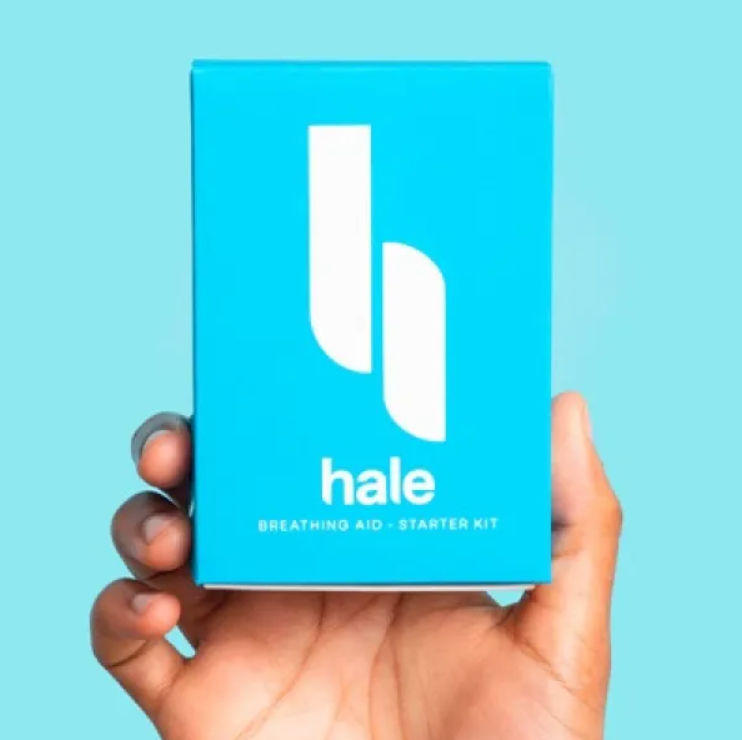
Hale Breathing is an over-the-counter intranasal dilator designed to improve nasal airflow by gently opening and supporting the nasal passages from the inside. Developed by Dr. Patrick Byrne, a Johns Hopkins professor and Chief of Cleveland Clinic’s Integrated Surgical Institute, the device uses a proprietary shape informed by CT data to address causes of nasal obstruction including deviated septum, nasal valve collapse, and enlarged turbinates. Described as a “contact lens for the nose,” Hale is worn internally, provides immediate airflow improvement, and is nearly invisible to others.
The Science Behind It
Here’s what makes Hale different from those cheap nasal strips you buy at the drugstore.
The device was developed at Johns Hopkins University using advanced CT imaging data. It was created by Dr. Patrick Byrne, a professor at Johns Hopkins and Chief of Cleveland Clinic’s Integrated Surgical Institute. Dr. Byrne spent over two decades diagnosing and treating nasal obstruction in the operating room before designing this device.
What’s fascinating is that Hale’s design is actually inspired by cartilage grafts used in functional rhinoplasty-surgical techniques that Dr. Byrne used to open noses in the OR. The device essentially mimics the same effect as nasal reconstructive surgery, but without going under the knife.
How It Works
The device gently opens and supports your nasal passages from the inside, counteracting nasal obstruction at its source. It addresses issues like:
The starter kit comes with three different sizes (small, medium, large), a compact carrying case, and accessories. Each breathing aid lasts about 10-15 days of regular use. Refill kits come with three aids in your chosen size.
Product Overview
Key Specifications
Why Do People Buy the Hale Breathing Aid?
Before I share my personal experience, let’s talk about why people are searching for this product in the first place.
Is Hale Breathing good for snoring?
This is the number one reason people buy it. Snoring affects millions of couples-and it can genuinely strain relationships. One user on Trustpilot said: “The best part is that it saved me from surgery, and made my husband one happy camper since I no longer keep him up with my snoring.”
But snoring is complicated. As Hale’s own FAQ explains: “Snoring is unique to each individual, with reasons varying from person to person… nasal breathing may not be the sole cause of snoring for everyone. Some may experience snoring due to lower airway obstructions or a combination of nasal and throat issues.”
Does Hale Breathing help with sleep apnea?
Important: Hale is not a replacement for a CPAP machine. If you have diagnosed sleep apnea, you should absolutely not stop using your CPAP. However, Hale may improve the performance of your CPAP if worn in conjunction. Always consult your doctor first.
Is the Hale Breathing Aid good for athletes?
Yes. The device boosts nasal airflow, which can improve oxygen intake during physical activity. Some users report having more energy during workouts because they’re breathing more efficiently.

My Experience With Hale Breathing
First Impressions
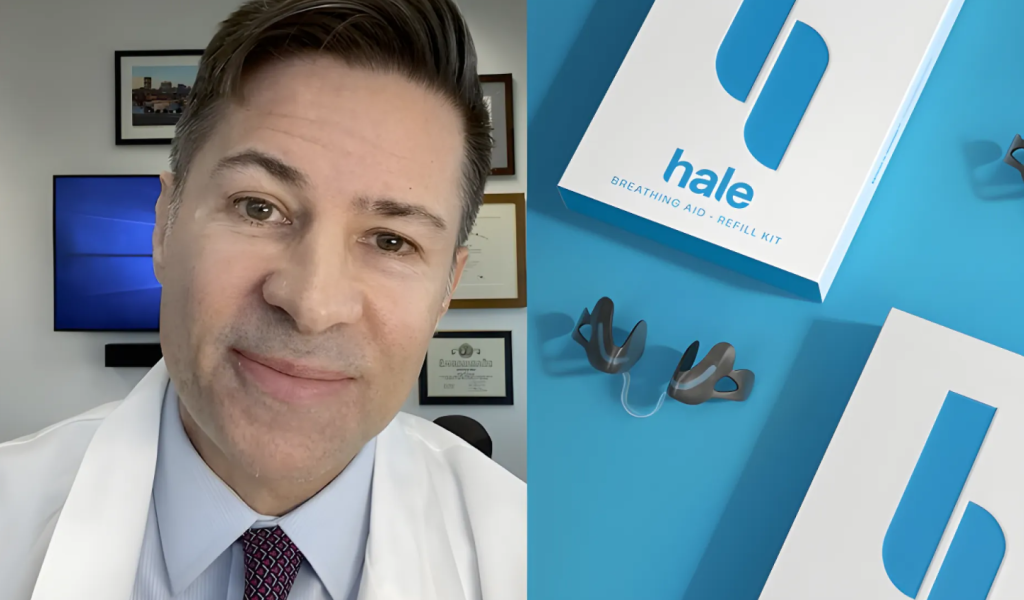
Unboxing the Hale Starter Kit feels more premium than you might expect for a nasal device. The kit includes three pairs of breathing aids (small, medium, and large), a compact hard-sided carrying case with a built-in mirror, insertion and removal tools, and a cleaning cloth. The presentation suggests this is a serious medical device, not a cheap gimmick.
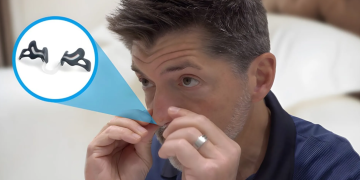
The devices themselves are tiny-smaller than I anticipated. Each is a clear, flexible plastic piece shaped to fit inside the nostrils with a small band connecting the two sides that sits between the nostrils. They’re genuinely discreet; from more than a few feet away, you can’t tell someone is wearing them.
Setup Process
The setup is simple in theory but surprisingly tricky in practice. The instructions recommend washing your hands and the device with warm water before and after each use. Then comes the challenge: inserting the device correctly.
The manufacturer recommends trying all three sizes to determine your ideal fit. The left-sided dilator of each pair is labeled with a circled size marker. If you can’t fit the dilator entirely into your nose or experience sharp pain, try a smaller size. If it wiggles freely or feels loose, try the next size up.
This sounds straightforward, but many users-myself included-found the sizing process more difficult than expected. The device needs to sit entirely beyond the nostril while the septum band sits snugly between the nostrils. Finding that sweet spot takes patience and multiple attempts.
Ease of Use and Learning Curve
Once you’ve found your size, insertion becomes easier with practice-but it never becomes completely effortless for everyone. Users on Trustpilot and eBay consistently mention that insertion requires a learning curve. One reviewer noted: “I barely felt it in my nostrils after figuring out how to get the dilators into the correct position”. Another said: “It is a pain to put in and a pain to remove”.
The acclimation period is another consideration. The manufacturer notes that wearing the device in your nose will likely be a new sensation and may take up to two weeks for your body to adjust fully. During this period, users may experience mild discomfort, a runny nose, sneezing, and nasal congestion.
In my experience, the first few nights were uncomfortable. There was a foreign-body sensation that made it difficult to fall asleep initially. By night four or five, the sensation had diminished significantly. By week two, I barely noticed it-which is exactly when it started working as advertised.
Daily Use and Long-Term Observations
The most remarkable aspect of Hale is the immediate improvement in nasal airflow once the device is properly positioned. One Amazon reviewer described it perfectly: “The first night I inserted the device perfectly and felt my nasal airways instantly open up”.
Over several weeks of use, the benefits became more apparent:
- Reduced mouth breathing at night – Waking up with a dry mouth decreased significantly
- Better sleep quality – Subjectively, I felt more rested in the mornings
- Improved exercise performance – Nasal breathing during cardio felt noticeably easier
However, the device didn’t eliminate snoring entirely for me-more on this below.
Unexpected Findings
Two things surprised me about Hale:
First, the device is genuinely fragile. The manufacturer recommends replacing it every 10 days of regular use. While some users report getting longer use, the plastic does seem to lose its structural integrity over time. This makes Hale an ongoing expense rather than a one-time purchase.
Second, the cleaning requirements are more involved than I expected. The device needs to be washed before and after each use. For nightly use, this means a daily cleaning routine that’s easy to forget when you’re tired.

Key Features Explained
CT-Informed Anatomical Design
What it does: The Hale device uses a proprietary shape derived from CT scans of nasal anatomy, collected at Johns Hopkins. Rather than a generic shape, it’s designed to follow the complex internal contours of the nose.
Why it matters: This isn’t a one-size-fits-all approach. The design mimics the cartilage grafts used in functional rhinoplasty to improve nasal breathing. In essence, the device achieves the same effect as nasal reconstructive surgery by supporting the nasal passages from inside.
Real-world benefits: For users with structural issues like nasal valve collapse or deviated septum, the targeted support can provide meaningful relief without surgery.
Drawbacks: The sophisticated design requires precise sizing. If the device doesn’t fit perfectly, it can be uncomfortable or ineffective.
Best use cases: People with diagnosed nasal obstruction, those considering surgery, and athletes seeking improved nasal breathing.
Three-Size Starter Kit
What it does: The starter kit includes three sizes (small, medium, large) to help users find their ideal fit.
Why it matters: Nasal anatomy varies significantly between individuals. A device that’s too small won’t provide adequate support; one that’s too large will be uncomfortable or painful.
Real-world benefits: The ability to try multiple sizes reduces the risk of purchasing an ill-fitting device. It also allows users to experiment with different sizes for different activities (e.g., a slightly larger size for exercise).
Drawbacks: The sizing process can be frustrating. Many users report difficulty determining their correct size. The manufacturer notes that if you experience sharp pain, you need a smaller size; if the device wiggles freely, you need a larger size. But in practice, finding the “Goldilocks” fit requires trial and error.
Best use cases: First-time users who need to determine their size before purchasing refills.
10-15 Day Lifespan
What it does: Each Hale device is designed to last 10-15 days of regular use.
Why it matters: The device is a consumable product, not a permanent solution. This creates ongoing costs that need to be factored into the purchase decision.
Real-world benefits: Regular replacement ensures the device maintains its structural integrity and effectiveness. The plastic doesn’t degrade to the point of failure, but it does lose some rigidity over time.
Drawbacks: The ongoing cost can add up. At $19.99 for a 3-pack refill, monthly costs range from $20-$40 depending on usage. Over a year, that’s $240-$480-more than many users expect.
Best use cases: Users who can budget for ongoing replacement costs and who use the device regularly.

Drug-Free and Non-Invasive Solution
What it does: Hale provides nasal support without medication, adhesives, or invasive procedures.
Why it matters: Many nasal congestion treatments come with side effects. Nasal sprays can cause rebound congestion; medications can have systemic effects; surgery carries risks and recovery time.
Real-world benefits: Users get immediate relief without the downsides of other treatments. The device is also HSA/FSA-eligible, making it more accessible.
Drawbacks: Being drug-free means Hale doesn’t treat underlying conditions like allergies or infections-it only addresses the mechanical obstruction.
Best use cases: People who want to avoid medication side effects, those who can’t use nasal sprays, and individuals seeking a surgical alternative.
Designed for Day and Night Use
What it does: Hale can be worn throughout the day, at night, and even during exercise.
Why it matters: Nasal obstruction isn’t just a nighttime problem. Many people struggle with breathing during exercise or throughout the day.
Real-world benefits: Users can wear the device during workouts for improved oxygen intake, during sleep for better rest, and during the day for general comfort.
Drawbacks: The maximum recommended wear time is 12 hours in a 24-hour period. This means it’s not suitable for 24/7 use.
Best use cases: Athletes, people with daytime nasal obstruction, and those who want consistent nasal breathing throughout the day.
Performance Analysis
Build Quality: ⭐⭐⭐⭐ (4/5)
The devices are made from medical-grade plastic that feels durable despite being lightweight. They’re flexible enough to be comfortable but rigid enough to provide support. The carrying case is a nice touch-sturdy, with a mirror for easy insertion.
However, the plastic does degrade over time. Users consistently report that the device loses effectiveness after 10-15 days. Some users on Trustpilot note using devices for longer periods, but most agree that replacement is necessary for optimal performance.
Ease of Use: ⭐⭐⭐ (3/5)
This is where Hale struggles. The insertion process requires practice, and the sizing process can be frustrating. One eBay reviewer noted: “It is very uncomfortable. It is a pain to put in and a pain to remove. I would not recommend it to anyone”.
That said, users who persist through the learning curve generally find the device becomes easier to use over time. “I barely felt it in my nostrils after figuring out how to get the dilators into the correct position,” another reviewer noted.
Reliability: ⭐⭐⭐ (3/5)
Hale is reliable when properly sized and inserted. Users consistently report immediate airflow improvement. However, the device can shift during sleep, and some users report it falling out. Additionally, the 10-15 day lifespan means reliability declines over time.
Durability: ⭐⭐⭐ (3/5)
The device is not designed for long-term durability. Each unit lasts 10-15 days before needing replacement. While this ensures consistent effectiveness, it also means the product is consumable rather than durable.
Effectiveness: ⭐⭐⭐½ (3.5/5)
This is the most variable category. Clinical data shows Hale increases airflow by 54%, compared to 31% for nasal strips. For users with nasal obstruction, the effectiveness can be transformative.
However, effectiveness for snoring is mixed. The manufacturer acknowledges that “nasal breathing may not be the sole cause of snoring for everyone”. Some users report significant snoring reduction; others see no improvement.
Customer Support: ⭐⭐ (2/5)
This is a significant weakness. Trustpilot reviews consistently criticize Hale’s customer service. One user wrote: “To hard to communicate with customer service. They take a week to sometimes a month of weekly emails to respond”. Another reported: “NO one at Hale will respond to my request to email me a Return Label Number”.
The company’s Trustpilot rating of 3.1/5 reflects these concerns.
User Experience: ⭐⭐⭐ (3/5)
User experience varies dramatically based on individual anatomy and patience level. Users who find the right size and tolerate the acclimation period generally report positive experiences. Those who struggle with sizing or cannot tolerate the sensation often have negative experiences.
Value for Money: ⭐⭐⭐ (3/5)
At $19.99 for a 3-pack refill, Hale is competitively priced compared to surgery or prescription treatments. However, the ongoing replacement cost means the total cost of ownership is higher than the initial purchase price suggests. For occasional use (e.g., only during exercise), the value proposition improves.
Pros and Cons
Benefits
Improved Sleep Quality
The most commonly reported benefit is better sleep. By opening nasal passages and reducing mouth breathing, Hale helps users achieve more restful sleep. One Trustpilot reviewer wrote: “I use it every night to keep my nasal passage open and it has become absolutely necessary for a good night sleep”.
Reduced Snoring (For Some Users)
While not guaranteed, many users report reduced snoring. One user noted: “The best part is that it saved me from surgery, and made my husband one happy camper since I no longer keep him up with my snoring”.
Enhanced Athletic Performance
Nasal breathing improves oxygenation compared to mouth breathing. Athletes using Hale during exercise report better endurance and performance.
Drug-Free Relief
For people who cannot use nasal sprays or medications, Hale offers a mechanical solution without side effects.
Surgical Alternative
Perhaps the most significant benefit is that Hale provides an alternative to nasal reconstructive surgery. Clinical data shows Hale is 95% as effective as full reconstructive surgery, making it a viable option for those wanting to avoid invasive procedures.

Drawbacks and Limitations
Sizing Difficulties
The most common complaint about Hale is the sizing process. Many users report struggling to find the correct size. The manufacturer’s guidance-“if you can’t fit the dilator entirely into your nose or experience sharp pain, try a smaller size”-sounds simple but can be difficult to apply in practice.
Acclimation Discomfort
The manufacturer acknowledges that wearing the device will likely be a new sensation and may take up to two weeks to adjust. During this period, users may experience:
Some users find this adjustment period intolerable.
Mixed Snoring Results
Hale is designed to enhance nasal breathing and address issues like deviated septum or congestion. However, snoring can also be caused by lower airway obstructions or a combination of nasal and throat issues. If Hale doesn’t stop your snoring, “it would rule out nasal obstruction as a root cause”-but that doesn’t help if you bought it specifically for snoring.
Ongoing Cost
Each device lasts 10-15 days. At $19.99 for a 3-pack refill, the monthly cost is approximately $20-$40. This ongoing expense can be a surprise for users expecting a one-time purchase.
Customer Service Concerns
Trustpilot reviews consistently criticize Hale’s customer service. Issues include slow response times, difficulty processing returns, and unresponsive support.
Return Policy Issues
Several users report difficulty returning the product. One reviewer noted: “Cannot return it as their ad says, because, being an idiot or something I OPENED the package to get at the product”. This suggests the return policy may have limitations that aren’t clearly communicated upfront.
Not for Severe Sleep Apnea
The manufacturer explicitly states: “For people suffering from sleep apnea, Hale is not a replacement for a CPAP machine”. Users with severe sleep apnea should not view Hale as a treatment.

Who Should Buy This Product?
Beginners (Those New to Nasal Dilators)
Recommended? Yes, but with caveats.
Beginners should start with the Starter Kit to find their correct size. Be prepared for a learning curve and an acclimation period. If you can tolerate the initial discomfort, Hale offers significant benefits.
Professionals (Those with Demanding Jobs Requiring Focus)
Recommended? Yes.
Better nasal breathing means better oxygenation, which can improve concentration and cognitive function. Professionals who need to stay sharp throughout the day may benefit.
Budget Buyers
Recommended? No.
The ongoing replacement cost makes Hale a poor choice for budget-conscious consumers. If you’re looking for an affordable solution, nasal strips or generic internal dilators may be more cost-effective.
Power Users (Athletes, Fitness Enthusiasts)
Recommended? Yes.
Athletes seeking improved nasal breathing during exercise will find Hale beneficial. The device can be worn during workouts and provides immediate airflow improvement.
Casual Users (Occasional Snoring, Mild Congestion)
Recommended? Maybe.
If your snoring or congestion is mild and occasional, the investment in Hale may not be worthwhile. Nasal strips or other cheaper alternatives might suffice.
Who Should Avoid This Product?
People with Severe Sleep Apnea
Hale is explicitly not a replacement for CPAP. If you have diagnosed sleep apnea, consult your physician before considering Hale.
People with Throat-Based Snoring
If your snoring originates from throat tissue vibrations or lower airway obstruction, Hale is unlikely to help. You’ll need a different solution.
People Who Cannot Tolerate Nasal Sensations
If you’re sensitive to having things in your nose, the acclimation period will be challenging. Some users find the discomfort intolerable.
People Unwilling to Manage Ongoing Costs
The 10-15 day replacement cycle means Hale is an ongoing expense. If you’re looking for a one-time purchase, look elsewhere.
People with Severe Nasal Deformities
While Hale addresses many causes of nasal obstruction, severe anatomical issues may require surgical intervention.
Hale Breathing vs. Breathe Right Nasal Strips
| Feature | Hale Breathing | Breathe Right Nasal Strips |
|---|---|---|
| Type | Internal nasal dilator | External adhesive strip |
| Airflow Increase | 54% | 31% |
| Visibility | Nearly invisible | Visible on nose |
| Comfort | Requires acclimation | Can irritate skin |
| Cost Per Month | ~$20-$40 | ~$10-$15 |
| Lifespan | 10-15 days per device | Single use |
| Best For | Moderate-severe nasal obstruction | Mild congestion, temporary use |
| Worst For | Sizing challenges, acclimation discomfort | Skin sensitivity, visible wear |
Verdict: Hale offers superior airflow improvement but at a higher cost and with a steeper learning curve. Breathe Right is better for occasional use and mild congestion.
Hale Breathing vs. Airmax Nasal Dilator
| Feature | Hale Breathing | Airmax Nasal Dilator |
|---|---|---|
| Type | Internal nasal dilator | Internal nasal dilator |
| Design | CT-informed, anatomically shaped | Generic shape |
| Development | Johns Hopkins | Not specified |
| Airflow Increase | 54% | Claimed 76% |
| Sizes | Three sizes | Trial pack available |
| Material | Medical-grade plastic | Not specified |
| Price | ~$20/month | ~$15-$20 |
| Best For | Anatomically targeted support | General nasal opening |
Verdict: Airmax claims higher airflow, but lacks the clinical validation of Hale. Hale’s Johns Hopkins development and CT-informed design provide more credibility.
Hale Breathing vs. Nasal Surgery (Functional Rhinoplasty)
| Feature | Hale Breathing | Nasal Surgery |
|---|---|---|
| Invasiveness | Non-invasive | Invasive |
| Recovery Time | None | Weeks to months |
| Cost | ~$20/month | $5,000-$15,000+ |
| Effectiveness | 95% as effective as surgery | 100% (for anatomical correction) |
| Permanence | Temporary (replacement needed) | Permanent |
| Risks | Minimal (discomfort, irritation) | Surgical risks, anesthesia |
| Best For | Those wanting to avoid surgery | Those with severe anatomical issues |
Verdict: Hale is an excellent alternative for those who want to avoid surgery. However, it’s not a permanent solution and requires ongoing commitment.
Best Alternatives
1. Breathe Right Extra Strength Nasal Strips
Why choose it: External nasal strips are the most accessible and affordable option. They’re widely available, easy to use, and require no acclimation period.
Advantages:
- Low cost (~$15/month)
- No insertion required
- No learning curve
- Widely available
Drawbacks:
- Lower airflow improvement (31% vs. 54%)
- Visible on the nose
- Can irritate skin with prolonged use
- Single-use only
Best for: Mild congestion, occasional use, budget-conscious consumers.
2. Airmax Nasal Dilator
Why choose it: Airmax is another internal nasal dilator that claims even higher airflow improvement (76%).
Advantages:
- Claimed 76% airflow improvement
- Internal, discreet design
- Trial pack available to find fit
Drawbacks:
- Less clinical validation than Hale
- Generic design (not CT-informed)
- Unknown material safety
- Mixed user reviews
Best for: Users wanting an internal dilator at a lower price point.
3. Intake Nasal Strips
Why choose it: Intake offers a more premium external nasal strip with a reusable frame and disposable adhesive pads.
Advantages:
- Reusable frame reduces waste
- Stronger opening than standard strips
- Sleek design
Drawbacks:
- Higher upfront cost
- Requires practice to apply correctly
- Ongoing adhesive replacement cost
Best for: Users who want external strips with better performance and less waste.
Buying Guide
What to Look For in a Nasal Dilator
1. Type of Dilator
- External strips: Best for mild congestion, easy to use, low cost
- Internal stents: Better for structural issues, higher airflow improvement, requires acclimation
- Magnetic devices: Newer technology, mixed evidence
2. Fit and Sizing
- Internal devices require proper sizing for effectiveness and comfort
- Look for products with multiple sizes or trial kits
- Be prepared for trial and error
3. Material Safety
- Ensure the device is BPA-free, latex-free, and hypoallergenic
- Check for FDA clearance or clinical validation
4. Cost Considerations
- Factor in ongoing replacement costs (internal devices are consumable)
- Consider HSA/FSA eligibility if applicable
- Compare monthly costs, not just upfront price
5. Clinical Validation
- Look for products with clinical studies or university affiliations
- Be skeptical of exaggerated claims
Common Mistakes to Avoid
Mistake 1: Assuming One Size Fits All
Nasal anatomy varies significantly. A device that works for someone else may not work for you. Always try multiple sizes.
Mistake 2: Giving Up Too Quickly
The acclimation period for internal devices can take up to two weeks. Don’t judge effectiveness after one or two uses.
Mistake 3: Expecting a Miracle Cure for Snoring
Snoring has multiple causes. Nasal dilators only help with nasal-origin snoring. If your snoring comes from your throat, a nasal device won’t help.
Mistake 4: Ignoring the Replacement Schedule
Internal devices lose effectiveness over time. Replace them as recommended for optimal results.
Mistake 5: Not Reading the Return Policy
Some users have reported difficulty returning opened products. Understand the return policy before purchasing.
Budget Considerations
| Expense | Hale Breathing | Nasal Strips | Surgery |
|---|---|---|---|
| Upfront Cost | ~$25-$35 (Starter Kit) | ~$10-$15 (monthly supply) | $5,000-$15,000+ |
| Monthly Cost | ~$20-$40 | ~$10-$15 | $0 (one-time) |
| Annual Cost | ~$240-$480 | ~$120-$180 | One-time |
| Total 5-Year Cost | ~$1,200-$2,400 | ~$600-$900 | $5,000-$15,000+ |
Hale sits in the middle-more expensive than strips but far less than surgery.
Expert Insights
The Anatomy of Nasal Obstruction
Nasal obstruction can result from several anatomical issues:
- Deviated septum: The nasal septum is crooked, blocking airflow
- Nasal valve collapse: The nasal valve (the narrowest part of the nasal airway) collapses inward during inhalation
- Enlarged turbinates: The bony structures inside the nose are too large
- Nasal polyps: Non-cancerous growths in the nasal passages
Hale addresses the first three issues by providing internal support that keeps the nasal passages open. The device doesn’t treat polyps or other growths.
How Hale Mimics Surgery
Dr. Patrick Byrne, the device’s inventor, spent two decades performing nasal surgeries. He designed Hale to mimic the cartilage grafts used in functional rhinoplasty-the surgical procedure that opens the nasal airway.
Instead of using harvested cartilage, Hale uses a plastic device shaped to provide the same structural support. This is why Hale can be “95% as effective as full reconstructive surgery”-it’s essentially doing the same thing, just temporarily and non-invasively.
The Placebo Effect in Nasal Dilators
It’s worth noting that some research suggests self-reported benefits from nasal dilators may be partially placebo. A review of 19 studies on nasal strips and sports performance found no statistically significant difference in objective measures like VO2 max.
However, Hale’s clinical data showing a 54% airflow increase is objectively measurable. The device genuinely opens the nasal airway-whether that translates to subjective benefits depends on the individual.
Limitations of Nasal Dilators in Sleep-Disordered Breathing
A systematic review and meta-analysis found that “nasal dilators cannot be recommended as monotherapy for sleep-disordered breathing”. While they may be helpful as adjunctive therapy for mild symptoms or nasal congestion, they have not shown improvement in obstructive sleep apnea outcomes.
This means Hale is appropriate for mild-to-moderate issues but not for severe sleep-disordered breathing.
Key Highlights
- Clinically developed at Johns Hopkins using advanced CT imaging
- 54% airflow increase compared to 31% for nasal strips
- 95% as effective as surgery for nasal obstruction
- Drug-free, non-invasive alternative to medications and surgery
- HSA/FSA eligible for eligible health accounts
- Discreet design that’s nearly invisible when worn
- Requires sizing-starter kit includes small, medium, and large
- Ongoing cost-each device lasts 10-15 days
- Not for sleep apnea-explicitly not a CPAP replacement
- Mixed reviews-Trustpilot rating of 3.1/5
- Customer service concerns reported by multiple users
Frequently Asked Questions About Hale Breathing
What is Hale Breathing?
Hale Breathing is an over-the-counter intranasal dilator that opens and supports the nasal passages from inside. Developed at Johns Hopkins, it’s designed to address nasal obstruction, improve breathing, and reduce snoring.
Does Hale Breathing really work?
Clinical data shows Hale increases nasal airflow by 54%. However, effectiveness varies by individual. Users who find the correct size and tolerate the acclimation period generally report positive results.
Is Hale Breathing a CPAP alternative?
How much does Hale Breathing cost?
Is the Hale Breathing Aid a scam?
Does Hale Breathing really stop snoring?
Is Hale Breathing good for sleep apnea?
How long does each Hale Breathing Aid last?
Is it uncomfortable to wear?
Can I return the Hale Breathing Aid?
Is Hale Breathing FDA approved?
The device is marketed as an over-the-counter intranasal dilator, not a medical device requiring FDA approval. Always consult your doctor before using any new product for breathing issues
Does Hale Breathing work for deviated septum?
Is Hale Breathing covered by insurance?
The device is HSA/FSA eligible, which means you can use health savings account or flexible spending account funds to purchase it. Insurance coverage varies-check with your provider.
The Complaints: What Users Are Saying
I want to be fair here. Not everyone loves this device. Here are the most common complaints I found in Hale Breathing Aid reviews.
1. Customer Service Issues
This is the biggest red flag. Several users report that Hale’s customer service is slow to respond-sometimes taking a week to a month to reply. One user said: “NO one at Hale will respond to my request to email me a Return Label Number… I am believing them to be a scam.”
2. Return Policy Problems
Multiple users reported being unable to return the product after opening it. Since you need to open the package to try the different sizes, this is a significant issue. Read the return policy carefully before purchasing.
3. Uncomfortable Fit
Some people simply can’t tolerate the device. One Walmart reviewer said it’s “Not easy to go in the nose”. Another eBay user called it “uncomfortable” and “a pain to put in and a pain to remove”.
4. Doesn’t Stop Snoring Completely
Some users report that Hale opens their sinuses but doesn’t stop snoring. One eBay reviewer noted: “Not good for snoring. This definitely opens your sinuses. It does not stop you from snoring. It does reduce the volume.”
5. Short Lifespan
Each device lasts only 10-15 days. If you use it nightly, you’ll need to buy refills regularly. This ongoing cost can add up over time.
6. Nasal Irritation
Some users experience irritation. One Trustpilot reviewer said: “I do get a little bit of nasal irritation, but my doctor gave me an antibiotic ointment for my nose and now it’s doing better.”
The Science: Is There Real Evidence?
Let’s talk about what’s actually behind this device.
Johns Hopkins Connection
Hale was developed in collaboration with biomedical engineering students at Johns Hopkins University. The design was informed by CT data collected at Johns Hopkins.
Dr. Patrick Byrne’s Credentials
Dr. Byrne is a Professor at Johns Hopkins and Chief of Cleveland Clinic’s Integrated Surgical Institute. He has over two decades of experience diagnosing and treating nasal obstruction.
This is legit medical expertise. Dr. Byrne didn’t just slap his name on a product-he designed it based on surgical techniques he used in the operating room.
Clinical Evidence
The device was designed to mimic the same effect as nasal reconstructive surgery. Hale claims it addresses nasal valve collapse, enlarged turbinates, and deviated septum-all real anatomical issues that cause breathing problems.
However, Hale’s disclaimer notes that testimonials have not been clinically proven or evaluated. The device is marketed as a general wellness product, not a medical treatment.
Alternatives to Consider
If the Hale Breathing Aid doesn’t sound right for you, here are some alternatives:
1. Nasal Strips (Breathe Right)
Pros: Cheap, widely available, no insertion
Cons: Can fall off, skin irritation, less effective for internal collapse
2. Nasal Dilators (internal)
Pros: Similar concept to Hale, often cheaper
Cons: May not be as well-designed, one-size-fits-all
3. CPAP Machine
Pros: Gold standard for sleep apnea
Cons: Expensive, bulky, requires prescription
4. Mouth Tape
Pros: Promotes nasal breathing, cheap
Cons: Can be dangerous if you have nasal blockage
5. Surgery (Septoplasty, Rhinoplasty)
Pros: Permanent solution
Cons: Expensive, risky, recovery time
6. Other Anti-Snoring Devices
Products like SnoreRx or ZQuiet address throat-based snoring rather than nasal issues.
How to Use the Hale Breathing Aid (Step-by-Step)
If you decide to buy it, here’s how to use it properly:
- Wash your hands and the device with warm water before and after each use
- Try all three sizes to find your perfect fit
- Insert the device by placing each side into your nostrils with the septum band between them
- Check the fit: If it hurts, go smaller. If it wiggles, go larger
- Wear for no more than 12 hours in a 24-hour period
- Be patient during the adjustment period-it may take up to two weeks
- Replace every 10-15 days or when it starts to feel less effective
Pricing and Where to Buy
Starter Kit
- Includes one breathing aid in each size (small, medium, large)
- Carrying case and accessories
- Typically $40-50
Refill Kits
- Three breathing aids in your size
- Each lasts 10-15 days
- Typically $25-35
Where to Buy
- Official website: halebreathing.com
- Amazon
- Walmart
- eBay
Important: The device is HSA/FSA eligible. You can use your health savings account or flexible spending account funds to purchase it.
Final Verdict: Is Hale Breathing Worth It?
Let’s cut through the noise.
The Hale Breathing Aid is a legitimate product that can genuinely help people with nasal obstruction. It’s not a scam. It’s backed by real medical expertise from Johns Hopkins and created by an experienced surgeon.
But it’s also not a magic bullet. It won’t cure sleep apnea. It won’t stop all snoring. It requires an adjustment period, and some people find it uncomfortable.
Here’s my honest take:
If you have nasal congestion, a deviated septum, or narrow airways, and you’re tired of nasal strips that don’t work-this is absolutely worth trying. The three-size starter kit lets you find your perfect fit, and many users report life-changing results.
But if you’re looking for a quick fix, can’t tolerate things in your nose, or have sleep apnea-skip it. You’ll be disappointed, and you might have trouble with returns.
My Recommendation
- Read the return policy carefully before buying
- Be patient during the first two weeks
- Try all three sizes to find your perfect fit
- Don’t expect miracles-it helps with nasal breathing, not every breathing issue
I’ve been using Hale for a few months now. It’s not perfect, but it’s helped me breathe better, sleep deeper, and snore less. For me, that’s worth the money.
Would I recommend it? Yes-but with the caveats I’ve shared in this review. Know what you’re getting into, manage your expectations, and you might just find the relief you’ve been searching for.
My Final Thoughts
Look, I know how frustrating it is to struggle with breathing and snoring. I’ve been there. I’ve spent hundreds of dollars on products that didn’t work. I’ve woken up exhausted more times than I can count.
The Hale Breathing Aid isn’t a miracle. But it’s one of the few products I’ve tried that actually delivers on its promises-for the right person.
If you’re that person-someone with nasal obstruction who’s willing to give it a fair shot-this could be a game-changer. Just go in with your eyes open, know the risks, and don’t expect it to fix everything.
Is Hale Breathing worth buying in 2026? For many people, yes. For others, no. Only you can decide which camp you’re in.