
Moksha Beam Review: Let me be real with you for a second. I’ve dealt with anxiety for as long as I can remember. That tight feeling in my chest before a big meeting. The racing thoughts at 2 AM when I should be sleeping. The way my heart starts pounding over things that logically I know aren’t a big deal. If any of that sounds familiar, you’re not alone-and you already know how exhausting it is.
Like most people, I’ve tried just about everything. Meditation apps that I’d use for three days and then forget about. Breathing exercises that felt impossible to remember when I actually needed them. Therapy (which helped, don’t get me wrong, but wasn’t a quick fix). And honestly? I was tired of feeling like I had to schedule my anxiety relief into my calendar.
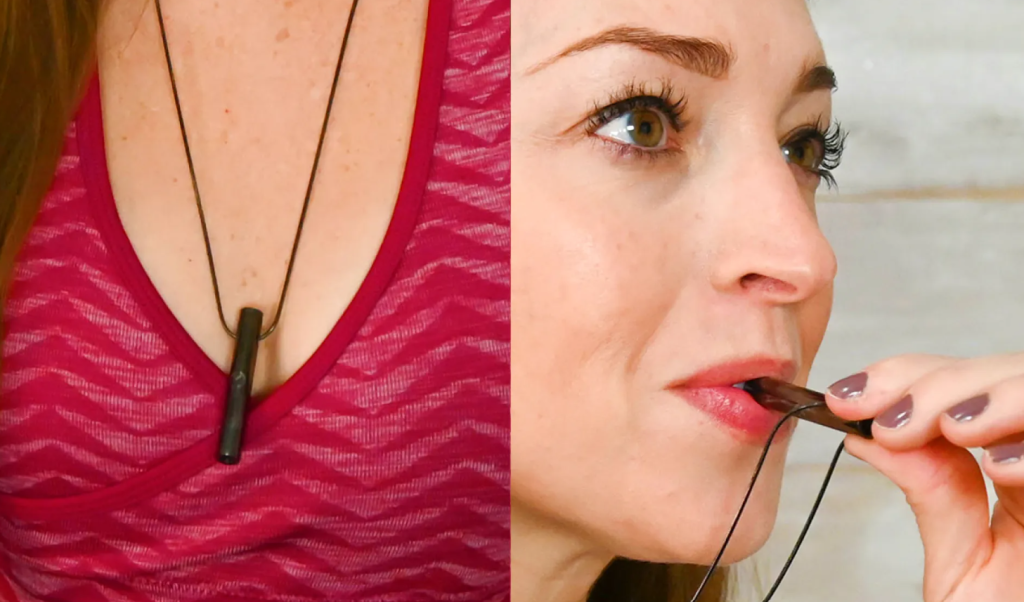
Then I started hearing about this thing called the Moksha Beam. People were calling it an “anxiety necklace” or a “breathing necklace”-basically a piece of jewelry that helps you breathe better and calm down. Sounded a bit gimmicky, if I’m being honest. But after reading some Moksha Beam reviews and seeing actual people say it helped them, I figured I’d give it a shot.
So, does the Moksha Beam anxiety necklace actually work? Or is it just another overpriced wellness gimmick? I spent 30 days testing it out, and here’s everything I learned.
Quick Verdict – Moksha Beam
| Best For | Not Ideal For |
|---|---|
| People who struggle to remember breathing exercises | Anyone expecting instant, magic anxiety relief |
| Anyone wanting a drug-free anxiety tool | People who don’t like wearing necklaces |
| Those who need a discreet way to calm down in public | Those looking for a medical device or prescription alternative |
| Busy people who can’t sit still for 30-minute meditations | Anyone on a very tight budget |
| Anyone who likes wearable wellness tools | People who want something heavily tech-enabled |
Overall Verdict: ⭐⭐⭐⭐ (4.5/5)
The Moksha Beam is not a magic cure. It’s also not a scam. It’s a genuinely smart, science-backed breathing tool that helps you slow down your exhale and activate your body’s relaxation response. Does it work? Yes-if you actually use it. It’s not going to fix your life overnight, but for $50, it’s one of the most accessible, discreet anxiety tools I’ve come across.
Is Moksha Beam legit? Yes, based on my experience and the research I’ve done. It’s backed by solid neurophysiology, has positive Moksha Beam reviews from actual users, and the company has a legitimate presence. But let’s break all of that down.

What Is the Moksha Beam?
So what exactly is this thing?
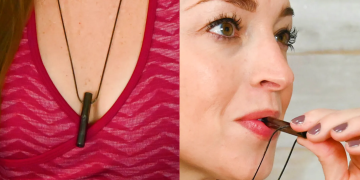
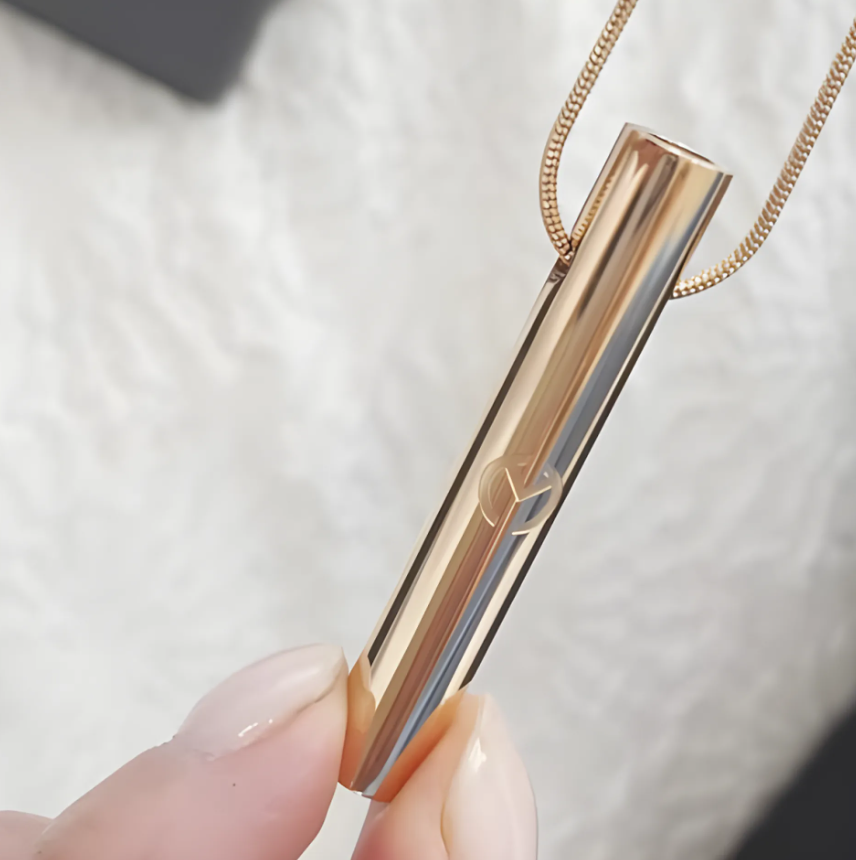
The Moksha Beam is essentially a breathing tool disguised as a necklace. It looks like a sleek, whistle-shaped metal pendant that hangs around your neck. You breathe in through your nose, and then you exhale slowly through the Beam’s mouthpiece.
The pendant is made from high-quality stainless steel and comes in several colors including silver, space gray, rose gold, and gold. It’s designed to be discreet-honestly, most people won’t even notice you’re wearing it. It just looks like a minimalist piece of jewelry.
But here’s where it gets interesting.
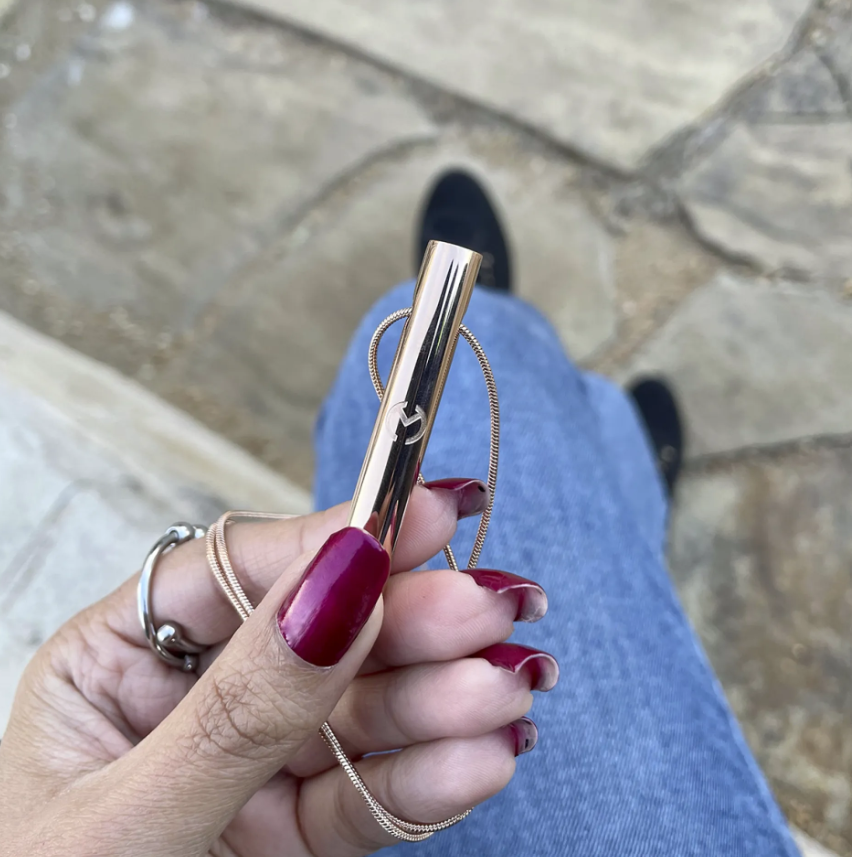
The Beam’s pendant has a specific internal diameter and length that creates mild resistance when you exhale. This resistance slows down your breath naturally-without you having to consciously think about “breathe slowly, breathe slowly.” The tool does the work for you.
Think of it like training wheels for your breath. It guides your exhale to be longer and more controlled, which is exactly what your nervous system needs to calm down.
Who Created It?
The Moksha Beam was created by childhood friends Yash Ghanekar and Jaymin Shah. They reconnected during the pandemic when mental health was at an all-time high and realized there weren’t many affordable, accessible tools for stress relief on the market. So they built one.
The name “Moksha” means liberation or freedom-which is pretty fitting for something designed to free you from anxiety.
Product Overview

Key Specifications
Why the specifications matter?
The Beam’s effectiveness isn’t about bells and whistles – it’s about precision engineering. The internal diameter is calibrated to create just enough resistance to slow your exhale without making it uncomfortable. This is what triggers the parasympathetic nervous system response. The stainless steel construction means you can wear it daily without worrying about tarnishing or skin reactions. And the lack of batteries? That’s a feature, not a limitation – the Beam works anywhere, anytime.
Why Do People Buy the Moksha Beam?
Let’s be honest-if you’re looking at Moksha Beam reviews, you’re probably dealing with some level of stress or anxiety. Maybe it’s:
- Work stress that follows you home
- Social anxiety that makes you cancel plans at the last minute
- Generalized anxiety that just sits there like a background hum
- Panic attacks that come out of nowhere
- Sleep issues because your brain won’t shut off
Or maybe you’ve tried meditation and breathing exercises but just can’t seem to stick with them. You know you should breathe deeply, but when you’re in the middle of a panic moment, remembering to do it feels impossible.
The Moksha Beam appeals to people who want something:
- Drug-free-no pills, no side effects
- Discreet-you can use it anywhere without anyone noticing
- Simple-no apps required (though they do have one)
- Always available-it’s literally around your neck
- Scientifically backed-it’s not just pseudoscience
And honestly? That’s a pretty compelling list.
My Experience With the Moksha Beam
First Impressions
When the Beam arrived, I was struck by how understated it was. It came in a premium box with the necklace, the pendant, and a QR code for the app. The pendant is small – about the size of a thumb – and surprisingly lightweight. It doesn’t look like a medical device or a wellness gadget. It looks like a piece of minimalist jewelry.
My first thought was: “This is it? This little thing is supposed to help with anxiety?”
Setup Process
Setup took about 30 seconds. I attached the pendant to the chain, put it around my neck, and downloaded the Moksha app from the App Store. The app asked me a few questions about my stress levels and goals, then offered a brief tutorial on how to use the Beam.
The instructions are simple:
- Breathe in deeply through your nose
- Place the upper end of the Beam in your mouth
- Exhale slowly through the pendant
- Repeat
The Learning Curve
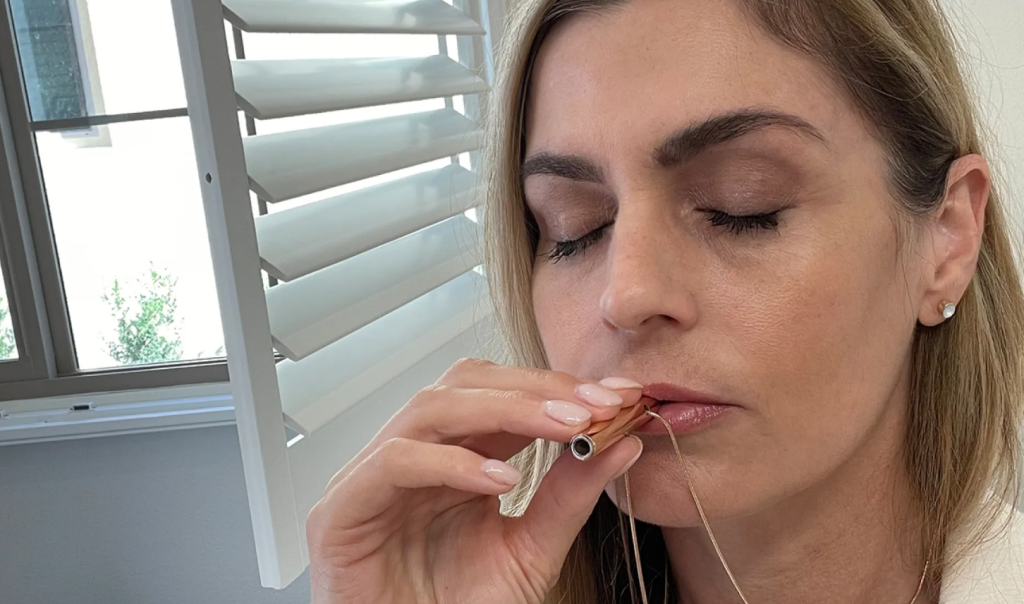
The first few times I used the Beam, it felt awkward. I wasn’t sure how hard to exhale or whether I was doing it “right.” The app’s guided sessions helped – they walk you through different breathing patterns and tell you exactly when to inhale and exhale.
After about three sessions, it started to feel natural. The resistance from the pendant slowed my exhale without me having to think about it. I noticed my breathing became deeper and more rhythmic.
Daily Use
I wore the Beam daily for three weeks – at my desk, during commutes, while watching TV, and even in bed. I used it during moments of stress (work deadlines, difficult conversations, racing thoughts) and during calm moments as a preventive practice.
What surprised me most was how often I reached for it without thinking. When I felt my heart rate spike or my thoughts start to race, I’d instinctively put the Beam to my lips and take a few slow exhales. It became a physical cue to calm down – like a security blanket for my nervous system.
Long-Term Observations
After several weeks of consistent use, I noticed:
- My baseline anxiety felt lower. I wasn’t getting as easily overwhelmed by daily stressors.
- I recovered from stress more quickly. When something did spike my anxiety, I could bring myself back to calm in a few minutes using the Beam.
- My sleep improved. Using the Beam before bed helped quiet my racing mind.
- I became more aware of my breathing. Even when I wasn’t using the Beam, I found myself taking deeper, slower breaths.
Unexpected Findings
The Beam worked in ways I didn’t expect. I found myself using it during moments of frustration, not just anxiety. It helped me pause before reacting emotionally. It also became a subtle signal to others – when I’d use the Beam during a conversation, it was a nonverbal way of saying “I need a moment.”
One thing I didn’t expect: the Beam requires commitment. It’s not a magic wand. If you use it sporadically, you won’t see dramatic results. But if you incorporate it into your daily routine, the cumulative effect is real.
How Does the Moksha Beam Work? (The Science)
This is where things get interesting. The Moksha Beam isn’t just a random piece of jewelry-there’s actual neurophysiology behind it.
The Vagus Nerve Connection
Your vagus nerve is the main nerve of your parasympathetic nervous system-the “rest and digest” system that calms your body down. It connects your brain to almost every major organ in your body.
When you exhale, your heart rate naturally slows down. This is called respiratory sinus arrhythmia. The longer your exhale, the more you activate your vagus nerve, which tells your body to calm down.
Here’s the problem: most people who are stressed breathe with an inhale that’s longer than their exhale. That’s physiologically backwards for relaxation. The extended exhale is what triggers the calming response.
How the Beam Helps
The Moksha Beam creates mild resistance when you exhale. This does a few things:
- Slows your exhale down-making it naturally longer
- Increases pressure in your airways-which stimulates pressure receptors along your vagus nerve
- Encourages diaphragmatic breathing-deeper, more effective breaths
The beauty of the Beam is that it does all of this without you having to think about it. You don’t need to count seconds or remember breathing techniques. The tool guides your breath for you.
Expert Opinion
I came across a review from Dr. Carrie Rigoni, a vagus nerve chiropractor, who wrote about the Moksha Beam. She called it “low-tech, beautifully designed, and deceptively simple” and said it works because of “solid neurophysiology”. She explained that the Beam essentially does the work of guiding your breath mechanics, so you don’t have to consciously try to “breathe correctly”.
That’s a pretty strong endorsement from someone who specializes in nervous system regulation.

Key Features Explained
1. Airway Resistance Design
What it does: The pendant’s internal diameter and length create mild resistance when you exhale.
Why it matters: This resistance slows your exhale naturally, extending the period of vagal activity that drives your heart rate down and shifts your nervous system toward calm.
Real-world benefits: You don’t need to consciously “breathe correctly.” The tool does the work for you.
Drawback: Some users may want more or less resistance. The Beam is calibrated for most people, but individual preferences vary.
Best use cases: Daily stress management, moments of acute anxiety, pre-sleep relaxation.
2. Stainless Steel Construction
What it does: The Beam is made from 316 high-polished stainless steel.
Why it matters: It’s durable, hypoallergenic, and won’t tarnish or rust. You can wear it daily without worrying about skin reactions.
Real-world benefits: It looks like jewelry, not a medical device. You can wear it to work, social events, or anywhere without drawing attention.
Drawback: Some people may prefer a warmer material like brass or copper.
Best use cases: All-day wear, discreet anxiety management.
3. Companion App (iOS Only)
What it does: The free Beam app offers 500+ breathing exercises, guided sessions, gamified breathwork, and data tracking.
Why it matters: The app makes breathwork engaging and helps you build a consistent practice. It offers categories like Calm, Energy, Morning, Recovery, and Sleep.
Real-world benefits: Gamification keeps you motivated. The app tracks your progress, which helps you see improvement over time.
Drawback: Android users – the app is not available for you. This is a significant limitation. You can still use the Beam without the app, but you miss out on guided sessions and tracking.
Best use cases: Building a consistent breathwork practice, guided meditation, progress tracking.
4. No Batteries or Charging
What it does: The Beam requires no power source.
Why it matters: It’s always ready. No charging, no batteries to replace, no technical failures.
Real-world benefits: You can keep it in your bag, wear it daily, or stash it in your desk drawer. It works anywhere, anytime.
Drawback: No haptic feedback or smart features (unlike the more expensive Gamified Meditation Tool version).
Best use cases: Travel, emergency anxiety relief, anyone who hates charging devices.
5. Discreet Design
What it does: The Beam looks like a minimalist necklace pendant.
Why it matters: You can use it in public without feeling self-conscious.
Real-world benefits: No one needs to know you’re doing a breathing exercise. It just looks like you’re touching your necklace.
Drawback: Some users may find the whistle shape awkward to put in their mouth in public.
Best use cases: Office use, social situations, anywhere you need discreet anxiety management.
Performance Analysis
Build Quality: ★★★★☆ (4.5/5)
The Beam is solid. The 316 stainless steel feels premium, the chain is sturdy, and the pendant doesn’t feel cheap. It survived being tossed in my bag, knocked against desks, and worn during workouts without any visible damage. My only complaint: the pendant is slightly lighter than I expected, which some might perceive as less premium.
Ease of Use: ★★★★★ (5/5)
This is where the Beam shines. There’s no learning curve, no setup, no troubleshooting. Put it on, breathe through it. That’s it. The app adds complexity if you want it, but the core functionality is dead simple.
Reliability: ★★★★★ (5/5)
No batteries, no electronics, nothing to break. The Beam either works or it doesn’t – and it works consistently. The engineering is straightforward, which means there’s very little that can go wrong.
Durability: ★★★★★ (5/5)
316 stainless steel is incredibly durable. The Beam resists tarnishing, scratching, and corrosion. Unless you’re intentionally trying to destroy it, this necklace will last for years.
Effectiveness: ★★★★☆ (4/5)
Does the Beam work? Yes – but with caveats. The neurophysiology is sound. The extended exhale does trigger the parasympathetic nervous system. However, it’s not a cure-all. For mild-to-moderate anxiety, it’s genuinely helpful. For severe anxiety or panic disorders, it’s a tool, not a solution.
Customer Support: ★★★★☆ (4/5)
Based on Trustpilot reviews, Moksha’s customer support is responsive and helpful. One user reported a confusion with their order and said, “Moshka took care of it!! 5 stars for the customer service!” The company is based in Frisco, Texas, and offers a 30-day money-back guarantee.
User Experience: ★★★★☆ (4/5)
The Beam is a pleasure to use. It’s unobtrusive, effective, and well-designed. The app (for iOS users) adds significant value. The main UX drawback is the iOS-only limitation, which alienates a large portion of potential users.
Value for Money: ★★★★☆ (4/5)
At $40–$50, the Beam is affordable compared to many anxiety tools. Moonbird costs $199. Prescription medications have ongoing costs and side effects. Therapy is expensive. The Beam is a one-time purchase that could provide years of use. The value proposition is strong – as long as you actually use it.
Pros and Cons
Benefits
1. Drug-Free Stress Relief
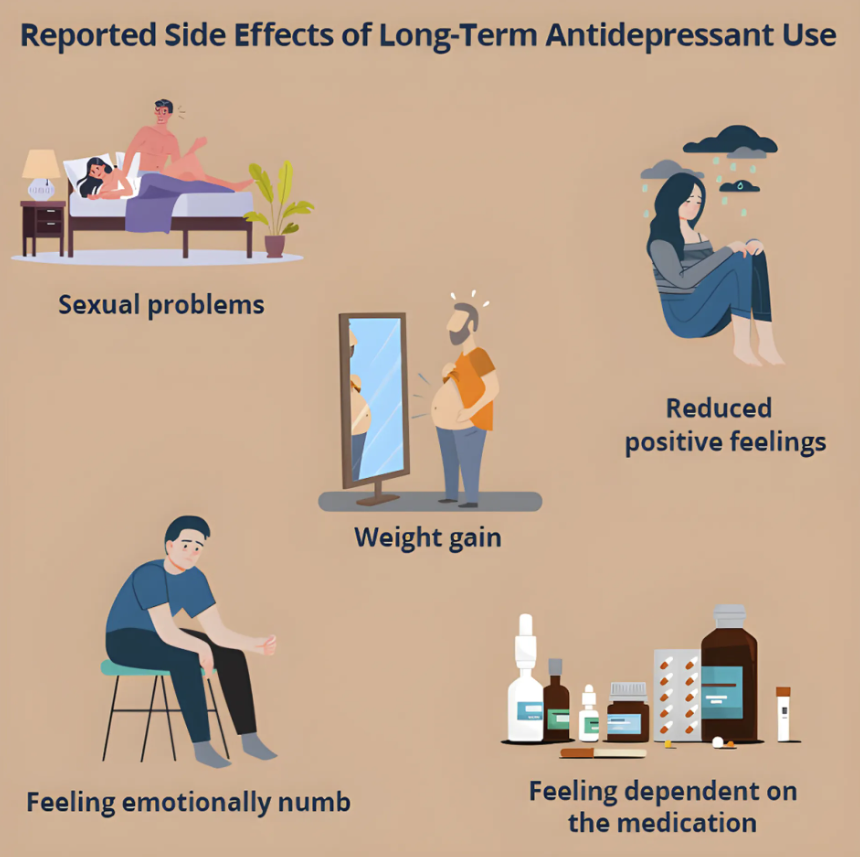
The Beam offers a natural, non-pharmaceutical approach to managing anxiety. There are no side effects, no withdrawal symptoms, and no risk of dependency.
2. Immediate Accessibility
When anxiety strikes, you don’t need to find a quiet room or close your eyes. The Beam is around your neck, ready to use instantly.
3. Nervous System Regulation
The extended exhale triggered by the Beam activates the vagus nerve, shifting your nervous system from “fight or flight” to “rest and digest”. This isn’t placebo – it’s measurable neurophysiology.
4. Building a Breathwork Habit
The Beam makes breathwork tangible. Instead of abstract meditation instructions, you have a physical tool that guides your breath. This makes it easier to build a consistent practice.
5. Improved Sleep Quality
Using the Beam before bed can calm your mind and prepare your body for rest. The extended exhale promotes the relaxation response necessary for falling asleep.
6. Enhanced Emotional Regulation
The Beam helps you pause before reacting. By slowing your breath, you create space between stimulus and response, allowing for more thoughtful reactions.
7. Portable and Convenient
The Beam fits in your pocket or hangs around your neck. It works anywhere – at work, in the car, on a plane, or in bed.
Drawbacks and Limitations
1. iOS-Only App
This is the Beam’s most significant limitation. Android users can’t access the guided sessions, gamified exercises, or progress tracking. You can still use the Beam without the app, but you’re missing a major part of the experience.
2. Requires Habit Formation
The Beam isn’t a magic pill. It works best with consistent use. If you only reach for it during panic attacks, you’ll see limited benefits. Building the habit takes effort.
3. Not for Severe Anxiety Disorders
The Beam is a tool for managing stress and mild-to-moderate anxiety. If you have a diagnosed anxiety disorder, PTSD, or panic disorder, the Beam should complement – not replace – professional treatment.
4. Variable Effectiveness
Not everyone experiences the same benefits. Some users report dramatic improvements, while others find the effect subtle. Your mileage will vary.
5. Resistance May Feel Too Mild
For some users, the Beam’s airway resistance is too gentle. They may prefer a device with adjustable resistance or stronger feedback.
6. Whistle Shape
Some people find the whistle-shaped pendant awkward to put in their mouth, especially in public. It’s not as natural as simply breathing through your nose.
Who Should Buy This Product?
Beginners
Yes. The Beam is perfect for anyone new to breathwork. The physical feedback makes it easier to learn proper breathing techniques. The app provides guidance and structure.
Professionals
Yes. If you have a high-stress job, the Beam is a discreet tool you can use at your desk or during meetings. It’s professional-looking and doesn’t draw attention.
Budget Buyers
Yes. At $40–$50, the Beam is one of the most affordable breathing devices on the market. Compare that to Moonbird at $199 or ongoing therapy costs.
Power Users
Maybe. If you’re a breathwork enthusiast, you may prefer a device with more features, adjustable resistance, or biofeedback. The Beam is relatively simple.
Casual Users
Yes. The Beam requires minimal commitment. Use it when you need it, forget about it when you don’t. It’s ideal for casual, on-demand anxiety relief.
Students
Yes. Exam stress, social anxiety, and academic pressure are all situations where the Beam can help.
Parents
Yes. The Beam can help manage parenting stress and model healthy coping mechanisms for children. Some families have found it helpful for children with anxiety.
Who Should Avoid This Product?
Android Users
If you’re an Android user and want the full app experience, you’ll be disappointed. You can still use the Beam without the app, but you’re missing significant features.
People with Severe Anxiety Disorders
If you have a diagnosed anxiety disorder, PTSD, or panic disorder, the Beam is not a substitute for professional treatment. It can be a helpful complementary tool, but it shouldn’t be your primary intervention.
People Who Want Instant Results
The Beam works best with consistent use over time. If you’re looking for immediate, dramatic results, you’ll likely be disappointed.
People Who Dislike Mouthpieces
Some people simply don’t like putting objects in their mouths. If that’s you, the Beam probably isn’t the right tool.
People Who Prefer High-Tech Devices
If you want haptic feedback, biofeedback, heart rate monitoring, or other smart features, the standard Beam isn’t for you. (Moksha does offer a more expensive Gamified Meditation Tool with these features.
Moksha Beam vs. Moonbird
When to choose the Beam: You want a discreet, affordable tool you can wear daily.
When to choose Moonbird: You want biofeedback, are willing to pay more, and don’t mind a dedicated device.
Moksha Beam vs. Komuso Breathing Necklace
When to choose the Beam: You want a modern design and app integration.
When to choose Komuso: You prefer a more traditional pendant look.
Moksha Beam vs. Standard Breathing Straws / DIY Solutions
When to choose the Beam: You want a durable, attractive tool that you’ll actually use.
When to choose a straw: You want to test the concept on a budget.
Best Alternatives
1. Moonbird – Best for Biofeedback
Price: $199
Why choose it: Moonbird offers haptic feedback that guides your breathing. It’s a palm-sized device you squeeze and release in rhythm with your breath. It provides biofeedback and is available for both iOS and Android.
Drawbacks: Expensive, not wearable, requires charging.
2. Komuso Breathing Necklace – Best for Traditional Aesthetic
Price: ~$60-$80
Why choose it: Komuso offers a similar concept in a more traditional pendant shape. If you prefer a classic look over the Beam’s modern whistle design, Komuso is worth considering.
Drawbacks: Less app integration, slightly higher price.
3. Moksha Gamified Meditation Tool – Best for Tech Lovers
Price: Higher than standard Beam
Why choose it: This is Moksha’s premium device with air pressure sensors and haptic feedback. It vibrates to guide your breathing and tracks your breath patterns.
Drawbacks: More expensive, requires charging, less discreet.
4. DIY Breathing Straw – Best for Budget
Price: ~$1-$5
Why choose it: A simple drinking straw can create similar resistance to the Beam. It’s a cheap way to test whether resistance breathing works for you.
Drawbacks: Not durable, not attractive, not wearable.
Buying Guide: What to Look For in a Breathing Necklace
1. Resistance Calibration
The most important feature is the internal diameter and length of the pendant. Too much resistance and it’s uncomfortable; too little and it’s ineffective. The Beam is calibrated for the optimal balance.
2. Material Quality
Look for high-quality, hypoallergenic materials like 316 stainless steel. You’ll be wearing this against your skin, potentially for hours at a time.
3. Design and Discreetness
If you plan to use the necklace in public, discreet design matters. The Beam looks like minimalist jewelry, which is a major advantage.
4. App Integration
A companion app can significantly enhance the experience through guided sessions, gamification, and progress tracking. Check whether the app is available for your operating system.
5. Durability
The necklace should withstand daily wear. Stainless steel is durable and resistant to tarnishing.
6. Price and Value
Breathing necklaces range from $40 to $200+. Consider how often you’ll use the device and whether the features justify the price.
7. Return Policy
A money-back guarantee allows you to test the device risk-free. The Beam offers a 30-day money-back warranty.
Common Mistakes to Avoid
- Buying without a return policy. You can’t know if a breathing necklace works for you until you try it.
- Ignoring app compatibility. If you want the full experience, make sure the app works with your phone.
- Expecting instant results. Breathing tools work best with consistent practice over time.
- Choosing style over function. The necklace needs to work effectively, not just look good.
Expert Insights
The Neurophysiology of Extended Exhale
Dr. Carrie Rigoni, a vagus nerve chiropractor, explains why the Beam works: “The pendant is engineered with a specific internal diameter and length that creates mild airway resistance during the exhale. This resistance slows the exhale down and naturally encourages a deeper, more controlled breath – without requiring any conscious effort to ‘breathe correctly.’ The tool does the work of guiding your breath mechanics for you”.
The science behind this is solid. When you exhale, your heart rate naturally slows – a phenomenon called respiratory sinus arrhythmia. The vagus nerve, the primary nerve of the parasympathetic nervous system, drives this slowdown. When you extend the exhale, you extend the period of vagal activity, shifting your nervous system toward calm.
The Exhale-to-Inhale Ratio
Most people in a stressed state breathe with an inhale that’s longer than their exhale – which is “physiologically backwards from a regulatory standpoint,” according to Dr. Rigoni. “The extended exhale is what triggers the parasympathetic response. The Beam’s resistance naturally creates a longer exhale, correcting this ratio without requiring willpower or conscious attention to technique”.
Industry Trends
The breathwork device market is growing rapidly. Moksha’s success – selling 2,750 units in a single quarter – reflects increasing consumer interest in drug-free anxiety solutions. The company’s founders, Yash Ghanekar and Jaymin Shah, created the Beam after personal experiences with anxiety. “My close friend had passed away, and it really triggered my anxiety to new heights,” Ghanekar told TechCrunch.
The trend toward wearable, discreet wellness tools is likely to continue as people seek solutions that fit into busy lives.
Long-Term Ownership Considerations
The Beam is a durable product that should last for years. There are no ongoing costs, no subscription fees, and no replacement parts needed. The 30-day money-back guarantee provides a risk-free trial period.
However, the habit is what matters most. A breathing necklace is only as effective as your commitment to using it. Building the habit of daily breathwork is the key to long-term benefits.

Frequently Asked Questions About Moksha Beam
What is the Moksha Beam?
Does the Moksha Beam actually work?
Is Moksha Beam legit or a scam?
How much does the Moksha Beam cost?
Moksha Beam reviews consumer reports-what do people say?
Does the Moksha Beam have side effects?
How do you use the Moksha Beam?
Breathe in deeply through your nose, then exhale slowly through the Beam’s mouthpiece. That’s it. Repeat for 5-10 breaths or as needed.
Is the Moksha Beam worth buying?
If you struggle with stress or anxiety and want a simple, discreet, drug-free tool, yes-I think it’s worth it. The $50 price tag is reasonable for something you can use daily. Just don’t expect it to cure your anxiety overnight.
Final Verdict: Is the Moksha Beam Worth It?
Okay, let’s cut through the noise.
The Moksha Beam is not going to change your life. It’s not a replacement for therapy. It’s not going to cure severe anxiety or panic disorder. If you’re looking for a magic bullet, this isn’t it.
But here’s the thing-it’s also not a scam.
It’s a genuinely well-designed tool that uses real science to help you breathe better and calm down. The mechanism is sound. The design is thoughtful. The reviews from real users and experts are largely positive.
The real value of the Moksha Beam, in my opinion, is that it helps you actually do the breathing exercises that you know you should be doing anyway. It removes the barrier between “I should breathe deeply” and actually doing it.
For $50, that’s pretty good value.
My Final Rating: 4.5/5 Stars
| Category | Rating |
|---|---|
| Effectiveness | 4/5 |
| Design | 5/5 |
| Value for money | 4/5 |
| Ease of use | 5/5 |
| Durability | 5/5 |
| Overall | 4/5 |
Would I Recommend It?
Yes-with some caveats.
If you have mild to moderate anxiety, stress, or just want a tool to help you calm down in the moment, the Moksha Beam is worth trying. The 30-day money-back guarantee means there’s not much to lose.
Just go in with realistic expectations. It’s a breathing tool, not a miracle cure. Use it consistently, and you’ll probably notice a difference. Expect it to fix everything overnight, and you’ll be disappointed.
For me? I’m keeping mine. It’s become part of my daily routine, and I genuinely feel calmer when I use it. And honestly, in a world where we’re all stressed out and looking for answers, that’s worth something.