
Living with chronic pain, muscle soreness, or nerve discomfort can significantly impact your daily life. Whether you’re dealing with back pain, arthritis, sports injuries, or post-workout muscle tension, finding effective pain relief without relying solely on medications has become a priority for many people.
Transcutaneous electrical nerve stimulation (TENS) therapy has emerged as a popular, non-invasive solution for managing various types of pain. These small, portable devices deliver gentle electrical pulses through electrode pads placed on your skin, helping to block pain signals and promote natural pain relief.
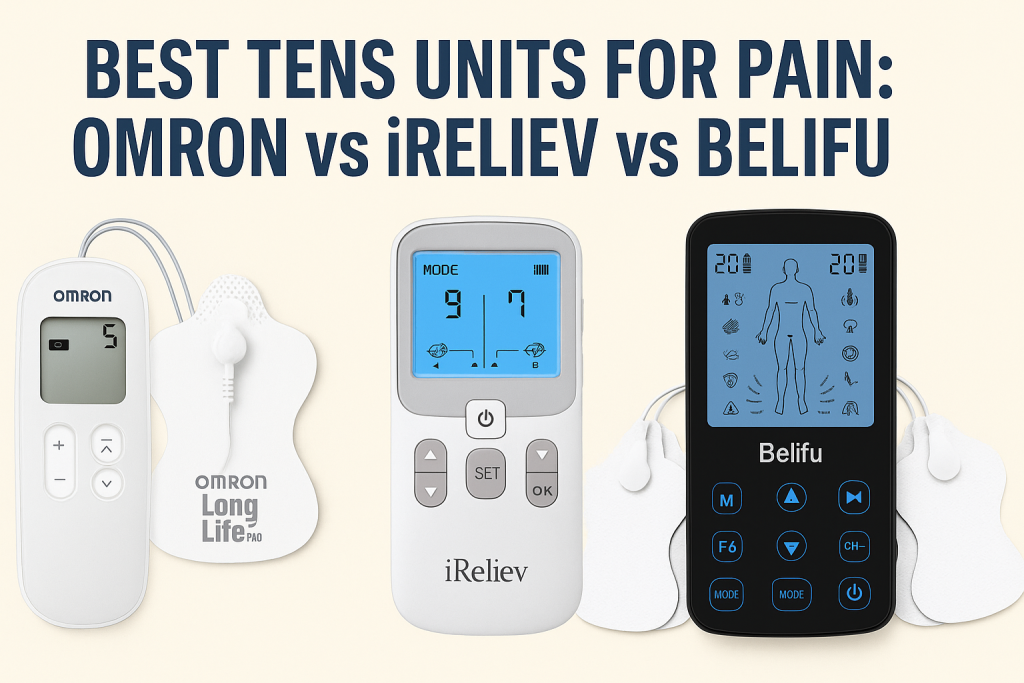
But with dozens of TENS units flooding the market, how do you choose the right one? Three brands consistently stand out: Omron, iReliev, and Belifu. Each offers unique features, different intensity levels, and varying price points that cater to different needs and budgets.
In this comprehensive guide, we’ll dive deep into these three leading TENS unit brands, comparing their features, effectiveness, ease of use, and overall value. By the end, you’ll have all the information you need to make an informed decision about which TENS machine is best for your specific pain relief needs.
Understanding TENS Therapy: How These Devices Work for Pain Relief
Before comparing specific brands, it’s essential to understand how TENS units actually work and why they’ve become so popular for pain management.
What Is TENS Therapy?
TENS therapy uses low-voltage electrical currents to stimulate your nerves through electrode pads attached to your skin. This electrical stimulation can help reduce pain perception in two primary ways:
The gate control theory suggests that electrical stimulation helps close neural “gates” in your spinal cord, preventing pain signals from reaching your brain. Essentially, the TENS unit creates a competing sensation that interrupts pain transmission.
Additionally, some research indicates that TENS therapy may encourage your body to produce more endorphins, your natural pain-relieving chemicals. This dual action makes TENS units effective for various pain conditions without the side effects associated with medications.
Common Pain Conditions Treated with TENS Units
TENS therapy has shown effectiveness for numerous pain-related conditions:
- Chronic lower back pain and sciatica
- Arthritis pain in joints
- Fibromyalgia symptoms
- Sports injuries and muscle strains
- Neck and shoulder tension
- Period pain and menstrual cramps
- Knee pain and joint discomfort
- Post-surgical pain management
- Nerve pain and neuropathy
Safety Considerations for TENS Device Use
While TENS units are generally safe for most people, certain individuals should consult healthcare providers before use:
- People with pacemakers or other implanted electrical devices
- Pregnant women (particularly placement near the abdomen)
- Individuals with epilepsy
- Anyone with heart problems or irregular heartbeat
- People with active cancer or tumors
TENS therapy should complement, not replace, professional medical advice and treatment plans. Always discuss new pain management strategies with your healthcare provider.
Omron TENS Units: Professional-Grade Pain Relief with Medical Brand Trust
Omron Healthcare has built a solid reputation over decades as a trusted medical device manufacturer. Known primarily for blood pressure monitors and nebulizers, Omron has brought the same quality standards to their TENS unit lineup.
Omron Product Range Overview
Omron offers several TENS units designed for different user needs and pain management goals:
Omron Pocket Pain Pro TENS Unit: A compact, travel-friendly device ideal for on-the-go pain relief. This model features multiple therapy modes and adjustable intensity levels in a discreet package.
Omron Max Power Relief TENS Unit: Their most powerful model, designed for deeper muscle penetration and more intense pain relief. This unit includes advanced features and preset programs for various pain types.
Omron TENS Nerve Stimulator: A straightforward, user-friendly option perfect for TENS therapy beginners who want reliable pain relief without complex settings.
Key Features of Omron TENS Devices
Omron TENS units share several standout characteristics that set them apart:
FDA Clearance and Medical-Grade Quality: All Omron TENS units carry FDA clearance, meeting stringent safety and effectiveness standards. This medical-grade designation provides peace of mind that you’re using a device tested for therapeutic use.
Preset Pain Programs: Most Omron models include preset therapy modes specifically designed for different body areas and pain types. Simply select the program that matches your needs, and the device automatically adjusts pulse width, frequency, and intensity.
Long-Lasting Rechargeable Batteries: Many Omron models feature rechargeable lithium-ion batteries that eliminate the ongoing cost of replacement batteries. A single charge typically provides multiple therapy sessions.
Clear Digital Display: Easy-to-read LCD screens show your current settings, battery life, and timer information. This intuitive interface makes adjustments simple, even for those unfamiliar with TENS technology.
Quality Electrode Pads: Omron includes durable, reusable electrode pads that maintain good conductivity through multiple uses when properly cared for.
Omron TENS Units: Pros and Cons
Advantages:
- Trusted medical brand with proven quality standards
- FDA-cleared devices for therapeutic use
- Intuitive controls suitable for beginners
- Effective preset programs eliminate guesswork
- Reliable customer support and warranty coverage
- Wide availability through major retailers
Disadvantages:
- Higher price point compared to some competitors
- Fewer intensity levels than some specialized brands
- Some models use proprietary electrode pads that cost more to replace
- Limited customization options on entry-level models
Omron Pricing and Value Proposition
Omron TENS units typically range from $40 to $100, depending on the model and features. While not the cheapest option, the brand’s reputation for quality and reliability often justifies the investment for users who prioritize brand trust and consistent performance.
The devices generally include everything needed to start therapy immediately: the main unit, electrode pads, batteries or charging cable, and a carrying case. Replacement electrode pads cost between $10 and $20 for a set, which is slightly higher than generic options.
iReliev TENS + EMS Units: Advanced Technology for Serious Pain Management
iReliev has carved out a distinct niche in the pain relief device market by focusing specifically on TENS and EMS (electrical muscle stimulation) combination units. This specialization has allowed them to develop more advanced features tailored to chronic pain sufferers and athletes.
iReliev Product Lineup
iReliev offers several models designed for different intensity levels and user preferences:
iReliev TENS + EMS Combination Unit: Their flagship device combines TENS therapy for pain relief with EMS technology for muscle recovery and strengthening. This dual-function approach addresses both pain management and rehabilitation.
iReliev Wireless TENS + EMS System: A premium model featuring Bluetooth connectivity and a smartphone app for customized therapy programs. The wireless design eliminates tangled wires for enhanced convenience.
iReliev Pocket TENS Unit: A budget-friendly, portable option for basic TENS therapy without the advanced features of their higher-end models.
Distinctive Features of iReliev Devices
iReliev sets itself apart with several innovative features:
TENS + EMS Combination Therapy: Unlike many competitors that offer only TENS, iReliev devices typically include both TENS and EMS modes. TENS targets pain relief, while EMS provides muscle stimulation to strengthen, tone, and accelerate recovery. This combination is particularly valuable for athletes and those recovering from injuries.
Higher Intensity Range: iReliev units often provide stronger maximum intensity levels compared to competitors, reaching up to 80-100 mA. This higher ceiling benefits users with severe chronic pain who need more powerful stimulation, though beginners can still start at lower, comfortable levels.
Extensive Therapy Programs: Many iReliev models include 14 or more preset programs designed by pain management specialists. These programs target specific conditions like arthritis, fibromyalgia, sciatica, and sports injuries with optimized pulse patterns.
Large Digital Display with Dual Channels: Most iReliev devices feature two independent channels, allowing you to treat two body areas simultaneously with different intensity levels for each area. The large, backlit display makes adjustments easy even in low light.
Bluetooth App Integration: Premium iReliev models connect to a smartphone app that allows you to create custom therapy programs, track usage patterns, and access guided therapy sessions. This technology appeals to users who want more control over their treatment.
iReliev TENS Units: Pros and Cons
Advantages:
- Dual TENS and EMS functionality in most models
- Higher maximum intensity for severe pain
- Extensive preset programs for various conditions
- Two independent channels for treating multiple areas
- Innovative wireless options available
- Excellent for athletes and active individuals
- Responsive customer service
Disadvantages:
- Steeper learning curve due to advanced features
- Higher price point on premium models
- Wireless models require charging more frequently
- App connectivity can be complex for less tech-savvy users
- Some users find the maximum intensity overwhelming initially
iReliev Pricing and Value Analysis
iReliev TENS units range from approximately $40 for basic models to $150+ for advanced wireless versions with app connectivity. The mid-range combination TENS + EMS units typically cost between $60 and $100.
Each device comes with electrode pads, batteries or USB charging cable, electrode lead wires, and a protective case. Replacement electrode pads are reasonably priced at $8-$15 per set, and the company offers various sizes and shapes for different body areas.
For serious chronic pain sufferers or athletes who want professional-grade features, the investment in a higher-end iReliev model often proves worthwhile. However, those seeking simple, occasional pain relief might find the advanced features unnecessary.
Belifu TENS Unit: Budget-Friendly Pain Relief Without Compromise
Belifu has gained popularity as an affordable TENS unit option that doesn’t sacrifice essential features. This brand appeals particularly to first-time TENS users and those on tighter budgets who still want effective pain relief.
Belifu Product Overview
Belifu primarily focuses on a streamlined product line:
Belifu Dual Channel TENS Unit: Their main offering, featuring two independent channels, multiple therapy modes, and rechargeable batteries. This model balances affordability with functionality.
Belifu TENS Unit with Extra Electrode Pads: Package deals that include additional electrode pads in various sizes, providing better value for long-term use.
Key Features of Belifu TENS Devices
Despite the lower price point, Belifu units include several valuable features:
Dual Independent Channels: Like more expensive competitors, Belifu offers two channels that can operate simultaneously at different intensity levels. This allows treatment of two body areas at once or provides more coverage for larger pain areas.
24 Preset Therapy Modes: Belifu includes an impressive variety of preset programs considering its budget-friendly price. These modes address common pain conditions and muscle recovery needs with different pulse patterns and frequencies.
Rechargeable Long-Life Battery: The built-in rechargeable battery eliminates ongoing battery costs and typically provides 10-15 therapy sessions per charge, depending on intensity settings used.
Complete Electrode Pad Set: Belifu packages include multiple pairs of electrode pads in different sizes, giving you flexibility for various body areas and ensuring you have backups when pads wear out.
Clear LCD Display: Despite the economical price, Belifu doesn’t skimp on user interface quality. The display clearly shows mode settings, intensity levels for each channel, and battery status.
Auto-Off Safety Feature: The device automatically shuts off after the preset time (typically 10-20 minutes), preventing overuse and conserving battery life.
Belifu TENS Units: Pros and Cons
Advantages:
- Highly affordable price point
- Dual channels despite budget cost
- Good variety of preset therapy modes
- Rechargeable battery included
- Generous electrode pad assortment
- Simple, intuitive operation
- Good value for first-time TENS users
- Positive user reviews for basic pain relief
Disadvantages:
- Lower maximum intensity than premium brands
- Less durable construction compared to medical-grade devices
- Generic electrode pads may not last as long
- Limited brand recognition and warranty support
- Fewer advanced features for serious chronic pain
- Instructions may lack detail for optimal pad placement
Belifu Pricing and Overall Value
Belifu TENS units typically cost between $25 and $45, making them one of the most affordable options in the market. This price point includes the main unit, multiple pairs of electrode pads, USB charging cable, lead wires, and usually a simple carrying pouch.
Replacement electrode pads are inexpensive, often available in multi-pack deals for under $10. The budget-friendly price makes Belifu an excellent entry point for those curious about TENS therapy but hesitant to invest heavily before knowing if it works for them.
While not designed for severe chronic pain requiring maximum intensity, Belifu units perform admirably for mild to moderate pain relief, muscle recovery after exercise, and general tension relief.
Side-by-Side Comparison: Omron vs iReliev vs Belifu
To help you make an informed decision, here’s a comprehensive comparison table highlighting the key differences between these three brands:
| Feature | Omron | iReliev | Belifu |
|---|---|---|---|
| Price Range | $40-$100 | $40-$150 | $25-$45 |
| FDA Clearance | Yes (Medical Grade) | Yes (Most Models) | Limited Information |
| Channels | 1-2 (Model Dependent) | 2 Independent | 2 Independent |
| Intensity Levels | 20-25 levels | 100+ levels | 20-25 levels |
| Max Intensity | 55-70 mA | 80-100 mA | 40-60 mA |
| Preset Programs | 6-9 modes | 14-25 modes | 24 modes |
| TENS + EMS | TENS Only (Most Models) | Yes (Most Models) | TENS Only |
| Wireless Option | No | Yes (Premium Models) | No |
| Rechargeable | Select Models | Yes (Most Models) | Yes |
| Battery Life | 10-15 sessions | 8-12 sessions | 10-15 sessions |
| App Connectivity | No | Yes (Premium Models) | No |
| Electrode Pads Included | 1-2 pairs | 2-4 pairs | 4-8 pads |
| Pad Replacement Cost | $10-$20 | $8-$15 | $5-$10 |
| Warranty | 1-2 years | 1 year | 30-90 days |
| Brand Reputation | Established Medical Brand | Specialized Pain Relief Brand | Budget-Friendly Newcomer |
| Best For | Reliability & Trust | Advanced Features & Chronic Pain | Budget-Conscious First-Time Users |
Performance Comparison for Different Pain Types
For Chronic Back Pain:
- Winner: iReliev – Higher intensity levels and specialized programs for chronic conditions
- Runner-up: Omron – Reliable performance with medical-grade quality
For Sports Recovery:
- Winner: iReliev – TENS + EMS combination accelerates muscle recovery
- Runner-up: Belifu – Affordable option for occasional post-workout relief
For Arthritis Pain:
- Winner: Omron – Gentle, consistent stimulation with arthritis-specific modes
- Runner-up: iReliev – Adjustable intensity accommodates sensitive joints
For Beginners:
- Winner: Belifu – Low-risk investment to try TENS therapy
- Runner-up: Omron – User-friendly interface with trusted brand backing
For Tech-Savvy Users:
- Winner: iReliev – App connectivity and customizable programs
- Runner-up: Omron – Straightforward digital interface
Important Factors to Consider When Choosing Your TENS Unit
Beyond brand comparisons, several personal factors should guide your TENS unit selection:
Your Pain Severity and Type
Mild to moderate pain typically responds well to any quality TENS unit, including budget options like Belifu. However, severe chronic pain often requires the higher intensity levels that iReliev provides.
Nerve pain and neuropathy may need more targeted frequency settings, making preset programs valuable. Muscle soreness benefits from EMS functionality, giving iReliev an advantage for athletic recovery.
Frequency of Use
Occasional users who need pain relief a few times per month can justify a budget-friendly option. Daily users dealing with chronic conditions should invest in more durable, medical-grade devices like Omron or premium iReliev models that withstand frequent use.
Portability Requirements
If you need pain relief while traveling, commuting, or at work, compact units like the Omron Pocket Pain Pro or Belifu portable models offer discreet, convenient options. Wireless iReliev models eliminate cord tangles for active lifestyles.
Technical Comfort Level
First-time users often prefer simple, preset programs found in Omron and Belifu devices. Tech-comfortable individuals might appreciate iReliev’s app connectivity and customization options, despite the learning curve.
Budget Constraints
Your available budget naturally influences your choice. However, consider the long-term value equation. A more expensive unit that provides better pain relief and lasts longer may cost less over time than replacing cheaper units or continuing to purchase over-the-counter pain medications.
Electrode Pad Availability and Cost
Consider the ongoing cost of replacement electrode pads. Generic pads work with most units and cost less than brand-specific options. Omron’s proprietary pads are excellent quality but more expensive, while Belifu and iReliev generally accept standard replacement pads.
How to Use TENS Units Effectively for Maximum Pain Relief
Purchasing the right TENS unit is only the first step. Proper use significantly impacts the effectiveness of your pain relief therapy.
Optimal Electrode Pad Placement
Correct pad placement is crucial for effective TENS therapy. General guidelines include:
For back pain: Place pads vertically on either side of the spine at the pain location, never directly on the spine itself.
For shoulder pain: Position pads above and below the painful area, or on either side of the shoulder joint.
For knee pain: Place pads above and below the kneecap, or on either side of the joint if treating the sides.
For general muscle pain: Surround the painful area with pads, ensuring they’re at least one inch apart to allow electrical current flow between them.
Many TENS unit manuals include placement diagrams for common pain areas. Start with these recommended positions and adjust slightly based on where you feel the most relief.
Finding Your Ideal Intensity Setting
Always start with the lowest intensity setting and gradually increase until you feel a strong but comfortable tingling sensation. The stimulation should never be painful. If you experience sharp pain or muscle spasms, reduce the intensity immediately.
Different body areas tolerate different intensity levels. Areas with more muscle mass often handle higher intensities, while bony areas or sensitive regions require gentler settings.
Recommended Treatment Duration and Frequency
Most TENS therapy sessions should last between 15 and 30 minutes. Many users find relief within 20 minutes, though some chronic conditions benefit from longer sessions.
For acute pain, you can use TENS therapy several times daily as needed. Chronic pain sufferers often use their units 2-3 times daily for maintenance relief.
Allow your skin to rest between sessions, especially if using high intensity levels. Watch for any skin irritation and give your skin breaks if redness or sensitivity develops.
Skin Preparation and Care
Clean, dry skin ensures good electrode contact and prevents irritation:
- Wash the treatment area with mild soap and water
- Dry completely before applying electrode pads
- Avoid using lotions, oils, or creams on the treatment area
- Shave excessive hair if needed for better pad adhesion
After therapy, carefully remove pads by lifting edges slowly rather than pulling quickly. Clean your skin again if any adhesive residue remains.
Maintaining Your Electrode Pads for Longevity
Proper pad care extends their lifespan significantly:
- After each use, place pads back on the protective plastic sheet immediately
- Store in a cool, dry place away from direct sunlight
- If adhesion weakens, lightly dampen the gel side with a few drops of water
- Replace pads when they no longer stick well or show visible wear
- Never use pads with broken or damaged gel surfaces
Quality electrode pads typically last 20-30 applications with proper care, though this varies based on skin type, storage conditions, and usage frequency.
Real User Experiences: What Customers Say About Each Brand
Understanding actual user experiences provides valuable insight beyond technical specifications.
Omron User Feedback Themes
Omron users consistently praise the brand’s reliability and ease of use. Many reviews mention that the devices work as expected right out of the box without complex setup.
Common positive feedback includes appreciation for the intuitive controls, clear display, and effective preset programs. Users particularly value the brand’s reputation, feeling confident they’re using a medical-grade device.
Some criticisms focus on the limited intensity range for severe pain and the higher cost of replacement electrode pads. A few users wished for more customization options beyond the preset programs.
iReliev User Feedback Themes
iReliev receives strong reviews from chronic pain sufferers who need powerful, customizable therapy. Users with conditions like fibromyalgia, severe arthritis, and sciatica frequently mention that iReliev provides the intensity level they couldn’t achieve with other brands.
Athletes particularly appreciate the EMS functionality for muscle recovery and strengthening. The dual TENS + EMS modes receive consistently positive feedback for versatility.
The most common complaint involves the complexity of advanced features. Some users found the extensive program options overwhelming initially, though most adjusted after reading the manual thoroughly. A few mentioned that wireless models required more frequent charging than expected.
Belifu User Feedback Themes
Belifu reviews often emphasize the exceptional value for the price. First-time TENS users frequently express surprise at the effectiveness despite the budget-friendly cost.
Many customers mention that Belifu serves as an excellent introduction to TENS therapy without significant financial commitment. The included variety of electrode pads receives particular appreciation.
Critical feedback generally acknowledges that Belifu units lack the power for severe chronic pain but excel at their intended purpose of mild to moderate pain relief. Some users reported shorter product lifespans compared to premium brands, though this appears acceptable given the lower price point.
Making Your Final Decision: Which TENS Unit Is Right for You?
After examining all three brands in depth, here’s guidance for matching the right TENS unit to your specific needs:
Choose Omron If You Want:
- A trusted medical brand with proven quality
- Straightforward, user-friendly operation
- Reliable performance for mild to moderate pain
- FDA-cleared medical-grade device
- Strong warranty and customer support
- A device that will last for years
Best Omron Model for Most Users: Omron Max Power Relief TENS Unit offers the best balance of features, power, and value within the Omron lineup.
Choose iReliev If You Need:
- Maximum intensity for severe chronic pain
- TENS and EMS combination therapy
- Extensive customization and preset programs
- Wireless convenience and app connectivity
- Professional-grade features for serious pain management
- Muscle recovery and athletic performance support
Best iReliev Model for Most Users: iReliev TENS + EMS Combination Unit provides comprehensive features without the complexity of wireless models, making it ideal for those who want advanced functionality with straightforward controls.
Choose Belifu If You’re Looking For:
- Budget-friendly introduction to TENS therapy
- Basic pain relief without expensive investment
- Occasional use for mild to moderate pain
- Simple operation with essential features
- Good value with included accessories
- A backup unit for travel
Best Belifu Model for Most Users: Belifu Dual Channel TENS Unit with extra electrode pads offers the best complete package at an unbeatable price point.
Additional Tips for Successful TENS Therapy
Beyond choosing the right device, these strategies enhance your TENS therapy experience:
Combine TENS with Other Pain Management Strategies
TENS therapy works best as part of a comprehensive pain management approach. Consider combining it with gentle stretching, heat or cold therapy, proper ergonomics, stress management techniques, and appropriate physical activity.
Many users find that using a TENS unit before stretching or exercise helps reduce pain during these activities, allowing better range of motion and more effective rehabilitation.
Keep a Pain Relief Journal
Track your TENS therapy sessions, noting intensity settings, pad placement, duration, and pain levels before and after treatment. This record helps identify which settings work best for your specific pain patterns and allows you to optimize your treatment over time.
Consult Healthcare Professionals
While TENS units are safe for home use, discussing your pain management strategy with healthcare providers ensures you’re addressing underlying causes appropriately. Physical therapists can provide personalized guidance on optimal pad placement and therapy protocols for your condition.
Stay Consistent
Regular TENS therapy often provides better long-term results than sporadic use. Establishing a consistent routine helps maintain pain control rather than only using the device during pain flares.
Conclusion: Take Control of Your Pain Management Journey
Choosing between Omron, iReliev, and Belifu TENS units ultimately depends on your specific pain management needs, budget, and preferences. Each brand offers distinct advantages that serve different user profiles.
Omron delivers medical-grade reliability and user-friendly operation backed by a trusted healthcare brand. It’s the right choice for those who prioritize quality assurance and straightforward functionality over advanced features.
iReliev excels at providing professional-grade pain relief with maximum intensity, extensive programs, and innovative TENS + EMS combination therapy. It’s ideal for chronic pain sufferers and athletes who need powerful, customizable treatment options.
Belifu offers remarkable value for budget-conscious consumers and first-time TENS users. While lacking the power and durability of premium brands, it provides effective relief for mild to moderate pain at an accessible price point.
Regardless of which brand you choose, TENS therapy represents a safe, non-invasive option for managing pain without relying solely on medications. Taking an active role in your pain management empowers you to find relief on your own terms.
Start with the brand that best matches your current needs and budget. Many users find that their first TENS unit introduces them to effective pain relief, and they later upgrade or add different models as their understanding of TENS therapy grows.
Remember that finding the right settings and pad placement may take some experimentation. Be patient with the process, and don’t hesitate to reach out to customer support or healthcare professionals for guidance.
Your journey to better pain management starts with taking that first step. Choose your TENS unit today and discover the relief you’ve been seeking.
Ready to experience drug-free pain relief? Select the TENS unit that matches your needs and start your path to greater comfort and mobility today.
FAQs About Best TENS Units for Pain
1. Can TENS units help with chronic back pain?
Many people say they get relief for few hours after using a TENS session. It doesn’t cure chronic pain, but it can reduce tension and muscle tightness.
2. Is it safe to use TENS every day?
Yes, daily use is common. Just don’t use extra high intensity for long periods because it can cause sore skin or fatigue in muscles.
3. Which brand is best for strong intensity?
Belifu usually has higher intensity range than Omron. iReliev sits somewhere between. If you want strong pulses, Belifu is cheapest option.
4. Do the pads need replacing often?
Pads wear out with sweat, hair, and daily use. Most people replace them every few weeks or month. Belifu gives extra pads in the box so cost is lower.
How long does it typically take to feel pain relief when using a TENS unit for the first time?
Most people begin feeling some level of pain relief within the first 10-15 minutes of using a TENS unit, though the experience varies by individual and pain type. Some users notice immediate relief from the tingling sensation that distracts from pain, while others require several sessions to achieve optimal results. For chronic conditions, consistent use over several days often yields the most significant improvements. Start with 20-minute sessions and adjust timing based on your response. If you don’t feel any relief after trying different pad placements and intensity levels over multiple sessions, consult with a healthcare provider to ensure TENS therapy is appropriate for your specific condition.
Can I use a TENS unit while sleeping or overnight for continuous pain relief?
No, you should never use a TENS unit while sleeping. TENS devices are designed for active, supervised use when you can monitor sensations and adjust settings as needed. Using a TENS unit while asleep poses several risks: you won’t notice if the intensity becomes too strong, if electrode pads shift to improper positions, or if skin irritation develops. Additionally, most TENS units include automatic shut-off features after 20-60 minutes specifically because prolonged continuous use isn’t recommended. For nighttime pain relief, use your TENS unit for an appropriate session before bed, then discontinue use while sleeping. This approach often provides residual pain relief that extends into sleep hours without the safety concerns of overnight use.
Will insurance cover the cost of a TENS unit, or are these always out-of-pocket expenses?
Many health insurance plans, including Medicare, may cover TENS units when prescribed by a healthcare provider for specific medical conditions like chronic pain. Coverage typically requires documentation showing that other conservative treatments have been tried and that TENS therapy is medically necessary for your condition. The process usually involves getting a prescription from your doctor, who may need to provide additional justification to your insurance company. Some plans cover the full cost while others require copayments or coinsurance. Over-the-counter TENS units purchased without prescription are generally not covered. Contact your insurance provider before purchasing to understand your specific coverage, required documentation, and whether you need to use particular suppliers or brands for reimbursement eligibility.
What’s the difference between single-channel and dual-channel TENS units, and which is better?
Single-channel TENS units have one set of controls powering one or two pairs of electrode pads with identical settings, meaning all pads operate at the same intensity and program mode. Dual-channel units have two independent sets of controls, allowing you to use four pads total with different intensity levels and potentially different programs for each channel. Dual-channel units offer significant advantages: you can treat two separate pain areas simultaneously (like both knees or shoulder and lower back), adjust intensity independently for different body areas that have varying sensitivity levels, and cover larger pain regions more effectively. While single-channel units work fine for localized pain in one area, dual-channel units provide much greater versatility and value, especially for people with multiple pain sites or conditions. Most iReliev and Belifu units include dual channels even at budget price points, making them preferred options for flexibility.
How do I know when it’s time to replace my electrode pads, and are generic pads as effective as brand-name ones?
You should replace electrode pads when they no longer adhere properly to your skin, when the gel surface appears dried out or damaged, when you notice decreased stimulation intensity despite proper unit settings, or when they’ve been used approximately 20-30 times (though this varies significantly). Signs that replacement is needed include pads that fall off during treatment, uneven stimulation with hot spots, visible cracks or tears in the gel layer, or residue that transfers to skin. Generic electrode pads are generally as effective as brand-name versions for most users, as they use similar conductive gel materials and designs. The key is ensuring they’re the correct size and connector type for your TENS unit. Generic pads cost significantly less while providing comparable performance, making them an economical choice for regular TENS therapy users. However, some people with sensitive skin find that premium brand-name pads cause less irritation, so skin sensitivity may justify the extra cost for certain individuals.