
You know that feeling when your chest gets tight, your mind races at 2 AM, and nothing seems to calm you down?
Yeah, I’ve been there too many times.
After trying everything from meditation apps to weighted blankets, I kept seeing the Moonbird breathing device pop up on my Instagram feed. At first, I thought it was just another wellness gadget that promised miracles but delivered nothing.
But my anxiety wasn’t getting better, and my Apple Watch kept reminding me that my resting heart rate was way too high for someone my age.
So I took the plunge and ordered one.
That was 60 days ago, and I’ve got a lot to share about whether this little pebble-shaped device actually lives up to the hype – or if it’s just expensive snake oil.
Quick Verdict – Moonbird Breathing Device
Best for:
- People with chronic stress or anxiety who struggle with traditional meditation
- Anyone who needs a physical anchor for breathing exercises
- Those who want haptic-guided breathwork without staring at screens
- People dealing with sleep issues related to stress
- Professionals in high-stress jobs looking for quick relief tools
Not ideal for:
- Budget-conscious buyers (there are cheaper alternatives)
- People who prefer app-based solutions only
- Those who need clinical-grade medical devices for respiratory conditions
- Anyone looking for a “magic pill” without putting in daily practice
Overall Verdict:
After two months of daily use, the Moonbird has become part of my evening routine. It’s not a miracle worker, but it’s the first breathing tool that actually helped me stick with the practice. The haptic feedback makes a real difference compared to just following an app.
Is it worth $179? If you’ve tried everything else and nothing stuck, probably yes. If you’re just curious about breathwork, start with free apps first.
My Rating: 4.2/5

What is the Moonbird Breathing Device?
Let me break this down in the simplest way possible.
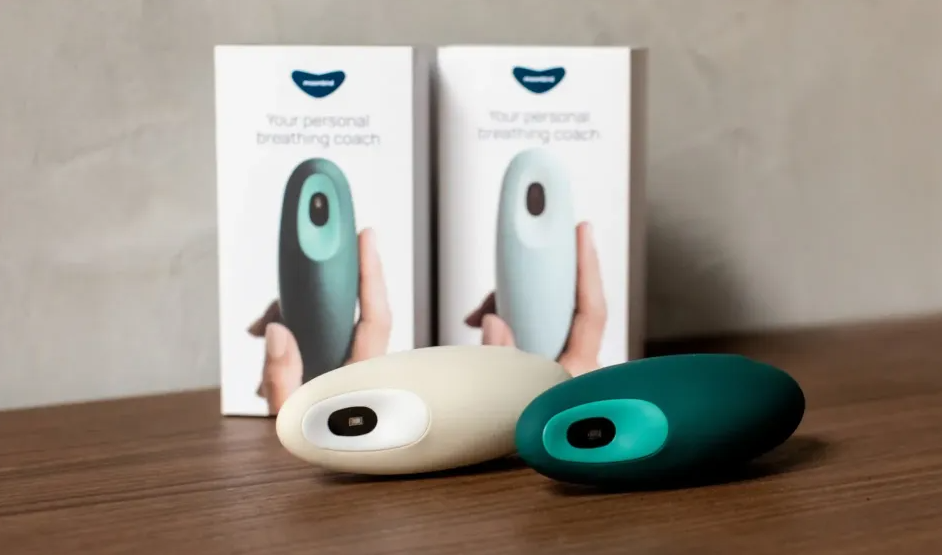
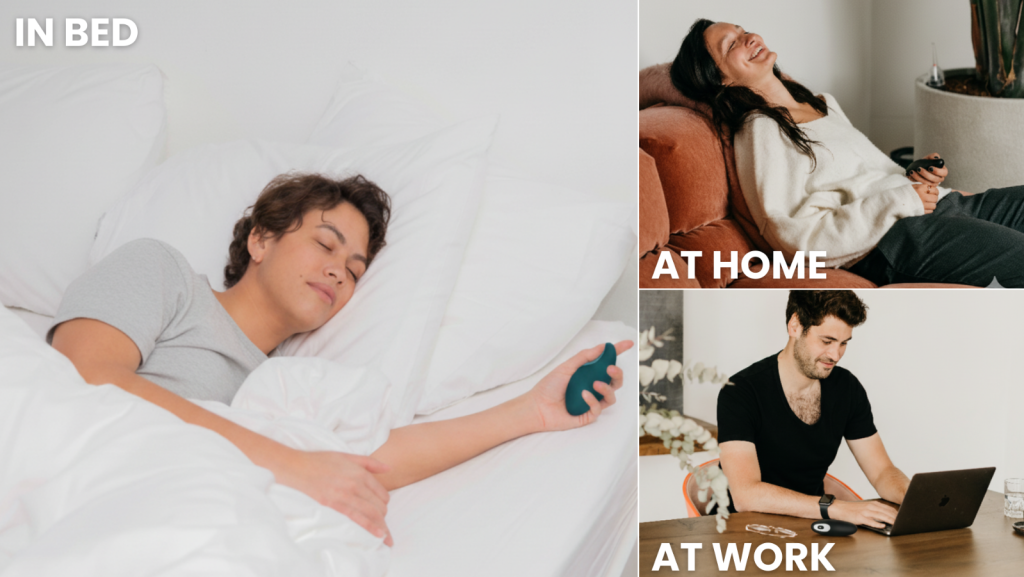
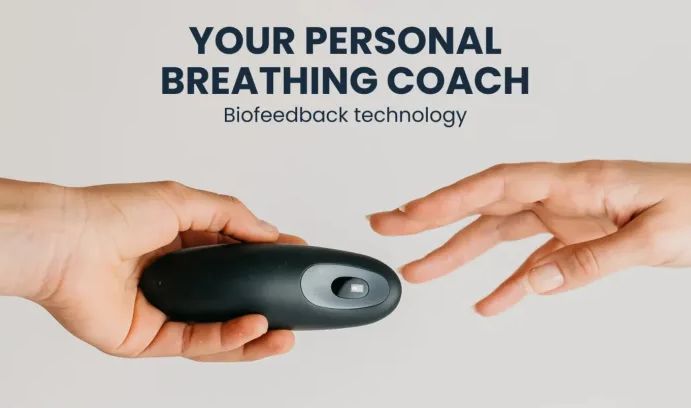
The Moonbird is basically a smooth, palm-sized device that expands and contracts in your hand to guide your breathing. Think of it like a breathing coach that you can hold.
It’s made by a Belgian company, and the whole idea is pretty clever: instead of watching a screen or listening to audio cues, you feel the rhythm of your breath through gentle pulsing movements.
The device connects to an app on your phone via Bluetooth, but here’s the thing – once you’re comfortable with it, you don’t even need the app. You can just grab the device, hold it, and follow the expansion and contraction pattern.
Moonbird Breathing Device
Moonbird is basically a smooth, palm-sized device that expands and contracts in your hand to guide your breathing. Think of it like a breathing coach that you can hold.
Product Brand: Moonbird
Product Currency: USD
Product Price: 300
Product In-Stock: InStock
4.9
How Does It Actually Work?
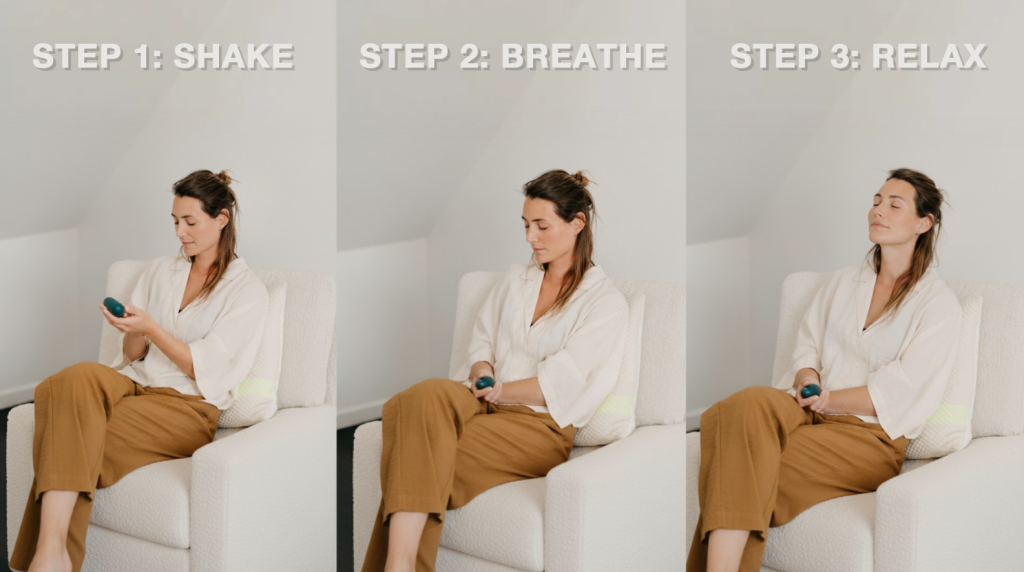
When you turn it on, the Moonbird starts gently expanding in your palm. As it expands, you breathe in. When it contracts (gets smaller), you breathe out.
The rhythm follows something called coherent breathing – usually around 5-6 breaths per minute, which research shows can help activate your parasympathetic nervous system (the “rest and digest” mode).
You can customize:
- Breathing pace (slower or faster)
- Session length (2 to 30 minutes)
- Intensity of the expansion
- Different breathing patterns (box breathing, 4-7-8, etc.)
The device is about the size of a large river stone and weighs around 130 grams. It’s got this really smooth, soft-touch coating that feels nice in your hand.
Why Are People Buying the Moonbird?
Before I share my experience, let me tell you what I discovered while researching why this thing became so popular.
The Breathwork Trend is Real
Breathing exercises aren’t new, but they’ve exploded in popularity lately. Everyone from athletes to CEOs talks about breathwork now.
The problem? Most people can’t stick with it.
Apps are great, but you need to stare at your phone. Audio guides work until your mind wanders. And trying to count breaths on your own? Forget about it when you’re stressed.
The Screen Fatigue Factor
This is huge for me personally.
We’re already glued to screens all day. The last thing I wanted was another app demanding my attention. The Moonbird lets you close your eyes and just feel the rhythm.
The Anxiety Epidemic
Let’s be real – anxiety levels are through the roof. The World Health Organization reports that anxiety disorders affect about 301 million people globally.
People are desperate for non-pharmaceutical solutions that actually work.
What Makes Moonbird Different?
According to user reviews and my own experience:
- Tangible feedback – You physically feel the breathing guidance
- No screen required – Works independently after setup
- Portable – Fits in a pocket or purse
- Simple – No complicated instructions or techniques to master
- Immediate – You can use it anywhere, anytime
But does it actually deliver on these promises?
Let me share what happened when I used it every day for two months.
My Real Experience with the Moonbird
Week 1: The Learning Curve
I’ll be honest – the first few days felt weird.
The device arrived in nice packaging (not gonna lie, it feels premium). Setup was easy: charge it, download the app, connect via Bluetooth, and you’re good to go.
My first session was 5 minutes using the “Relax” setting.
At first, I kept opening my eyes to check if I was doing it right. Old habits die hard – I’m used to looking at my phone for everything.
The expansion and contraction felt subtle but noticeable. Like holding a small balloon that inflates and deflates in slow motion.
Initial thoughts: “This is nice, but is it worth $179?”
Week 2-3: Building the Habit
This is where things started clicking.
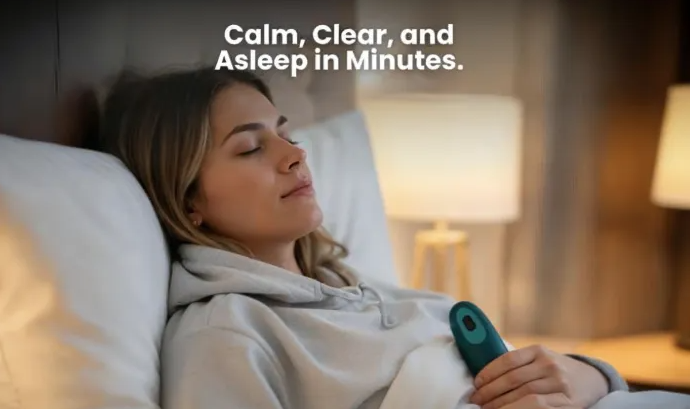
I made a rule: use Moonbird every night before bed, no exceptions. I set it for 10 minutes and put my phone on the nightstand (not in my hand for once).
Something shifted around day 12.
Instead of my mind racing through tomorrow’s to-do list, I actually focused on the breathing. The physical sensation in my hand gave my brain something concrete to anchor to.
My Apple Watch data showed my resting heart rate dropping from an average of 68 bpm to 63 bpm. Not earth-shattering, but noticeable.
Sleep quality improved slightly – I was falling asleep faster, though I still woke up once or twice per night.
Week 4-6: The Real Test
Here’s where I really put it to the test.
I had a deadline-heavy month at work, the kind where stress usually sends me spiraling. I started using the Moonbird during my lunch break too – quick 5-minute sessions at my desk.
One particularly stressful afternoon, I felt that familiar chest tightness coming on. Instead of doom-scrolling Twitter (sorry, X), I grabbed the Moonbird and did a 7-minute session with the “Calm” breathing pattern.
It worked.
Not like magic – I still had deadlines and stress – but I felt more capable of handling it. Like turning the volume down on the anxiety instead of it screaming in my head.
My partner even noticed I was less irritable in the evenings. (That’s saying something.)
Week 7-8: The Routine Solidifies
By now, using the Moonbird felt as natural as brushing my teeth.
I experimented with different breathing patterns:
- Box breathing for focus before important tasks
- 4-7-8 breathing for sleep
- Coherent breathing for general stress relief
The app tracks your sessions, total minutes, and streaks. I’m not usually into gamification, but seeing my streak hit 45 days straight actually motivated me.
Notable changes after 2 months:
- Resting heart rate: down to 61 bpm average
- Time to fall asleep: reduced by about 15-20 minutes (according to my sleep tracker)
- Stress levels: subjectively better, especially in managing acute stress
- Breathing awareness: I caught myself doing conscious breathing even without the device
Is the Moonbird Legit? What the Science Says
Okay, let’s talk about whether this is actually backed by science or just expensive placebo.
The Research Behind Breathwork
Slow, controlled breathing has solid research supporting it:
- A 2017 study in Frontiers in Psychology found that slow breathing techniques can improve emotional control and reduce anxiety
- Research published in the Journal of Alternative and Complementary Medicine showed that coherent breathing (around 5-6 breaths per minute) can improve heart rate variability (HRV)
- Multiple studies confirm that controlled breathing activates the vagus nerve, which helps regulate stress response
But here’s the thing: Most of this research is about breathing techniques in general, not the Moonbird device specifically.
Does Moonbird Have Clinical Evidence?
The company partnered with researchers at Ghent University in Belgium to study the device. According to their findings, users reported:
- 19% improvement in stress levels
- 46% improvement in sleep quality
- Significant improvements in HRV after just one week
I’ll be straight with you – I couldn’t find these studies in peer-reviewed journals. The company references them, but independent verification is limited.
My take: The breathing techniques are legit. The device makes it easier to practice them consistently. Whether you need a $179 device to do so is the real question.
What Do Medical Professionals Say?
I’m not a doctor (obviously), but I looked into what healthcare providers think about devices like this.
Most respiratory therapists and psychologists I found discussing the Moonbird said the same thing: breathing exercises definitely help, and if a device helps you stick with it, that’s valuable.
But they emphasize this isn’t a replacement for therapy or medication if you have clinical anxiety or panic disorder.
It’s a tool, not a cure.
Moonbird Features Breakdown
Let me walk you through what this device actually does, because the marketing can be a bit fluffy.
Physical Design
- Size: About 4 inches long, 2 inches wide
- Weight: 130 grams (feels substantial but not heavy)
- Material: Soft-touch plastic coating
- Colors: Comes in blue-grey or a pinkish tone
- Battery life: About 4 hours of active use, lasts me a full week with daily 10-minute sessions
The build quality is solid. I’ve dropped mine twice (oops), and it’s fine. No scratches on the coating, which surprised me.
The Expansion Mechanism
This is the core feature, obviously.
Inside the device is a small mechanical system that creates the expansion and contraction. It’s quiet – not silent, but quiet enough to use in bed without disturbing my partner.
The expansion is gentle and smooth. It’s not dramatic – we’re talking maybe 5-8mm of expansion. But it’s enough to feel clearly in your palm.
You can adjust the intensity through the app from 1-5. I keep mine at level 3.
The App (iOS and Android)
The app is well-designed but not essential after you learn the basics.
What it does:
- Connects the device via Bluetooth
- Lets you choose breathing patterns
- Customizes session length and intensity
- Tracks your usage and progress
- Offers guided programs (like “7 Days to Better Sleep”)
App features I actually use:
- Changing breathing patterns
- Tracking my streak (I’m competitive with myself)
- Occasionally trying the guided programs
What I don’t use:
- The breathing journal feature
- Most of the educational content (it’s fine, just not my thing)
- Social features (you can share progress – why?)
The app needs Bluetooth to connect, which occasionally glitches. I’ve had to restart the connection maybe 3-4 times in 60 days. Minor annoyance.
Breathing Patterns Available
The Moonbird offers several pre-programmed patterns:
- Coherent breathing (5.5 breaths/min) – My go-to for general relaxation
- Box breathing (4-4-4-4) – Great for focus
- 4-7-8 breathing – The one I use before bed
- Custom patterns – You can create your own
You can also adjust the pace to be slower or faster depending on your preference.
Battery and Charging
Charges via USB-C (thank goodness, not proprietary).
Full charge takes about 2 hours. Battery indicator is in the app, which is helpful but also means you need to check it.
I charge mine once a week, usually on Sunday mornings.
Moonbird vs Alternatives: How Does It Compare?
Let’s be real – $179 is a lot of money for a breathing coach.
Are there cheaper options that work just as well?
Moonbird vs Breathing Apps (Free to $70/year)
Apps like Calm, Headspace, Insight Timer:
Pros:
- Much cheaper (many are free)
- Huge libraries of guided meditations
- More variety in content
- Always with you (phone is always in pocket)
Cons:
- Requires screen time
- Easy to get distracted by notifications
- No haptic feedback
- Harder to build consistent habit (in my experience)
When apps are better: If you’re just starting with breathwork and want to explore different styles without investment.
When Moonbird is better: If you’ve tried apps and they didn’t stick, or if you want to reduce screen time.
Moonbird vs Breathing Necklace/Pendant ($30-$60)
There are these trendy breathing necklaces – basically metal tubes you breathe through to slow your exhale.
Pros:
- Much cheaper
- Wearable (always accessible)
- Simple concept
- No charging needed
Cons:
- Only works for exhale control
- Less discrete (you’re literally breathing through a tube in public)
- No customization
- No tracking
My take: These are interesting for extending exhale, but they’re one-trick ponies. Moonbird is more versatile.
Moonbird vs Spire Stone ($99-$130)
The Spire Stone is a clip-on device that monitors your breathing patterns and vibrates when you’re stressed.
Pros:
- Cheaper than Moonbird
- Passive monitoring (you don’t have to actively use it)
- Clips to clothes, so hands-free
Cons:
- Doesn’t guide breathing actively
- Requires wearing it all day
- Battery life issues (from reviews I read)
- Less intuitive for intentional practice
When Spire is better: If you want passive monitoring throughout the day.
When Moonbird is better: If you want active, guided breathwork sessions.
Moonbird vs Traditional Meditation ($0-$200 for classes)
Obviously, you can do breathing exercises for free or take meditation classes.
Pros of traditional methods:
- Free (or cost of classes)
- Deep community support
- Broader spiritual/mental benefits
- Proven over thousands of years
Cons:
- Requires significant discipline
- Steep learning curve
- Easy to “do it wrong” as a beginner
- No tangible feedback
My experience: I tried meditation for years and could never stick with it. The Moonbird gave me the structure and feedback I needed. But that’s me – many people thrive with traditional meditation.
The Honest Comparison
| Feature | Moonbird | Apps | Breathing Necklace | Spire Stone |
|---|---|---|---|---|
| Price | $179 | $0-$70/yr | $30-$60 | $99-$130 |
| Haptic Feedback | ✅ | ❌ | ❌ | ✅ (alerts only) |
| Screen-Free | ✅ | ❌ | ✅ | ✅ |
| Guided Breathing | ✅ | ✅ | ❌ | ❌ |
| Portability | Good | Excellent | Excellent | Good |
| Battery Life | 4hrs active | N/A | N/A | 1 week |
| Learning Curve | Low | Medium | Low | Low |
| Customization | High | Very High | None | Medium |
Detailed Pros and Cons
What I Actually Like About the Moonbird
1. It Makes Breathwork Tangible
This is the biggest win for me. Feeling the expansion in my hand gives my brain something concrete to focus on. When I tried to count breaths on my own, my mind wandered after about 30 seconds. With Moonbird, I can actually complete a full session.
2. Screen-Free Practice
I’m on screens 10+ hours a day for work. The last thing I want is another screen telling me to relax. Being able to close my eyes and just follow the physical rhythm is genuinely refreshing.
3. Portability
It fits in my jacket pocket. I’ve used it on planes, in waiting rooms, even in my car before stressful meetings. Try doing that with a meditation class.
4. Build Quality
For $179, it better feel premium – and it does. The soft-touch coating, the smooth mechanism, the weight… it feels like a quality device, not a cheap gadget.
5. Tracks Progress Without Being Annoying
The app shows your streak and total minutes without being pushy about it. There are no annoying notifications saying “You haven’t breathed today!” (which would be concerning anyway).
6. Multiple Breathing Patterns
Having box breathing, 4-7-8, and coherent breathing in one device means I can match the technique to what I need in the moment.
7. Helps Build the Actual Habit
This is huge. I’ve tried building breathing habits before and failed. Something about having a physical object that’s for breathing makes it easier to remember and stick with.
What Honestly Bothers Me About It
1. The Price Point
Let’s not dance around this – $179 is expensive for what is essentially a mechanical breathing guide. You’re paying for the technology, the design, and the consistency… but still. That’s a lot of money.
2. Bluetooth Connection Issues
Not often, but occasionally the device won’t connect to the app. I have to restart both. It’s annoying when you just want to start a quick session.
3. Battery Indicator Only in App
There’s no LED on the device itself showing battery level. You have to open the app to check. I’ve had it die on me mid-session once because I forgot to check.
4. Limited Scientifically Validated Claims
While breathing techniques are well-researched, the specific claims about Moonbird’s effectiveness aren’t as robustly proven. I wish there was more independent research.
5. One Breathing Modality
It’s only for breathwork. For $179, I sometimes wish it did more – like HRV tracking or something. (Though keeping it simple might actually be a feature, not a bug.)
6. The App Feels Underutilized
The app is nice but feels like it could do more. The guided programs are fine, but there’s not much depth. More educational content or coaching would be valuable.
7. Not Suitable for Severe Clinical Conditions
If you have diagnosed panic disorder or severe anxiety, this isn’t a replacement for therapy or medication. It’s a wellness tool, not a medical device. I wish the marketing was clearer about this.
8. Cleaning the Surface
The soft-touch coating picks up hand oils and looks dirty over time. You need to wipe it down regularly, which is a minor hassle.
Who Should Actually Buy the Moonbird?
You’ll Probably Love It If:
You’re a “busy mind” person – If meditation apps don’t work because your mind wanders constantly, the physical feedback helps anchor your attention.
You have screen fatigue – If you’re exhausted from staring at screens and want a non-digital wellness practice.
You’ve tried breathwork and liked it – If you know breathing exercises help but struggle with consistency, this makes it easier.
You have stress-related sleep issues – If anxiety keeps you awake and you need a bedtime wind-down ritual that actually works.
You can afford it without stress – If $179 doesn’t make you financially anxious. (Ironically, stressing about the cost defeats the purpose.)
You want a portable stress tool – If you travel often or need stress relief in various locations.
You respond well to physical objects – Some people are tactile learners. If you like worry stones, fidget devices, or weighted blankets, you’ll probably like this.
Skip It If:
You’re on a tight budget – There are free and cheap alternatives that work almost as well if you’re disciplined.
You’re expecting a miracle cure – If you think this will eliminate anxiety without any other changes, you’ll be disappointed.
You’re fine with apps – If Calm or Headspace work great for you, no need to spend more money.
You need clinical intervention – If you have diagnosed anxiety disorders, get professional help first. This can supplement therapy but not replace it.
You’re not ready to commit – If you won’t use it daily, it’s not worth the money. This works through consistent practice.
You want multi-functional devices – If you want something that also tracks fitness, monitors health metrics, etc., look elsewhere.
Moonbird Reviews: What Are Other People Saying?
I’m not the only person who’s used this thing, so let me share what I found in my research.
Consumer Reports and Review Aggregates
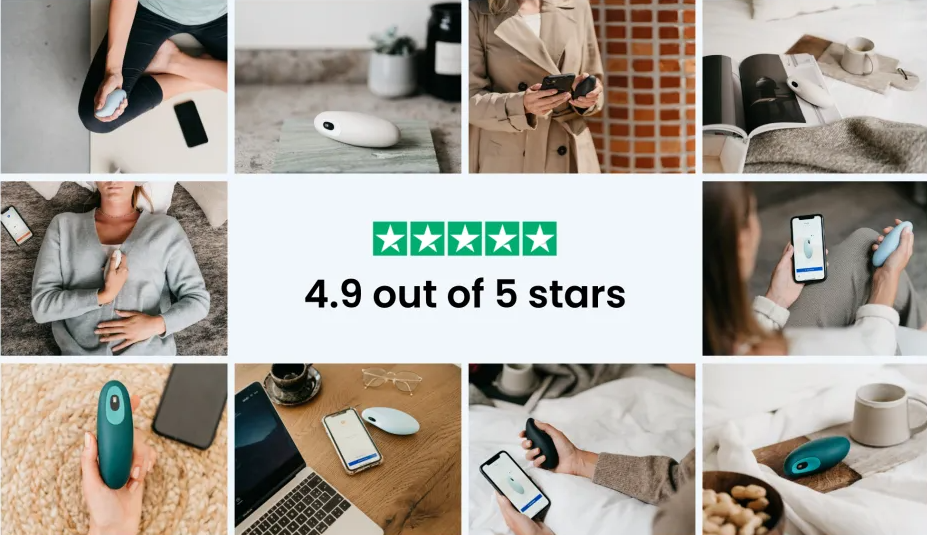
Trustpilot: 4.3/5 stars (based on ~800 reviews when I checked)
Common positive themes:
- “Actually helps me sleep better”
- “Simple and effective”
- “Love that I don’t need my phone”
- “Great for panic attacks”
Common complaints:
- “Expensive for what it is”
- “Battery doesn’t last as long as advertised”
- “App could be better”
- “Stopped working after 6 months” (though these seem rare)
Amazon Reviews: Not sold on Amazon (only through Moonbird’s website), which makes it harder to gauge mass-market reception.
Reddit Discussions:
I found threads on r/Anxiety and r/Meditation. The consensus is pretty balanced:
- People who are already into breathwork tend to love it
- Skeptics think it’s overpriced
- Several users said it’s the only thing that helped them stick with breathing practice
- Some mentioned cheaper DIY alternatives (like holding a stress ball with a metronome)
Is It a Scam?
No, it’s not a scam.
The company is legit (based in Belgium, been around since 2019). The product does what it claims – guides your breathing through haptic feedback.
The question isn’t whether it’s a scam but whether it’s worth the price for YOU specifically.
How Much Does the Moonbird Cost?
Let’s break down the actual pricing.
Standard Pricing
- Moonbird Device: $179 USD (€169 in Europe)
- Shipping: Usually around $10-15 depending on location
- Total: Around $190-195
Is There a Subscription?
No.
This was a big factor for me. I’m so tired of subscription services. You pay once for the device, and that’s it. The app is free to use forever.
No monthly fees, no premium tiers, no paywalled features.
Are There Discounts?
Occasionally, they run promotions:
- Black Friday deals (I’ve seen 20% off)
- Email signup discounts (usually 10%)
- Bundle deals if buying multiple (for families or gifts)
I paid full price like a chump, but if you’re patient, you can probably save $20-30.
Warranty and Returns
- 30-day money-back guarantee – You can return it if you don’t like it
- 2-year warranty – Covers defects and malfunctions
- Customer service – Generally responsive (I emailed once with a question and got a reply within 24 hours)
Is It Worth the Money?
Here’s my honest math:
If you use it daily for a year, that’s 365 sessions. That breaks down to about $0.49 per session.
Compare that to:
- One therapy session: $100-200
- One month of meditation app subscription: $10-15
- One massage: $60-100
- One yoga class: $20-30
If it actually helps reduce your stress and improves your sleep, the ROI is there.
But that’s a big “if” that depends on you using it consistently.
FAQs About Moonbird
What is the Moonbird breathing device?
The Moonbird is a handheld device that expands and contracts in your palm to guide your breathing patterns. It uses haptic feedback to help you practice slow, controlled breathing exercises that can reduce stress and anxiety.
Is the Moonbird breathing device worth it?
If you’ve struggled with meditation apps or traditional breathwork and can afford the $179 price tag, yes, it’s worth trying. The haptic feedback makes it easier to maintain focus and build a consistent practice. However, if you’re disciplined with free apps, you might not need it.
How does the Moonbird work?
You hold the Moonbird in your hand, and it gently expands and contracts. As it expands, you breathe in. As it contracts, you breathe out. The rhythm guides you through proven breathing techniques like coherent breathing and box breathing without needing to watch a screen.
Does Moonbird actually reduce anxiety?
Based on my experience and user reviews, yes, it helps reduce anxiety symptoms when used consistently. The slow breathing patterns it guides you through activate your parasympathetic nervous system, which naturally calms your body’s stress response. It’s not a cure, but it’s an effective management tool.
Is Moonbird good for sleep?
Yes, many users (including me) find it helpful for sleep. Using it before bed helps slow your heart rate and calm your nervous system. I use the 4-7-8 breathing pattern for 10 minutes before sleep, and I fall asleep noticeably faster than before.
How long does the Moonbird battery last?
The company claims about 4 hours of active use per charge. In my experience, using it 10-15 minutes per day, I charge it about once a week. The battery life is decent but not exceptional.
Can you use Moonbird without the app?
Yes! Once you’ve set up your preferred patterns through the app, you can use the device completely independently. This is one of my favorite features – no phone required.
Is there a monthly fee for Moonbird?
No, there’s no subscription or monthly fee. You pay once for the device ($179), and the app is free to use forever. No hidden costs.
What’s the difference between Moonbird and meditation apps?
The main difference is haptic feedback. Apps require you to look at or listen to your phone. Moonbird gives you physical, tangible guidance through touch, which makes it easier to focus and doesn’t require screen time.
Is Moonbird FDA approved?
No, the Moonbird is not FDA approved because it’s classified as a wellness device, not a medical device. It’s not intended to diagnose or treat medical conditions. It’s a tool for breathing exercises and stress management.
How do you clean the Moonbird?
Wipe it down with a slightly damp cloth. The soft-touch coating can pick up hand oils, so I clean mine about once a week. Don’t submerge it in water – it’s not waterproof.
Can Moonbird help with panic attacks?
Many users report that it helps during panic attacks or when they feel one coming on. The slow breathing it guides you through can interrupt the panic cycle. However, if you have severe panic disorder, you should work with a mental health professional and use this as a supplementary tool.
Is Moonbird better than breathing necklaces?
It depends on what you want. Breathing necklaces are cheaper ($30-60) but only extend your exhale. Moonbird offers customizable breathing patterns, tracking, and more versatility. I prefer Moonbird, but breathing necklaces work for some people.
Where is Moonbird made?
Moonbird is designed by a Belgian company called Moonbird BV. I believe the devices are manufactured in Europe, though I couldn’t confirm the exact factory location.
Does Moonbird have scientific backing?
The breathing techniques it uses (coherent breathing, box breathing, etc.) have solid scientific research supporting them. The device itself has some company-sponsored research from Ghent University showing benefits, but independent peer-reviewed studies specifically on the device are limited.
How long should you use Moonbird each day?
Most users (including me) find 5-15 minutes per day effective. The company recommends starting with 5-minute sessions and building up. I do 10 minutes before bed and sometimes 5 minutes during the day if I’m stressed.
Can kids use the Moonbird?
Yes, kids can use it, and some parents report success using it to help children with anxiety. However, younger kids might find it boring or not understand the concept. Probably best for kids 10+ years old.
What if Moonbird doesn’t work for me?
They offer a 30-day money-back guarantee. If you try it consistently for a few weeks and it doesn’t help, you can return it for a refund.
Is Moonbird legit or a scam?
Moonbird is a legitimate product from a real company. It’s not a scam – it does what it claims (guides your breathing through haptic feedback). Whether it’s worth the price is subjective and depends on your needs and budget.
My Final Verdict: Is Moonbird Worth the Hype?
After 60 days of daily use, here’s my bottom line:
The Moonbird isn’t a magic solution, but it’s the most effective breathing tool I’ve personally used.
Here’s the thing about wellness products – they only work if you actually use them. I have a drawer full of abandoned self-care gadgets that I used three times and forgot about.
The Moonbird stuck because it removed the friction from breathing practice:
- No screen to stare at
- No complicated techniques to remember
- No willpower required to “focus” – my hand literally tells me when to breathe
- Takes less than 10 minutes
The Real Question: Should YOU Buy It?
Buy it if:
- You’ve tried cheaper options and they didn’t work
- You have the budget without financial stress
- You’re committed to using it daily for at least 3 weeks
- You value screen-free wellness tools
- You respond well to tactile/physical feedback
Skip it if:
- You haven’t tried free breathing apps yet (start there)
- $179 is a significant expense for you
- You’re expecting instant results
- You need a medical device for respiratory issues
- You’re buying it on impulse without a plan to use it
What Happened to My Anxiety?
Did the Moonbird cure my anxiety? No.
Did it help me manage it better? Absolutely.
My resting heart rate is lower. I fall asleep faster. I have a tool I can reach for when I feel stress building instead of just spiraling.
It’s not therapy, it’s not medication, and it’s not a substitute for addressing the root causes of stress.
But as a daily practice tool? It’s genuinely helpful.
The Honest Truth
If someone gave me $179 and said, “You have to spend this on wellness,” would I buy the Moonbird again?
Yeah, I would.
But if money was tight and I had to choose between this and, say, therapy sessions or a gym membership? I’d choose those first.
The Moonbird is a premium wellness tool that makes breathwork easier and more consistent. If that’s worth $179 to you in your current situation, it delivers on its promises.
If you’re on the fence, my advice: try breathing apps for two weeks first. If you struggle with consistency or screen time bothers you, then consider upgrading to Moonbird.
My Final Rating: 4.2/5
Would I recommend it? Yes, with the caveats above.
Will I keep using it? Definitely. It’s part of my routine now.
Where to Buy Moonbird (and How to Get the Best Deal)
Official Website
The safest place to buy is directly from moonbird.life (their official website).
Pros:
- Guaranteed authentic product
- Full warranty and return policy
- Sometimes exclusive online discounts
- Direct customer support
Cons:
- No third-party price competition
- Shipping times can vary internationally
Is It on Amazon?
As of now, no. I couldn’t find authentic Moonbird devices on Amazon. Be wary of any listings claiming to sell it – they might be counterfeit or scams.
Other Retailers
Some wellness and meditation stores carry it, but availability varies by region. In Europe, I’ve seen it at select meditation centers and wellness shops.
How to Save Money
- Sign up for their email list – Usually gets you 10% off your first order
- Wait for seasonal sales – Black Friday, Cyber Monday, New Year typically have deals
- Check for bundle offers – Sometimes they offer discounts when buying multiple units
- Ask about student discounts – Some wellness companies offer these; worth an email
Shipping Costs
- US: Around $10-15
- Europe: €10-15
- International: Varies, can be $20-30
They usually ship within 2-3 business days, and delivery takes 5-10 days depending on location.