
Have you ever bought a foundation that looked perfect in the store, only to get home and realize it makes you look orange, gray, or completely washed out? You’re not alone. Studies show that over 70% of people struggle to find their correct foundation shade on the first try.
Choosing the wrong foundation shade doesn’t just waste money—it can affect your confidence and how your entire makeup look comes together. Whether you’re dealing with mismatched jawlines, oxidized formulas, or shades that simply don’t complement your natural complexion, finding the right foundation can feel overwhelming.
But here’s the good news: with the right knowledge and techniques, anyone can find their perfect foundation match. This comprehensive guide will walk you through everything you need to know about selecting a foundation shade that seamlessly blends with your skin tone, enhances your natural beauty, and lasts throughout the day.
By the end of this article, you’ll understand your undertone, know exactly where and how to test foundation shades, and have actionable strategies for finding your ideal match—whether you’re shopping in-store or online.
Understanding Your Skin Tone vs. Skin Undertone
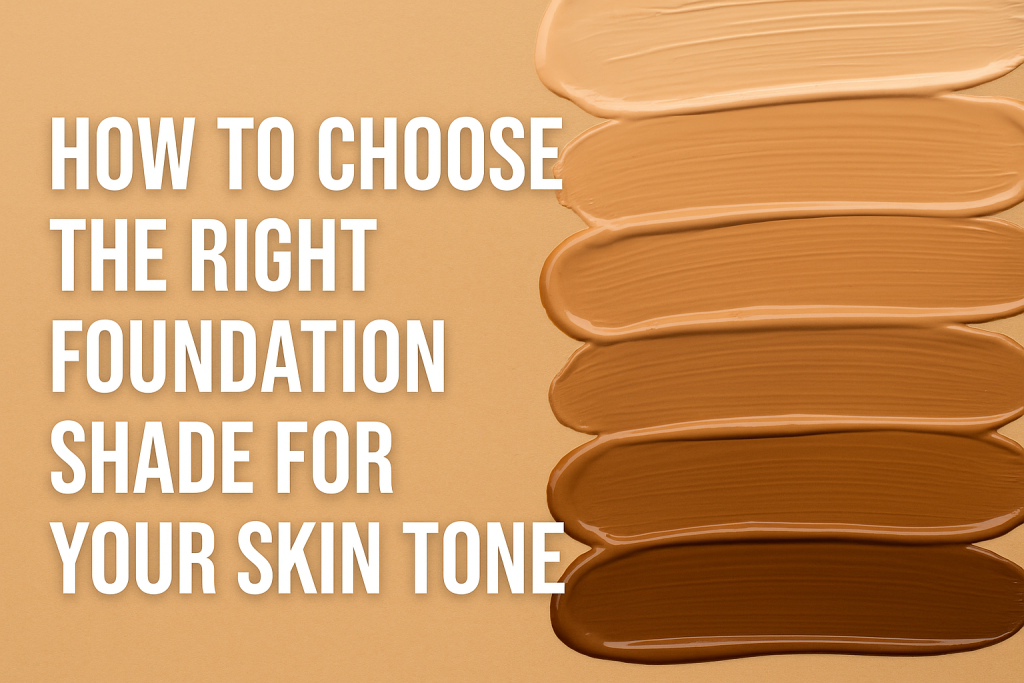
Before you can choose the right foundation shade, you need to understand the difference between skin tone and undertone. Many people confuse these two concepts, which leads to foundation mismatches.
What Is Skin Tone?
Skin tone refers to the surface color of your skin—whether you have fair, light, medium, tan, or deep skin. This is what most people notice first and what foundation shade ranges typically categorize their products by.
Your skin tone can change throughout the year based on sun exposure, seasonal variations, and other environmental factors. This is why you might need different foundation shades for summer and winter.
What Is Skin Undertone?
Your undertone is the subtle hue beneath the surface of your skin. Unlike your skin tone, your undertone remains consistent throughout your life and doesn’t change with sun exposure or other factors.
There are three main undertone categories:
- Cool undertones: Pink, red, or bluish hues beneath the skin
- Warm undertones: Yellow, peachy, or golden hues beneath the skin
- Neutral undertones: A balanced mix of both cool and warm hues
Understanding your undertone is crucial because it determines which foundation shades will look natural on your skin, regardless of how light or dark your complexion is.
Why Undertone Matters More Than You Think
Even if you choose a foundation that matches your skin tone depth perfectly, it will look off if the undertone doesn’t match. A foundation with the wrong undertone can make your skin appear:
- Ashy or grayish (wrong undertone for deeper skin tones)
- Orange or overly warm (wrong undertone for cool-toned skin)
- Pink or too cool (wrong undertone for warm-toned skin)
- Muddy or unnatural (undertone mismatch in general)
This is why identifying your undertone is the first and most important step in finding your perfect foundation shade.
How to Determine Your Undertone: 5 Proven Methods
Determining your undertone doesn’t require professional help. Here are five reliable methods you can try at home to identify whether you have cool, warm, or neutral undertones.
Method 1: The Vein Test
This is one of the most popular and easiest ways to determine your undertone.
How to do it:
- Look at the veins on the inside of your wrist in natural daylight
- Observe the color of your veins
What it means:
- Blue or purple veins: Cool undertone
- Green veins: Warm undertone
- Blue-green veins (can’t tell): Neutral undertone
This method works because the color of your blood vessels shines through your skin, revealing the undertone beneath.
Method 2: The Jewelry Test
Have you ever noticed that certain jewelry metals look more flattering on you than others? This is directly related to your undertone.
How to do it:
- Hold silver jewelry next to your skin
- Hold gold jewelry next to your skin
- Compare which metal looks better against your complexion
What it means:
- Silver looks better: Cool undertone
- Gold looks better: Warm undertone
- Both look equally good: Neutral undertone
Method 3: The White Paper Test
This simple test uses a plain white piece of paper to reveal your undertone.
How to do it:
- Hold a pure white piece of paper next to your bare face in natural light
- Look at how your skin appears in comparison to the white
What it means:
- Skin looks pink, rosy, or bluish: Cool undertone
- Skin looks yellow, golden, or peachy: Warm undertone
- Skin looks gray or ashen: You might be using the wrong test lighting, or you have a neutral undertone
Method 4: The Sun Reaction Test
How your skin reacts to sun exposure can indicate your undertone.
What it means:
- You burn easily and rarely tan: Typically cool undertone
- You tan easily and rarely burn: Typically warm undertone
- You burn sometimes and tan sometimes: Likely neutral undertone
Method 5: The Color Clothing Test
The colors that look most flattering on you often align with your undertone.
What it means:
- You look best in blues, purples, emerald greens, and jewel tones: Cool undertone
- You look best in earth tones, oranges, yellows, and warm reds: Warm undertone
- You look good in most colors: Neutral undertone
Quick Reference Table: Undertone Identification
| Test Method | Cool Undertone | Warm Undertone | Neutral Undertone |
|---|---|---|---|
| Veins | Blue/Purple | Green | Blue-green |
| Jewelry | Silver | Gold | Both |
| White Paper | Pink/Rosy | Yellow/Golden | No strong lean |
| Sun Reaction | Burns easily | Tans easily | Mixed |
| Best Colors | Blues, purples | Oranges, earth tones | Most colors |
Understanding Foundation Shade Naming Systems
Once you know your undertone, the next step is understanding how foundation brands categorize and name their shades. Unfortunately, there’s no universal standard, which can make shopping confusing.
Common Shade Naming Conventions
Different brands use different systems to organize their foundation shades:
Numbered Systems: Many brands use numbers to indicate depth (how light or dark the shade is):
- Lower numbers: Lighter shades (e.g., 1, 2, 3)
- Higher numbers: Deeper shades (e.g., 8, 9, 10)
Letter Codes: Letters often indicate undertone:
- C or P: Cool or Pink undertones
- W or G: Warm or Golden undertones
- N or B: Neutral or Beige undertones
Combined Systems: Many brands combine numbers and letters:
- Example: “3W” means medium depth with warm undertone
- Example: “5N” means medium-tan depth with neutral undertone
Popular Foundation Shade Systems by Brand
MAC Cosmetics: Uses NC (Neutral Cool, which is actually warm-toned) and NW (Neutral Warm, which is actually cool-toned). The numbers indicate depth.
Fenty Beauty: Uses numbers for depth (1-50) followed by undertone indicators:
- Numbers 100-199: For very fair to light skin
- Numbers 200-299: For light to medium skin
- Numbers 300-499: For medium to deep skin
NARS: Uses descriptive names like “Gobi,” “Punjab,” or “Tahoe” with no clear system, requiring swatching or research.
Tips for Navigating Different Shade Systems
- Look for undertone indicators: Pay attention to letters, descriptions, or swatches that show undertone
- Research shade descriptions: Many brands provide detailed descriptions online
- Check comparison tools: Websites like Findation and Temptalia help match shades across brands
- Read reviews: Other customers often mention whether shades run pink, yellow, or neutral
Understanding these naming systems will save you time and frustration when shopping for foundation.
Where to Test Foundation Shades Correctly
Testing foundation in the right location on your body is critical for finding an accurate match. Many people make the mistake of testing on their hand or wrist, which rarely matches their facial skin tone.
The Best Places to Test Foundation
Your Jawline (Most Recommended): The jawline is considered the gold standard for foundation testing because:
- It represents where your face meets your neck
- It shows how the foundation will blend with your natural skin
- It’s easily visible in natural light
- It prevents the “mask effect” where your face is a different color than your neck
How to test on your jawline:
- Apply three different shades along your jawline
- Blend each shade down toward your neck
- Wait 10-15 minutes (foundations can oxidize)
- Check in natural daylight
- The shade that disappears into your skin is your match
Your Neck (Secondary Option): Some makeup artists recommend matching to your neck rather than your face, especially if your face is uneven in tone or has redness.
Your Chest (For Body Matching): If you wear foundation on your décolletage, test shades on your chest area for seamless matching.
Places to AVOID Testing Foundation
- Your hand: Hands are typically darker or more pigmented than your face
- Your inner wrist: Usually lighter and more pink-toned than facial skin
- Your forearm: Different texture and tone than facial skin
- Store lighting: Artificial lighting can distort how colors appear
Testing Foundation In-Store vs. Online
In-Store Testing Tips:
- Always go to the store without makeup if possible
- Bring a mirror to check the shade in natural light outside
- Test during daylight hours
- Take photos in natural light to see how it looks on camera
- Ask for samples to test at home before purchasing full size
Online Shopping Strategies:
- Order multiple shades if the brand offers free returns
- Look for brands with shade-matching quizzes or virtual try-on tools
- Read reviews from people with similar skin tones
- Check Instagram or YouTube for swatches on real people
- Use shade-matching websites that cross-reference brands
The Complete Foundation Shade Testing Process
Finding your perfect foundation match requires a systematic approach. Follow this step-by-step process to ensure you choose the right shade every time.
Step 1: Prepare Your Skin
Before testing any foundation shades:
- Cleanse your face and remove any existing makeup
- Apply your regular skincare routine (moisturizer, primer if you use one)
- Wait 15-20 minutes for products to absorb
- Your skin should be in its normal, everyday state
Step 2: Narrow Down Your Options
Based on your undertone identification:
- If you have cool undertones: Look for shades labeled “C,” “P,” “Cool,” or “Pink”
- If you have warm undertones: Look for shades labeled “W,” “G,” “Warm,” or “Golden”
- If you have neutral undertones: Look for shades labeled “N,” “Neutral,” or “Beige”
Also consider your skin tone depth:
- Fair: Lightest shades in the range
- Light: Light to light-medium shades
- Medium: Medium shades
- Tan: Medium to medium-deep shades
- Deep: Deeper shades in the range
Step 3: Test Three Shades
Always test three shades at once:
- Your best guess match
- One shade lighter
- One shade darker
This ensures you don’t miss your perfect match by being slightly off.
Step 4: Apply and Blend
- Swipe each shade on your jawline, spacing them apart
- Blend each shade slightly down toward your neck
- Use the same application method you would normally use (fingers, brush, or sponge)
Step 5: Wait and Observe
This is the step most people skip, but it’s crucial:
- Wait at least 10-15 minutes after application
- Foundations can oxidize (darken) or change color as they interact with your skin’s natural oils
- Move to different lighting conditions (natural light is best)
- Check how the shades look from different angles
Step 6: Identify Your Match
The perfect foundation shade should:
- Disappear into your skin completely
- Match your jawline and blend seamlessly into your neck
- Look natural in both indoor and outdoor lighting
- Not appear orange, gray, pink, or yellow
- Enhance your natural complexion without looking like a mask
If none of the three shades are perfect, you may need to:
- Try a different undertone category
- Mix two shades together
- Try a different brand with more shade options
Step 7: Test Throughout the Day
If possible, get a sample and test the foundation for a full day:
- Apply it in the morning using your normal routine
- Check how it wears throughout the day
- Observe how it looks in different lighting (office, outdoors, evening)
- Note if it oxidizes, separates, or changes color
- Take photos to see how it appears on camera
Common Foundation Matching Mistakes to Avoid
Even with the best intentions, many people make common mistakes that lead to the wrong foundation shade. Here’s what to avoid:
Mistake 1: Testing in Artificial Lighting Only
Store lighting is notoriously deceptive. Fluorescent lights can make foundations appear more pink or cool-toned than they actually are, while warm lighting can make them appear more yellow or orange.
Solution: Always check your foundation match in natural daylight before committing to a purchase.
Mistake 2: Matching to Your Hand or Arm
Your hands and arms are typically different colors than your face due to sun exposure and pigmentation differences.
Solution: Always test foundation on your jawline or neck area.
Mistake 3: Not Accounting for Oxidation
Many foundations oxidize, meaning they darken or change color after application as they react with your skin’s natural oils and pH.
Solution: Wait 10-15 minutes after applying before making a decision, and test the foundation throughout the day if possible.
Mistake 4: Ignoring Seasonal Changes
Your skin tone can shift slightly between seasons due to sun exposure, even if your undertone stays the same.
Solution: Consider having two foundation shades—one for summer when you’re slightly tanned, and one for winter when you’re paler.
Mistake 5: Buying Based on Description Names
Foundation names like “Natural Beige” or “Golden Ivory” can vary wildly between brands and don’t always accurately describe the undertone.
Solution: Always look at swatches, test shades yourself, or research online before buying based on name alone.
Mistake 6: Not Considering Coverage and Finish
The same shade can look different in matte versus dewy finishes, or in light versus full coverage formulas.
Solution: Test the specific formula you plan to use, not just the shade from a different product line.
Mistake 7: Skipping the Neck Check
A foundation that matches your face but not your neck creates the dreaded “mask effect.”
Solution: Always blend foundation down your jawline and check that it matches your neck area.
Mistake 8: Using the Wrong Application Method
Different application methods can affect how a foundation shade looks:
- Brushes provide more coverage
- Sponges offer sheerer, more natural coverage
- Fingers warm the product and can change its appearance
Solution: Test foundation using the same application method you’ll use daily.
How to Find Your Foundation Shade When Shopping Online
Online shopping for foundation presents unique challenges since you can’t physically test shades. Here’s how to navigate digital foundation purchases successfully.
Use Virtual Try-On Technology
Many brands now offer augmented reality (AR) tools that let you virtually try on foundation shades:
- L’Oréal’s Virtual Try-On
- Sephora Virtual Artist
- Charlotte Tilbury’s Magic Mirror
- MAC Virtual Try-On
While not perfect, these tools provide a helpful starting point, especially when combined with other strategies.
Take Advantage of Shade-Matching Tools
Several online tools help you find your shade across different brands:
Findation.com: Enter foundations you’ve used before, and it suggests matching shades in other brands.
Temptalia Foundation Matrix: Comprehensive database that matches foundation shades across hundreds of brands.
Brand-Specific Shade Finders: Many brands offer quizzes or questionnaires to help identify your shade:
- Answer questions about your undertone
- Provide reference shades you’ve used
- Upload a photo for analysis
Research Swatches and Reviews
Before purchasing online:
- Search for swatches on real people: Look on Instagram, YouTube, and TikTok for your shade
- Read detailed reviews: Focus on reviews from people with similar skin tones
- Check multiple sources: Different lighting shows different aspects of the shade
- Look for comparison swatches: Many content creators compare popular foundation shades
Order Multiple Shades with Free Returns
If the brand or retailer offers free returns:
- Order 2-3 shades that might work
- Test them at home in natural light
- Return the shades that don’t match
- This eliminates the guesswork and ensures you get the right match
Use Sample Programs
Some retailers offer sample programs:
- Sephora allows you to request samples in-store or with online orders
- Many brands sell discovery sets with multiple shade options
- Beauty subscription boxes sometimes include foundation samples
Check Brand Shade Ranges
Before committing to a brand, ensure they have adequate options:
- At least 40+ shades indicates good inclusivity
- Multiple undertone options in each depth category
- Shades specifically designed for your skin tone range
Join Online Beauty Communities
Reddit communities like r/MakeupAddiction or brand-specific Facebook groups can provide:
- Shade recommendations from people with similar skin tones
- Honest reviews about undertones and oxidation
- Comparison photos in various lighting
- Tips for matching specific brands
Foundation for Different Skin Tones: Specific Guidance
Different skin tone categories face unique challenges when finding foundation. Here’s specific advice for various complexions.
Foundation for Fair to Light Skin Tones
Common Challenges:
- Foundations can appear too dark or orange
- Limited light shade options in some brands
- Difficulty finding cool-toned or neutral options in lighter shades
Solutions:
- Look for brands with extensive fair shade ranges (Fenty, NARS, Charlotte Tilbury)
- Pay close attention to undertone—pink undertones are common in fair skin
- Test for oxidation, as it’s more noticeable on lighter skin
- Consider white foundation mixers if shades are consistently too dark
Best Shade Descriptors to Look For:
- Porcelain, Ivory, Alabaster (but always check undertone)
- Shades numbered 1-3 or 100-200 range
- C, P, or Cool designations for pink undertones
- W or Warm if you have yellow undertones
Foundation for Medium Skin Tones
Common Challenges:
- Finding the right undertone balance (many medium shades lean too pink or too orange)
- Seasonal shade variations as skin tans
- Identifying whether you’re light-medium or medium-deep
Solutions:
- Test multiple undertone options in your depth range
- Consider having two shades for seasonal variations
- Mix shades together for custom matching
- Look for brands with multiple medium-range options
Best Shade Descriptors to Look For:
- Beige, Tan, Sand, Honey
- Shades numbered 4-6 or 300-400 range
- N or Neutral undertones work well for many medium skin tones
- Golden, Warm, or Olive for warm-medium tones
Foundation for Tan to Deep Skin Tones
Common Challenges:
- Limited shade ranges in many brands
- Foundations appearing ashy or gray
- Difficulty finding truly deep shades
- Undertones being ignored in deeper shades
Solutions:
- Choose brands known for inclusive shade ranges (Fenty Beauty, Black Opal, Fashion Fair, MAC)
- Avoid foundations with just one or two deep shades—they rarely match well
- Look for undertone variations in deeper shades (cool, neutral, warm, olive, red)
- Test for ashiness by checking in natural light
Best Shade Descriptors to Look For:
- Cocoa, Espresso, Mahogany, Ebony, Chestnut
- Shades numbered 7-10 or 400-500+ range
- Red, Golden, or Neutral undertones depending on your skin
- Brands specifically designed for deeper skin tones
Foundation for Olive Skin Tones
Common Challenges:
- Olive undertones aren’t always represented in foundation ranges
- Foundations can look too pink, too orange, or too yellow
- Olive skin often gets categorized as “neutral” but needs specific shades
Solutions:
- Look for brands that specifically offer olive undertones (NARS, Giorgio Armani, MAC)
- Neutral shades with slight green or golden undertones often work best
- Avoid pure yellow or pure pink foundations
- Consider mixing foundations to achieve the right tone
Best Shade Descriptors to Look For:
- Descriptions mentioning “olive,” “green undertones,” or “neutral-warm”
- Brands that offer O or Olive designations
- Shades with names like “Olive,” “Golden Beige,” “Neutral Tan”
How to Mix Foundation Shades for a Perfect Match
Sometimes the perfect foundation shade doesn’t exist off the shelf, and that’s where mixing comes in. Custom mixing allows you to create your ideal match.
When to Mix Foundation Shades
Consider mixing foundations when:
- You’re between two shades in a brand’s range
- Your skin tone changes seasonally
- You can’t find the right undertone in your depth
- You want to adjust coverage or finish
- You need a shade that doesn’t exist in the market
Basic Foundation Mixing Techniques
Mixing Two Shades from the Same Brand: This is the easiest and most common mixing method.
- Purchase one shade lighter and one shade darker than your skin
- Mix equal parts on the back of your hand or a mixing palette
- Adjust the ratio until you achieve your perfect match
- Apply using your preferred method
Mixing Different Undertones: If you’re neutral-toned or between undertones:
- Mix a cool-toned and warm-toned foundation in your depth
- Start with 50/50 and adjust based on your needs
- This creates custom neutral or olive shades
Using Foundation Adjusting Drops
Foundation mixing drops allow you to customize your foundation without buying multiple bottles:
White Mixing Drops:
- Lighten foundation shades that are too dark
- Useful for fair-skinned individuals
- Popular options: The Body Shop, LA Girl, NYX
Darkening Drops:
- Deepen foundations that are too light
- Essential for deeper skin tones with limited options
- Popular options: The Body Shop, Black Opal
Undertone Adjusting Drops:
- Add warmth (yellow/golden drops)
- Add coolness (pink/blue drops)
- Neutralize unwanted tones (green drops for redness)
Mixing Different Brands Together
You can mix foundations from different brands, but consider:
- Similar formulas mix better (both water-based or both silicone-based)
- Different finishes can be combined (matte + dewy = satin)
- Different coverage levels can be adjusted (full + sheer = medium)
- Test the mixture on your skin first for compatibility
Pro Mixing Tips
- Mix on your hand or palette first: Never mix directly on your face
- Keep track of ratios: Note what works so you can recreate it
- Mix enough for your face: Don’t mix tiny amounts that require multiple batches
- Store mixed foundation: If mixing larger quantities, use a clean bottle or container
- Check oxidation: Mixed foundations may oxidize differently than single shades
Creating a Custom Foundation Wardrobe
Consider maintaining a small foundation wardrobe:
- Summer shade: 1-2 shades darker for tanned skin
- Winter shade: 1-2 shades lighter for paler skin
- Mixing drops: For fine-tuning both shades
- Different formulas: Matte for oily days, dewy for dry days
This approach ensures you always have the right shade and formula for any season or skin condition.
Testing Foundation in Different Lighting Conditions
Lighting dramatically affects how foundation appears on your skin. Testing in multiple lighting scenarios ensures your foundation looks good everywhere.
The Importance of Natural Light
Natural daylight is the most accurate lighting for testing foundation because:
- It reveals the true color without artificial distortion
- It shows how foundation looks in everyday outdoor situations
- It’s the most common lighting in which people will see you
- It exposes undertone mismatches clearly
How to test in natural light:
- Stand near a window with indirect sunlight
- Go outside during daytime hours
- Avoid direct harsh sunlight, which can wash out color perception
- Midday light (10 AM – 3 PM) is ideal
Understanding Different Lighting Types
Warm Lighting (Incandescent bulbs):
- Makes foundation appear more yellow or orange
- Can hide cool-toned undertone mismatches
- Common in homes and restaurants
- Foundation may look good in this light but wrong in others
Cool Lighting (Fluorescent bulbs):
- Makes foundation appear more pink or ashy
- Can exaggerate cool or pink undertones
- Common in offices and stores
- Foundation may look too pink or gray in this lighting
LED Lighting:
- More neutral than incandescent or fluorescent
- Closer to natural light in quality
- Increasingly common in homes and stores
- Generally more accurate for foundation testing
Flash Photography:
- Can reveal foundation oxidation
- Shows true undertone matching
- May create flashback with certain ingredients (SPF, certain silicones)
- Test foundation with camera flash before important events
The Multi-Light Testing Protocol
For the most accurate foundation match:
- Initial test in store or at home: Apply foundation in available lighting
- Natural light check: Go to a window or outside within 15 minutes
- Indoor artificial light: Check in typical indoor settings
- Evening light: See how it looks in dim or evening lighting
- Camera test: Take photos with and without flash
Lighting Situations to Consider
Think about where you spend most of your time:
- Office workers: Test how foundation looks in fluorescent lighting
- Outdoor workers: Natural light is most important
- Evening events: Check how foundation appears in dim lighting
- Content creators: Test with ring lights and camera settings
- Service industry: Consider mixed lighting conditions
Quick Lighting Test Checklist
Before committing to a foundation shade, ensure it looks good in:
- ✓ Natural daylight
- ✓ Bathroom mirror lighting
- ✓ Office or work lighting
- ✓ Car mirror/outdoor settings
- ✓ Phone camera/selfie lighting
- ✓ Flash photography
If your foundation looks good in all these scenarios, you’ve found your perfect match.
Special Considerations for Foundation Matching
Certain skin conditions and concerns require additional considerations when choosing foundation shades.
Foundation for Mature Skin
As skin ages, undertones can shift, and texture changes affect how foundation appears.
Considerations:
- Skin may become more sallow or yellow with age
- Redness or discoloration may be more prominent
- Texture changes can affect how color appears
- Lighter coverage formulas often look more natural
Tips:
- Retest your shade every few years
- Consider hydrating formulas that don’t settle into lines
- Avoid heavy coverage that emphasizes texture
- Yellow-based shades often work better than pink for mature skin
Foundation for Acne-Prone or Scarred Skin
Acne and scarring can create uneven skin tone, making foundation matching more complex.
Considerations:
- Active redness from acne
- Dark spots or hyperpigmentation
- Texture that affects how foundation sits on skin
- Need for higher coverage
Tips:
- Match foundation to your overall skin tone, not the darkest or lightest areas
- Use color correctors underneath for specific concerns
- Consider foundations with skincare benefits
- Test how foundation looks over textured skin
Foundation for Skin with Rosacea or Redness
Significant redness requires strategic foundation matching.
Considerations:
- Redness can make your face appear more pink than your natural undertone
- Foundation may need to neutralize redness
- Some areas may be redder than others
Tips:
- Match to your neck or non-red areas
- Consider using green color corrector underneath
- Look for foundations with redness-neutralizing properties
- Your true undertone is underneath the redness—match to that
Foundation for Vitiligo or Uneven Skin Tone
Significant color variations require specialized approaches.
Considerations:
- Multiple skin tones may exist on one face
- Some areas may be significantly lighter or darker
- Coverage needs may vary across the face
Tips:
- Match to the majority of your skin tone
- Consider using different shades for different areas
- Look for buildable coverage foundations
- Color-correcting can help even out tones before foundation
Foundation for Textured Skin (Acne, Scarring, Pores)
Texture can affect how foundation color appears and distributes.
Considerations:
- Texture can make foundation look different than it does on smooth skin
- Formula matters as much as shade
- Application method significantly impacts appearance
Tips:
- Test foundation on your actual skin, not smooth swatches
- Blur primers can help create a smoother base
- Thin, buildable layers work better than thick application
- Consider your finish preference (matte vs. dewy vs. satin)
Foundation Application Tips for the Best Color Match
Even with the perfect shade, improper application can make your foundation look off. Here’s how to apply foundation for the most seamless color match.
Prep Your Skin Properly
Foundation sits better on well-prepared skin:
- Cleanse: Start with clean skin
- Moisturize: Hydrated skin helps foundation blend better
- Prime (optional): Primer can help color matching and longevity
- Wait: Let skincare absorb for 10-15 minutes before applying foundation
Choose the Right Application Method
Different tools affect how color appears:
Beauty Sponge (Most Popular):
- Provides sheer to medium coverage
- Creates a natural, skin-like finish
- Best for achieving seamless blending
- Dampen sponge before use for best results
Foundation Brush:
- Provides more coverage
- Creates a more polished look
- Good for precise application
- Can sometimes appear streaky if not blended well
Fingers:
- The warmth helps foundation blend
- Quick and convenient
- Great for spot application
- May transfer oils to product
Airbrush:
- Most expensive option
- Creates flawless, even coverage
- Requires special equipment
- Best for special occasions or professional use
Application Technique for Seamless Matching
- Start in the center: Apply foundation to the center of your face first
- Blend outward: Work the foundation outward toward your hairline
- Extend to jawline: Blend down your jawline
- Fade into neck: Don’t create a harsh line—blend until the foundation fades into your neck
- Check your ears: Many people forget to blend foundation over their ears, creating a color mismatch
Blending for No-Makeup Makeup
For the most natural appearance:
- Use less product than you think you need
- Build coverage gradually in layers
- Blend thoroughly, especially at the jawline and hairline
- Set lightly with translucent powder only where needed
Setting Your Foundation
Proper setting ensures your carefully matched shade stays true:
- Use translucent powder to avoid altering the color
- Set only where needed (T-zone, under eyes)
- Avoid over-powdering, which can change the color and finish
- Consider setting spray for longer wear without color change
Common Application Mistakes That Affect Color
Avoid these errors that can make even perfect shades look wrong:
- Applying too much product (makes color appear darker and cakey)
- Not blending into the hairline and ears
- Using the wrong primer (silicone primer with water-based foundation, etc.)
- Applying foundation to dry, unprepared skin
- Not waiting for foundation to set before judging color
How to Know When You’ve Found Your Perfect Match
Sometimes it’s hard to tell if you’ve truly found the right foundation shade. Here’s how to confirm you’ve made the right choice.
Signs You’ve Found the Perfect Foundation Shade
Your foundation match is correct when:
Visual Indicators:
- The foundation completely disappears into your skin
- There’s no visible line at your jawline or hairline
- Your face matches your neck and chest
- The shade looks natural in all lighting conditions
- Friends and family don’t notice you’re wearing foundation
- It enhances your natural skin tone without looking obvious
Feel and Performance:
- The foundation feels comfortable, not like a mask
- It wears well throughout the day without oxidizing
- Your skin looks healthy and radiant, not flat or lifeless
- The coverage level works for your needs without looking heavy
Photography Test:
- Foundation looks natural in photos, not ghostly or orange
- No flashback or white cast in flash photography
- Color appears consistent across different cameras and lighting
The 24-Hour Test
The ultimate test for foundation matching is wearing it for a full day:
Morning (Application):
- Apply foundation as you normally would
- Check immediately in natural light
- Take a reference photo
Midday (4-6 hours later):
- Check how the foundation has settled
- Look for oxidation (darkening or color change)
- Assess whether it still matches your skin
- Check for separation or fading
Evening (8-12 hours later):
- See how the foundation has worn throughout the day
- Check if the color has shifted
- Assess whether it still looks natural
- Take another photo for comparison
If your foundation looks good at all three checkpoints, you’ve found your perfect match.
When to Reconsider Your Shade Choice
Consider trying a different shade if:
- You see a distinct line at your jawline
- The foundation looks orange, pink, gray, or ashy
- Multiple people comment that you look different or ask about your makeup
- The shade changes dramatically after a few hours (oxidation)
- You need heavy concealer or color corrector to make it work
- It looks good in one lighting but terrible in another
- Your neck and face are noticeably different colors
Don’t be discouraged if your first choice isn’t perfect. Finding the right foundation shade often takes trial and error, even for beauty professionals.
Frequently Asked Questions (FAQs)
1. Can I use the same foundation shade year-round, or do I need different shades for different seasons?
Many people need different foundation shades for different seasons because skin tone can change with sun exposure. While your undertone remains constant, your skin depth can shift 1-2 shades darker in summer and lighter in winter.
The solution depends on how much your skin tone changes. If you tan significantly, consider purchasing two shades—one for summer and one for winter. Alternatively, you can use a summer and winter shade and mix them during transitional seasons for a perfect match. Some people also use lightening or darkening drops to adjust their existing foundation shade throughout the year.
If you’re unsure whether you need seasonal shades, take photos of your foundation match in different months. If you notice your foundation looking too light or too dark depending on the season, investing in two shades is worthwhile.
2. What should I do if my face and neck are different colors due to sun damage or pigmentation?
This is an incredibly common concern, and there’s no single “correct” approach—it depends on your goals and the extent of the color difference.
For minor differences, most makeup artists recommend matching foundation to your neck rather than your face. This prevents the “floating head” effect where your face appears disconnected from your body. Apply the neck-matched foundation to your entire face, then spot-conceal any specific discoloration or redness on your face.
For significant differences where matching your neck would make your face look odd, try this approach: Match foundation to the majority tone of your face, then blend the foundation down onto your neck and chest area to create a gradient effect. You can also use a slightly lighter body makeup or tinted moisturizer on your neck and décolletage to bring everything into harmony.
Consider addressing the root cause over time through skincare. Consistent sunscreen use can prevent further darkening, while treatments like vitamin C serums or gentle exfoliation can help even out skin tone over several months.
3. How do I know if my foundation is oxidizing, and what can I do about it?
Foundation oxidation occurs when the product reacts with your skin’s natural oils, pH, or air exposure, causing it to darken or change color after application. You’ll know your foundation is oxidizing if it looks perfect when you first apply it but turns orange, darker, or ashy after 30 minutes to a few hours.
To test for oxidation, apply foundation and wait 15-30 minutes before making your final shade decision. Take photos immediately after application and then again after a few hours to compare.
If your foundation oxidizes, try these solutions: Use a mattifying primer to create a barrier between your skin and foundation, set your foundation immediately with powder to reduce oil interaction, apply less product (thinner layers oxidize less), or try oil-free or water-based formulas which typically oxidize less than oil-based ones. Some people also find that using a chemical exfoliant regularly helps balance their skin’s pH and reduces oxidation.
If oxidation is severe and consistent across multiple formulas, choose a foundation that’s 1-2 shades lighter than your perfect match to account for the darkening.
4. Is it better to match foundation to my face or my neck?
The golden rule in professional makeup artistry is to match foundation to your jawline, as this is where your face naturally transitions to your neck. Your jawline represents the meeting point between your face and body, making it the ideal reference point for a seamless match.
However, the “best” approach depends on your specific situation. If your face and neck are the same color, matching to either works perfectly. If your face is significantly more red or uneven due to rosacea, acne, or sun damage, matching to your neck creates a more natural look—though you may need additional coverage on your face.
If your face is naturally darker than your neck due to genetics or sun exposure, you have two options: Match to your face and blend foundation down onto your neck and chest area, or match to your neck and use color correctors to address facial redness or darkness.
The ultimate goal is creating a cohesive look where your face doesn’t appear disconnected from your body. When in doubt, test the foundation by blending it from your cheek down across your jawline to your neck. The shade that disappears at all points is your best match.
5. Can I mix different foundation brands together, or will this cause problems?
Yes, you can absolutely mix different foundation brands together, and many people do this to create custom shades or adjust coverage and finish. However, there are some considerations to ensure compatibility.
For best results, mix foundations with similar bases. Water-based foundations mix well with other water-based formulas, while silicone-based foundations mix best with other silicone-based products. Mixing incompatible formulas can cause separation, pilling, or poor wear time. You can identify the base by looking at the ingredients—if water or aqua is listed first, it’s water-based; if dimethicone or cyclopentasiloxane appears early in the list, it’s silicone-based.
The good news is that mixing different brands can actually be beneficial. You might mix a full-coverage foundation with a lighter tinted moisturizer for medium coverage, combine a matte foundation with a dewy one for a satin finish, or blend a slightly-too-light shade with a slightly-too-dark shade from different brands to achieve your perfect color.
Start by mixing small amounts on the back of your hand or a mixing palette to test compatibility before mixing larger quantities. If the mixture looks smooth and blends well on your skin without separating or pilling, you’ve found a compatible combination. Many makeup enthusiasts maintain a “foundation wardrobe” of several formulas they mix and match based on their needs each day.
Conclusion: Your Journey to the Perfect Foundation Match
Finding the right foundation shade for your skin tone doesn’t have to be a frustrating guessing game. By understanding your undertone, knowing where and how to test foundation properly, and avoiding common matching mistakes, you can find a foundation that seamlessly enhances your natural beauty.
Remember these key takeaways:
Undertone is everything. Your undertone—cool, warm, or neutral—is the most critical factor in finding a foundation that looks natural on your skin. Use the vein test, jewelry test, or white paper test to identify yours before shopping.
Test on your jawline in natural light. Always test foundation shades on your jawline, wait 15 minutes for oxidation, and check the match in natural daylight. This eliminates most matching errors.
Don’t be afraid to mix shades. If you can’t find your perfect match off the shelf, mixing two shades or using lightening/darkening drops can create your custom color.
Your perfect shade should disappear. The right foundation literally disappears into your skin, creating a seamless transition from your face to your neck with no visible line.
Seasonal adjustments are normal. Your skin tone may change throughout the year, and that’s okay. Many people maintain two foundation shades for optimal matching.
The foundation matching process takes patience, but the result—a flawless, natural-looking complexion that boosts your confidence—is absolutely worth it. Don’t give up if your first attempt isn’t perfect. Even professional makeup artists sometimes need multiple tries to find the ideal match.
Ready to find your perfect foundation shade? Start by identifying your undertone today using the methods outlined in this guide, then visit your local beauty retailer or order samples online to begin testing. Your ideal foundation match is out there waiting for you—and now you have all the tools to find it.
Have questions about finding your foundation shade? Drop a comment below or share your foundation matching success stories with our community!