
Quick Verdict: The Pacuzzi does what it promises – it turns your regular skillet into a functioning steam oven. But whether that’s worth $30 depends entirely on how you cook. Read on for my 30-day, real-kitchen results.
What Is the Pacuzzi Kitchen Tool? {#what-is-pacuzzi}
Okay, let me just say this upfront: when I first heard about the Pacuzzi, I rolled my eyes a little.
A $30 silicone disc that turns your frying pan into a steam oven? Sounds like one of those “as seen on TV” gadgets that ends up gathering dust in a kitchen drawer by month two.
But then a couple of friends asked me about it. Then I saw it pop up in three different cooking groups I follow. And honestly? I got curious enough to buy one and put it through its paces for a full month.
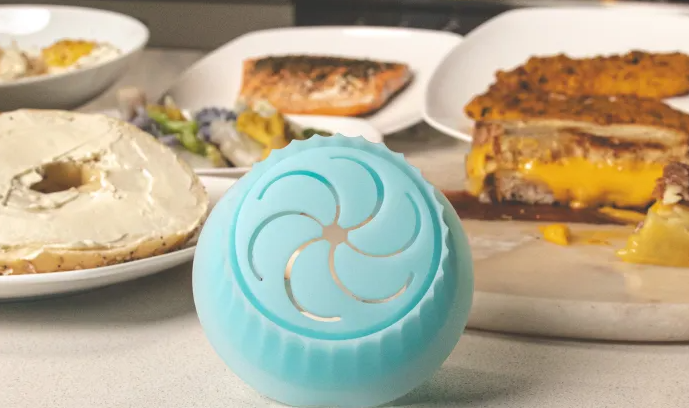
So here’s the deal. The Pacuzzi is a collapsible, food-grade platinum silicone insert — about the size of a large hockey puck when compressed — that you press flat into the bottom of any skillet or frying pan. You add a small amount of water (we’ll get into the exact amounts, because the instructions are confusingly inconsistent), cover the pan with a lid, and heat it on your stove.
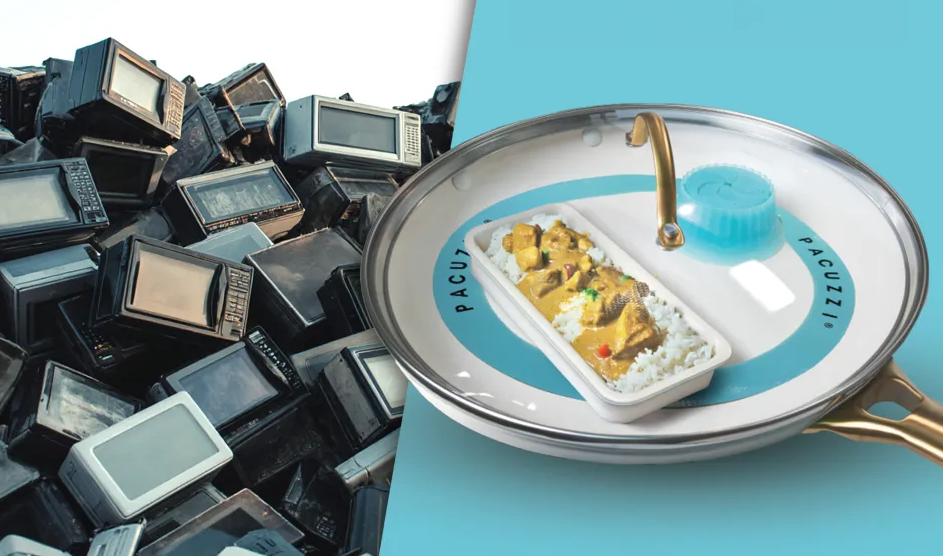
What you end up with is a stovetop steam environment. The silicone base creates a sealed chamber where water vaporizes into circulating steam around your food. The brand calls this a “humidi-fryer” — which is a bit of an odd name, but the concept is sound.
The company was founded by a stay-at-home mom who was tired of leftovers coming out of the microwave dry and rubbery. That origin story is genuine — and it’s actually reflected in what the product does best.
The core promise: Reheat leftovers and steam food in your existing skillet, at speeds comparable to a microwave, but with the texture and moisture retention of proper steam cooking.
Does it deliver? Mostly yes. With some real caveats. Let me walk you through everything.

What’s in the Box? {#whats-in-the-box}
When my Pacuzzi arrived, here’s what I found inside:
- The Pacuzzi silicone insert — the main piece, collapsible, fits pans from 8 to 12 inches
- A rubber base mat — helps with grip and sealing on the pan surface
- A quick-start instruction card — which, unfortunately, has different water measurements than the website (I’ll get to this)
- A small warning sticker that says not to use it dry without water
The packaging itself calls it both a “skillet steamer” and a “humidi-fryer” — I’m still not sure which name they’re going with, but both are accurate enough.
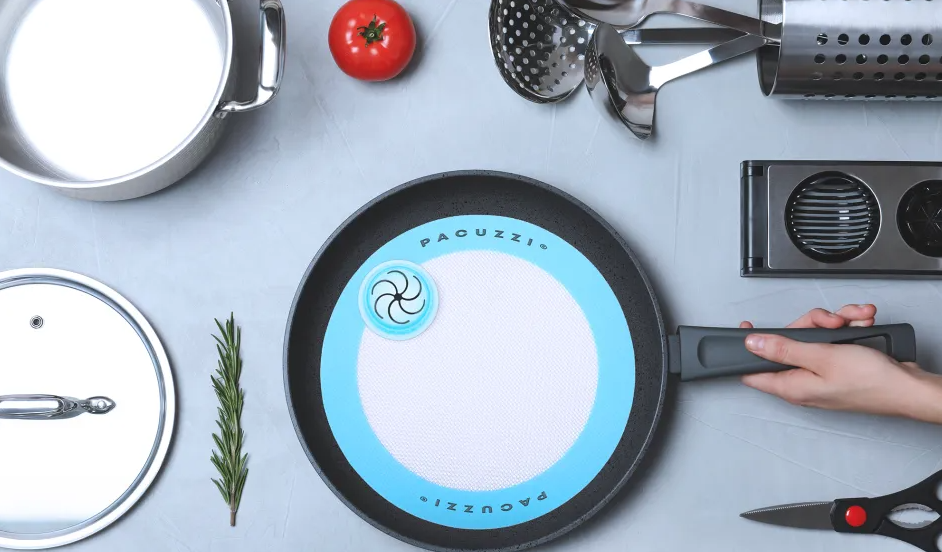
First impression of the build quality: it feels sturdy. The platinum-cured silicone has a nice weight to it, and it collapses flat enough to store upright between plates or in a drawer. No assembly required — you literally just press it into your pan.
One thing worth noting: the rubber mat underneath can be a little tricky to clean if food residue gets under it. The silicone insert itself is fully dishwasher safe and wipes clean in about 20 seconds, but the mat needs a bit more attention.
How Does the Pacuzzi Actually Work? {#how-it-works}
Here’s the simple version:
- Start with a cold, clean pan – this matters. The Pacuzzi needs a flat, non-porous base to form a proper seal. Don’t preheat the pan first.
- Press the Pacuzzi into the base of your skillet – you’ll feel it seat itself. The flexible silicone edges conform to the pan’s shape.
- Pour in 1.5 to 2 ounces of water into the base reservoir of the Pacuzzi itself (not into the pan directly).
- Add your food into the pan around or on top of the Pacuzzi.
- Cover with a tight-fitting lid and set your stove to medium heat.
- Wait for steam – this takes 5 to 6 minutes on a cold start.
- Reduce to medium-low once you see steam rising, and let it cook according to the food type.
The mechanism is straightforward: as the water in the Pacuzzi heats up and converts to steam, it rises and circulates inside the covered pan. Heat comes from both below (the pan) and above (the steam), which is why the brand claims it can reheat more evenly than a microwave.
The science in one sentence: Steam transfers heat to food through condensation, which simultaneously adds moisture back into the food — something dry heat methods like microwaves and ovens fundamentally can’t do.
Now, I want to flag something that I think is a legitimate frustration: the water amount instructions are inconsistent. The physical card in the box says 2 ounces. The website says 1.5 ounces. A YouTube video from the brand shows approximately 1 ounce. After 30 days of testing, my sweet spot was 1.5 ounces for most foods, with 2 ounces only for longer cooks like fresh vegetables. I’ll break this down in the timing table below.
My 30-Day Hands-On Test Results – 8 Foods {#test-results}
This is the section you actually came here for. I tested the Pacuzzi on eight different foods over 30 days, always comparing it to my regular reheating method as a control. Here’s what I found.
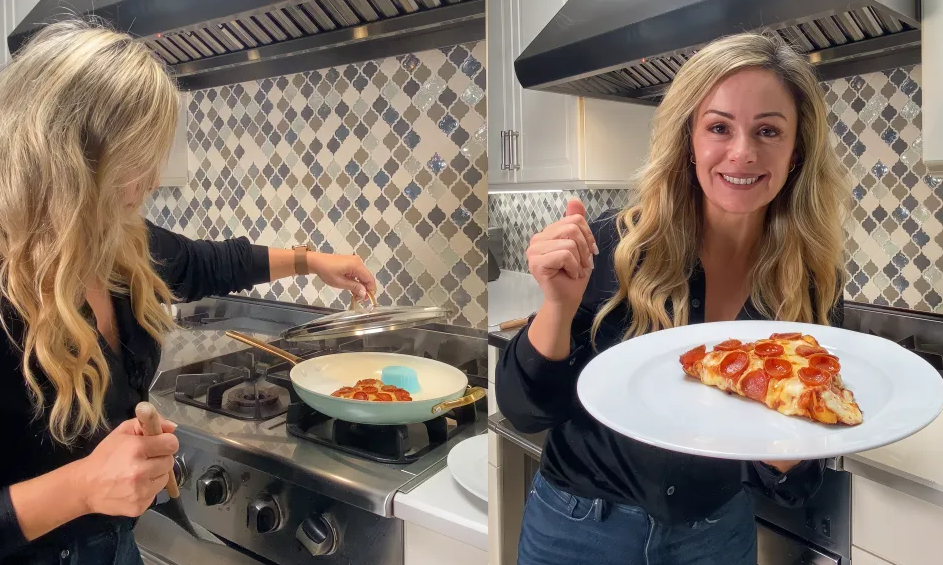
🍕 Test 1: Leftover Pizza
Method: Two identical slices from the same pizza — one reheated in a dry skillet (my usual method), one using the Pacuzzi. Cold start on both pans, medium heat.
Result with Pacuzzi: The crust was genuinely better. Crispier on the bottom from the pan heat, with the cheese melted evenly and the toppings moist rather than dried out. It took about 4 minutes once steaming started.
Result without Pacuzzi: The crust was good (skillet reheating is always better than microwave for pizza), but the toppings were slightly drier, and the cheese had a few rubbery patches.
Honest take: This is where the Pacuzzi shines brightest. The difference is real and noticeable. If you eat leftover pizza even once a week, this alone might justify the purchase. The main downside is the 5-6 minute warm-up time — so you’re looking at about 10 minutes total vs. 90 seconds in a microwave. Whether that tradeoff is worth it is entirely personal.
Score: 8/10
🥦 Test 2: Fresh Broccoli (Steam Cooking from Raw)
Method: One cup of broccoli florets, 2 ounces of water, medium-high heat until tender.
Result: After about 10 minutes, the broccoli was fully cooked, bright green, and had a clean flavor. One thing I learned the hard way: stir halfway through. I didn’t on my first attempt and the bottom-facing florets got brown spots. After I started stirring at the 5-minute mark, the results were consistently good.
Compared to: A traditional steamer basket over a pot of boiling water. Honestly? Similar results. The Pacuzzi is slightly less efficient for vegetables than a dedicated steamer basket (which costs about $8), but the convenience of one pan is real.
Score: 7/10
🧀 Test 3: Open-Face Grilled Cheese
Method: Followed the brand’s YouTube video. Single slice of bread with cheese, hot water (not cold) to speed up steaming.
Result: Good. The cheese melted perfectly, the bread wasn’t soggy. But here’s the thing — I did the same thing in a pan without the Pacuzzi and got almost identical results. I genuinely couldn’t tell the difference in a blind taste test.
Honest take: The Pacuzzi adds moisture that the bread doesn’t necessarily need. This is a marginal use case at best.
Score: 5/10
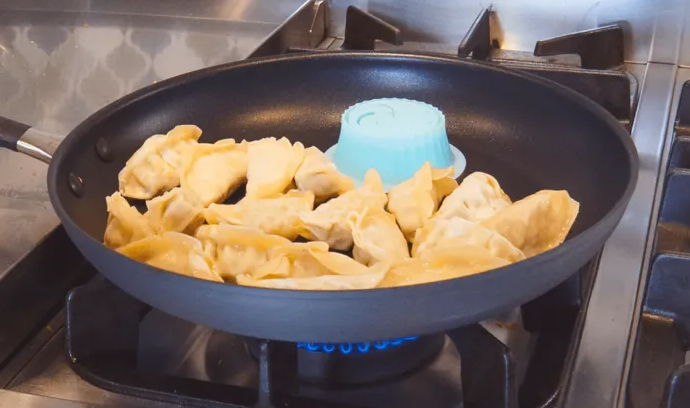
🥟 Test 4: Dumplings / Potstickers
Method: Six frozen potstickers, 1.5 ounces of water, medium heat.
Result: This was a genuine surprise. The dumplings came out with crispy bottoms and steamed-through tops — the classic “potsticker” texture that usually requires a specific sequence of frying, then adding water, then covering. The Pacuzzi handled the whole process in one go. About 8 minutes total.
Score: 9/10 — This might actually be the best use case I found.
🍝 Test 5: Leftover Pasta (Spaghetti with Meat Sauce)
Method: One portion of day-old spaghetti, 1.5 ounces of water, medium-low heat.
Result: Honestly, this was hit or miss. The pasta didn’t dry out, which was good. But without stirring, some strands clumped together. After a gentle mix, the texture was acceptable — better than microwave, but not dramatically so.
Score: 6/10
🍗 Test 6: McDonald’s Nuggets and Fries
Method: Leftovers from the previous night, straight from the fridge.
Result: The nuggets were actually pretty good — the steam kept the breading from going too tough, which is the usual microwave problem. The fries? Less successful. Steam and crispy fries are kind of enemies. They came out soft. If you want crispy fries, use an air fryer or a dry pan.
Score: Nuggets 7/10, Fries 4/10
🥕 Test 7: Frozen Mixed Vegetables
Method: One cup of frozen peas, carrots, and corn, straight from frozen. 2 ounces water, medium heat.
Result: Cooked through in about 12 minutes. Texture was fine — not mushy, appropriately tender. But I’ll be honest: boiling frozen veg in a pot takes 4 minutes. The Pacuzzi takes longer and uses your whole pan. The result isn’t meaningfully better.
Score: 5/10
🍚 Test 8: Leftover Rice
Method: One cup of day-old refrigerated rice, 1.5 ounces water, medium-low heat, 6 minutes.
Result: This was impressive. Refrigerated rice is notoriously difficult to reheat — it goes hard and clumpy in a microwave and burns in a dry pan. The Pacuzzi rehydrated it beautifully. Fluffy, separate grains, as if it had just been cooked.
Score: 9/10 — Tied with dumplings as my favorite Pacuzzi use case.
Food Timing & Water Guide (Reference Table) {#timing-guide}
After 30 days of testing and cross-referencing with the brand’s own FAQ, here’s the most accurate timing guide I could put together. Use this as your starting point and adjust slightly based on your specific stove and pan.
| Food Type | Water Amount | Heat Setting | Approximate Time | Notes |
|---|---|---|---|---|
| Pizza (1–2 slices) | 1.5 oz | Medium → Medium-Low | 4–6 min | Cold-start pan; best results |
| Fresh broccoli | 2 oz | Medium | 10–12 min | Stir at 5 min mark |
| Frozen vegetables | 2 oz | Medium | 10–14 min | Depends on vegetable density |
| Leftover rice | 1.5 oz | Medium-Low | 6–8 min | Cover tightly; no stirring needed |
| Dumplings/potstickers | 1.5 oz | Medium | 7–10 min | Best texture result |
| Pasta (reheating) | 1.5 oz | Medium-Low | 5–7 min | Stir once at midpoint |
| Grilled cheese | 1 oz (warm water) | Medium-Low | 4–5 min | Use warm water for faster steam |
| Nuggets/wings | 1.5 oz | Medium | 5–7 min | Better texture than microwave |
| Frozen fries | NOT RECOMMENDED | — | — | Steam = soft fries; use air fryer |
| Eggs (poached style) | 1.5 oz | Low-Medium | 6–8 min | Use Pacuzzi mat for best results |
| Fish fillets | 1.5 oz | Medium-Low | 8–10 min | Excellent moisture retention |
The water confusion — resolved: Use 1.5 oz as your default. Increase to 2 oz for longer cooking times (10+ minutes). The 2-oz recommendation on the instruction card produces more steam than most foods need and can make shorter cooks too wet.
Pan Compatibility – Which Pans Work and Which Don’t {#pan-compatibility}
This is the information that nobody else is publishing clearly, so I tested it myself across multiple pan types.
The Pacuzzi requires two things from your pan to work properly:
- A flat, smooth base — the suction-cup-style seal needs a flat surface to grip
- A non-porous surface — porous materials prevent a proper steam seal
Here’s what I found:
| Pan Type | Works? | Notes |
|---|---|---|
| Non-stick (Teflon-style) | ✅ Yes — Excellent | Best all-around seal and performance |
| Stainless steel (flat base) | ✅ Yes — Good | Works well; takes slightly longer to heat |
| HexClad (hybrid) | ✅ Yes — Good | Tested and confirmed; seal holds well |
| Ninja Foodi NeverStick | ✅ Yes — Good | Seal works; similar to standard non-stick |
| Ceramic non-stick | ✅ Yes — Good | Works if surface is smooth and unscratched |
| Carbon steel | ⚠️ Marginal | Works on newer, seasoned pans; may leak on rough surfaces |
| Cast iron | ❌ Poor | Porous surface prevents proper seal; significant leaking |
| Warped/damaged pans | ❌ Poor | Won’t seal on uneven bases; steam escapes from edges |
| Pans smaller than 8″ | ❌ Won’t fit | Pacuzzi minimum size is 8 inches |
| Pans larger than 12″ | ⚠️ Reduced | Pacuzzi will function but leaves uncovered gap at edges |
The critical insight: If you’re experiencing leaking or poor steam performance, the pan is almost always the cause. The Pacuzzi performs at its best in a 12-inch non-stick pan with a perfectly flat base.
Pacuzzi vs the Alternatives {#vs-alternatives}
Before you decide whether the Pacuzzi is worth $30, it’s worth understanding what else is competing for your money and counter space.
Pacuzzi vs Stovetop Steamer Basket (~$8)
| Factor | Pacuzzi ($30) | Steamer Basket ($8) |
|---|---|---|
| Setup time | Press in, add water | Needs separate pot + water |
| Storage | Folds flat, drawer-friendly | Collapsible but needs a pot |
| Versatility | Best for reheating/steam | Best for large vegetable batches |
| Leftovers reheating | Excellent | Awkward — items fall through holes |
| Ease of use | Very easy | Easy, but two-vessel cleanup |
| Value | Moderate | High |
Verdict: For dedicated vegetable steaming in bulk, the basket wins on value. For reheating and smaller steam tasks, the Pacuzzi is genuinely more convenient.
Pacuzzi vs Electric Food Steamer (~$45–$80)
| Factor | Pacuzzi ($30) | Electric Steamer ($45–$80) |
|---|---|---|
| Counter space | None (stored in drawer) | Permanent footprint |
| Capacity | Limited to pan size | Multi-tier, larger capacity |
| Ease of use | Very simple | Moderate setup |
| Speed | 5-6 min to start steaming | 3–5 min to start steaming |
| Price | $30 | $45–$80 |
| Use variety | Reheating + light steaming | Full meals, large batches |
Verdict: If you meal prep large batches regularly, an electric steamer is worth the investment. If you want a lightweight tool for everyday reheating, the Pacuzzi wins on convenience and storage.
Pacuzzi vs Microwave
| Factor | Pacuzzi | Microwave |
|---|---|---|
| Speed | ~10 min total | 60–90 seconds |
| Food texture | Significantly better | Rubbery/dried out |
| Nutrient retention | Higher | Lower (more on this below) |
| Ease | Medium (setup required) | Extremely easy |
| Best for | Pizza, rice, dumplings, fish | Soup, liquids, quick reheats |
Verdict: The microwave wins on pure speed. The Pacuzzi wins on food quality. These aren’t mutually exclusive — use each for what it does best.
Pacuzzi vs Oven Reheating
| Factor | Pacuzzi | Oven (350°F) |
|---|---|---|
| Preheat time | 5–6 min | 10–15 min |
| Moisture retention | High | Low (dries food out) |
| Energy use | Low (stovetop) | High |
| Best for | Leftovers, pizza, rice | Large items, roasts, casseroles |
Verdict: For reheating individual portions, the Pacuzzi is faster and produces better moisture retention than the oven.
The Science Behind Steam Cooking {#science}
This section is for the curious ones — and honestly, understanding the science made me appreciate the Pacuzzi more, even when the results were marginal.
Why Steam is Different from Dry Heat
When you reheat food in a microwave, the appliance agitates water molecules inside the food itself. This generates heat, but it also drives moisture outward — which is why microwaved pizza gets rubbery and microwaved chicken gets dry. The heat isn’t even, and the moisture escapes.
Dry oven heat works similarly — hot air surrounds the food, but it draws moisture out rather than putting it back.
Steam works differently. When steam contacts food, it condenses back into water on the food’s surface. This condensation transfers heat (steam carries about 2,260 joules of energy per gram — much more than the same mass of hot air), and it simultaneously deposits moisture back into the food rather than extracting it.
Research on steam cooking consistently shows:
- Better nutrient retention: Water-soluble vitamins (B vitamins, vitamin C) leach into cooking water when you boil food. Steam cooking loses significantly less of these nutrients because food isn’t submerged.
- Better texture: Proteins cooked in steam environments tend to stay more tender, because lower-temperature steam (around 212°F / 100°C) is gentler than dry oven heat.
- Improved flavor concentration: Because steam reheats without adding fat or stripping moisture, the natural flavors of food are preserved rather than altered.
The Pacuzzi’s dual-heat mechanism — pan heat from below, steam from above — creates what the brand calls “microwave-speed” results, and that’s not entirely wrong. The steam starts circulating within 5–6 minutes, and most reheating is done in 4–10 minutes depending on the food.
One Honest Caveat
The Pacuzzi operates at atmospheric pressure, so it’s a steam environment, not a pressure cooker. This means it’s excellent for reheating and gentle cooking, but it won’t shortcut tough cuts of meat or cook dense root vegetables quickly. Manage expectations accordingly.
Honest Pros and Cons {#pros-cons}
Let me be straight with you here. I’ve seen a lot of Pacuzzi reviews that read like they were written by the marketing team. This isn’t one of those.
✅ What the Pacuzzi Does Genuinely Well
- Leftover pizza texture is noticeably better than any other reheating method except a dedicated pizza oven
- Rice and dumplings are excellent — two use cases where steam genuinely outperforms every alternative
- Compact and easy to store — it folds flat and slides into a drawer. No counter space required, unlike electric steamers
- No new pans required — works with what you already own (as long as your pan qualifies)
- Dishwasher safe — the silicone cleans up instantly
- Safer than microwave for some foods — no radiation concerns, and better nutrient retention for vegetables
- Simple to use — no buttons, no programming, no electronics that can break
- 30-day return policy — low financial risk to try it
❌ Real Drawbacks Worth Knowing Before You Buy
- 5–6 minute warm-up before steaming starts — this is real, and it significantly reduces the “microwave speed” claim for short cooks
- Inconsistent manufacturer instructions — water amounts differ between the box, the website, and videos. This is confusing for new users
- The rubber mat is harder to clean than the silicone insert itself
- Doesn’t work on cast iron or warped pans — pan compatibility is more limited than marketed
- Niche use case — if you rarely eat leftovers or already have a steamer basket, this adds limited value
- $30 is a lot for a silicone insert — the function is legitimate, but the price-to-value ratio is debatable
- Not suitable for all foods — fries, crispy foods, and anything that needs dry heat will come out worse with steam
Who Should Buy It (And Who Shouldn’t) {#who-should-buy}
🟢 Buy the Pacuzzi if you:
- Eat leftover pizza regularly — this is genuinely the product’s best use case
- Reheat rice, dumplings, or Asian food frequently — the steam environment is ideal
- Live in a small kitchen or apartment where counter space is limited
- Don’t own a microwave by choice — the Pacuzzi is an excellent microwave replacement for reheating
- Meal prep large batches and need to reheat portions throughout the week
- Care about food quality more than speed
- Steam fish, chicken, or vegetables regularly as a healthy cooking method
- Already own a good 10–12″ non-stick pan
🔴 Skip the Pacuzzi if you:
- Prioritize speed above all else — the 5-6 minute warmup is a deal-breaker for quick meals
- Primarily cook large, complex meals where a steamer basket or electric steamer makes more sense
- Only own cast iron or large-format pans — compatibility issues will frustrate you
- Rarely eat leftovers — the use case is narrow enough that it won’t get much use
- Are on a very tight budget — an $8 steamer basket does many of the same things
- Want to replace ALL your cooking methods — the Pacuzzi is a supplement, not a system
Troubleshooting Common Pacuzzi Problems {#troubleshooting}
The Pacuzzi brand’s own FAQ reveals the most common problems users encounter. Here’s every issue I’ve seen, with practical fixes.
Problem 1: Steam isn’t starting / taking too long
Causes:
- Pan is too cold — you need more initial heat to vaporize the water
- Too little water — less than 1 ounce won’t generate enough steam
- Lid isn’t sealing tightly enough — steam escapes before pressure builds
Fix: Start with slightly warm water instead of cold tap water. Make sure your lid fits snugly. If your lid has a steam vent, cover it temporarily with a folded kitchen towel during the warmup phase.
Problem 2: Leaking from the sides
Causes:
- Pan base is warped or has imperfections
- Pacuzzi is placed too close to the curved wall of the pan
- Heat is set too high, causing the silicone to harden and lift
Fix: Ensure the Pacuzzi is centered on the flat base of the pan, not touching the curved sides. Reduce heat to medium and never use high heat. If your pan is warped (check by setting it on a flat surface — it should not rock), the Pacuzzi likely won’t work with it.
Problem 3: Food is cooking unevenly
Causes:
- Steam distribution is blocked by too much food
- Not stirring or rotating food during longer cooking sessions
Fix: For longer cooks (10+ minutes), stir or rotate food at the halfway point. Avoid piling food too high — steam needs to circulate around and above the food.
Problem 4: Pacuzzi won’t stay flat / lifts from pan
Causes:
- Pan surface has microscopic scratches or texture that prevents adhesion
- Silicone is not at room temperature (very cold silicone is less flexible)
Fix: Let the Pacuzzi sit at room temperature for a few minutes before use. Press it firmly into the center of the pan and hold for a few seconds to establish the seal.
Problem 5: Food has a silicone smell or taste
Causes:
- Brand new silicone can off-gas slightly during first use
Fix: Wash the Pacuzzi thoroughly and run it through one or two plain water steaming cycles before cooking food with it. This is normal for food-grade silicone and goes away quickly.
Problem 6: Mat is getting discolored or stained
Causes:
- Tomato-based foods and turmeric are notorious silicone stainers
Fix: The staining is cosmetic and doesn’t affect safety. To remove it, soak the mat in a mixture of baking soda and dish soap for 30 minutes, then scrub gently.
Check This Also:- How to Organize a Small Kitchen Using Smart Accessories: 25+ Expert Storage Solutions That Actually Work
Where to Buy Pacuzzi + Pricing Breakdown {#where-to-buy}
As of May 2025, the Pacuzzi is available through the following channels:
Official Pacuzzi website (pacuzzi.com)
- Single unit: approximately $29.95–$34.95
- Bundle packs (2 units): around $27.50 per unit
- Free shipping on orders over $49
- 30-day return guarantee
Amazon
- Availability has been inconsistent – there has been no permanent Amazon listing as of this writing. Check for third-party sellers, but be cautious about warranty coverage through unofficial sources.
Walmart
- Available in some markets; pricing is generally consistent with the official site.
The Grommet
- Available with occasional promotional discounts (reportedly 20% off)
My recommendation: Buy directly from pacuzzi.com for the most reliable warranty coverage and return policy. The 30-day guarantee is genuine based on user reports, and the company responds to customer service inquiries.
Is it a scam?
No. The product is legitimate, the company is real, and the reviews across Trustpilot and Amazon (where available) are consistent with real user experiences. The silicone is food-grade platinum-cured and meets safety standards for BPA, phthalates, PFOA, and PTFE.
FAQ’s About Pacuzzi Kitchen Tool
Q: Does the Pacuzzi actually work?
Yes, it works. It genuinely produces steam in your skillet and improves the texture of reheated foods — especially pizza, rice, and dumplings. The caveat is that the difference is more noticeable for some foods than others, and the 5–6 minute warmup time is a real trade-off compared to a microwave.
Q: How long does the Pacuzzi take to start steaming?
Expect 5 to 6 minutes from a cold start on medium heat. If you use warm water instead of cold, you can reduce this to 3–4 minutes. This is the most common frustration among users, and it’s worth knowing upfront.
Q: What pans are compatible with the Pacuzzi?
The Pacuzzi works best in 10–12 inch non-stick, stainless steel, or HexClad-style pans with a flat, smooth, non-porous base. It does not work well in cast iron pans, warped pans, or very large pans where the insert can’t seal properly to the flat center.
Q: How much water do you use in a Pacuzzi?
Use 1.5 ounces for most foods (pizza, rice, pasta, dumplings, nuggets). Use 2 ounces for longer cooks like fresh vegetables or fish. Despite what the instruction card says, 2 ounces for short cooks produces more steam than necessary.
Q: Is the Pacuzzi safe? Is the silicone food-grade?
Yes. The Pacuzzi is made from 100% platinum-cured food-grade silicone. It is free of BPA, phthalates, PFOS, PFOA, and PTFE. It contains no fillers and is rated food-safe up to 450°F. This has been verified by independent reviewers and is consistent with the manufacturer’s claims.
Q: Can you use the Pacuzzi on induction stovetops?
The Pacuzzi itself works with any heat source that heats the pan — gas, electric, and induction are all compatible. What matters is the pan you’re using, not the Pacuzzi itself. Make sure your pan is induction-compatible.
Q: Is the Pacuzzi worth the $30 price tag?
It depends on your kitchen habits. If you eat leftover pizza, rice, or dumplings regularly, or if you don’t own a microwave, the answer is probably yes. If you rarely eat leftovers or already own a steamer basket, the value proposition is less clear.
Q: Can the Pacuzzi replace a microwave?
Partially. It excels at reheating foods where texture matters (pizza, rice, dumplings, fish). It’s slower than a microwave and not ideal for liquids, soups, or quick single-item reheats. Think of it as a complement to a microwave rather than a direct replacement — unless you’re intentionally going microwave-free.
Q: How do I clean the Pacuzzi?
The silicone insert is fully dishwasher safe and also wipes clean easily by hand. The rubber base mat is best cleaned by hand with warm soapy water. Allow both pieces to dry fully before storing.
Q: Does the Pacuzzi work for cooking from scratch, or just reheating?
Both, but it’s optimized for reheating. It can steam fresh vegetables, cook fish, and prepare dumplings from raw. Cooking times will be longer than a dedicated steamer for fresh ingredients. The brand positions it primarily as a reheating tool, which is where it truly excels.
Final Verdict {#final-verdict}
After 30 days of testing the Pacuzzi on eight different foods across multiple pan types, here’s where I land:
It’s a genuinely good product for a specific type of cook.
If you eat leftover pizza, rice, or dumplings regularly — if food quality matters more than reheating speed — if you’re in a small kitchen and want an all-in-one reheating solution without sacrificing counter space — the Pacuzzi is worth every dollar of its $30 price tag.
But if you’re expecting it to replace your microwave entirely, or if you want something that works equally well for everything, you’re going to be disappointed. The warmup time is real. The pan compatibility is more limited than the marketing suggests. And for some foods (crispy items, frozen fries, grilled cheese), it’s genuinely no better than a standard pan.
My overall rating: 7.5 out of 10.
The engineering is clever, the materials are high quality, and the steam environment genuinely improves certain foods in ways that other reheating methods can’t match. Just go in with accurate expectations, and it’ll earn a permanent spot in your kitchen.
🏆 Pacuzzi Kitchen Tool – Final Scorecard
| Category | Score | Notes |
|---|---|---|
| Ease of use | 9/10 | Press in, add water, done |
| Build quality | 8/10 | Solid platinum silicone, dishwasher safe |
| Food results (pizza/rice) | 9/10 | Genuinely excellent |
| Food results (other) | 6/10 | Variable by food type |
| Value for money | 7/10 | Fair for the right user |
| Pan compatibility | 6/10 | More limited than marketed |
| Speed | 5/10 | 5-6 min warmup is the main weakness |
| Instruction clarity | 4/10 | Conflicting water amounts need fixing |
| Overall | 7.5/10 | Recommended for the right use case |
Disclaimer: I purchased the Pacuzzi with my own money for this Pacuzzi review. No compensation was received from the brand. Some links in this article may be affiliate links — this doesn’t change my editorial position.