
Tossing and turning at night? You’re not alone. Nearly 70 million Americans struggle with sleep disorders, and many are searching for natural alternatives to improve their rest. If you’ve been wondering how to use essential oils to improve sleep, you’ve come to the right place.
Essential oils have been used for centuries to promote relaxation and enhance sleep quality. These concentrated plant extracts work with your body’s natural rhythms to calm your mind, reduce stress, and create the perfect environment for deep, restorative sleep.
In this comprehensive guide, you’ll discover exactly how to harness the power of essential oils for better sleep. We’ll explore the science behind aromatherapy, reveal the most effective oils for insomnia, share practical application methods, and provide safety guidelines to ensure you get results without risks.
Whether you’re dealing with occasional sleeplessness or chronic insomnia, this evidence-based approach will help you create a natural sleep routine that actually works.
Understanding Essential Oils and Sleep Science
What Are Essential Oils?
Essential oils are highly concentrated aromatic compounds extracted from plants through distillation or cold pressing. These potent liquids capture the essence of flowers, leaves, bark, and roots, containing natural chemicals that can influence your body and mind.
When you use essential oils for sleep, you’re tapping into therapeutic-grade plant extracts that contain:
- Aromatic molecules that interact with your olfactory system
- Natural compounds like linalool and linalyl acetate that promote relaxation
- Botanical properties that have been studied for their calming effects
Unlike synthetic fragrances, pure essential oils offer genuine therapeutic benefits backed by growing scientific research.
How Essential Oils Affect Sleep Quality
The connection between essential oils and better sleep involves fascinating neuroscience. When you inhale essential oil molecules, they travel through your nasal passages and interact with olfactory receptors. These receptors send signals directly to your limbic system, the part of your brain that controls emotions, memory, and stress responses.
This process triggers several sleep-promoting effects:
- Reduced cortisol levels: Certain oils help lower stress hormones that keep you awake
- Increased GABA activity: Some compounds enhance this calming neurotransmitter
- Parasympathetic activation: Aromatherapy can trigger your body’s relaxation response
- Improved sleep architecture: Studies show essential oils may increase deep sleep phases
Research published in evidence-based complementary medicine journals has demonstrated that aromatherapy can significantly improve sleep quality, reduce the time it takes to fall asleep, and decrease nighttime awakenings.
The Science Behind Aromatherapy for Insomnia
Multiple studies have examined how essential oils improve sleep:
A systematic review of clinical trials found that lavender aromatherapy increased sleep quality scores by an average of 20-30% compared to control groups. Participants reported falling asleep faster and experiencing fewer disruptions throughout the night.
Another study focusing on shift workers with poor sleep showed that inhaling essential oils before bed improved both sleep duration and quality within just one week of consistent use.
The evidence suggests that while essential oils aren’t a cure-all, they represent a valuable tool in your natural sleep improvement toolkit when used correctly and consistently.
Best Essential Oils for Sleep Improvement
Lavender Oil: The Sleep Champion
Lavender essential oil stands as the most researched and proven oil for sleep enhancement. Its gentle floral aroma contains compounds that directly influence brain chemistry to promote relaxation.
Key benefits of lavender for sleep:
- Reduces anxiety and nervous tension
- Lowers heart rate and blood pressure
- Increases slow-wave sleep (deep sleep)
- Safe for most people, including children
How to use lavender oil for sleep: Add 3-5 drops to your diffuser 30 minutes before bedtime, or mix 2 drops with a carrier oil and apply to your wrists and temples.
Chamomile Oil: Gentle Evening Calm
Roman and German chamomile oils offer mild sedative properties that make them excellent choices for sensitive individuals or those new to aromatherapy.
Chamomile contains apigenin, a compound that binds to specific receptors in your brain that promote sleepiness and reduce insomnia. The sweet, apple-like scent creates an immediate sense of comfort and relaxation.
Best practices: Blend chamomile with lavender for enhanced effects, or use alone in a bedside diffuser for 2-3 hours before sleep.
Bergamot Oil: Stress Relief for Better Sleep
Unlike most citrus oils that energize, bergamot has unique calming properties. This essential oil reduces anxiety and lowers cortisol levels, making it perfect for people whose sleep problems stem from stress or racing thoughts.
Application tip: Use bergamot in your evening shower or bath, or diffuse during your wind-down routine. Its uplifting yet calming aroma helps transition your mind from day to night.
Cedarwood Oil: Deep, Grounding Rest
Cedarwood essential oil promotes the release of serotonin, which your body converts to melatonin, the sleep hormone. Its warm, woody aroma creates a sense of security and grounding that many people find deeply relaxing.
Ideal for: People who struggle with racing thoughts or those who need help achieving deeper sleep stages.
Ylang Ylang Oil: Relaxation and Blood Pressure Support
Ylang ylang offers powerful sedative effects and helps reduce blood pressure and heart rate. Its sweet, exotic floral scent can be quite strong, so use sparingly.
Usage recommendation: Combine 2 drops of ylang ylang with 4 drops of lavender in your diffuser, or use in massage oil blends.
Vetiver Oil: Calm for Anxious Minds
Vetiver essential oil has an earthy, grounding aroma that works exceptionally well for people with anxiety-related sleep issues. Studies suggest it may be particularly helpful for those dealing with trauma or PTSD-related sleep disturbances.
Application method: Diffuse alone or blend with lavender and cedarwood for a powerful sleep-inducing combination.
Valerian Root Oil: Nature’s Sedative
Valerian essential oil comes from the same plant used in herbal sleep supplements. While the aroma can be quite strong and earthy (some find it unpleasant), its sedative properties are remarkable.
Important note: Valerian works best when combined with other oils like lavender or orange to improve the scent profile.
Clary Sage Oil: Hormonal Balance and Sleep
Clary sage helps regulate hormones and reduce stress, making it especially beneficial for women experiencing sleep disturbances related to menstrual cycles or menopause.
Safety consideration: Avoid during pregnancy, but otherwise excellent for promoting deep, uninterrupted sleep.
How to Use Essential Oils for Sleep: Practical Methods
Diffusing Essential Oils in Your Bedroom
Aromatherapy diffusion remains the most popular and effective method for using essential oils to improve sleep.
Step-by-step diffusing guide:
- Choose the right diffuser: Ultrasonic diffusers work best for bedrooms as they add gentle humidity
- Fill with water: Add clean, room-temperature water to the fill line
- Add essential oils: Use 3-7 drops depending on room size (start with less)
- Timing matters: Turn on your diffuser 30-60 minutes before bedtime
- Set the mood: Many diffusers offer gentle LED lights; use warm colors or turn off completely
Pro tips for diffusing:
- Clean your diffuser weekly to prevent oil buildup
- Alternate oils to prevent olfactory fatigue
- Position the diffuser 3-6 feet from your bed
- Run for 30-60 minutes rather than all night
Topical Application: Massage and Skin Absorption
Applying essential oils directly to your skin allows absorption into your bloodstream while providing aromatherapy benefits simultaneously.
Safe topical application steps:
- Always dilute: Mix 2-3 drops of essential oil with 1 teaspoon of carrier oil (coconut, jojoba, or sweet almond)
- Perform a patch test: Apply a small amount to your inner arm and wait 24 hours
- Apply to pulse points: Wrists, temples, behind ears, or bottoms of feet
- Massage gently: Use circular motions to enhance absorption
- Apply 20-30 minutes before bed: Gives oils time to work
Best carrier oils for sleep blends:
- Coconut oil (solid at room temperature, deeply moisturizing)
- Jojoba oil (closely matches skin’s natural oils)
- Sweet almond oil (lightweight, absorbs quickly)
- Fractionated coconut oil (stays liquid, odorless)
Pillow and Linen Sprays
Creating a DIY sleep spray allows you to infuse your bedding with sleep-promoting aromas.
Simple sleep spray recipe:
- 4 oz distilled water
- 2 oz witch hazel or vodka (helps oils disperse)
- 15 drops lavender essential oil
- 10 drops cedarwood essential oil
- 5 drops bergamot essential oil
Instructions: Combine all ingredients in a glass spray bottle, shake well before each use, and lightly mist your pillow and sheets 10-15 minutes before bed.
Aromatherapy Bath Before Bedtime
A warm bath infused with essential oils provides dual benefits: the warm water relaxes muscles while aromatherapy calms your mind.
Evening bath ritual:
- Prepare your mixture: Combine 5-8 drops of essential oil with 1 tablespoon of carrier oil or Epsom salts
- Water temperature: Keep between 97-100°F (36-38°C) for optimal relaxation
- Timing: Bathe 60-90 minutes before bedtime
- Duration: Soak for 15-20 minutes
- Create ambiance: Dim lights, light candles, play soft music
Best bath oil combinations:
- Lavender + chamomile + ylang ylang
- Bergamot + cedarwood + frankincense
- Vetiver + sandalwood + orange
Personal Inhalers and Rollers
Portable aromatherapy options let you bring sleep support wherever you go, perfect for travel or shift workers.
DIY sleep roller recipe:
- 10 ml roller bottle
- Carrier oil (fill most of the bottle)
- 5 drops lavender
- 3 drops cedarwood
- 2 drops vetiver
Roll onto wrists, neck, or chest whenever you need to signal your body that it’s time to wind down.
Direct Inhalation Techniques
Sometimes the simplest method works best. Direct inhalation provides immediate aromatherapy benefits.
Three direct inhalation methods:
- Palm inhalation: Drop 1-2 drops in your palms, rub together, cup over nose, and breathe deeply for 5-10 breaths
- Cotton ball method: Apply 2-3 drops to a cotton ball and place near your pillow
- Tissue technique: Add drops to a tissue and keep under your pillow or on your nightstand
Some of Trending Sleep Gadgets
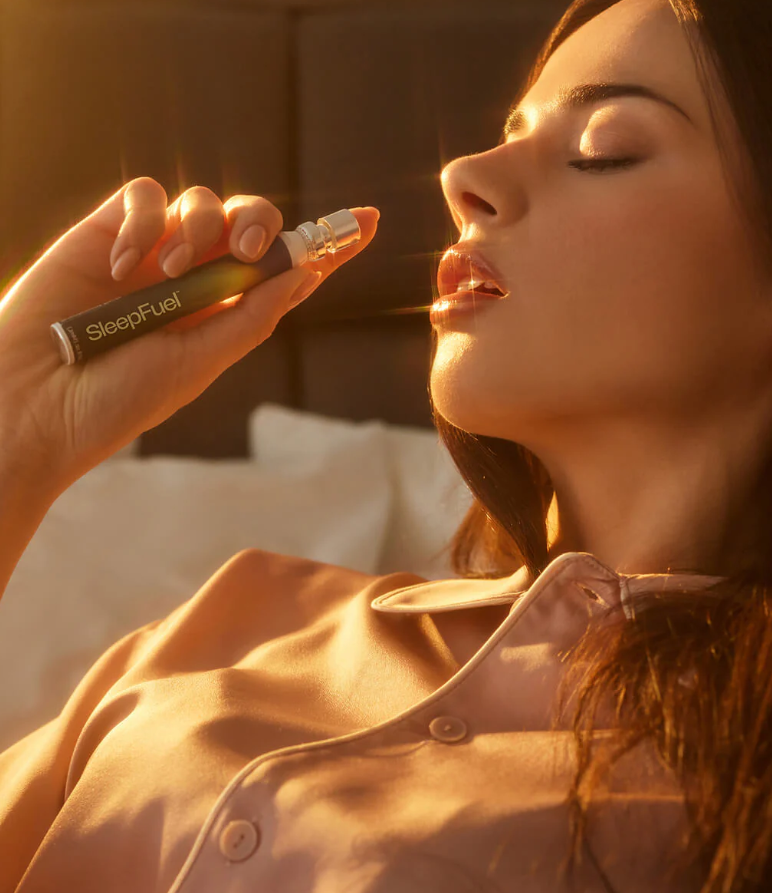
SleepFuel Sleep Spray Review
SnoreRx Mouthpiece Review
VelaSleep Pillow Review
Creating Your Perfect Sleep Essential Oil Blend
Understanding Synergy in Essential Oil Blending
When you combine essential oils thoughtfully, they create synergistic effects where the whole becomes greater than the sum of its parts. This synergy can significantly enhance sleep benefits.
Blending principles for sleep:
- Base notes (cedarwood, vetiver, sandalwood): These grounding oils last longest and provide foundation
- Middle notes (lavender, chamomile, clary sage): The heart of your blend, offering primary therapeutic benefits
- Top notes (bergamot, orange, neroli): Quick-acting oils that provide immediate aromatic appeal
Tried-and-Tested Sleep Blend Recipes
The Classic Sleep Inducer:
- 4 drops lavender
- 2 drops cedarwood
- 1 drop ylang ylang
Stress-Relief Evening Blend:
- 3 drops bergamot
- 3 drops lavender
- 2 drops frankincense
Deep Rest Formula:
- 3 drops vetiver
- 3 drops cedarwood
- 2 drops Roman chamomile
Anxiety-Calming Bedtime Blend:
- 4 drops lavender
- 2 drops clary sage
- 2 drops bergamot
Customizing Blends for Your Needs
Different sleep issues require different aromatic approaches. Here’s how to customize:
For racing thoughts: Increase vetiver and cedarwood (grounding oils)
For stress-induced insomnia: Add more bergamot and lavender (anxiety-reducing oils)
For difficulty staying asleep: Emphasize sandalwood and frankincense (deep, lasting aromas)
For hormonal sleep disruptions: Include clary sage and geranium (hormone-balancing properties)
Seasonal Sleep Blend Adjustments
Your sleep needs may change with seasons. Consider these adjustments:
Summer blends: Add cooling peppermint or spearmint in small amounts (1 drop) to combat heat
Winter blends: Increase warming oils like cinnamon bark or ginger (always heavily diluted)
Spring/Fall: Stick with classic combinations as temperature fluctuates
Essential Oil Safety Guidelines for Sleep Use
Dilution Ratios and Proper Concentrations
Proper dilution protects your skin while maintaining therapeutic effectiveness.
Standard dilution chart:
| Use Case | Essential Oil % | Drops per Teaspoon Carrier Oil |
|---|---|---|
| Adults (general use) | 2-3% | 2-3 drops |
| Sensitive skin | 1% | 1 drop |
| Children (2-10 years) | 0.5-1% | 1 drop per 2 tsp |
| Elderly | 1-2% | 1-2 drops |
| Pregnancy (approved oils only) | 1% | 1 drop |
Who Should Avoid Certain Essential Oils
While generally safe, some people should exercise extra caution:
Pregnancy and nursing:
- Avoid: clary sage, rosemary, sage, fennel, peppermint (during nursing)
- Safe options: lavender, chamomile (in low dilutions after first trimester)
- Always consult your healthcare provider first
Children:
- Never use essential oils on babies under 3 months
- Use only gentle oils (lavender, chamomile) in very low dilutions
- Avoid eucalyptus and peppermint near young children’s faces
- Never apply undiluted oils to children’s skin
Medical conditions:
- Epilepsy: Avoid camphor, fennel, rosemary, sage
- High blood pressure: Use caution with rosemary and thyme
- Hormone-sensitive conditions: Consult doctor before using clary sage or geranium
Potential Side Effects and Allergic Reactions
Even natural substances can cause adverse reactions in some individuals.
Common side effects:
- Skin irritation or redness (usually from undiluted application)
- Headaches (often from using too much oil or poor-quality products)
- Nausea (typically from overpowering scents)
- Respiratory irritation (rare, but possible with some oils)
How to minimize risks:
- Always perform patch tests before first-time use
- Start with single oils before trying blends
- Use the minimum effective amount
- Ensure proper ventilation in your bedroom
- Stop use immediately if you experience adverse effects
Quality Matters: Choosing Pure Essential Oils
The quality of your essential oils directly impacts both safety and effectiveness.
What to look for:
- 100% pure essential oil (no synthetic additives)
- Botanical name listed (e.g., Lavandula angustifolia)
- Country of origin (indicates source quality)
- Extraction method (steam distilled or cold-pressed)
- Dark glass bottles (protects oil integrity)
- GC/MS testing (confirms purity and composition)
Red flags to avoid:
- Prices that seem too good to be true
- “Fragrance oil” or “perfume oil” labels
- Missing safety information
- Claims of treating or curing diseases
- Clear or plastic bottles
Storage and Shelf Life
Proper storage extends the life of your essential oils and maintains their therapeutic properties.
Storage best practices:
- Keep in dark glass bottles away from light
- Store in a cool, dry place (not the bathroom)
- Keep lids tightly closed to prevent oxidation
- Store away from children and pets
- Avoid temperature fluctuations
Shelf life guide:
- Citrus oils: 1-2 years
- Most floral and herbal oils: 2-3 years
- Wood and resin oils: 4-8 years
- Carrier oils: 6 months to 2 years (refrigerate after opening)
Building a Complete Sleep Routine with Essential Oils
Creating Your Evening Wind-Down Ritual
Essential oils work best when integrated into a consistent bedtime routine that signals your body it’s time to sleep.
60-Minute Pre-Sleep Routine:
8:00 PM – Digital Sunset:
- Begin dimming lights throughout your home
- Start your bedroom diffuser with your chosen sleep blend
- Turn off screens and put away electronic devices
8:15 PM – Relaxation Bath or Shower:
- Add essential oil bath blend or use aromatic shower steamers
- Keep water warm but not hot
- Focus on deep breathing while bathing
8:30 PM – Gentle Movement:
- Light stretching or yoga with calming music
- Apply diluted essential oil to pulse points
- Practice progressive muscle relaxation
8:45 PM – Final Preparations:
- Spray pillows with sleep mist
- Adjust room temperature to 60-67°F
- Use your aromatherapy roller on wrists and temples
- Read or practice meditation
9:00 PM – Lights Out:
- Ensure diffuser is on or has completed its cycle
- Focus on slow, rhythmic breathing
- Visualize peaceful, calming scenes
Combining Aromatherapy with Sleep Hygiene
Essential oils enhance sleep hygiene practices but don’t replace them.
Essential sleep hygiene basics:
- Consistency: Same bedtime and wake time daily (even weekends)
- Environment: Cool (60-67°F), dark, and quiet bedroom
- Bed association: Use your bed only for sleep and intimacy
- Exercise timing: Complete workouts 3+ hours before bedtime
- Caffeine cutoff: No caffeine after 2 PM
- Alcohol awareness: While sedating initially, alcohol disrupts deep sleep
Where essential oils fit in:
- Reinforce your sleep schedule with consistent evening aromatherapy
- Create environmental cues through scent associations
- Reduce pre-sleep anxiety that disrupts sleep hygiene efforts
- Support relaxation during wind-down activities
Tracking Your Sleep Improvement Progress
Monitoring your progress helps you identify which oils and methods work best for your unique needs.
What to track:
- Sleep onset time: How long it takes to fall asleep
- Number of awakenings: Middle-of-night disruptions
- Total sleep duration: Hours of actual sleep
- Morning energy levels: How you feel upon waking
- Daytime alertness: Energy and focus throughout the day
- Essential oils used: Specific oils and blends tried
- Application methods: Diffusion, topical, bath, etc.
Simple tracking method: Keep a sleep journal or use a smartphone app. Record your essential oil use and sleep quality for at least 2-3 weeks to identify patterns and determine what works best.
When to Adjust Your Approach
Not every essential oil works for every person. Here’s when to make changes:
Signs you need to adjust:
- No improvement after 2-3 weeks of consistent use
- Headaches or irritation from current oils
- Olfactory fatigue (nose-blind to the scent)
- Sleep quality plateaus or declines
Adjustment strategies:
- Switch to different oils with similar properties
- Modify dilution ratios up or down
- Change application methods
- Try using oils at different times
- Reduce or increase session duration
Troubleshooting Common Essential Oil Sleep Challenges
“Essential Oils Aren’t Working for Me”
If you’re not seeing results, consider these common issues:
Possible problems and solutions:
Problem: Using synthetic or low-quality oils Solution: Invest in therapeutic-grade, pure essential oils from reputable suppliers
Problem: Inconsistent application Solution: Use essential oils every night for at least 2-3 weeks to establish effectiveness
Problem: Wrong oil selection Solution: Experiment with different oils; lavender doesn’t work for everyone
Problem: Using too much oil Solution: Start with fewer drops; more isn’t always better
Problem: Underlying sleep disorder Solution: Consult a healthcare provider to rule out sleep apnea, restless leg syndrome, or other conditions
Dealing with Strong or Unpleasant Scents
Not everyone enjoys the same aromas, and some oils can be overwhelming.
Strategies for scent sensitivity:
- Start minimal: Use just 1-2 drops instead of the recommended amount
- Blend with gentler oils: Mix strong oils like vetiver with lighter lavender
- Change application methods: Switch from diffusion to topical application
- Try different oil varieties: For example, Roman chamomile vs. German chamomile
- Use indirect methods: Cotton ball near (not on) your pillow instead of direct diffusion
Managing Olfactory Fatigue
Your nose can become desensitized to scents you use repeatedly, reducing their effectiveness.
Preventing nose-blindness:
- Rotate between 2-3 different sleep blends weekly
- Take occasional breaks (use no oils for 2-3 nights monthly)
- Vary application methods throughout the week
- Keep oils fresh and properly stored
- Clean your diffuser regularly to prevent scent mixing
Addressing Middle-of-the-Night Awakenings
Essential oils primarily help with sleep onset, but they can also support staying asleep.
Nighttime awakening strategies:
- Use longer-lasting base note oils (cedarwood, sandalwood, vetiver)
- Apply topical oils before bed for sustained release
- Keep a pre-diluted roller bottle on your nightstand
- Practice the palm inhalation method if you wake up
- Consider switching from short diffusion sessions to leaving the diffuser on longer
Essential Oils vs. Other Sleep Solutions
Natural Sleep Aids Comparison
| Method | Effectiveness | Safety | Cost | Ease of Use |
|---|---|---|---|---|
| Essential oils | Moderate to High | High (when used properly) | Low to Moderate | High |
| Melatonin supplements | Moderate | Moderate | Low | Very High |
| Valerian supplements | Moderate | Moderate | Low | High |
| Chamomile tea | Low to Moderate | Very High | Very Low | Very High |
| Meditation/mindfulness | Moderate to High | Very High | Free | Moderate |
| Sleep restriction therapy | High | High | Free | Low |
| White noise machines | Moderate | Very High | Moderate | Very High |
Complementary Approaches for Maximum Results
Essential oils work best as part of a comprehensive sleep improvement strategy.
Powerful combinations:
Essential oils + meditation: Diffuse calming oils during evening meditation practice to enhance relaxation and create positive sleep associations.
Essential oils + progressive muscle relaxation: Apply topical oils to each muscle group as you work through relaxation sequences.
Essential oils + cognitive behavioral therapy for insomnia (CBT-I): Use aromatherapy as a component of stimulus control and sleep restriction protocols.
Essential oils + gentle yoga: Practice evening yoga while diffusing sleep-promoting oils to prepare both body and mind.
Essential oils + journaling: Write in a gratitude or worry journal while inhaling calming essential oils to process the day.
When to Seek Professional Help
Essential oils support better sleep but aren’t appropriate for all sleep problems.
See a healthcare provider if you experience:
- Chronic insomnia lasting more than 3 months
- Loud snoring or breathing pauses during sleep (possible sleep apnea)
- Unusual movements during sleep (possible restless leg syndrome)
- Extreme daytime sleepiness despite adequate sleep duration
- Sleep issues accompanied by depression or anxiety
- No improvement with natural methods after 6-8 weeks
Remember: Essential oils complement professional treatment but should never replace medical advice for serious sleep disorders.
Cost-Effective Essential Oil Sleep Solutions
Budget-Friendly Starter Approach
You don’t need dozens of oils to improve your sleep. Start simple and expand gradually.
Minimalist essential oil sleep kit ($30-50):
- One 10ml bottle of lavender essential oil ($8-15)
- One carrier oil (4oz sweet almond or jojoba) ($6-10)
- Basic ultrasonic diffuser ($15-25)
- Optional: One complementary oil (cedarwood or chamomile) ($8-12)
This starter kit provides everything needed to experience the benefits of essential oils for sleep without significant financial investment.
DIY vs. Pre-Made Sleep Products
Cost comparison:
DIY sleep roller (10ml): $12-15
- Essential oils: $8
- Carrier oil: $2
- Roller bottle: $2-5
Store-bought sleep roller: $20-35
- Same or similar formulation
- Premium for convenience and branding
DIY pillow spray (4oz): $8-10
- Essential oils: $5
- Distilled water: $1
- Witch hazel: $2
- Spray bottle: $1
Store-bought pillow spray: $15-30
- Often contains synthetic fragrances
- Added preservatives
Verdict: Making your own essential oil sleep products saves 30-50% while ensuring quality and customization.
Long-Term Value and Sustainability
Essential oils offer excellent long-term value when purchased wisely.
Cost per use calculation:
A 10ml bottle of lavender oil (approximately 200 drops) at $12:
- At 5 drops per night = 40 nights of use
- Cost per use: $0.30
- Monthly cost (nightly use): ~$9
Compare this to:
- Over-the-counter sleep aids: $0.50-1.00 per dose ($15-30/month)
- Prescription sleep medications: $10-100+ per month
- Melatonin supplements: $0.20-0.50 per dose ($6-15/month)
Sustainability tips:
- Buy from companies using sustainable harvesting practices
- Purchase oils in appropriate sizes (larger bottles for favorites, smaller for experimentation)
- Store properly to maximize shelf life
- Use every drop (add final amounts to unscented lotion or Epsom salts)
Real User Experiences and Success Stories
Common Positive Outcomes
People who successfully use essential oils for sleep commonly report:
Immediate benefits (1-7 days):
- Feeling more relaxed during evening hours
- Reduced bedtime anxiety
- Pleasant, calming bedroom environment
- Faster transition from wakefulness to drowsiness
Short-term improvements (1-4 weeks):
- Falling asleep 10-20 minutes faster
- Fewer middle-of-the-night awakenings
- Improved sleep ritual consistency
- Better morning mood and energy
Long-term changes (1-3+ months):
- Significant sleep quality improvements
- Reduced reliance on sleep medications
- Enhanced ability to self-soothe back to sleep
- Overall stress reduction affecting multiple life areas
Different People, Different Results
Essential oils affect individuals differently based on various factors.
Profile 1 – The Stress Sleeper: “I never realized how much work stress was keeping me awake until I started diffusing bergamot and lavender an hour before bed. The ritual itself helps me mentally separate work from rest time.”
Profile 2 – The Racing Mind: “Vetiver changed everything for me. Lavender didn’t do much, but vetiver’s earthy scent somehow quiets my thoughts. I fall asleep within 15 minutes now instead of lying there for over an hour.”
Profile 3 – The Light Sleeper: “I wake up easily from any sound, but since I started using a bedside diffuser with cedarwood and frankincense, I sleep more deeply and return to sleep faster when I do wake.”
Profile 4 – The Medication Reducer: “With my doctor’s guidance, I’ve been able to reduce my sleep medication dosage by using essential oils alongside other sleep hygiene improvements. I feel more alert during the day now.”
Learning from Setbacks
Not every experience is immediately successful, and that’s okay.
Common learning curves:
- Trial period required: Most people try 3-5 different oils before finding their perfect match
- Consistency matters: Skipping nights in the first few weeks often delays results
- Quality revelation: Many people initially buy cheap oils and see no results, then switch to quality oils and notice immediate differences
- Method matters: Some people don’t respond to diffusion but see excellent results from topical application
The key is patience and willingness to experiment within safe guidelines.
Advanced Essential Oil Sleep Techniques
Chronotype-Based Essential Oil Selection
Your natural sleep-wake tendency (chronotype) can guide your essential oil choices.
Morning types (Larks):
- Usually fall asleep easily but may wake too early
- Best oils: Sandalwood, vetiver (promote sustained deep sleep)
- Application: Focus on middle-of-the-night support
Evening types (Owls):
- Struggle to wind down and fall asleep on schedule
- Best oils: Lavender, bergamot, clary sage (strong relaxation properties)
- Application: Begin aromatherapy 2-3 hours before desired sleep time
Intermediate types:
- Flexible sleep patterns but may struggle with consistency
- Best oils: Chamomile, cedarwood (gentle, adaptable)
- Application: Standard evening routine works well
Seasonal Aromatherapy Adjustments
Sleep needs and aromatherapy effectiveness can shift with seasons.
Winter sleep support:
- Longer darkness requires mood support
- Add uplifting bergamot to evening blends
- Use warming scents like frankincense and myrrh
- Combat dry air with ultrasonic diffusion
Summer sleep strategies:
- Heat disrupts sleep quality
- Add cooling elements (tiny amount of peppermint to blends)
- Lighten scent concentration
- Focus on stress-reducing oils as schedules change
Spring/Fall transitions:
- Changing light patterns affect circadian rhythm
- Emphasize regulating oils like lavender and cedarwood
- Maintain strict routine with aromatherapy anchors
- Address allergy-related sleep disruptions with eucalyptus (used cautiously)
Travel and Essential Oil Sleep Support
Maintaining sleep quality while traveling becomes easier with portable aromatherapy.
Travel-friendly options:
- Personal aromatherapy inhalers (TSA-compliant)
- Pre-diluted roller bottles (under 3.4oz for carry-on)
- Individual essential oil bottles (pack in toiletry bag)
- Cotton balls with oil in sealed plastic bag
- Portable USB diffusers
Hotel sleep ritual:
- Immediately diffuse familiar sleep scent upon arrival
- Apply topical blend to wrists and temples
- Request extra pillows and use sleep spray
- Maintain home bedtime routine as closely as possible
Time zone adjustment: Use energizing oils (citrus, rosemary) during destination daytime and sleep oils on the new nighttime schedule to help reset your circadian rhythm.
Conclusion: Your Path to Naturally Better Sleep
Discovering how to use essential oils to improve sleep opens the door to a gentler, more natural approach to rest. These ancient botanical extracts offer modern solutions for one of our most common challenges—getting quality sleep in our fast-paced world.
Throughout this guide, you’ve learned that essential oils work through proven mechanisms—interacting with your brain’s limbic system, reducing stress hormones, and promoting relaxation responses that pave the way for restorative sleep.
Key takeaways for your essential oil sleep journey:
The most effective oils for sleep include lavender (the research-backed champion), chamomile (gentle and calming), bergamot (stress-relieving), cedarwood (grounding), and vetiver (for anxious minds). Success comes from choosing quality oils, using them consistently, and finding the application method that works best for your lifestyle.
Safety remains paramount. Always dilute oils properly, perform patch tests, buy from reputable sources, and consult healthcare providers if you’re pregnant, nursing, have medical conditions, or take medications.
Remember that essential oils work best as part of a comprehensive sleep improvement strategy. Combine your aromatherapy practice with solid sleep hygiene—consistent schedules, cool dark bedrooms, stress management, and daytime exercise.
Your next steps:
Start simple with a basic lavender oil and diffuser. Establish a consistent evening routine that incorporates aromatherapy. Track your progress for at least three weeks before making adjustments. Be patient with yourself—finding the perfect essential oil sleep solution takes experimentation and consistency.
The journey to better sleep doesn’t require perfection, just progress. Each night you invest in your sleep ritual with essential oils, you’re building habits that support long-term wellness. Your body and mind will thank you for prioritizing rest in this natural, gentle way.
Ready to transform your sleep tonight? Start by choosing one essential oil that resonates with you, set up your diffuser, and commit to a consistent bedtime routine. Sweet dreams await.
Frequently Asked Questions About Essential Oils for Sleep
Can essential oils really help you fall asleep faster?
Yes, essential oils can help you fall asleep faster when used correctly and consistently. Research shows that lavender aromatherapy, for example, can reduce sleep onset time by 15-20 minutes on average. Essential oils work by interacting with your brain’s limbic system, which controls emotions and stress responses. When you inhale calming scents like lavender, bergamot, or chamomile, they trigger the release of neurotransmitters that promote relaxation and reduce cortisol levels. However, results vary by individual, and essential oils work best when combined with good sleep hygiene practices like maintaining a consistent bedtime, keeping your bedroom cool and dark, and avoiding screens before bed. Give any new essential oil routine at least 2-3 weeks of consistent use before evaluating effectiveness.
How many drops of essential oil should I use in my diffuser for sleep?
For bedroom aromatherapy, use 3-7 drops of essential oil in your diffuser, depending on your room size and personal sensitivity. A standard guideline is 3-5 drops for rooms under 200 square feet, and 5-7 drops for larger bedrooms. Always start with fewer drops and increase gradually if needed—more isn’t always better with essential oils. Using too much can cause headaches or make the scent overwhelming, which defeats the purpose of relaxation. Run your diffuser for 30-60 minutes before bedtime rather than all night long. This creates a pleasant aromatic environment without oversaturating your bedroom air. If you’re new to essential oils or have a sensitive nose, begin with just 2-3 drops and see how you respond. Clean your diffuser weekly with white vinegar to prevent oil buildup and maintain optimal performance.
Are essential oils safe to use every night for sleep?
Essential oils are generally safe for nightly use when you follow proper dilution guidelines, use quality products, and rotate between different oils to prevent sensitization. Most people can safely diffuse sleep-promoting oils like lavender, chamomile, or cedarwood every evening without issues. However, there are important precautions to consider. Always use therapeutic-grade, pure essential oils without synthetic additives. Pregnant women should consult healthcare providers before using any essential oils, and certain oils like clary sage should be avoided during pregnancy. Children under three months should not be exposed to essential oils, and older children need significantly lower concentrations. If you experience headaches, skin irritation, or respiratory issues, reduce the amount you’re using or take a few nights off. Rotating between 2-3 different sleep blends weekly can help prevent olfactory fatigue and maintain effectiveness. Listen to your body and adjust accordingly.
Which essential oil is most effective for insomnia and anxiety-related sleep problems?
For insomnia and anxiety-related sleep issues, lavender essential oil stands out as the most extensively researched and proven option, but bergamot and vetiver are also highly effective for anxiety. Lavender contains compounds like linalool and linalyl acetate that have demonstrated anxiety-reducing and sedative properties in multiple clinical studies. For those whose sleep problems stem specifically from racing thoughts and worry, vetiver oil’s earthy, grounding aroma can be particularly powerful. Bergamot is unique among citrus oils for its anxiety-reducing properties rather than energizing effects, making it excellent for stress-induced insomnia. Many people find that blending these oils creates even better results—try combining 4 drops of lavender with 2 drops of bergamot and 1 drop of vetiver for a comprehensive anxiety-calming sleep blend. That said, individual responses vary significantly. If lavender doesn’t work for you after 2-3 weeks of consistent use, experiment with chamomile, clary sage, or ylang ylang, all of which offer anxiety-reducing benefits through different aromatic profiles.
Can I apply essential oils directly to my skin without dilution?
No, you should almost never apply essential oils directly to your skin without dilution—this practice, called “neat application,” can cause severe skin irritation, burns, or sensitization reactions. Essential oils are extremely concentrated plant extracts, and most are too potent for undiluted skin contact. Always dilute essential oils in a carrier oil like coconut, jojoba, sweet almond, or fractionated coconut oil before topical application. A safe dilution ratio for adults is 2-3 drops of essential oil per teaspoon of carrier oil, which creates a 2-3% dilution. For sensitive skin, pregnancy, children, or elderly individuals, use even more conservative dilutions of 1% or less. The only common exceptions to the dilution rule are lavender and tea tree oil in very small amounts for specific purposes, but even these are safer when diluted. Before applying any new essential oil to your skin, perform a patch test by applying a small amount of the diluted mixture to your inner forearm and waiting 24 hours to check for adverse reactions. When in doubt, always dilute and start with less than you think you need.