
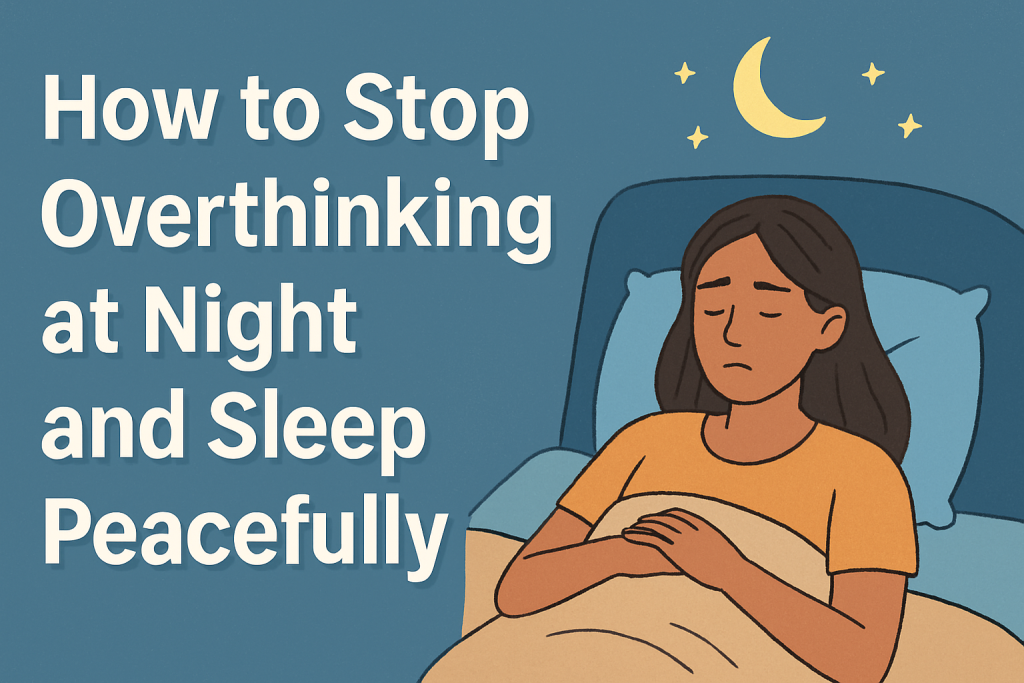
Have you ever found yourself lying in bed at 3 AM, mind racing through tomorrow’s to-do list, replaying today’s conversations, or worrying about things completely beyond your control? You’re not alone. Research shows that nearly 73% of adults aged 25-64 report overthinking before bed, making it one of the most common sleep disruptors in modern life.
Nighttime overthinking doesn’t just steal your sleep—it creates a exhausting cycle where lack of rest makes your mind even more prone to anxious thoughts the following night. This pattern can affect your mental health, physical wellbeing, work performance, and relationships.
The good news? You can break free from this cycle. In this comprehensive guide, you’ll discover 15 scientifically proven strategies to quiet your racing thoughts, calm your restless mind, and finally enjoy the peaceful sleep you deserve. Whether your overthinking stems from stress, anxiety, or simply an overactive mind, these practical techniques will help you reclaim your nights.
Understanding Nighttime Overthinking: Why Your Brain Won’t Shut Off
What Is Overthinking and Why Does It Happen at Night?
Overthinking, also known as rumination, is the process of repetitively thinking about the same thoughts, problems, or worries without reaching a resolution. At night, this tendency intensifies for several reasons:
Why nighttime makes overthinking worse:
- Reduced distractions: Without daytime activities to occupy your mind, thoughts have free reign
- Fatigue lowers mental defenses: Your tired brain struggles to manage intrusive thoughts effectively
- Circadian rhythm factors: Certain times of night naturally increase stress hormone levels
- Silence amplifies internal dialogue: The quiet environment makes your thoughts seem louder
- Laying still triggers reflection: The physical stillness of bed encourages mental activity
The Science Behind Racing Thoughts Before Sleep
Understanding the biological mechanisms behind nighttime overthinking can help you address it more effectively. Your brain’s default mode network (DMN) becomes more active during rest periods, which is designed for self-reflection and processing experiences. However, when combined with stress or anxiety, this natural process can spiral into unproductive rumination.
Key biological factors:
| Factor | How It Affects Sleep | Impact on Overthinking |
|---|---|---|
| Cortisol levels | Can spike in evening due to stress | Increases alertness and worry |
| Melatonin production | Disrupted by blue light and stress | Delays sleep onset while mind races |
| Sympathetic nervous system | Activated by anxious thoughts | Creates physical tension and mental alertness |
| Prefrontal cortex | Less active when tired | Weakens ability to control worry |
Common Types of Nighttime Thoughts That Keep You Awake
Different people experience different patterns of overthinking. Identifying your specific type can help you choose the most effective strategies:
Work-related rumination: Replaying meetings, planning tomorrow’s tasks, worrying about deadlines or performance reviews
Social anxiety thoughts: Analyzing conversations, worrying about what others think, replaying embarrassing moments
Future catastrophizing: Creating worst-case scenarios about health, finances, relationships, or life events
Past regret spirals: Dwelling on mistakes, missed opportunities, or things you wish you’d done differently
Problem-solving loops: Trying to solve complex problems when your tired brain isn’t at its best
Existential contemplation: Deep questions about life, purpose, mortality, or meaning that feel overwhelming
The Hidden Costs of Overthinking Before Bed
How Nighttime Rumination Affects Your Health
Chronic overthinking at night creates a domino effect throughout your entire wellbeing. The consequences extend far beyond just feeling tired the next day.
Physical health impacts:
- Weakened immune system function due to poor sleep quality
- Increased risk of cardiovascular problems from chronic stress
- Weight gain and metabolic issues from disrupted sleep patterns
- Higher inflammation levels throughout the body
- Chronic fatigue that persists despite attempts to rest
- Digestive problems linked to stress and poor sleep
Mental and emotional consequences:
- Heightened anxiety and depression symptoms
- Reduced cognitive function and memory problems
- Difficulty concentrating and making decisions
- Increased irritability and emotional reactivity
- Lower stress tolerance and resilience
- Diminished motivation and productivity
The Vicious Cycle: How Poor Sleep Worsens Overthinking
Sleep deprivation and overthinking create a self-reinforcing loop that becomes progressively harder to break. When you don’t sleep well, your brain’s emotion regulation centers become less effective, making you more prone to negative thinking patterns the following night.
This cycle looks like: Overthinking → Poor Sleep → Increased Stress → More Overthinking → Worse Sleep
Breaking this pattern requires addressing both the thinking patterns and the sleep environment simultaneously, which is exactly what the strategies in this guide will help you accomplish.
15 Powerful Strategies to Stop Overthinking at Night
1. Create a Dedicated “Worry Time” Earlier in the Day
Instead of letting worries ambush you at bedtime, schedule 15-20 minutes during the day specifically for addressing concerns. This cognitive behavioral technique helps contain anxious thoughts to a designated period.
How to implement worry time:
- Choose a consistent time between 4-7 PM (not too close to bedtime)
- Set a timer for 15-20 minutes maximum
- Write down all your worries, concerns, and racing thoughts
- For each concern, note one action step you can take
- When nighttime thoughts arise, remind yourself you’ll address them during tomorrow’s worry time
This approach works because it gives your mind permission to postpone processing until a more appropriate time, reducing the urgency of thoughts at night.
2. Practice the “Brain Dump” Journaling Technique
Writing down your thoughts physically removes them from your mental workspace, making it easier for your brain to relax. A brain dump is different from regular journaling—it’s about getting everything out without filtering or organizing.
Steps for an effective brain dump:
- Keep a notebook and pen on your nightstand (not your phone)
- When thoughts start racing, turn on a dim light
- Write continuously for 5-10 minutes without stopping
- Don’t worry about grammar, spelling, or making sense
- Include tasks, worries, ideas, feelings—anything occupying mental space
- Close the notebook and place it away from the bed
- Take three deep breaths and return to sleep
Many people find that the physical act of writing creates a psychological boundary between themselves and their thoughts.
3. Master the 4-7-8 Breathing Technique for Instant Calm
Developed by Dr. Andrew Weil, this breathing pattern activates your parasympathetic nervous system, naturally countering the stress response that fuels overthinking.
The 4-7-8 breathing method:
- Exhale completely through your mouth, making a whoosh sound
- Close your mouth and inhale quietly through your nose for 4 counts
- Hold your breath for 7 counts
- Exhale completely through your mouth for 8 counts
- Repeat this cycle 4 times
This technique works by forcing your mind to focus on counting rather than worrying, while the extended exhale triggers relaxation responses in your nervous system. Practice this method when you first get into bed and whenever racing thoughts interrupt your sleep.
4. Use Progressive Muscle Relaxation to Release Physical Tension
Physical tension and mental overthinking often occur together. Progressive muscle relaxation (PMR) systematically releases tension throughout your body while giving your mind a focal point other than worries.
How to practice PMR:
- Start with your toes: tense the muscles for 5 seconds, then release
- Move up to your calves, thighs, buttocks, abdomen
- Continue through chest, arms, hands, neck, and face
- Notice the difference between tension and relaxation
- If thoughts intrude, acknowledge them and return focus to the muscle work
This technique serves double duty: it physically relaxes your body for sleep while occupying your conscious mind with a task that prevents rumination.
5. Implement the “10-10-10” Decision-Making Framework
Many nighttime thoughts involve decisions or problems that feel urgent but aren’t. The 10-10-10 framework helps you gain perspective by asking: Will this matter in 10 minutes? 10 months? 10 years?
Applying the 10-10-10 method at night:
When a worry surfaces, mentally ask yourself these questions. Most nighttime concerns fail the 10-year test, and many fail the 10-month test. This quick mental exercise helps you recognize when your tired brain is magnifying minor issues.
For thoughts that do pass the 10-10-10 test, write them down for your dedicated worry time or morning planning session. You’ve acknowledged their importance without letting them hijack your sleep.
6. Create a Relaxing Pre-Sleep Ritual (Sleep Hygiene Optimization)
A consistent bedtime routine signals your brain that it’s time to transition from active thinking to rest mode. Your routine should begin 60-90 minutes before your target sleep time.
Elements of an effective sleep routine:
- 60-90 minutes before bed: Dim lights throughout your home, reduce screen time
- 45-60 minutes before: Take a warm bath or shower (temperature drop afterward promotes sleepiness)
- 30-45 minutes before: Engage in calming activities like reading, gentle stretching, or listening to soft music
- 15-30 minutes before: Practice relaxation techniques like breathing exercises or meditation
- Final 15 minutes: Prepare your bedroom (cool temperature, dark, quiet), complete brief skincare routine
Consistency is more important than perfection. Your brain will learn to associate these activities with sleep, making the transition easier over time.
7. Try the Cognitive Shuffle or Mental Distraction Technique
When thoughts persist despite your best efforts, cognitive shuffling provides a pattern-interrupt that’s boring enough to allow sleep but engaging enough to prevent rumination.
How cognitive shuffling works:
Choose a random, emotionally neutral word with at least 5 different letters (example: “BLANKET”). For each letter, visualize simple, unrelated objects that start with that letter:
- B: ball, banana, book, bird, button
- L: lamp, leaf, lion, lemon, ladder
- A: apple, arrow, anchor, acorn, astronaut
Continue through each letter, visualizing each object for a few seconds. If you finish the word, choose another. The random, non-threatening imagery prevents your mind from forming thought chains that lead to worry.
8. Address the Root Cause with Cognitive Behavioral Therapy (CBT) Techniques
Cognitive behavioral therapy offers powerful tools for identifying and changing thought patterns that fuel nighttime overthinking. You can practice these techniques independently or with a therapist.
Key CBT strategies for nighttime thoughts:
Thought challenging: When a worry appears, ask yourself:
- What evidence supports this thought?
- What evidence contradicts it?
- Am I catastrophizing or jumping to conclusions?
- What would I tell a friend having this thought?
Cognitive distancing: Instead of thinking “I’m going to fail,” reframe it as “I’m having the thought that I might fail.” This subtle shift creates psychological space between you and the thought.
Reality testing: Are your nighttime fears actually likely, or is your tired brain exaggerating? Most things we worry about at night either never happen or aren’t as bad as we imagine.
9. Leverage the Power of Guided Sleep Meditations
Guided meditations provide external focus for your attention, making it easier to disengage from repetitive thoughts. Unlike music, meditations offer narrative structure that occupies the language-processing parts of your brain where worry often originates.
Choosing effective sleep meditations:
- Look for recordings specifically designed for sleep (25-45 minutes)
- Prefer content with slow, calm narration
- Select topics that feel soothing (nature imagery, body scans, progressive relaxation)
- Use sleep timer features so audio doesn’t play all night
- Try different voices and styles to find what resonates
Many people find that having someone else “do the thinking” through guided imagery eliminates the space for their own worried thoughts to take hold.
10. Establish a “Thought Parking Lot” System
The thought parking lot technique acknowledges your brain’s concerns while deferring action to a more appropriate time. This respects your mind’s need to process while protecting your sleep.
Setting up your thought parking lot:
Keep a small notepad or index cards beside your bed (physical writing is more effective than phone notes). When a thought arises that feels important:
- Write it down in one sentence: “Call about insurance,” “Plan presentation,” “Talk to Alex”
- Tell yourself: “I’ve captured this thought; I’ll address it tomorrow”
- Visualize placing the thought in a parking lot where it will safely wait
- Return your attention to relaxation or sleep
The next morning, review your notes during breakfast or your morning routine. Many concerns will seem less urgent in daylight, while genuinely important items can be scheduled into your day.
11. Optimize Your Sleep Environment for Mental Quietness
Your bedroom environment significantly impacts your brain’s ability to quiet down. Small changes can create powerful sleep signals that help override overthinking.
Essential environmental adjustments:
| Element | Optimal Setting | Why It Matters |
|---|---|---|
| Temperature | 60-67°F (15-19°C) | Cool temperatures trigger sleep hormones |
| Darkness | Complete darkness or dim red light | Blocks stimulation of alertness centers |
| Noise | White noise or complete silence | Masks intrusive sounds that trigger thoughts |
| Bed association | Sleep and intimacy only | Strengthens bed-sleep connection |
| Clutter | Minimal and organized | Reduces visual stimulation and stress |
Consider blackout curtains, a white noise machine, and removing work materials, exercise equipment, and screens from your bedroom. Your bedroom should be a sanctuary exclusively associated with rest.
Some of Trending Sleep Gadgets
SleepFuel Sleep Spray Review
SnoreRx Mouthpiece Review
VelaSleep Pillow Review
12. Practice Mindfulness Meditation to Observe Without Engaging
Mindfulness teaches you to notice thoughts without getting caught up in them—a crucial skill for managing nighttime overthinking. Regular practice strengthens your ability to let thoughts pass like clouds in the sky.
Simple mindfulness practice for bedtime:
- Lie comfortably in bed with eyes closed
- Focus on the sensation of breathing in your chest or abdomen
- When thoughts arise (and they will), simply notice them: “There’s a worry about work”
- Don’t judge the thought as good or bad
- Gently return your attention to your breath
- Repeat this process each time your mind wanders
The goal isn’t to stop thoughts entirely—that’s impossible. Instead, you’re training your brain to notice thoughts without following them down rabbit holes of rumination.
13. Use the “5-4-3-2-1” Grounding Technique
When anxiety fuels your overthinking, grounding techniques bring you back to the present moment. The 5-4-3-2-1 method engages your senses to interrupt thought spirals.
How to practice 5-4-3-2-1 grounding:
- 5 things you can see: Look around your dark room—shadows, shapes, dim light sources
- 4 things you can physically feel: Pillow texture, sheet weight, air temperature, your heartbeat
- 3 things you can hear: Fan humming, distant traffic, your breathing, house settling
- 2 things you can smell: Fresh sheets, night air, lotion, or if nothing, imagine calming scents
- 1 thing you can taste: Trace of toothpaste, water, or simply your mouth’s sensation
This technique works because sensory awareness occupies the same mental space as verbal worry, effectively crowding out anxious thoughts.
14. Address Underlying Anxiety with Professional Support
Sometimes overthinking at night signals underlying anxiety disorders or unresolved trauma that requires professional help. There’s no shame in seeking support—it’s actually a sign of strength and self-awareness.
Signs you might benefit from professional help:
- Overthinking persists despite consistent effort with self-help strategies
- Nighttime thoughts include intrusive images or traumatic memories
- Sleep problems have lasted more than a month
- Daytime functioning is significantly impaired
- You experience panic attacks related to sleep
- Thoughts include self-harm or suicide ideation
Mental health professionals can offer therapies like CBT for insomnia (CBT-I), Eye Movement Desensitization and Reprocessing (EMDR) for trauma, or medication when appropriate. Online therapy platforms have made quality mental health care more accessible than ever.
15. Develop a Morning Mental Health Practice
What you do when you wake up influences how your brain behaves at night. A morning practice that processes emotions and sets intentions can reduce the mental backlog that surfaces during sleep.
Components of an effective morning routine:
- Morning pages (3 pages of stream-of-consciousness writing to clear mental clutter)
- Gratitude practice (listing 3 specific things you’re grateful for)
- Intention setting (identifying 1-3 priorities for the day)
- Brief meditation (even 5 minutes of mindfulness practice)
- Physical movement (stretching, walking, or exercise to release tension)
This morning investment pays dividends at night by ensuring fewer unprocessed thoughts and emotions waiting to surface when you’re trying to sleep.
Lifestyle Changes That Support Better Sleep and Reduced Overthinking
Nutrition and Timing for Sleep-Friendly Eating
What and when you eat impacts both sleep quality and mental clarity. Certain nutritional choices can either promote or undermine your efforts to quiet nighttime thoughts.
Sleep-supportive nutritional guidelines:
Foods that promote sleep and calm thoughts:
- Complex carbohydrates (whole grains, sweet potatoes) increase serotonin
- Magnesium-rich foods (leafy greens, nuts, seeds) reduce nervous system excitability
- Tryptophan sources (turkey, eggs, cheese) are precursors to sleep hormones
- Tart cherry juice contains natural melatonin
- Herbal teas (chamomile, passionflower, valerian root) have calming properties
Timing matters:
- Finish eating 2-3 hours before bed to avoid digestive interference
- Avoid heavy, spicy, or fatty foods in the evening
- Limit caffeine after 2 PM (effects can last 6+ hours)
- Reduce alcohol consumption (it disrupts sleep architecture despite initial drowsiness)
Exercise and Physical Activity for Mental Clarity
Regular physical activity is one of the most powerful tools for reducing anxiety and improving sleep quality. Exercise helps process stress hormones that fuel nighttime overthinking.
Optimal exercise patterns for better sleep:
- Timing: Morning or afternoon exercise is ideal; vigorous evening workouts can be stimulating
- Type: Aerobic exercise (walking, jogging, cycling) most effectively reduces anxiety
- Duration: Even 20-30 minutes daily creates measurable improvements
- Consistency: Regular exercise matters more than intensity
- Evening alternative: Gentle yoga or stretching 60-90 minutes before bed can promote relaxation
Physical activity also increases adenosine (a sleep-promoting chemical) in your brain and raises body temperature; the subsequent temperature drop signals sleep time.
Digital Boundaries and Screen Time Management
Blue light from screens suppresses melatonin production and stimulating content activates your mind exactly when you’re trying to wind down. Creating digital boundaries is essential for managing nighttime overthinking.
Effective digital hygiene practices:
- Implement a screen curfew 60-90 minutes before bed
- Use blue light filters if you must use devices in the evening
- Remove phones from the bedroom or place them across the room on silent
- Turn off work email notifications after work hours
- Avoid scrolling social media before bed (comparison and FOMO fuel overthinking)
- Set app time limits to prevent unconscious late-night usage
Consider replacing pre-bed scrolling with reading physical books, conversation with household members, or gentle hobbies like puzzles or knitting.
When to Seek Professional Help for Sleep Issues
While the strategies in this guide help most people, some situations require professional evaluation and treatment. Sleep disorders and mental health conditions can masquerade as simple overthinking.
Warning Signs That Warrant Medical Attention
Consult a healthcare provider or sleep specialist if you experience:
- Persistent insomnia lasting more than 3 weeks despite trying behavioral strategies
- Daytime sleepiness that interferes with work, driving, or relationships
- Loud snoring, gasping, or breathing pauses during sleep (possible sleep apnea)
- Irresistible urges to move your legs at night (possible restless leg syndrome)
- Depression or anxiety symptoms that worsen over time
- Thoughts of self-harm or suicide related to sleep deprivation
Treatment Options Beyond Self-Help
Professional interventions that might help include:
Cognitive Behavioral Therapy for Insomnia (CBT-I): The gold-standard treatment for chronic insomnia, typically showing results in 4-8 sessions. More effective long-term than medication.
Sleep studies: Overnight monitoring at a sleep clinic can diagnose disorders like sleep apnea, narcolepsy, or periodic limb movement disorder.
Medication: When appropriate, doctors may prescribe short-term sleep aids, anti-anxiety medications, or antidepressants. These should complement, not replace, behavioral strategies.
Alternative therapies: Acupuncture, massage therapy, and biofeedback training have helped some people manage stress and improve sleep quality.
Creating Your Personalized Anti-Overthinking Sleep Plan
With 15 strategies to choose from, you might feel overwhelmed about where to begin. The key is starting small and building gradually.
Week 1: Foundation Building
Focus on these three core elements:
- Establish a consistent sleep schedule (same bedtime and wake time every day)
- Create a basic bedtime routine (30 minutes minimum)
- Optimize your sleep environment (temperature, darkness, quiet)
Week 2: Adding Mental Techniques
Once your foundation is solid, introduce:
- Choose one breathing or relaxation technique to practice nightly
- Implement the thought parking lot system
- Start a simple journaling practice
Week 3-4: Refinement and Expansion
Now layer in additional strategies:
- Add dedicated worry time to your daily schedule
- Experiment with different meditation or cognitive shuffling approaches
- Address any lifestyle factors (exercise, nutrition, screen time)
Measuring Your Progress
Track your sleep and overthinking patterns to identify what works best for you:
- Sleep quality: Rate 1-10 each morning
- Time to fall asleep: Estimate in minutes
- Number of night wakings: Count each occurrence
- Daytime energy: Rate 1-10 at midday
- Overthinking intensity: Rate 1-10 at bedtime
After 2-3 weeks, review your data to see which strategies create the most improvement. Everyone responds differently, so personalization is key.
Conclusion: Your Journey to Peaceful Nights Starts Tonight
Overthinking at night is frustrating, exhausting, and isolating—but it doesn’t have to be permanent. The 15 strategies in this guide offer you a comprehensive toolkit for quieting your racing thoughts and reclaiming peaceful sleep.
Remember these key principles:
- Be patient with yourself: Breaking the overthinking cycle takes time and practice
- Start small: Implement one or two strategies consistently rather than trying everything at once
- Progress isn’t linear: You’ll have better and worse nights; focus on overall trends
- Personalize your approach: What works for others might not work for you, and that’s okay
- Seek help when needed: Professional support isn’t a sign of weakness but of wisdom
The most important step is the one you take tonight. Choose just one strategy from this guide—perhaps the brain dump technique or 4-7-8 breathing—and commit to trying it for the next week. Small, consistent actions create remarkable changes over time.
Your mind deserves rest. Your body needs sleep. And you have the power to create the peaceful nights you’ve been dreaming of.
Ready to take action? Before bed tonight, set up your thought parking lot system and commit to a 30-minute screen-free bedtime routine. These two simple changes can create immediate improvements in your sleep quality.
Sweet dreams await.
n is designed to process memories and plan for the future, but when it does this non-stop at night, it causes stress and prevents sleep. Many people think overthinking is a bad habit, but it’s more like an overactive autopilot mode. You can’t always stop it completely, but you can train your mind to slow down.
FAQs About Stop Overthinking at Night and Sleep Peacefully
How long does it typically take to stop overthinking at night using these techniques?
Most people notice initial improvements within 1-2 weeks of consistently applying these strategies, though the timeline varies considerably based on individual circumstances. If overthinking is situational (triggered by a specific stressor), you might see faster results. Chronic overthinking patterns developed over years typically require 4-8 weeks of consistent practice before significant changes become automatic. The key is consistency rather than perfection—using your chosen techniques nightly creates the neural pathways that eventually make quieting your mind feel more natural. If you haven’t seen any improvement after 4 weeks of dedicated effort, consider whether underlying anxiety or sleep disorders might be contributing factors that require professional evaluation.
Can certain medications or supplements help reduce nighttime overthinking?
Several supplements show promise for supporting better sleep and reducing anxiety-driven thoughts, though they work best when combined with behavioral strategies. Magnesium glycinate (300-400mg before bed) helps calm the nervous system and is well-tolerated by most people. L-theanine (200-400mg) promotes relaxation without sedation. Melatonin (0.5-3mg) can help with sleep onset but doesn’t directly address overthinking. Some people find benefit from herbal supplements like valerian root, passionflower, or ashwagandha. However, always consult a healthcare provider before starting supplements, especially if you take other medications or have health conditions. Prescription medications like anti-anxiety drugs or certain antidepressants can help with severe overthinking but should be used under medical supervision and typically alongside therapy.
Why does overthinking seem worse on Sunday nights or before important events?
This phenomenon, sometimes called “anticipatory anxiety,” occurs because your brain perceives higher stakes attached to the upcoming day. Sunday night overthinking often stems from the transition from weekend relaxation to work stress, giving your mind time to mentally rehearse everything that could go wrong. Before important events, your brain engages in a hyperactive version of preparation that crosses the line from helpful planning into unproductive rumination. The heightened emotional significance of these situations amplifies your natural tendency toward overthinking. Combat this by scheduling extra worry time earlier on these days, doing a detailed brain dump before dinner, and implementing calming rituals earlier in the evening rather than waiting until bedtime when anxiety has already peaked.
Is it normal for racing thoughts to return even after successfully managing them for a while?
Absolutely, and this is actually one of the most important things to understand about managing overthinking. Progress isn’t linear, and setbacks don’t erase your gains—they’re a normal part of the process. Racing thoughts often return during periods of increased stress, major life changes, illness, or disrupted sleep schedules. The difference is that with practice, you have tools to manage these episodes rather than feeling helpless. When thoughts return, avoid catastrophizing (“It’s not working anymore”) and instead recognize this as a signal to return to your foundational practices with renewed intention. Most people find that even when overthinking resurfaces, they can manage it more quickly and effectively than before they learned these techniques. Consider setbacks as opportunities to practice resilience rather than evidence of failure.
Can overthinking at night be a sign of a more serious mental health condition?
While occasional overthinking is normal, persistent rumination that significantly impacts your daily functioning can indicate underlying conditions like generalized anxiety disorder (GAD), depression, obsessive-compulsive disorder (OCD), or post-traumatic stress disorder (PTSD). Warning signs that suggest professional evaluation is needed include: thoughts that are intrusive and extremely distressing, rumination that persists despite consistent efforts with self-help strategies for over a month, thoughts that include themes of self-harm or hopelessness, overthinking accompanied by other symptoms like panic attacks or significant mood changes, or nighttime thoughts that center on past trauma. These conditions are highly treatable with appropriate professional help through therapy, medication, or both. If you’re unsure whether your experiences warrant professional attention, a screening with a mental health provider can offer clarity and peace of mind. Remember that seeking help demonstrates self-awareness and strength, not weakness.