
Are you concerned about what’s lurking in your tap water? You’re not alone. Millions of households are turning to countertop water filtration systems to remove contaminants like chlorine, lead, fluoride, and harmful chemicals that traditional pitcher filters simply can’t handle.
The problem is clear: municipal water treatment doesn’t remove everything, and bottled water creates unnecessary plastic waste while draining your wallet. The solution? A high-quality countertop water filter that sits conveniently on your kitchen counter and delivers clean, safe drinking water on demand.
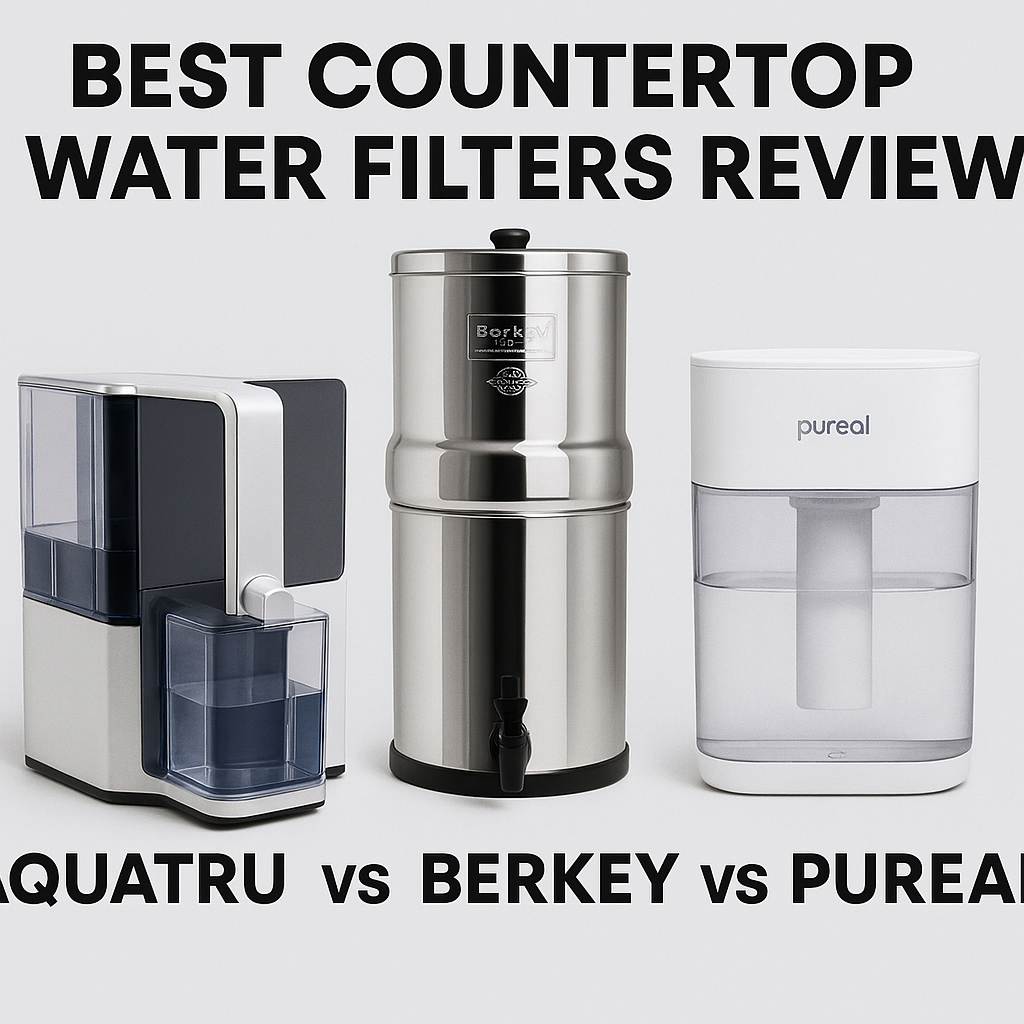
In this comprehensive review, we’ll compare three of the most popular countertop water filters available today: AquaTru, Berkey, and Pureal. We’ll break down their filtration technology, performance, costs, pros and cons, and help you decide which system is the perfect fit for your household needs.
By the end of this guide, you’ll know exactly which countertop water purification system offers the best value, performance, and reliability for your specific situation.
Why Choose a Countertop Water Filter?
Before diving into specific product comparisons, let’s understand why countertop water filtration systems have become so popular among health-conscious consumers.
Benefits of Countertop Water Filters
Countertop water purifiers offer several advantages over other filtration options:
- No installation required – Unlike under-sink systems, countertop filters require no plumbing modifications or professional installation
- Portability – Easy to move between locations, perfect for renters or those who relocate frequently
- Advanced filtration – Remove more contaminants than standard pitcher filters or faucet attachments
- Cost-effective – Lower upfront cost compared to whole-house systems while providing excellent filtration
- Immediate access – Get purified water instantly without waiting for a reservoir to refill
- Space-efficient – Compact design fits most kitchen counters without taking up excessive space
Common Water Contaminants Removed
Quality countertop filters effectively remove:
- Chlorine and chloramine
- Lead and heavy metals
- Fluoride compounds
- PFAS (forever chemicals)
- Bacteria and viruses
- Pesticides and herbicides
- Pharmaceutical residues
- Volatile organic compounds (VOCs)
- Sediment and rust particles
Now let’s examine how AquaTru, Berkey, and Pureal stack up against each other.
AquaTru Countertop Water Filter: Complete Review
What Is AquaTru?
AquaTru is a countertop reverse osmosis (RO) water purification system that doesn’t require any installation or connection to your plumbing. It uses advanced four-stage filtration to remove up to 99% of contaminants commonly found in tap water.
AquaTru Filtration Technology
The AquaTru system employs a sophisticated multi-stage filtration process:
Stage 1: Mechanical Pre-Filter Removes large particles, sediment, and rust that could clog subsequent filters.
Stage 2: Activated Carbon Filter Eliminates chlorine, bad tastes, odors, and organic compounds.
Stage 3: Reverse Osmosis Membrane The heart of the system – removes dissolved solids, heavy metals, fluoride, and microscopic contaminants down to 0.0001 microns.
Stage 4: VOC Carbon Filter Final polishing stage that removes any remaining volatile organic compounds and ensures great taste.
AquaTru Performance and Specifications
| Feature | Details |
|---|---|
| Filtration Method | 4-Stage Reverse Osmosis |
| Contaminant Removal Rate | Up to 99% (certified tested) |
| Tank Capacity | 3 gallons (clean water reservoir) |
| Production Rate | Approximately 1 gallon per hour |
| Power Requirements | Plugs into standard outlet |
| Dimensions | 14″ x 12″ x 14″ |
| Filter Lifespan | Pre-filters: 6-12 months, RO membrane: 2 years |
| NSF Certifications | Tested to NSF standards |
AquaTru Pros and Cons
Advantages:
- Removes more contaminants than gravity filters (including fluoride removal at high rates)
- No installation or plumbing connection needed
- Convenient built-in storage tank
- Certified performance data available
- Automatic shut-off when tank is full
- Mineralizes water option available with add-on filter
Disadvantages:
- Requires electricity to operate
- Produces wastewater (typical for RO systems)
- Higher initial investment
- Replacement filters more expensive than some alternatives
- Takes time to fill reservoir
Who Should Choose AquaTru?
AquaTru is ideal for households that:
- Want the highest level of contaminant removal
- Prefer convenience and automated operation
- Have access to electrical outlets near the counter space
- Value third-party testing and certification
- Don’t mind the higher upfront and ongoing filter costs
Berkey Countertop Water Filter: Complete Review
What Is Berkey?
Berkey water filters are gravity-fed purification systems that have been trusted for decades. These stainless steel units use proprietary Black Berkey purification elements to remove contaminants without requiring electricity or water pressure.
Berkey Filtration Technology
Berkey systems use a unique gravity filtration method:
Black Berkey Purification Elements These proprietary filter elements combine multiple media types including activated carbon, ion exchange, and microfiltration. Water passes through these elements via gravity, which removes bacteria, viruses, heavy metals, and chemicals.
Optional Fluoride Filters Berkey offers additional PF-2 fluoride filters that attach to the Black Berkey elements for enhanced fluoride and arsenic removal.
The filtration process relies entirely on gravity – you pour water into the upper chamber, and it slowly filters down to the lower chamber where clean water is stored.
Berkey Performance and Specifications
| Feature | Details |
|---|---|
| Filtration Method | Gravity-fed with Black Berkey elements |
| Contaminant Removal Rate | 99.9% of many contaminants (varies by substance) |
| Model Sizes | Travel (1.5 gal) to Crown (6 gal) |
| Production Rate | 2-4 gallons per hour (depending on model/elements) |
| Power Requirements | None – completely gravity-powered |
| Dimensions | Varies by model (Big Berkey: 8.5″ diameter x 19″ tall) |
| Filter Lifespan | Black Berkey: 6,000 gallons or approximately 5-6 years |
| Certifications | Independent lab tested |
Berkey Pros and Cons
Advantages:
- No electricity required – works during power outages
- Extremely long filter life (exceptional value over time)
- Various sizes available for different household needs
- Durable stainless steel construction
- Portable and perfect for emergency preparedness
- Can purify untreated raw water sources
- Low long-term operating costs
Disadvantages:
- Requires manual filling of upper chamber
- Slower filtration rate than pressurized systems
- Takes up vertical counter space
- Initial assembly required
- Fluoride removal requires additional filters (extra cost)
- Not suitable for very small spaces
Who Should Choose Berkey?
Berkey is perfect for households that:
- Want off-grid capability and emergency preparedness
- Prefer a system that works without electricity
- Value long-term cost savings
- Have adequate vertical counter space
- Don’t mind manually filling the reservoir
- Want a durable, long-lasting filtration system
Pureal Countertop Water Filter: Complete Review
What Is Pureal?
Pureal is a newer entrant in the countertop water filter market, offering an advanced filtration system that combines multiple technologies to provide comprehensive water purification. The system focuses on user convenience and thorough contaminant removal.
Pureal Filtration Technology
Pureal utilizes a multi-stage approach combining several filtration methods:
Activated Carbon Block Filter High-density carbon block removes chlorine, sediment, bad taste, odor, and organic chemicals.
Ion Exchange Technology Targets heavy metals, hard water minerals, and dissolved solids.
Sediment Filter Captures rust, sand, and particulate matter.
Optional UV Sterilization (model dependent) Some Pureal models include UV light sterilization for additional protection against microorganisms.
Pureal Performance and Specifications
| Feature | Details |
|---|---|
| Filtration Method | Multi-stage activated carbon with ion exchange |
| Contaminant Removal Rate | 95-99% of common contaminants |
| Tank Capacity | 2.5 gallons |
| Production Rate | 1.5 gallons per hour |
| Power Requirements | Varies by model (some gravity-fed, others electric) |
| Dimensions | Approximately 13″ x 11″ x 13″ |
| Filter Lifespan | 6-12 months depending on water quality |
| Certifications | Meets industry standards |
Pureal Pros and Cons
Advantages:
- Good balance of performance and affordability
- Compact footprint for smaller kitchens
- Decent filtration capacity
- Reasonable filter replacement costs
- Modern design aesthetic
- Some models offer both electric and gravity options
Disadvantages:
- Less established brand reputation
- Limited independent testing data publicly available
- Fewer size options compared to Berkey
- Shorter filter lifespan than Berkey
- Less comprehensive contaminant removal than RO systems
Who Should Choose Pureal?
Pureal works well for households that:
- Want a mid-range filtration option
- Have budget constraints but still want quality filtration
- Prefer a modern, compact design
- Need a straightforward system without complexity
- Have relatively good source water quality
Head-to-Head Comparison: AquaTru vs Berkey vs Pureal
Now let’s compare these three popular countertop water filters across the most important categories.
Filtration Performance Comparison
| Contaminant Type | AquaTru | Berkey | Pureal |
|---|---|---|---|
| Chlorine | 99%+ | 99.9%+ | 95-99% |
| Lead | 99%+ | 99.9%+ | 90-95% |
| Fluoride | 95%+ | 95%+ (with PF-2) | 60-70% |
| Bacteria/Viruses | 99.9%+ | 99.9%+ | 95%+ |
| PFAS | 99%+ | 99%+ | 85-90% |
| Heavy Metals | 99%+ | 99%+ | 90-95% |
| VOCs | 99%+ | 99%+ | 90-95% |
Winner: AquaTru (by a narrow margin) for overall contaminant removal, especially fluoride and dissolved solids, though Berkey performs nearly as well.
Cost Comparison
Initial Investment:
- AquaTru: $400-$500
- Berkey (Big Berkey): $350-$400
- Pureal: $200-$300
Annual Filter Replacement Costs:
- AquaTru: $150-$200 per year
- Berkey: $40-$60 per year (filters last much longer)
- Pureal: $80-$120 per year
5-Year Total Cost of Ownership:
- AquaTru: $1,200-$1,500
- Berkey: $550-$700
- Pureal: $600-$900
Winner: Berkey for long-term value due to exceptional filter longevity.
Convenience and Ease of Use
AquaTru:
- Automatic operation once water is added
- Requires electrical outlet
- Built-in storage tank
- Digital display shows filter status
Berkey:
- Manual filling required
- No electricity needed
- Gravity-fed (slower but reliable)
- Simple mechanical operation
Pureal:
- Semi-automatic (model dependent)
- Some models need electricity
- Moderate ease of use
- Standard indicator systems
Winner: AquaTru for set-it-and-forget-it convenience.
Capacity and Speed
Daily Production Capacity:
- AquaTru: 15-20 gallons per day
- Berkey (Big Berkey with 4 elements): 48+ gallons per day
- Pureal: 12-15 gallons per day
Winner: Berkey for large households or high water consumption needs.
Portability and Space Requirements
AquaTru:
- Moderate footprint (14″ x 12″ x 14″)
- Requires electrical outlet
- Weighs approximately 15 lbs empty
Berkey:
- Tall vertical design (varies by model)
- Highly portable, no power needed
- Weighs 7-10 lbs empty (stainless steel)
Pureal:
- Compact design
- Easy to move
- Lightweight construction
Winner: Berkey for true portability and off-grid use.
Durability and Longevity
AquaTru:
- Quality plastic construction
- Electronic components may need eventual replacement
- Expected lifespan: 5-8 years with proper maintenance
Berkey:
- Stainless steel body (nearly indestructible)
- No electronic parts to fail
- Expected lifespan: 15+ years or more
Pureal:
- Mixed material construction
- Standard durability
- Expected lifespan: 4-6 years
Winner: Berkey for exceptional build quality and longevity.
Which Countertop Water Filter Is Best for You?
Choosing the right countertop water filtration system depends on your specific needs, priorities, and circumstances. Here’s a quick decision guide:
Choose AquaTru If You:
- Want the most comprehensive contaminant removal available
- Prioritize convenience and automation
- Have electricity available and don’t mind using it
- Are willing to invest more upfront for top performance
- Live in an area with particularly challenging water quality
- Want certified performance data and testing
- Don’t mind higher ongoing filter costs for peace of mind
Best For: Urban households, families with young children, people with health concerns, those wanting maximum contaminant removal.
Choose Berkey If You:
- Want the best long-term value and lowest operating costs
- Need a system that works without electricity
- Value durability and buy-it-for-life quality
- Have adequate vertical counter space
- Want emergency preparedness capability
- Prefer a simple, mechanical system
- Need high daily water production capacity
- Are environmentally conscious (longest-lasting filters)
Best For: Large families, rural households, preppers, off-grid living, cost-conscious buyers, environmentally focused consumers.
Choose Pureal If You:
- Have a limited budget but still want quality filtration
- Need a compact, space-saving design
- Want a balance between performance and affordability
- Have relatively good source water (municipal supply)
- Prefer modern aesthetics
- Don’t need maximum contaminant removal
- Want a straightforward system without complexity
Best For: Singles or couples, apartment dwellers, first-time filter buyers, those with budget constraints.
Installation and Maintenance Tips
Regardless of which countertop water filter you choose, proper setup and maintenance ensure optimal performance and longevity.
General Setup Guidelines
Location Selection:
- Place on a stable, level countertop near a sink
- Ensure adequate clearance around the unit
- Keep away from direct sunlight (can promote algae growth)
- For electric models, position near an electrical outlet
Initial Preparation:
- Wash all components before first use
- Prime filters according to manufacturer instructions
- Run initial water through and discard (removes carbon fines)
- Check for leaks or issues during first operation
Maintenance Best Practices
Regular Cleaning:
- Wipe exterior surfaces weekly with mild soap and water
- Clean water reservoirs monthly to prevent biofilm buildup
- Inspect seals and gaskets for wear
Filter Replacement Schedule:
- Mark filter replacement dates on your calendar
- Don’t wait until performance noticeably degrades
- Keep spare filters on hand to avoid gaps in filtration
Water Quality Monitoring:
- Consider periodic testing of filtered water
- Watch for changes in taste, odor, or flow rate
- Address issues promptly to maintain system performance
Common Questions About Countertop Water Filters
Do countertop water filters remove fluoride?
Fluoride removal capability varies significantly by system type. Reverse osmosis systems like AquaTru remove 95-99% of fluoride effectively. Berkey systems require the addition of optional PF-2 fluoride filters to achieve 95%+ fluoride removal. Standard activated carbon filters like Pureal typically remove only 40-70% of fluoride.
If fluoride removal is a priority, either choose a reverse osmosis system or ensure your gravity filter includes specialized fluoride reduction elements.
How often should I change countertop water filter cartridges?
Filter replacement frequency depends on the system and your water consumption:
- AquaTru: Pre-filters every 6-12 months, RO membrane every 2 years, VOC filter every 12-24 months
- Berkey: Black Berkey elements every 6,000 gallons (typically 5-6 years for average household)
- Pureal: Every 6-12 months depending on usage and water quality
Most systems include indicators or reminders. Always follow manufacturer recommendations for your specific model.
Are countertop water filters better than pitcher filters?
Yes, countertop water filters generally provide superior filtration compared to pitcher filters. Countertop systems offer more comprehensive contaminant removal, higher capacity, longer filter life, and better overall value despite higher initial costs.
Pitcher filters primarily remove chlorine, taste, and odor issues but struggle with dissolved solids, fluoride, heavy metals, and many other contaminants that countertop systems effectively eliminate.
Can I use well water with countertop filters?
Yes, but with important considerations. Well water often contains higher sediment levels, bacteria, and dissolved minerals that can shorten filter life or overwhelm certain systems.
Berkey systems excel with well water and untreated sources. AquaTru can handle well water but may require more frequent pre-filter changes. For any system, consider getting your well water tested first to understand what contaminants need removal.
Some well water conditions may require pre-treatment before using countertop filters.
Do countertop water filters waste water?
This depends on the filtration technology:
- Reverse osmosis systems (AquaTru): Yes, RO systems produce wastewater (typically 2-3 gallons wasted per gallon filtered) as part of the purification process
- Gravity filters (Berkey, Pureal): No wastewater produced – all water added is filtered and available for use
If water conservation is a priority, gravity-fed systems are more efficient, though RO systems provide more thorough filtration.
Conclusion: Making Your Final Decision
Clean, safe drinking water is essential for your health and wellbeing. The good news is that all three countertop water filters reviewed here – AquaTru, Berkey, and Pureal – provide significantly better water quality than tap water alone.
The Bottom Line:
- AquaTru delivers the most comprehensive contaminant removal with convenient, automated operation. It’s the best choice for those who want maximum purification and don’t mind higher costs.
- Berkey offers exceptional long-term value, off-grid capability, and nearly indestructible construction. It’s ideal for families, preppers, and anyone wanting a buy-it-for-life system that works without electricity.
- Pureal provides solid mid-range performance at an accessible price point. It’s perfect for budget-conscious buyers who want better filtration than pitchers but don’t need industrial-strength purification.
Consider your specific needs: budget, space, contaminant concerns, daily water consumption, and whether you need off-grid capability. Any of these three systems will dramatically improve your water quality compared to unfiltered tap water.
Ready to enjoy cleaner, safer water? Choose the system that best matches your priorities and take the first step toward better hydration and health for your family today.
FAQs About Best Countertop Water Filters Review
1. Can countertop water filters remove all contaminants from tap water?
No filter removes 100% of all contaminants, but high-quality countertop systems remove 95-99% of most common pollutants. Reverse osmosis systems like AquaTru offer the most comprehensive removal, eliminating virtually all dissolved solids, heavy metals, chemicals, and microorganisms. Gravity filters like Berkey are also highly effective against a broad spectrum of contaminants. The key is matching your filter choice to your specific water quality concerns and getting your water tested if you have particular contamination worries.
2. Will a countertop water filter improve the taste of my tap water?
Absolutely. One of the most noticeable benefits of countertop filtration is dramatically improved taste and odor. These systems remove chlorine (the primary cause of chemical taste), organic compounds, and other substances that affect water flavor. Most users report that filtered water tastes significantly cleaner, fresher, and more pleasant than tap water. The activated carbon stages in all three systems reviewed specifically target taste and odor issues, making even poor-tasting municipal water enjoyable to drink.
3. How much money can I save by using a countertop filter instead of buying bottled water?
The savings are substantial. An average family spending $600-$1,200 annually on bottled water can recover their countertop filter investment within 6-12 months. Over five years, a Berkey system saves $2,500-$5,000 compared to bottled water while reducing plastic waste. Even with higher operating costs, AquaTru saves $2,000-$4,000 over the same period. Beyond financial savings, you’ll eliminate the hassle of purchasing, transporting, and storing heavy bottled water while significantly reducing your environmental footprint.
4. Do countertop water filters remove beneficial minerals from drinking water?
Reverse osmosis systems like AquaTru do remove most minerals along with contaminants, though you can add a remineralization filter. Gravity systems like Berkey and Pureal retain more beneficial minerals while removing harmful substances. However, research shows most people get adequate minerals from food, making mineral removal in water less concerning than many believe. If mineral content is important to you, choose a gravity-fed system or add a remineralization stage to your RO system.
5. Are countertop water filters difficult to maintain or time-consuming?
Not at all. Maintenance is straightforward for all three systems. AquaTru requires minimal effort – just add water and replace filters as indicated (10-15 minutes per filter change). Berkey needs periodic cleaning of the elements (15-20 minutes every few months) and filter replacement every few years. Pureal falls in between. None require professional service, special tools, or technical expertise. Monthly time investment is typically less than 30 minutes for any system – far less effort than shopping for and handling bottled water.