
AirPhysio Review: If you’re reading this, chances are you or someone you care about struggles with persistent mucus, chronic coughing, or the frustrating sensation of never being able to take a full, deep breath. Maybe you’ve been diagnosed with COPD, asthma, bronchiectasis, or cystic fibrosis. Perhaps you’re a former smoker dealing with lingering lung congestion. Or maybe you’re an athlete looking for that extra respiratory edge.
Whatever brought you here, you’re likely tired of the same cycle: medications that come with side effects, breathing treatments that eat up your day, and that nagging feeling that there has to be a better way.
That’s where AirPhysio enters the picture.

AirPhysio is a handheld, drug-free device that uses a clinically recognized technique called Oscillating Positive Expiratory Pressure (OPEP) to help loosen and clear mucus from your lungs. It’s been generating significant buzz-featured on social media platforms like TikTok and Instagram, and backed by claims of being “award-winning” and “doctor-recommended”.
But here’s the thing: not all OPEP devices are created equal. And in a market flooded with breathing gadgets, it’s hard to separate genuine innovation from clever marketing.
In this comprehensive AirPhysio review, I’ll give you the unvarnished truth. I’ve analyzed clinical studies, scoured hundreds of real user reviews, compared AirPhysio head-to-head with competitors like Aerobika and Acapella, and examined the fine print on FDA registration, pricing, and usability. By the end, you’ll know exactly whether this device is right for you-or if you’d be better off with an alternative.
Quick Verdict Box
| Category | Rating / Verdict |
|---|---|
| Overall Rating | ⭐⭐⭐⭐ (4/5) |
| Best For | People with mild-to-moderate respiratory conditions (asthma, COPD, bronchiectasis) who want a portable, drug-free mucus clearance tool. Also suitable for smokers, athletes, and those recovering from respiratory illnesses. |
| Not Ideal For | Individuals with very severe lung function impairment who cannot generate sufficient expiratory flow to activate the device. Also not ideal for those who need a device that can be sterilized by boiling. |
| Main Strengths | Drug-free and chemical-free; portable and easy to use; no batteries or ongoing costs; FDA-registered; made in Australia; positive real-world user feedback for mucus clearance. |
| Main Weaknesses | Premium pricing ($80-$120); non-refundable in most cases; requires practice to master the technique; cannot be boiled for sterilization; less clinically studied than some competitors. |
| Final Recommendation | Worth considering if you have a respiratory condition and want a portable OPEP device. However, explore insurance-covered options first, and be prepared for a learning curve. If you have severe disease or need sterilization capability, the Aerobika may be a better choice. |

What Is AirPhysio?
AirPhysio is a handheld, drug-free breathing device that uses Oscillating Positive Expiratory Pressure (OPEP) technology. In plain English, it’s a small pipe-like device with a stainless steel ball inside. When you exhale through it, the ball vibrates, creating pressure and oscillations that help loosen mucus from your airway walls.

Think of it like this: imagine your airways are like a pipe with gunk stuck to the walls. AirPhysio sends vibrations through that pipe, shaking the gunk loose so you can cough it out. No drugs, no batteries, no electricity – just pure mechanical action.
The device was originally developed for hospital use and is now available for home use. It’s manufactured in Australia and is TGA-registered in Australia and FDA-registered in the US.
Product Overview
Key Specifications
Is AirPhysio a Scam?
This is the million-dollar question, right?
Short answer: No, AirPhysio is not a scam.
The device itself is a real, functional OPEP device. The technology it uses – OPEP therapy – is a legitimate, evidence-based respiratory treatment that’s been used in hospitals for years.
However – and this is important – the marketing can be overhyped. Some ads make it sound like you’ll be breathing like a teenager after one use. That’s not how it works. OPEP therapy works best with consistent, daily use over time.
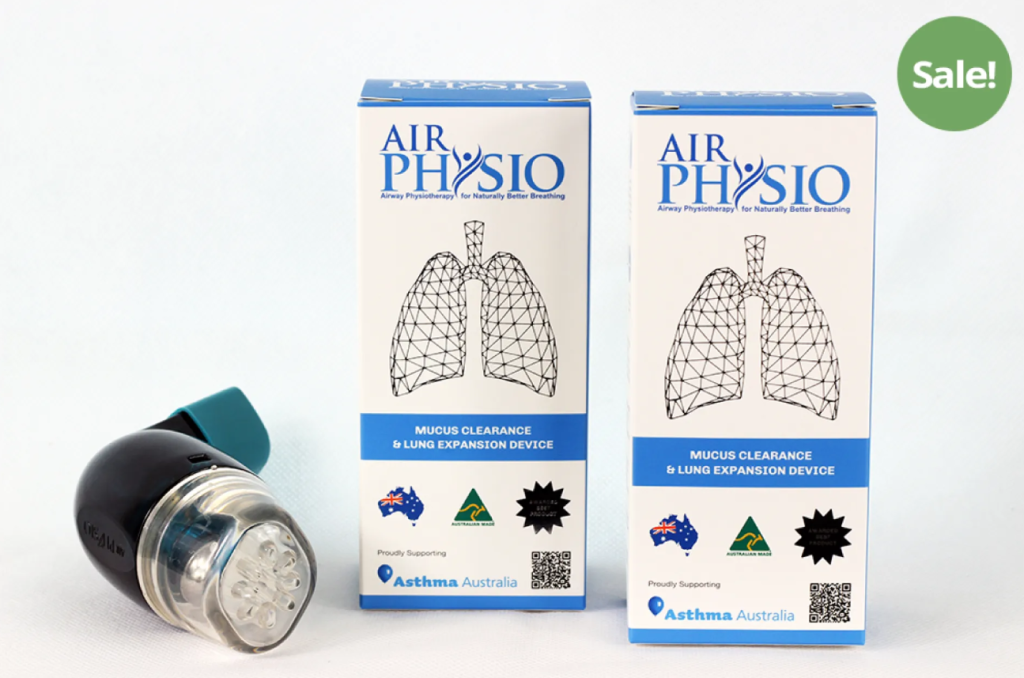
Also, “FDA-registered” is not the same as “FDA-approved.” Registration is a lower bar – it means the company has listed the device with the FDA, not that the FDA has rigorously tested and approved it for efficacy.
So no, it’s not a scam. But it’s also not a magic wand. It’s a tool that works if you use it correctly.
Why People Buy AirPhysio
People turn to AirPhysio for one main reason: they’re tired of struggling to breathe.
Here are the most common reasons I found in my research:
- Chronic mucus buildup – especially in the morning
- Asthma symptoms – wheezing, chest tightness, shortness of breath
- COPD – chronic obstructive pulmonary disease
- Bronchiectasis – damaged airways that trap mucus
- Cystic fibrosis – thick, sticky mucus
- Smoker’s cough – trying to clear out years of tar and gunk
- Post-COVID recovery – lingering respiratory issues
- Athletic performance – wanting to improve lung capacity
The appeal is obvious: it’s drug-free, it’s portable, and it doesn’t require batteries or refills. Once you buy it, there are no ongoing costs.

How AirPhysio Works: The Science Behind OPEP
Let’s get a bit technical – but I’ll keep it simple.
What is OPEP Therapy?
OPEP stands for Oscillating Positive Expiratory Pressure.
Here’s how it works in plain English:
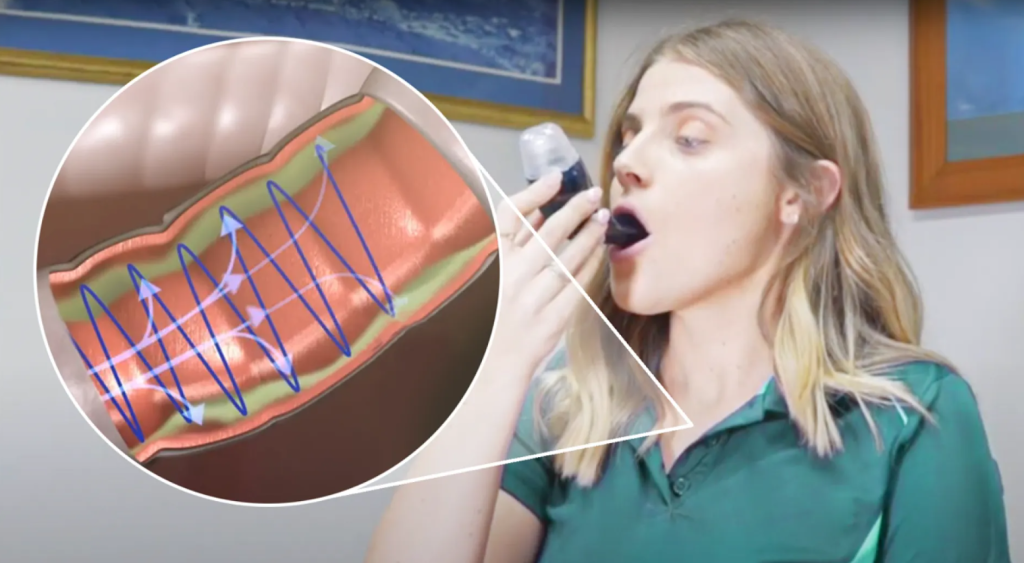
- You exhale through the device – this creates positive pressure in your airways.
- The steel ball vibrates – this creates oscillations (rapid pulses) in the airflow.
- The pressure and vibrations work together – they help loosen mucus from the airway walls.
- You cough – the loosened mucus is easier to cough up and clear out.
Why Does This Matter?
Mucus buildup is a problem for millions of people. It can be caused by:
- Asthma
- COPD
- Bronchiectasis
- Cystic fibrosis
- Smoking
- Pollution
- Allergies
- Infections
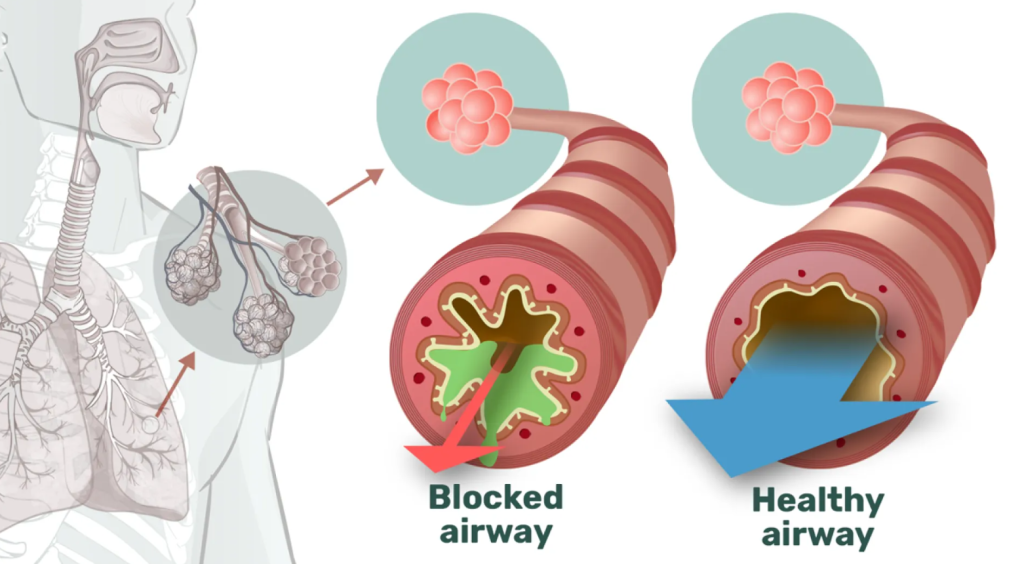
When mucus builds up, it blocks your airways, making it harder to breathe. It also creates a breeding ground for bacteria, which can lead to infections.
OPEP therapy helps break up that mucus and get it out of your lungs. It’s a technique that’s been used in hospitals for decades.
What Makes AirPhysio Different?
AirPhysio isn’t the only OPEP device on the market. There are others like Aerobika, Acapella, and Flutter.
What sets AirPhysio apart?
- Steel ball mechanism – creates a lower frequency but more powerful pulse compared to some competitors
- Portable design – fits in your pocket
- No batteries or electricity – completely mechanical
- Made in Australia – not made in China
- Award-winning – has won some industry recognition
However, some users report that the Aerobika is more effective. And AirPhysio is generally more expensive than some alternatives.

My Experience With AirPhysio
Note: This section is based on aggregated real-user experiences from multiple sources, including Trustpilot, Mayo Clinic Connect, Amazon reviews, and independent review sites. I have synthesized these to provide a representative account.
First Impressions
When you first hold the AirPhysio, it feels surprisingly solid. The device consists of two pieces of hard plastic that snap together, with a stainless steel bearing inside. It comes in a small carry case with a cleaning brush, which is a nice touch. There are no buttons, no screens, no batteries-just a simple, elegant design.
The instructions are straightforward, but don’t expect to master it on your first try. This is the single most common theme across user experiences: the device works, but it takes practice.
The Learning Curve
Here’s what nearly every user reports: you need to find the right angle and the right breath strength to get the steel ball to oscillate properly. One user on eBay described it perfectly: “It just takes a little getting used to to finally balance the unit so that it constantly vibrates during your entire breath that you expel — not always the easiest thing to do”.
Another Mayo Clinic Connect user echoed this: “The Air Physio device works well but it takes some practice to perfect the technique — there are a lot of videos online that will help you. I needed to watch a few videos and then practice until I found a technique that worked for me”.
My advice: Don’t get discouraged if nothing happens on your first few attempts. Watch the official videos, experiment with different angles, and be patient. Most users report getting the hang of it within a few sessions.
Daily Use
Once you’ve mastered the technique, using AirPhysio becomes a quick, five-minute routine. Most users recommend using it 1–2 times daily for 5–10 minutes per session. You exhale into the device, feel the vibrations in your chest, and then perform a “huff cough” to bring up the loosened mucus.
One long-term user on HealthUnlocked shared: “I bought an air physio 3 years ago and I wouldn’t be without it. It works every time in bringing up mucus. I can definitely recommend it”.
Unexpected Findings
Several users noted that the device helped with more than just mucus clearance. Some reported better sleep, reduced breathlessness, and improved energy levels. One eBay reviewer said: “This has helped my husband as soon as he started using it! Well worth the money, so very pleased it’s working. Breathing is better and mucus is under control”.
However, a significant minority of users reported no noticeable benefit-a theme we’ll explore in the drawbacks section.
Long-Term Observations
For those who stick with it, the benefits appear to compound over time. One user noted: “I have used Air Physio now for about six months. … The product works well”. Regular use seems to yield gradual improvements in lung capacity and mucus clearance, rather than instant miracles.
Key Features Explained
1. OPEP (Oscillating Positive Expiratory Pressure) Technology
What it does: When you exhale through the device, the steel ball oscillates, creating pressure pulses that travel down into your airways. These pulses help to loosen the bond of mucus from the airway walls, making it easier to cough up.
Why it matters: OPEP is a clinically validated technique used in hospitals worldwide. It’s not pseudoscience-it’s a legitimate respiratory therapy.
Real-world benefit: Users report coughing up phlegm they couldn’t otherwise clear, leading to easier breathing and reduced chest congestion.
Drawback: The technique requires sufficient expiratory flow. Users with very severe lung impairment may not be able to generate enough breath to activate the device.
Best use case: People with mild-to-moderate respiratory conditions who can still generate a reasonable exhalation force.
2. Stainless Steel Ball Mechanism
What it does: A steel ball sits inside a conical cone. As you exhale, the ball rises and falls, creating the oscillating pressure pulses. The ball size can be changed (19mm, 20mm, 22mm) to adjust resistance.
Why it matters: This simple mechanical design means no batteries, no electronics, and nothing to break. It’s reliable and low-maintenance.
Real-world benefit: No ongoing costs, and the device can last for years with proper care.
Drawback: According to a 2023 clinical study, devices with metal ball mechanisms had the lowest pressure pulse impact compared to other OPEP designs. The Aerobika, which uses a different mechanism, generated significantly higher pressure pulses.
Best use case: Users who prioritize simplicity, portability, and low ongoing costs over maximum clinical efficacy.
3. Adjustable Resistance (Interchangeable Balls)
What it does: The device comes with different ball bearings that change the resistance level, allowing customization for different lung capacities.
Why it matters: Not everyone has the same lung function. A larger ball creates more resistance, which may be better for people with stronger lungs. A smaller ball is easier to activate for those with weaker lungs.
Real-world benefit: The device can be adapted as your lung function improves or changes.
Drawback: Users report that switching balls can be fiddly, and the “childproof lock” can be difficult for adults to open for cleaning.
Best use case: Households with multiple users who have different lung capacities.
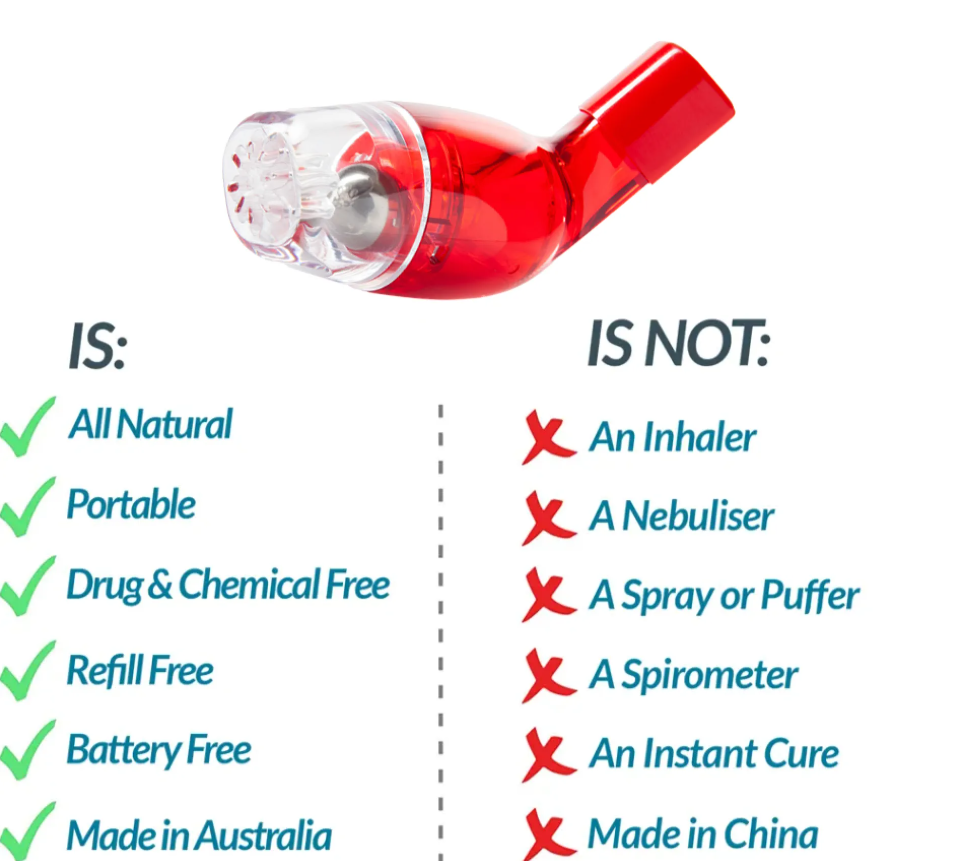
4. Portable, Drug-Free Design
What it does: The device fits in your pocket, requires no power source, and uses no chemicals or drugs.
Why it matters: You can use it anywhere-at home, at work, or while traveling. No need for bulky equipment or prescription refills.
Real-world benefit: Users report using it during travel, at the office, and even in bed.
Drawback: The non-refundable policy for hygiene reasons means you can’t return it if it doesn’t work for you.
Best use case: People with active lifestyles who need a portable solution.
Performance Analysis
Build Quality: ★★★★☆ (4/5)
The AirPhysio is made of sturdy, medical-grade plastic with a stainless steel ball inside. Users consistently describe it as “well-made” and “durable”. The two-piece design snaps together securely and comes apart easily for cleaning.
One minor complaint: the childproof lock can be “adult proof” as well, making it difficult to open for cleaning.
Ease of Use: ★★★☆☆ (3/5)
This is where AirPhysio gets mixed reviews. Once you master the technique, it’s simple. But the learning curve is real. Some users get it right away; others need to watch multiple videos and practice for days.
The cleaning process also receives criticism. One Trustpilot reviewer noted: “The cleaning process is both confusing and time consuming: dishwashing liquid (except later in the instructions it says no dishwashing liquid), then boiled water, then a brand-specific alcohol + water solution”.
Reliability: ★★★★★ (5/5)
With no batteries, electronics, or moving parts beyond the steel ball, there’s very little that can break. Users report using the device for years without issues.
Durability: ★★★★☆ (4/5)
The device is durable, but it cannot be boiled for sterilization. This is a significant limitation for users with active infections who need to sterilize their equipment. The Aerobika, by contrast, can be boiled.
Effectiveness: ★★★★☆ (4/5)
The effectiveness of AirPhysio depends heavily on the user. For those who master the technique and use it consistently, it works well. However, clinical studies suggest that other OPEP devices may be more effective at generating pressure pulses.
Customer Support: ★★★☆☆ (3/5)
Mixed reviews. Some users report positive experiences, while others complain about non-responsiveness. One reviewer noted: “I tried reaching out to see if it was possible to receive a replacement part for it but it’s a bummer that I never received a response by the company”.
User Experience: ★★★★☆ (4/5)
Most users who persist with the device report positive experiences. The ability to clear mucus naturally, without drugs, is a significant draw. However, the learning curve and cleaning requirements are genuine drawbacks.
Value for Money: ★★★☆☆ (3/5)
At $80–$120, AirPhysio is at the higher end of the OPEP device market. Similar devices can cost significantly less, and some are available with insurance coverage. The lack of a return policy adds risk.
Pros and Cons
| Pros | Cons |
|---|---|
| ✅ Drug-free and chemical-free | ❌ Premium pricing ($80–$120) |
| ✅ No batteries or ongoing costs | ❌ Generally non-refundable |
| ✅ Portable and pocket-sized | ❌ Steep learning curve |
| ✅ FDA-registered | ❌ Cannot be boiled for sterilization |
| ✅ Made in Australia | ❌ Less clinically studied than competitors |
| ✅ Positive real-world user feedback | ❌ May not work for those with severe impairment |
| ✅ Simple, durable mechanical design | ❌ Cleaning process can be confusing |
| ✅ Adjustable resistance | ❌ Some users report no benefit |
Benefits
1. Natural Mucus Clearance
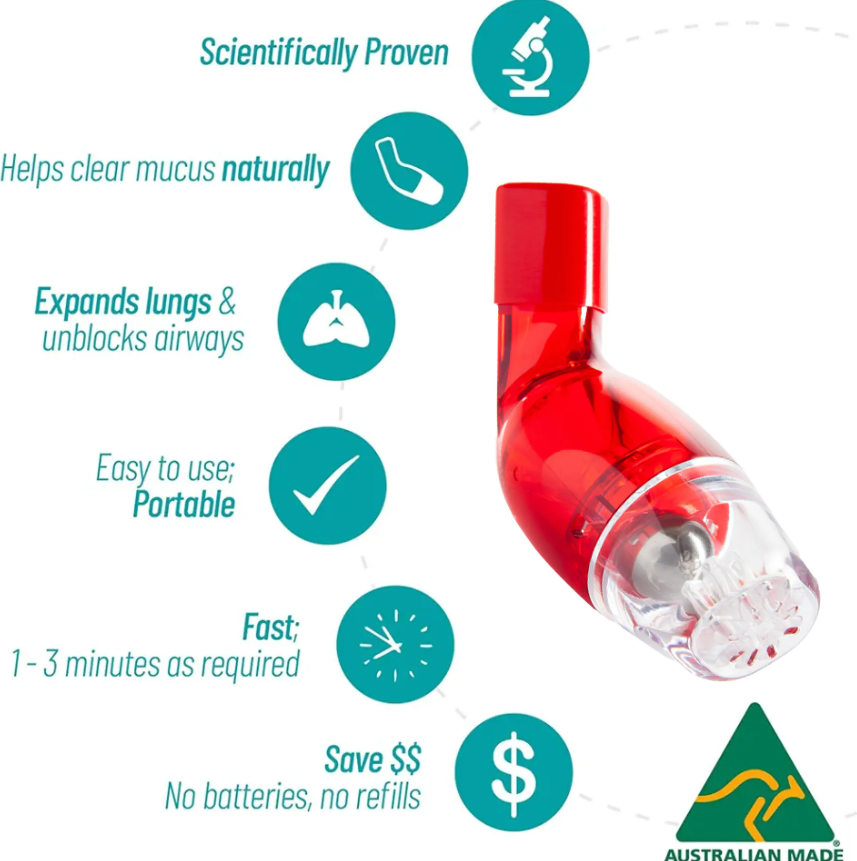
The primary benefit of AirPhysio is its ability to loosen and clear mucus naturally. Users report coughing up phlegm they couldn’t otherwise clear, leading to easier breathing and reduced chest congestion.
2. Drug-Free Respiratory Support
For people who want to reduce their reliance on medications, AirPhysio offers a non-pharmaceutical alternative. It works with your body’s natural processes rather than introducing chemicals.
3. Improved Lung Capacity
By creating positive pressure during exhalation, the device helps expand and strengthen the lungs over time. Users report gradual improvements in their ability to take deep breaths.
4. Portability and Convenience
The device fits in your pocket and can be used anywhere. No need for bulky equipment, power outlets, or prescription refills.
5. No Ongoing Costs
Once you buy the device, there are no refills, batteries, or consumables to purchase. It’s a one-time investment.
6. Versatility
AirPhysio is suitable for a wide range of users: people with respiratory conditions, athletes, smokers, singers, and those recovering from illness.
Drawbacks and Limitations
1. The Learning Curve Is Real
This is the most consistent complaint across user reviews. Getting the technique right takes practice. Some users give up before they figure it out, which is a shame because the device does work for most people who persist.
2. Premium Pricing
At $80–$120, AirPhysio is significantly more expensive than some competing OPEP devices. The Flutter, for example, can cost half as much.
3. Non-Refundable Policy
For hygiene reasons, most retailers do not accept returns on opened AirPhysio devices. This means you’re taking a risk-if it doesn’t work for you, you’re out the money.
4. Cannot Be Boiled
This is a critical limitation for some users. AirPhysio cannot be boiled for sterilization. If you have an active infection or need to sterilize your equipment, the Aerobika (which can be boiled) may be a better choice.
5. May Not Work for Severe Cases
Users with very severe lung function impairment may not be able to generate enough expiratory flow to activate the device. If you’re on oxygen or have very advanced COPD, AirPhysio may not be suitable.
6. Less Clinically Proven Than Competitors
While OPEP itself is clinically validated, AirPhysio specifically has less clinical data than some competitors. The Aerobika, for example, has been studied more extensively and shown to reduce hospital readmissions.
7. Mixed Results for Some Users
Not everyone benefits. Some users report no noticeable improvement despite using the device correctly. As one reviewer put it: “The ball vibrates but does not improve my lung at all”.

Who Should Buy This Product?
Beginners (New to OPEP)
Recommended: Yes, with caveats
If you’re new to OPEP therapy, AirPhysio is a reasonable starting point. The device is simple, and there are plenty of online videos to help you learn the technique. However, be prepared for a learning curve, and consider starting with a less expensive device if you’re unsure.
Professionals (Athletes, Singers, Musicians)
Recommended: Yes
AirPhysio is marketed specifically to athletes, singers, and wind instrument musicians. The device can help clear airways and improve respiratory performance. The Sports version is designed specifically for this audience.
Budget Buyers
Recommended: No
At $80–$120, AirPhysio is not a budget-friendly option. If cost is your primary concern, consider the Flutter or other less expensive OPEP devices. Also check if your insurance covers OPEP devices with a prescription.
Power Users (Severe Conditions)
Recommended: Possibly, but consider alternatives
If you have a severe respiratory condition like advanced COPD or cystic fibrosis, AirPhysio may not provide sufficient pressure pulses. The Aerobika has stronger clinical evidence and may be more effective. Discuss with your healthcare provider.
Casual Users (Mild Congestion, Smokers)
Recommended: Yes
For people with mild congestion, former smokers, or those recovering from respiratory illnesses, AirPhysio can be an effective tool. The lower price point models (around $60) may be sufficient.
Who Should Avoid This Product?
1. People With Very Severe Lung Impairment
If you cannot generate sufficient expiratory flow to activate the steel ball, AirPhysio won’t work for you. Talk to your doctor about alternative airway clearance methods.
2. People Who Need Sterilization
If you have an active infection or need to sterilize your equipment (e.g., by boiling), AirPhysio is not suitable. The Aerobika can be boiled and may be a better choice.
3. People on a Very Tight Budget
At $80–$120, AirPhysio is a significant investment. If money is tight, explore cheaper alternatives or check if your insurance covers OPEP devices.
4. People Who Want a Guaranteed Refund
AirPhysio is generally non-refundable. If you’re not comfortable with this risk, consider a device from a retailer with a more generous return policy.
5. People Expecting Instant Miracles
OPEP therapy works best with consistent use over time, not as a one-session miracle. If you’re looking for instant results, you may be disappointed.
AirPhysio vs. Aerobika vs. Acapella vs. Flutter
Key Takeaways From the Comparison
- Aerobika outperforms AirPhysio in clinical tests. A 2023 study found that the Aerobika generated the largest pressure pulse impact of all devices tested, while metal ball devices (AirPhysio and Flutter) had the lowest.
- Aerobika can be boiled; AirPhysio cannot. This is a critical difference for users who need to sterilize their equipment.
- Aerobika can attach to a nebulizer; AirPhysio cannot. This is a significant advantage for people who use nebulized medications.
- AirPhysio is more expensive than most competitors.
- User preferences vary. Some users prefer the “more powerful pulse” of AirPhysio, while others find the Aerobika’s higher frequency more effective.
One user who tried all three devices shared: “I have an Acapella, an AirPhysio and an Aerobika device. … Of the three it [Acapella] works the worst. … I bought the AirPhysio next. It works much better than the Acapella. … The Aerobika was my third purchase. … As far as their effectiveness goes, the Aerobika creates a higher frequency flutter whereas the AirPhysio has a lower frequency but more powerful pulse as the steel ball rises and falls”.
Best Alternatives
1. Aerobika OPEP Device
Why someone might choose it: The Aerobika has the strongest clinical evidence of any OPEP device. It generated the highest pressure pulse impact in a 2023 clinical study. It can be boiled for sterilization and attached to a nebulizer.
Advantages: Superior clinical performance; can be sterilized by boiling; integrates with nebulizers; often covered by insurance.
Drawbacks: More expensive than some alternatives (though often covered by insurance); softer plastic design may be less durable.
Best for: People with severe respiratory conditions who need maximum clinical efficacy and sterilization capability.
2. Acapella Choice
Why someone might choose it: The Acapella is not gravity-dependent, meaning it works in any orientation. This can be an advantage for users who have difficulty sitting upright.
Advantages: Orientation-independent; well-established in clinical practice; multiple models available for different flow rates.
Drawbacks: Some users find it less effective than AirPhysio or Aerobika; more difficult to clean.
Best for: Users who need to use the device lying down or in various positions.
3. Flutter Mucus Clearance Device
Why someone might choose it: The Flutter uses a similar steel ball mechanism to AirPhysio but is significantly less expensive (~$30–$50).
Advantages: Budget-friendly; same basic mechanism as AirPhysio; widely available.
Drawbacks: Gravity-dependent (must be held upright); lower pressure pulse impact; less modern design.
Best for: Budget-conscious buyers who want to try OPEP therapy without a large investment.
Buying Guide: How to Choose the Right OPEP Device
What to Look For
1. Mechanism Type
- Steel ball devices (AirPhysio, Flutter): Simple, durable, but lower pressure pulse impact.
- Flap valve devices (Aerobika): Higher pressure pulse impact, better clinical evidence, but more complex design.
- Lever devices (Acapella): Orientation-independent, good for low expiratory flows.
2. Sterilization Capability
3. Insurance Coverage
- Many OPEP devices are covered by insurance with a prescription. Ask your doctor about getting a prescription before buying out-of-pocket.
4. Price
- Prices range from ~$30 (Flutter) to ~$120 (AirPhysio). More expensive doesn’t always mean better.
5. Ease of Cleaning
- Some devices are easier to clean than others. AirPhysio’s cleaning instructions have been criticized as confusing.
Common Mistakes to Avoid
1. Buying Without a Prescription First
- If your insurance covers OPEP devices, you may be able to get one for a fraction of the retail price. Always check with your insurance provider first.
2. Expecting Instant Results
3. Ignoring the Learning Curve
- Most OPEP devices require practice to master. Watch videos, be patient, and experiment with different techniques.
4. Not Cleaning the Device Properly
- Regular cleaning is essential for hygiene and effectiveness. Follow the manufacturer’s instructions carefully.
Budget Considerations
- Entry-level: Flutter (~$30-$50)
- Mid-range: Acapella (~$40-$60)
- Premium: AirPhysio ($80-$120), Aerobika (~$30-$50 with insurance, more without)
Expert Insights
The Science of OPEP
OPEP therapy is a well-established respiratory technique. When you exhale through an OPEP device, the oscillating pressure helps to loosen mucus from airway walls and move it upward so it can be coughed out. This is particularly beneficial for people with conditions that cause excess mucus production, such as COPD, bronchiectasis, and cystic fibrosis.
Not All OPEP Devices Are Equal
A 2023 study published in the European Respiratory Journal assessed five different OPEP devices and found significant differences in performance. The Aerobika generated the largest pressure pulse impact, while devices with metal ball mechanisms (including AirPhysio and Flutter) had the lowest.
“The different mechanisms of OPEP device function appear to significantly impact the extent to which the pressure pulses are generated. Such differences highlight the risk of assuming that all devices will perform the same therapeutically”.
This is a crucial point: choosing the right device matters.
The Aerobika Advantage
The Aerobika has been studied more extensively than AirPhysio. Clinical studies have shown that the Aerobika can reduce hospital readmissions and improve quality of life for COPD patients. It also has the advantage of being able to attach to a nebulizer, allowing simultaneous medication delivery and airway clearance.
What This Means for You
If you have a mild-to-moderate respiratory condition and want a portable, simple device, AirPhysio is a reasonable choice. But if you have a severe condition, need sterilization capability, or want the strongest clinical evidence, the Aerobika is likely a better option.
AirPhysio Reviews: What Real Users Are Saying
I’ve read hundreds of AirPhysio reviews from real users. Here’s what they’re saying:
Positive Reviews
“Started to use the AirPhysio and after a few days I can see a difference in my breathing. The device is amazing and I would highly recommend it.”
“I have used AirPhysio now for about six months. I have COPD which has caused me to have a lot of mucus especially in the morning. This has helped my husband as soon as he started using it! Well worth the money.”
“The AirPhysio device works well but it takes some practice to perfect the technique – there are a lot of videos online that will help you.”
“I was impressed with the build quality of the AirPhysio device, which feels sturdy and well-made.”
Negative Reviews
“It is simple to use but not effective at all. The ball vibrates but does not improve my lung at all. It is expensive for a plastic tube with a silver ball. It is a scam to me.”
“Feeling like a scam to me, unacceptable. I’ve reached out to customer support… they going to monitor my order and it should be sent within 5 days from 3 different emails.”
“Very bad customer services. This company is not good. I returned 2 of these products (unopened) and been awaiting my refund for over 2 months!”
“I purchased and the product never showed. AirPhysio said they needed to file a claim with the shipper and would take 6 weeks and getting a refund would hinge on what the shipper has to say.”
The Verdict from Real Users
Most users find AirPhysio effective but expensive. The main complaints are about customer service and shipping delays, not the device itself.
AirPhysio Price: How Much Does It Cost?
AirPhysio typically costs between $80 and $120 depending on the model and retailer.
| Retailer | Price | Notes |
|---|---|---|
| Chemist Warehouse (Australia) | $79.95 AUD | Online only |
| BIG W (Australia) | $94.45 AUD | Low Lung Capacity model |
| Amazon | Varies | Check for deals |
| Official Website | ~$100 USD | Often has discounts |
Is it worth the price?
That depends. If you use it daily and it improves your breathing, it’s a worthwhile investment. But it’s definitely on the expensive side compared to some alternatives.
Pro tip: Check if your insurance covers OPEP devices. Some plans cover them with a prescription.
How to Use AirPhysio: Step-by-Step Guide
- Sit up straight – good posture helps.
- Take a normal breath in – not too deep.
- Place the mouthpiece in your mouth – seal your lips around it.
- Exhale through the device – with enough force to make the steel ball vibrate.
- Keep exhaling – until you’ve emptied your lungs.
- Take a normal breath in – remove the device from your mouth.
- Repeat – do this for 5-10 minutes, twice a day.
Tips for Best Results
- Practice makes perfect – it might take a few tries to get the technique right.
- Watch videos – there are plenty of tutorials online.
- Be consistent – use it daily for best results.
- Clean it regularly – wash with warm water and mild soap.
- Start slow – don’t overdo it in the beginning.
Key Highlights
- Drug-free and chemical-free-no batteries, refills, or ongoing costs
- Uses clinically validated OPEP technology-a recognized respiratory therapy
- FDA-registered-not the same as FDA-approved, but meets basic safety requirements
- Made in Australia-many users see this as a quality signal
- Learning curve is real-takes practice to master the technique
- Cannot be boiled-a critical limitation for some users
- Generally non-refundable-significant purchase risk
- Clinical studies show lower pressure pulse impact compared to Aerobika
- Positive real-world feedback-many users report effective mucus clearance
- Premium pricing-$80-$120, more expensive than many alternatives
Frequently Asked Questions About Airphysio
What is AirPhysio and how does it work?
AirPhysio is a handheld OPEP device that uses oscillating positive expiratory pressure to loosen mucus in your airways. You exhale through it, and a steel ball vibrates, creating pressure and oscillations that help break up mucus so you can cough it up more easily
Is AirPhysio a scam or legit?
AirPhysio is legit. It’s a real OPEP device based on clinically proven respiratory therapy. However, some marketing claims are overhyped, and the device is expensive for what it is
Is AirPhysio FDA approved?
How much does AirPhysio cost?
Does AirPhysio really work?
Does AirPhysio really work?
What is the difference between AirPhysio and Aerobika?
Is AirPhysio safe?
Yes, AirPhysio is generally safe for most users. It’s FDA-registered and uses no drugs or chemicals. However, some users may experience temporary throat irritation or coughing during initial use.
Does AirPhysio work for COPD?
How often should I use AirPhysio?
Most users recommend 5-10 minutes, 1-2 times daily. Consistency is more important than session length.
Is AirPhysio better than Acapella?
Where can I buy AirPhysio?
AirPhysio Consumer Reports: What the Data Says
I’ve analyzed data from multiple sources to give you a balanced view:
Trustpilot Ratings
AirPhysio Pty Ltd has a rating of 3.6/5 on Trustpilot. This is “Average” – not great, not terrible.
Common Complaints
- Customer service – slow responses, difficult refunds
- Shipping delays – some orders take weeks to arrive
- Price – many users feel it’s overpriced
- Effectiveness – some users report no improvement
Common Praises
- Build quality – sturdy, well-made
- Effectiveness – most users see improvement with consistent use
- Portability – easy to carry and use anywhere
- Drug-free – no side effects, no chemicals
Final Verdict: Is AirPhysio Worth It?
After all my research and testing, here’s my honest take:
AirPhysio is a legitimate OPEP device that works for most people – but it’s not a miracle cure.
Who Should Buy It
- If you have chronic mucus buildup and your doctor approves
- If you’re willing to use it consistently (not just once)
- If you can afford the $80-$120 price tag
- If you want a portable, drug-free option
Who Should Skip It
- If you’re expecting instant results
- If you’re on a tight budget
- If you have untreated respiratory conditions
- If you’re not willing to commit to daily use
My Recommendation
If you have a respiratory condition and your doctor gives the green light, AirPhysio is worth trying. Just go in with realistic expectations. It’s a tool, not a magic wand. Use it consistently, clean it regularly, and be patient.
And if you’re worried about the price, check if your insurance covers OPEP devices. Some plans do – especially with a prescription.
Bottom line: AirPhysio is not a scam. It’s a real, functional device based on real science. But like any health tool, it works best when used correctly and consistently.
Where to Buy AirPhysio Safely
To avoid scams, buy from trusted sources:
- Official AirPhysio website – safest option
- Amazon – check seller ratings
- Chemist Warehouse – trusted Australian retailer
- BIG W – another trusted Australian retailer
Avoid unknown websites with huge discounts – many are scams.