
Coming home to spotless floors without lifting a finger sounds like a dream, right? Robot vacuum cleaners have transformed from expensive novelties into essential smart home devices that millions of households rely on daily.
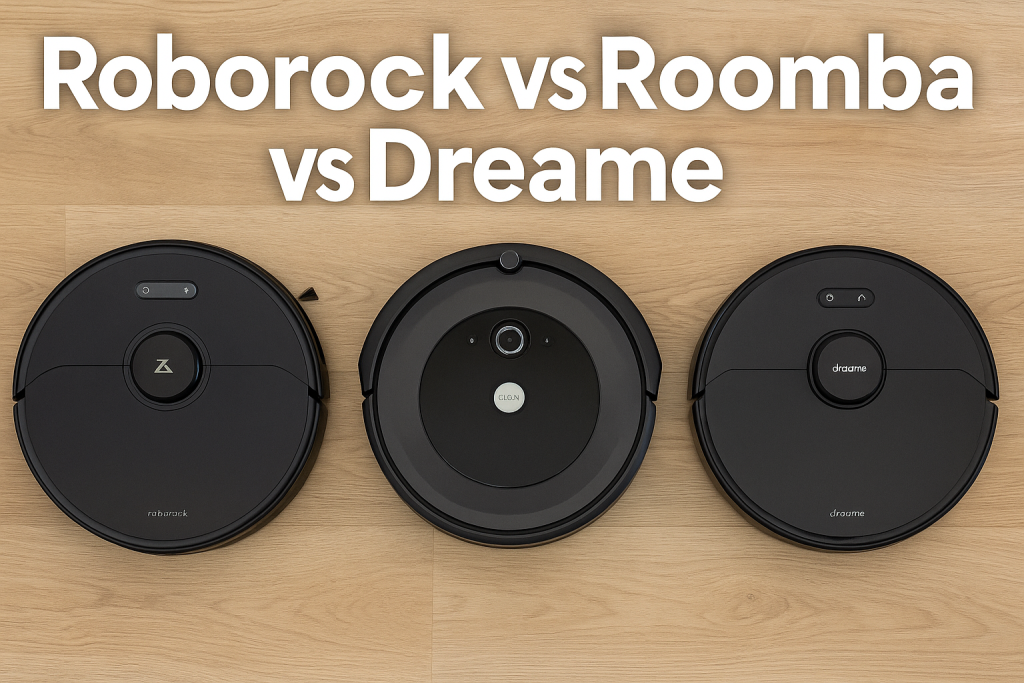
But here’s the challenge: with dozens of brands flooding the market, choosing the right robot vacuum can feel overwhelming. Three brands consistently dominate conversations among homeowners and tech enthusiasts: Roborock, Roomba (by iRobot), and Dreame.
Each brand brings something unique to your floors. Roborock impresses with cutting-edge navigation and powerful suction. Roomba offers decades of refinement and unmatched customer support. Dreame delivers premium features at competitive prices that challenge the status quo.
In this comprehensive comparison, we’ll break down everything you need to know about these three robot vacuum giants. You’ll discover which brand offers the best value for your specific needs, whether you’re dealing with pet hair, hardwood floors, thick carpets, or multi-level homes. By the end, you’ll know exactly which robot vacuum deserves a place in your home.
Understanding Robot Vacuum Technology: The Basics
Before diving into brand comparisons, let’s establish what makes modern robot vacuums so effective.
Core Components That Matter
Robot vacuum cleaners combine several technologies to clean your home autonomously:
Navigation Systems: Modern units use LiDAR (Light Detection and Ranging), cameras, or infrared sensors to map your home and plan efficient cleaning routes. This prevents random bumping and ensures complete floor coverage.
Suction Power: Measured in Pascals (Pa), suction strength determines how well the vacuum lifts dirt, debris, and pet hair from various floor types. Entry-level models offer 2,000-3,000 Pa, while premium units reach 6,000-8,000 Pa or higher.
Brush Systems: Most robot vacuums feature a combination of side brushes for edges, a main roller brush for general cleaning, and some include rubber extractors that prevent hair tangles.
Smart Features: App connectivity, voice control compatibility, multi-floor mapping, no-go zones, and scheduled cleaning have become standard expectations rather than luxury features.
Understanding these fundamentals helps you evaluate what matters most for your cleaning needs.
Roborock: Innovation Meets Performance
Roborock entered the robot vacuum market in 2016 and quickly established itself as a technology leader. This Chinese manufacturer focuses on delivering advanced features at competitive price points.
What Makes Roborock Stand Out
Advanced LiDAR Navigation: Roborock models use precise laser navigation that creates detailed home maps faster than most competitors. The system plans optimal cleaning paths that reduce cleaning time while improving coverage.
Impressive Suction Power: Many Roborock models deliver 5,000-6,000 Pa of suction, with flagship models reaching even higher. This makes them particularly effective on carpets and for households with pets.
Mopping Capabilities: Roborock pioneered integrated mopping systems in robot vacuums. Their sonic mopping technology scrubs floors up to 3,000 times per minute, going beyond simple wiping to tackle dried stains.
Smart Features: The Roborock app offers extensive customization including room-specific cleaning schedules, carpet detection for automatic suction boost, and detailed cleaning reports.
Popular Roborock Models
The Roborock S8 Pro Ultra represents their premium tier with auto-emptying, auto-washing, and heated air drying for the mop. The S7 MaxV Ultra adds AI obstacle recognition with a front-facing camera. For budget-conscious buyers, the Q series provides solid performance without breaking the bank.
Roborock Strengths
- Excellent navigation accuracy and speed
- Powerful suction across all price ranges
- Innovative mopping technology
- Regular software updates that add features
- Strong value proposition for features offered
Roborock Considerations
- Customer service can be inconsistent compared to established brands
- Some users report app connectivity issues
- Fewer authorized repair centers in certain regions
- Learning curve for advanced features
Roomba: The Trusted Pioneer
iRobot launched the first Roomba in 2002, making them the household name in robot vacuums. With over two decades of experience, Roomba built its reputation on reliability and continuous improvement.
The Roomba Advantage
Proven Reliability: Roomba’s long market presence means they’ve solved problems that newer competitors are still encountering. Their durability often exceeds warranty expectations.
Superior Obstacle Avoidance: Recent Roomba models with PrecisionVision navigation excel at identifying and avoiding small objects like cables, socks, and pet waste. This prevents the dreaded “stuck robot” scenario.
Excellent Customer Support: iRobot maintains extensive customer service networks, readily available replacement parts, and comprehensive warranty support that gives buyers peace of mind.
Dirt Detect Technology: Roomba’s proprietary sensors identify dirtier areas and automatically spend more time cleaning those spots, something that feels intuitive rather than just following a programmed pattern.
Notable Roomba Models
The Roomba j7+ and j9+ feature advanced AI-powered obstacle avoidance with a front camera. The Combo series adds mopping functionality. The i3+ serves budget-conscious buyers who want auto-emptying without premium pricing.
Roomba Strengths
- Industry-leading reliability and build quality
- Best-in-class obstacle avoidance technology
- Exceptional customer service and support network
- User-friendly setup and operation
- Strong resale value
Roomba Considerations
- Generally more expensive than competitors with similar specs
- Lower suction power compared to Roborock and Dreame
- Mopping features lag behind competitors
- Bulkier design takes more storage space
- Some models lack advanced mapping features
Dreame: The Rising Challenger
Dreame Technology launched in 2017 and has rapidly gained market share by offering premium features at aggressive prices. Backed by Xiaomi’s ecosystem, Dreame targets tech-savvy consumers who want cutting-edge capabilities.
Dreame’s Competitive Edge
Exceptional Suction Power: Dreame regularly pushes boundaries with models offering 7,000 Pa or more. Their flagship units compete with the most powerful vacuums in any category.
AI-Powered Recognition: Dreame invests heavily in artificial intelligence for obstacle detection and object recognition. Their models can identify dozens of object types and adapt cleaning strategies accordingly.
Comprehensive Automation: High-end Dreame units feature auto-emptying, auto-washing mop pads, automatic detergent dispensing, and self-cleaning base stations that minimize user intervention.
Aggressive Pricing: Dreame consistently undercuts Roborock and especially Roomba on price while offering comparable or superior specifications.
Popular Dreame Models
The Dreame L10s Ultra combines powerful suction with comprehensive auto-maintenance features. The Dreame D10 Plus offers excellent value in the mid-range segment. Their X series represents the cutting edge of robot vacuum technology.
Dreame Strengths
- Outstanding value for money
- Powerful suction performance
- Advanced AI obstacle detection
- Comprehensive all-in-one base stations
- Frequent feature updates via software
Dreame Considerations
- Newer brand with less established reputation
- Customer service still developing in some markets
- Less available in physical retail stores
- Some models require Xiaomi app ecosystem
- Fewer third-party accessories and replacement parts
Head-to-Head Comparison: Key Features
Let’s compare these three brands across the features that matter most to buyers.
Navigation and Mapping
| Feature | Roborock | Roomba | Dreame |
|---|---|---|---|
| Technology | LiDAR | Camera + Sensors | LiDAR + AI Camera |
| Mapping Speed | Fast | Moderate | Fast |
| Multi-Floor Maps | Yes (4+ maps) | Yes (up to 10) | Yes (4+ maps) |
| Real-Time Updates | Yes | Limited | Yes |
| Obstacle Avoidance | Good | Excellent | Very Good |
Roomba wins for obstacle avoidance reliability, particularly avoiding pet waste. Roborock and Dreame tie for mapping speed and efficiency.
Cleaning Performance
| Aspect | Roborock | Roomba | Dreame |
|---|---|---|---|
| Suction Power | 5,000-6,000 Pa | 2,000-4,000 Pa | 6,000-7,000+ Pa |
| Carpet Performance | Excellent | Good | Excellent |
| Hard Floor Cleaning | Excellent | Very Good | Excellent |
| Pet Hair Handling | Excellent | Very Good | Excellent |
| Edge Cleaning | Very Good | Good | Very Good |
Dreame leads in raw suction power, followed closely by Roborock. Roomba’s lower suction still delivers effective cleaning through smart algorithms and brush design.
Mopping Capabilities
| Feature | Roborock | Roomba | Dreame |
|---|---|---|---|
| Mopping Available | Yes (most models) | Yes (Combo series) | Yes (most models) |
| Mopping Technology | Sonic vibration | Basic wiping | Rotating pads |
| Auto-Washing Mop | Premium models | No | Premium models |
| Mop Lifting | Yes | Yes | Yes |
| Overall Mopping | Excellent | Basic | Very Good |
Roborock leads mopping innovation with sonic vibration technology. Dreame offers solid mopping with rotating pads. Roomba’s mopping remains basic compared to competitors.
Smart Home Integration
All three brands support Amazon Alexa and Google Assistant voice control. Roborock and Dreame integrate well with broader smart home ecosystems including Apple HomeKit on select models. Roomba works seamlessly with other iRobot products but has fewer third-party integrations.
Maintenance and Upkeep
Roborock: Requires regular emptying of dustbins (unless auto-empty model), mop pad cleaning, and filter replacement every 2-3 months. Parts are readily available online.
Roomba: Similar maintenance schedule but with easier access to replacement parts through retail and online channels. Brushes designed to resist hair tangles reduce maintenance frequency.
Dreame: Comparable maintenance needs with auto-maintenance stations handling much of the work on premium models. Replacement parts increasingly available as brand grows.
Price and Value Analysis
Understanding what you get at different price points helps identify the best value.
Entry-Level ($300-$500)
Roborock: Q series offers solid performance with basic mapping and good suction.
Roomba: i3/i4 series provides reliable cleaning with basic smart features.
Dreame: D9/D10 series delivers impressive specs including strong suction and mapping at aggressive prices.
Winner: Dreame offers the most features per dollar in this segment.
Mid-Range ($500-$800)
Roborock: S7/S8 series brings advanced mopping, excellent navigation, and strong suction.
Roomba: j7 series adds obstacle avoidance and smarter navigation with proven reliability.
Dreame: L10s series provides premium features including auto-empty and powerful cleaning.
Winner: Tie between Roborock and Dreame depending on whether you prioritize mopping innovation or overall feature completeness.
Premium ($800-$1,500+)
Roborock: S8 Pro Ultra offers comprehensive automation with sonic mopping and excellent cleaning.
Roomba: j9+ Combo delivers top-tier obstacle avoidance with mopping in a reliable package.
Dreame: X series pushes boundaries with maximum suction, AI features, and automation.
Winner: Roborock for most buyers seeking balanced excellence. Roomba for those prioritizing reliability over specifications.
Long-Term Value Considerations
Total Cost of Ownership: Factor in replacement brushes, filters, and mop pads over 3-5 years. Roomba’s parts cost more but last longer. Roborock and Dreame offer cheaper consumables but may need replacement more frequently.
Resale Value: Roomba maintains the strongest resale value due to brand recognition. Roborock holds value reasonably well. Dreame’s newer presence means less established resale market.
Warranty and Support: Roomba offers superior warranty service. Roborock provides adequate support. Dreame’s support network continues improving but lags established brands.
Best Robot Vacuum for Different Needs
Every home has unique requirements. Here’s guidance for common scenarios.
Best for Pet Owners
Winner: Roborock S7/S8 Series
Pet households need powerful suction and tangle-resistant brushes. Roborock combines 5,000+ Pa suction with rubber brushes that handle pet hair exceptionally well. The mopping feature cleans paw prints and dander effectively. Roomba’s obstacle avoidance prevents pet waste encounters, making it a close second.
Best for Large Homes
Winner: Dreame L10s Ultra
Large spaces demand efficient navigation and long battery life. Dreame models offer extended runtime, quick charging, and fast mapping that covers expansive floor plans efficiently. Auto-empty stations mean the vacuum handles extended cleaning sessions without intervention.
Best for Carpets
Winner: Dreame X Series
Deep carpet cleaning requires maximum suction power. Dreame’s 7,000+ Pa suction provides the strongest carpet performance in this comparison. Roborock follows closely with excellent carpet detection and automatic suction boost.
Best for Hard Floors and Mopping
Winner: Roborock S8 Pro Ultra
If mopping matters as much as vacuuming, Roborock’s sonic vibration technology delivers superior results. The automatic mop washing and drying system keeps pads clean and prevents mildew. This makes it ideal for homes with mostly hard flooring.
Best for Reliability and Support
Winner: Roomba j7+/j9+
When peace of mind matters most, Roomba’s proven track record and exceptional customer service justify the premium. You’re buying two decades of refinement and a support network that resolves issues quickly.
Best Budget Option
Winner: Dreame D10 Plus
Tight budget doesn’t mean sacrificing quality. Dreame’s entry and mid-range models pack impressive specifications at prices that undercut competitors. You’ll get mapping, strong suction, and smart features without breaking the bank.
Best for Smart Home Enthusiasts
Winner: Roborock S Series
Tech-savvy users appreciate Roborock’s extensive app customization, regular software updates, and broad smart home compatibility. The detailed mapping and scheduling options satisfy those who want complete control over their cleaning routines.
Real User Experiences and Common Concerns
Understanding what actual owners experience provides valuable perspective beyond specifications.
What Roborock Owners Say
Positive Feedback: Users consistently praise navigation accuracy, cleaning thoroughness, and feature-rich apps. The mopping capability exceeds expectations for daily maintenance cleaning. Value for money receives frequent mentions.
Common Complaints: Some users report Wi-Fi connectivity issues requiring router adjustments. Customer service response times vary by region. A few note that brushes need more frequent cleaning than expected with long pet hair.
What Roomba Owners Say
Positive Feedback: Reliability stands out as the most common praise. Users appreciate the “set it and forget it” nature of their Roombas. Customer service receives glowing reviews. Obstacle avoidance prevents common frustrations other brands face.
Common Complaints: The higher price point feels steep compared to competitors’ specifications. Lower suction power means extra passes on deep carpets. Mopping features feel basic compared to dedicated mopping robots.
What Dreame Owners Say
Positive Feedback: Performance per dollar impresses most buyers. Powerful suction handles challenging messes effectively. Feature-rich models rival anything on the market. Tech enthusiasts love the AI capabilities.
Common Complaints: Brand awareness and trust building takes time. Customer service availability varies by location. Some users note that aggressive features can be overwhelming for those wanting simple operation.
Making Your Decision: A Practical Framework
Choose your robot vacuum using this straightforward decision framework.
Step 1: Define Your Budget
Determine your comfortable spending range including potential accessories and extended warranties. Remember that premium models reduce hands-on maintenance time.
Step 2: Identify Must-Have Features
Create a list of non-negotiable features:
- Do you need mopping capability?
- Is powerful carpet cleaning essential?
- How important is obstacle avoidance?
- Do you want auto-empty functionality?
- Will multi-floor mapping serve you?
Step 3: Consider Your Home Environment
Evaluate your space honestly:
- Floor types and ratios (carpet vs hard flooring)
- Presence of pets and shedding levels
- Home size and number of levels
- Obstacle density (furniture, cords, toys)
- Storage space for charging stations
Step 4: Evaluate Brand Priorities
Rank what matters to you:
- Cutting-edge technology vs proven reliability
- Price vs premium features
- Customer support vs DIY troubleshooting
- Brand reputation vs newer innovation
Step 5: Read Recent Reviews
Technology improves constantly through software updates. Check reviews from the past 6-12 months rather than relying solely on launch reviews.
Maintenance Tips for Long-Term Performance
Maximize your robot vacuum’s lifespan and effectiveness with proper care.
Weekly Maintenance Tasks
Empty the dustbin after each cleaning cycle or every few days. Remove tangled hair from brushes and wheels. Wipe sensors with a dry microfiber cloth to maintain navigation accuracy.
Monthly Maintenance Tasks
Clean all brushes thoroughly by removing them and clearing debris. Wash mop pads or replace disposable pads. Check wheels for stuck debris. Wipe charging contacts on both the robot and base station.
Quarterly Maintenance Tasks
Replace filters according to manufacturer recommendations, typically every 2-3 months. Inspect side brushes for wear and replace if bristles appear damaged. Clean the dustbin compartment thoroughly. Update firmware through the app.
Creating a Maintenance Schedule
Set phone reminders for maintenance tasks. Most apps track brush and filter lifespan. Order replacement parts before you need them to avoid downtime. Keep maintenance supplies handy near the charging station.
Future of Robot Vacuum Technology
Understanding upcoming trends helps make forward-looking purchase decisions.
AI and Machine Learning Advances
Expect robot vacuums to become significantly smarter at identifying objects, understanding cleaning priorities, and adapting to household patterns. Future models may learn your preferences without explicit programming.
Enhanced Automation
The trend toward completely autonomous operation continues. Future base stations may handle more maintenance tasks, reducing user intervention even further.
Improved Cleaning Methods
Innovations in brush design, suction efficiency, and mopping technology will improve cleaning effectiveness while reducing energy consumption. UV sterilization and air purification features are expanding.
Better Integration
Deeper smart home integration means robot vacuums will coordinate with other devices. Imagine your robot starting its cleaning cycle when your smart lock indicates everyone left home.
Sustainability Focus
Manufacturers are increasingly emphasizing longer lifespans, repairable designs, and recyclable materials as environmental concerns influence buying decisions.
Conclusion: Your Path to Cleaner Floors
Choosing between Roborock, Roomba, and Dreame ultimately depends on your unique priorities and home environment.
Choose Roborock if you want excellent all-around performance with innovative mopping capabilities at competitive prices. It strikes the best balance for most households seeking advanced features without extreme cost.
Choose Roomba if reliability, customer support, and proven performance matter more than having the absolute latest technology. The peace of mind justifies the premium for many buyers.
Choose Dreame if you’re budget-conscious but refuse to compromise on specifications. You’ll get impressive performance and cutting-edge features at prices that challenge the market.
All three brands manufacture quality robot vacuums that will serve you well. The “best” option exists at the intersection of your needs, budget, and priorities.
Ready to transform your cleaning routine? Evaluate your home environment using the framework above, set your budget, and choose the brand that aligns with your priorities. Your future self will thank you every time you come home to spotlessly clean floors without lifting a finger.
FAQs About Top Robot Vacuum Cleaners
How long do robot vacuums typically last before needing replacement?
Quality robot vacuums from Roborock, Roomba, and Dreame typically last 4-6 years with proper maintenance. Battery lifespan becomes the limiting factor, usually requiring replacement after 2-3 years of regular use. High-end models with replaceable batteries and available parts can serve even longer. The brand’s parts availability and build quality significantly impact longevity, with Roomba generally offering the longest usable life due to superior parts availability and durability engineering.
Can robot vacuums handle transitions between different floor types effectively?
Modern robot vacuums from all three brands handle floor transitions well, including carpet to hardwood, tile to linoleum, and low-pile to high-pile carpet. They automatically adjust suction power when detecting carpet surfaces. However, extremely thick carpets, very high thresholds over 2cm, or shag rugs can present challenges. Models with larger wheels and threshold-climbing capabilities perform best with transitions. Most units handle standard home transitions without issue.
Do robot vacuums work well in homes with multiple levels?
Yes, but you have two options for multi-level homes. You can carry the robot between floors, with most models storing multiple floor maps for efficient navigation on each level. Alternatively, purchasing a robot for each level eliminates carrying and allows simultaneous cleaning. Roborock and Dreame typically store 4+ floor maps, while Roomba stores up to 10, making them all suitable for multi-story homes.
How much noise do these robot vacuums make during operation?
Robot vacuum noise levels range from 60-70 decibels, comparable to normal conversation or background television. Roborock and Dreame typically run slightly louder due to stronger suction but offer quiet modes sacrificing some power for reduced noise. Roomba models generally operate more quietly, especially in their standard modes. Most users find all three brands acceptable for daytime cleaning, though you might not want them running during important calls or while watching movies.
Are expensive robot vacuums worth the investment compared to traditional vacuums?
The value proposition depends on your lifestyle and priorities. Robot vacuums excel at maintenance cleaning, keeping floors consistently clean between deeper manual cleaning sessions. They’re particularly valuable for busy households, pet owners, and those with mobility limitations. Premium models with auto-empty and mopping features maximize convenience by minimizing hands-on time. However, they don’t completely replace traditional vacuums for deep cleaning carpets or reaching tight spaces. Consider them complementary tools that reduce but don’t eliminate traditional vacuuming needs.