
ZivoLife Review: I’ve spent way too much money on greens powders over the years.
Seriously – I’ve gone through at least half a dozen different brands. Big names. Podcast-sponsored ones. The kind with 47 ingredients on the label and a price tag that makes you wince a little every time you subscribe. And every single time, after a few weeks, I’d ask myself the same honest question:
Am I actually feeling anything? Or am I just hoping I am?
Most of the time? I couldn’t tell.
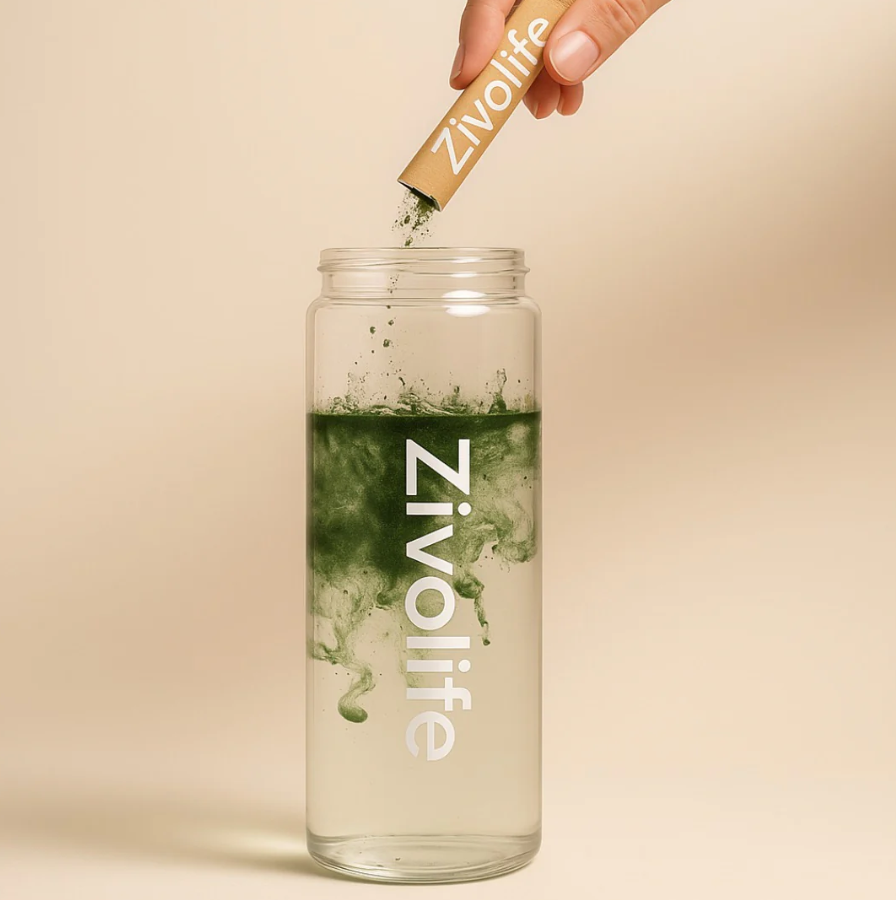
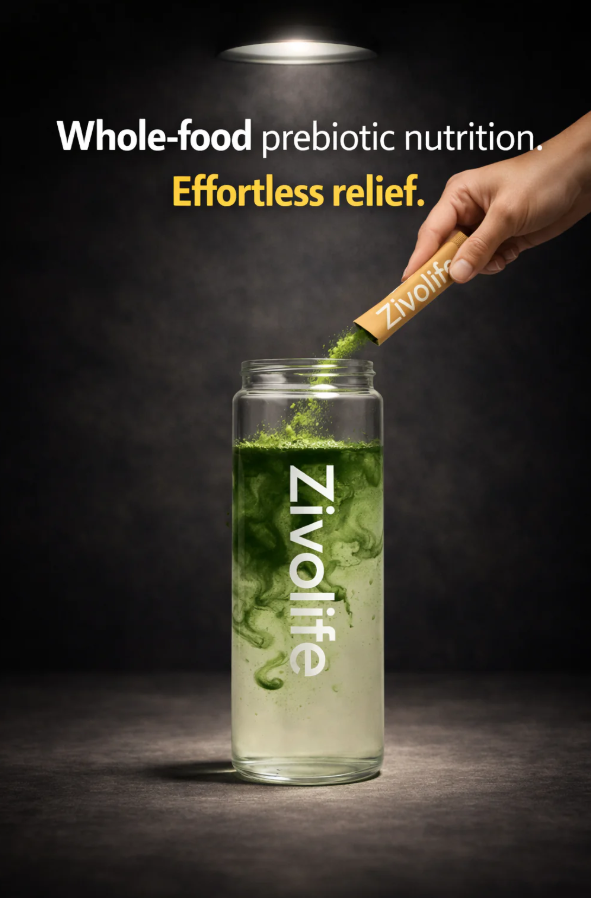
So when ZivoLife started appearing in my feeds – a single-ingredient superfood powder made from a 500-million-year-old plant – I was skeptical. Very skeptical. One ingredient? That’s it? That almost felt like a marketing trick.
But then I started reading. And then I started researching. And then I ordered a box.
This is my honest ZivoLife review. No fluff, no hype, just what I found after actually using it for 60 days alongside a fair amount of digging into what’s actually in it and whether the science holds up.
Quick Verdict: ZivoLife
| What it is | Single-ingredient whole-food powder made from Klebsormidium flaccidum var. ZL01 |
| Price | $69/month (subscription) · $99 one-time |
| Serving size | One stick pack per day, mixed into water |
| Best for | Gut health, sustained energy, natural nutrition, plant protein |
| Not ideal for | People wanting pre-workout-style performance boosters, or those on a very tight budget |
| Money-back guarantee | 30 days |
| Third-party tested | Yes – Eurofins Laboratories, every commercial lot |
| My rating | ⭐⭐⭐⭐½ (4.5/5) |
Best for:
- People who’ve tried greens powders and feel like they’re not doing anything
- Anyone with gut issues, low energy, or dull skin looking for a whole-food approach
- Health-conscious individuals who want simplicity and transparency over a 47-ingredient label
Not ideal for:
- Anyone looking for a high-stimulant energy boost (this is not a pre-workout)
- People who need an ultra-budget supplement option
- Those expecting overnight, dramatic results (this works over weeks, not days)
Overall Verdict: ZivoLife is the most genuinely different thing I’ve tried in the nutrition space in years. It’s not a gimmick. The single-ingredient philosophy is backed by real science, third-party lab testing, and a surprisingly high volume of consistent customer feedback. If you’ve been disappointed by overcomplicated greens powders, this is worth a serious look.

What Is ZivoLife, Exactly?
Let me break this down simply, because the science is genuinely interesting – and kind of wild, honestly.
ZivoLife is a whole-food nutritional powder made from a single organism: Klebsormidium flaccidum var. ZL01.
Now that name sounds like something out of a biology textbook, and that’s because it basically is. Klebsormidium flaccidum is not spirulina. It’s not chlorella. It’s not algae in the traditional sense. It’s actually something called a charophyte – a transitional organism that sits evolutionarily between aquatic algae and land plants.
Here’s what makes it genuinely remarkable:
About 500 million years ago, this organism was one of the first living things to successfully make the move from water to land. To do that, it had to develop some serious biological tools – UV-protective pigments, structural fibers, antioxidant systems, complete protein matrices – essentially the building blocks that would eventually make land-based plant life possible.
All of those compounds? Still in the plant today. Unchanged. And that’s what you’re getting in every stick pack of ZivoLife.
No isolates. No extracts. No synthetic add-ons. Just the whole plant, dried and delivered in its complete form.
It’s classified as a food, not a supplement – which means it carries a Nutrition Facts label, not a Supplement Facts label. That’s actually a meaningful distinction. It tells you that what you’re eating has been recognized as a whole food source, not a collection of isolated compounds.
Product Overview
Key Specifications
Why These Specs Matter
The single-ingredient nature of ZivoLife is its biggest differentiator. Most greens powders contain 30, 50, or even 75 ingredients—which sounds impressive until you realize you’re getting trace amounts of each. ZivoLife’s approach is different: one ingredient, but one that’s extraordinarily nutrient-dense.
The cultivation method matters too. Growing microalgae in desert ponds far from industrial contamination avoids the heavy metal issues that can plague aquatic algae farms. The controlled environment also means consistent quality batch after batch.
And that 3-gram serving size? It’s small enough to be convenient but delivers a remarkable nutrient density that most supplements can’t match.
Who Makes Zivolife? The Company Background Check
This is the part that most reviews completely skip – and it’s arguably the most important trust signal of all.
Zivolife is produced by Alimenta Algae S.A.C., a dedicated facility in Ica, Peru. The location was specifically chosen for its clean water sources, intense year-round sunlight, and geographic isolation from industrial contaminants – conditions that matter significantly for microalgae cultivation quality.
The parent company behind Zivolife is ZIVO Biosciences, Inc., which is publicly traded on the NASDAQ stock exchange under the ticker ZIVO. This matters more than people realize. A publicly traded company is subject to SEC disclosure requirements, audited financial statements, and shareholder accountability. You can’t fake product quality or manufacturing practices when the SEC is watching.
🏛️ Legitimacy Check: According to a report in Nutraceutical Business Review (April 2026), ZIVO Biosciences secured a multi-year distribution agreement with Z Worldwide Inc. covering North American exclusive rights – with a committed purchase of at least 24,000 kilograms per year over five years. That’s a real commercial relationship with inventory obligations, not a pop-up supplement brand.
Third-Party Testing – What Eurofins Means
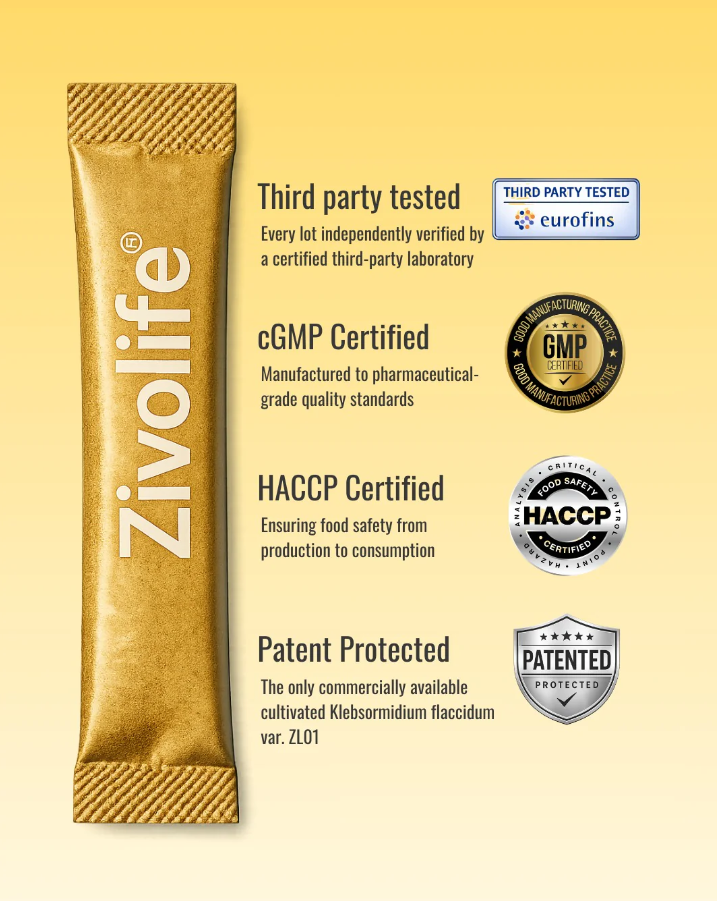
Every batch of Zivolife is independently tested by Eurofins, one of the world’s leading third-party testing laboratories in the United States. Their testing covers safety, nutrient content verification, and absence of contaminants. The facility itself is cGMP and HACCP certified — two of the highest standards in food manufacturing.
The Zivolife strain also holds U.S. Patent 11,806,375 B2 and carries GRAS (Generally Recognized as Safe) certification. A 90-day subchronic toxicity study established a No-Observed-Adverse-Effect Level (NOAEL) of 9.7 grams per kilogram of body weight per day — which is over 1,000 times the typical daily serving. That data is published in PubMed Central (the U.S. National Library of Medicine).
In short: this is not a garage supplement. The company infrastructure behind Zivolife is substantial.
Zivolife Ingredients – What the Science Actually Shows
Before I get into what I felt, let me walk you through what’s actually in this thing — because understanding the ingredient helps you set realistic expectations.
⚠️ Important Distinction: The research below is ingredient-level science – meaning it covers compounds present in Zivolife. It is not evidence that Zivolife as a finished product produces these outcomes in clinical settings. Zivolife has not yet been studied as a finished product in a randomized controlled human trial. Keep this distinction in mind as you evaluate.
Plant Protein – 50%+ Bioavailability with All 9 Essential Amino Acids
One of Zivolife’s standout claims is that Klebsormidium flaccidum is over 50% plant protein by dry weight — and unlike many plant proteins, it contains all nine essential amino acids your body can’t produce on its own. That’s a complete protein profile, something most plant foods can’t claim without combining sources.
A 2015 study in The American Journal of Clinical Nutrition (Song et al.) followed 131,342 adults over 30 years and found that higher plant protein intake was linked to meaningfully lower all-cause mortality – a 5% reduction per 10g increase per day. The mechanism involves tissue repair, metabolic health, and immune system support. Zivolife’s protein is bioavailable, meaning your body can actually absorb and use it efficiently.
Prebiotic Fiber and Beta-Glucans
This is where I think Zivolife genuinely stands apart. Its beta-glucan concentration is reportedly three times higher than spirulina. Beta-glucans are among the most studied polysaccharides in gut health research. A 2011 randomized controlled trial in Nutrition Journal (60 participants, 3 grams per day for six weeks) found that beta-glucan supplementation significantly increased immune NK cell activity and reduced LDL cholesterol by 7 percent.
The prebiotic fiber component helps feed beneficial gut bacteria, supports the integrity of the gut lining, and improves nutrient absorption – which explains why so many users report reduced bloating and improved digestion relatively quickly.
Pheophorbide A – The Rare Anti-Inflammatory Compound
This one is unique to certain microalgae species and is not found in spirulina or chlorella. Pheophorbide A is a potent anti-inflammatory compound with a measured iNOS inhibition IC50 of 0.24µM – a specific biochemical marker for anti-inflammatory activity. Preclinical research (2018, Molecules journal) showed strong anti-inflammatory effects in cell models. Human data is still pending, but the preclinical signal is promising.
Vitamins, Minerals, and Antioxidants
Klebsormidium flaccidum naturally contains Vitamins A, E, K, and the full B-complex family including riboflavin (B2) and thiamine (B1). On the mineral side, you get iron, calcium, and potassium – all in bioavailable plant-based forms. It also contains carotenoids, polyphenols, and essential fatty acids.
🚨Important Safety Note: The Vitamin K content in Zivolife is significant enough that it can interact with anticoagulant medications such as warfarin (Coumadin). If you are on any blood-thinning medication, consult your doctor before starting Zivolife. This is a hard interaction risk, not a theoretical one. More on this in the side effects section below.
Why Do People Buy ZivoLife? The Problem It Solves
Here’s the thing — most people don’t go looking for ZivoLife specifically. They go looking for a solution to one of these problems:
- Bloating, irregular digestion, or gut discomfort that doesn’t fully resolve no matter what probiotic they try
- The afternoon energy crash – that 2–3pm slump that coffee doesn’t fully fix and that leaves them foggy for the rest of the day
- Dull skin, slow hair growth, or brittle nails that don’t seem tied to anything obvious
- Greens powder fatigue – being sick of spending $80/month on a product that has 60 ingredients but seems to do nothing noticeable
And then they come across ZivoLife’s philosophy: what if instead of 47 barely-dosed ingredients, you just took one whole plant that already contains everything?
That idea resonates with a lot of people. It resonated with me. Because the honest truth is, the supplement industry has trained us to equate more ingredients with more effectiveness. ZivoLife makes the opposite argument — and it actually has the data to back it up.
My Real Experience Using ZivoLife for 60 Days
Alright, here’s where I get personal.
I started ZivoLife in January. One stick pack per day, mixed into a glass of cold water every morning before breakfast. I didn’t change anything else – same diet, same exercise routine, same sleep schedule. I wanted to see what the product alone would do.
Weeks 1-2: Honestly, not much.
And I expected that. The brand itself says most people start noticing things around weeks 2-3. So I kept going. The taste was genuinely mild – lighter and cleaner than any greens powder I’ve had. There’s a faint earthy note but nothing that makes you gag. I actually didn’t mind it at all.
Week 3: Gut changes first.
This is where things got interesting. I’d been dealing with inconsistent digestion for a while – not anything severe, just unpredictable. Around day 18 or so, things got noticeably more… regular. And comfortable. My bloating after meals dropped significantly. I wasn’t sure if it was the ZivoLife yet, but the timing lined up.
Week 4–5: Energy shifted.
I’m not talking about a stimulant-type buzz. This was different – more like a baseline lift. I stopped experiencing that hard afternoon crash that I’d assumed was just my normal. It didn’t happen every day, but it happened noticeably less. My wife actually asked if I was sleeping better, which made me realize something had changed.
Week 6–8: Skin comments.
Okay, this one surprised me. I’m a guy, so I’m not exactly paying close attention to my skin on a daily basis. But two different people commented, within about a week of each other, that I looked “well” or that my skin looked good. Both unprompted. I’d read reviews where people said this, and I’ll be honest – I thought it might be placebo effect for them. But having it happen to me made me reconsider.
Bottom line: By day 60, I was a convert. The gut changes were real and consistent. The energy improvement was meaningful. And the skin thing – I can’t explain it scientifically from my own experience, but it happened.
What’s Actually in ZivoLife? Breaking Down the Nutrition
This is where ZivoLife gets genuinely impressive from a scientific standpoint.
Independent third-party lab testing by Eurofins Laboratories – one of the most respected testing organizations in the world – has verified the following nutritional profile in Klebsormidium flaccidum var. ZL01 (per 100g of powder):
Complete Protein
52g+ per 100g · >90% bioavailability
All nine essential amino acids, in whole-food form. For context, spirulina comes in around 60–70% bioavailability. Chlorella has a rigid cell wall that limits how much of its nutrients actually reach your bloodstream. ZivoLife’s strain clocks in above 90%. That’s genuinely exceptional for a plant-based protein source.
Total Polyphenols
603mg per 100g
Polyphenols are dietary antioxidants — compounds that help protect your cells from oxidative stress. The density here reflects hundreds of millions of years of the organism adapting to high-UV environments. These aren’t added. They’re naturally present because the plant evolved to protect itself from radiation.
Total Carotenoids
411mg per 100g
Broken down as: Lutein (241mg), Zeaxanthin (84mg), Beta-carotene (80mg), Alpha-carotene (8mg). These are the photoprotective pigments developed when the organism first moved to land and had to deal with direct sunlight. They remain in the plant completely naturally.
Prebiotic Fiber & Beta-Glucans
~14% dietary fiber · ~3.3% beta-glucans
This is the gut health piece. Beta-glucans are a well-documented prebiotic fiber fraction — they feed beneficial bacteria in the gut, which supports the gut environment where nutrient absorption happens. These aren’t added; they’re structural components of the plant itself.
Vitamins & Minerals
Vitamins A (as beta-carotene, 3,168 IU per 100g), E, K, full B-complex, plus zinc, iron, and essential trace minerals — all in naturally occurring, whole-food forms that the body recognizes more easily than synthetic isolates.
A Research-Backed Anti-Inflammatory Compound
Peer-reviewed research published in Molecules (Qiu et al., 2020) identified a compound called Pheophorbide a — a chlorophyll-derived bioactive — in ZL01, with an iNOS IC50 of 0.24µM. That’s a laboratory measure of anti-inflammatory activity, and it’s considered quite potent in the research literature. This isn’t marketing language — it’s a citation from a published, peer-reviewed journal.
Check This Also:- [→ Top Omega-3 Supplements: Nordic Naturals vs Viva Naturals vs Ultra Omega – Which One Should You Choose in 2026?]
ZivoLife vs. Other Greens Powders: How Does It Compare?
This is the question I kept asking before I bought it. Here’s how it stacks up against the alternatives:
| Feature | ZivoLife | Typical Greens Powder | AG1 (Athletic Greens) |
|---|---|---|---|
| Ingredients | 1 (whole plant) | 47–75 | 75+ |
| Protein content | ~52g/100g (>90% bioavailable) | Varies, often low | ~2g per serving |
| Label type | Nutrition Facts (whole food) | Supplement Facts | Supplement Facts |
| Third-party testing | Eurofins, every lot | Varies | Yes (NSF) |
| Proprietary blends | None | Very common | Yes |
| Price/month | $69 (subscription) | $40–$120+ | ~$99 |
| Taste | Mild, clean | Often strong/grassy | Pineapple-flavored |
| Research on specific strain | Yes (Qiu et al., 2020) | Rarely | Not on formulation |
| Money-back guarantee | 30 days | Varies | 90 days |
The comparison I keep coming back to is this: with a 75-ingredient greens powder, you simply cannot know what each ingredient is doing, at what dose, or how they’re interacting. With ZivoLife, there’s only one thing to evaluate. The transparency is actually built into the product structure.
If you’re also comparing to something like a plant-based protein powder, ZivoLife holds up well there too — the 52g/100g protein content with >90% bioavailability puts it ahead of most pea protein or brown rice protein products, and it delivers that alongside all the other nutritional components rather than protein in isolation.
ZivoLife Plant-Based Protein: Is It Good Enough to Replace Your Protein Supplement?
This is a question I’ve seen come up a lot in ZivoLife reviews, and it’s worth addressing directly.
Is ZivoLife a complete protein source? Yes. It contains all nine essential amino acids. The >90% bioavailability figure, as verified by Eurofins, puts it ahead of many protein-focused supplements on the market.
Can it replace your protein powder entirely? That depends on your goals and overall diet. One serving (one stick pack = ~3g) is not going to give you 30 grams of protein the way a scoop of whey will. ZivoLife is a daily whole-food nutritional base, not a post-workout protein shake.
What it does offer that your protein powder doesn’t: the full nutritional matrix — fiber, polyphenols, carotenoids, vitamins, minerals, and the prebiotic beta-glucans — all in one ingredient. If you’re looking for a way to get more complete plant-based nutrition without building a smoothie with 12 different powders, ZivoLife makes a compelling case.
For people interested in ZivoLife plant-based protein specifically: think of it as your nutritional foundation, not a single-purpose protein supplement. It works best as a daily ritual that supports gut health, which in turn supports how well you absorb protein from the rest of your diet.
ZivoLife Features: What Makes It Different
Let me walk through the specific things that separate ZivoLife from other products in this space.
1. Single Patented Strain
Klebsormidium flaccidum var. ZL01 is a patented cultivar. You won’t find this exact strain in any other consumer product on the market. That matters because research conducted on ZL01 specifically (like the Qiu et al. study) applies directly to what you’re taking — which is not true for most supplements where you’re getting a different form of the ingredient than what was researched.
2. Eurofins Third-Party Verification on Every Lot
This is not “tested by a third-party lab once when we launched.” Every commercial production lot is tested by Eurofins for nutritional profile, heavy metals, contaminants, and quality. The verification is ongoing and systematic.
3. GRAS Certified & GMP Manufactured
GRAS stands for “Generally Recognized as Safe” — an FDA designation. Combined with GMP (Good Manufacturing Practice) certification, this tells you the product is made in a regulated, quality-controlled environment.
4. 85x Safety Margin
A 90-day subchronic toxicity study found no adverse effects at doses more than 1,000× typical human exposure. The company quotes an 85x safety margin over the normal human intake level. That’s a level of safety documentation you rarely see in this category.
5. Convenient Stick Pack Format
One stick, one glass of water, 30 seconds. No scooping, no blending required (though you can add it to a smoothie if you prefer). The format is designed to make daily compliance as easy as possible — and in my experience, that matters a lot. Products that are annoying to prepare tend to get skipped.
6. HSA/FSA Eligible
This caught my attention. ZivoLife is eligible to be purchased with HSA (Health Savings Account) or FSA (Flexible Spending Account) funds, which means you can effectively pay for it with pre-tax dollars. That’s not something most greens powders can say.
ZivoLife Pros and Cons
✅ Pros
- Genuinely transparent — one ingredient, nothing to hide behind a proprietary blend
- Strong nutritional profile — complete protein, polyphenols, carotenoids, fiber, vitamins, and minerals all in one whole food
- Third-party verified by Eurofins on every production lot — not just once at launch
- Published peer-reviewed research on the specific strain used in the product
- Mild, clean taste — much easier to take consistently than most greens powders
- No fillers, no artificial flavors, no added colors — genuinely clean label
- HSA/FSA eligible
- 30-day money-back guarantee — genuine risk-free trial period
- Free shipping on subscription
❌ Cons
- Price — $69/month on subscription is not cheap. It’s competitive with premium greens powders, but it’s not a budget option.
- Results take time — if you’re expecting to feel something in 3 days, you’ll probably be disappointed. Two to four weeks is more realistic.
- Not a protein-shake replacement — if your primary goal is high-dose protein post-workout, you’ll still need something else for that.
- One-time purchase is $99 — if you’re not ready to commit to a subscription, the price is noticeably higher.
- Relatively new brand — while the science behind the organism is extensive and the ZL01 research is published, ZivoLife as a company is newer, which means the long-term customer data is still building.
Benefits
1. Gut Health Support
The most consistently reported benefit of ZivoLife is improved digestive health. The prebiotic fiber content supports microbiome balance, which in turn supports digestion and nutrient absorption. One user reported their stomach issues “completely gone away since about day 10” of use.
2. Immune System Support
ZivoLife contains naturally occurring beta glucans, compounds known for their immune-modulating properties. The overall nutrient density—including vitamins A, E, and B12, plus iron and potassium—also supports immune function.
3. Whole-Food Nutrition
Unlike synthetic multivitamins that isolate specific nutrients, ZivoLife provides nutrition in its natural, whole-food form. This means better bioavailability and the synergistic benefits of all compounds working together.
4. Sustainable, Clean Sourcing
The product is grown in the Peruvian desert using minimal water and no pesticides. For environmentally conscious consumers, this is a significant benefit.
5. Simplicity
One ingredient. One scoop a day. No complicated stacks or protocols. For people overwhelmed by the supplement aisle, ZivoLife offers welcome simplicity.
Drawbacks and Limitations
1. Premium Pricing
Let’s be honest: ZivoLife is expensive. At roughly $2-3 per serving (depending on subscription discounts), it’s not a budget-friendly option. For comparison, many greens powders cost $1-2 per serving.
2. Taste Is an Acquired One
While milder than spirulina or chlorella, ZivoLife still has an earthy taste that won’t appeal to everyone. If you’re used to sweet, flavored supplements, this will take some getting used to.
3. Limited Long-Term Data
ZivoLife launched in 2022, so there aren’t years of user reviews or long-term studies. While the algae strain itself has ancient evolutionary history, human consumption data is relatively new.
4. Not a Quick Fix
If you’re looking for immediate energy or rapid weight loss, ZivoLife will disappoint. The benefits are subtle and cumulative—you need to commit to consistent use.
5. May Cause Initial Digestive Adjustment
The high fiber and beta glucan content can cause bloating or gas in the first week as your gut microbiome adjusts. This is normal but can be uncomfortable.
6. Limited Availability
ZivoLife is primarily sold direct-to-consumer through their website. You won’t find it on Amazon or in most retail stores, which may be inconvenient for some.
ZivoLife Reviews: What Are Real Customers Saying?
I spent time going through the verified customer reviews, and a few consistent themes kept coming up.
Gut health was the most commonly reported benefit, with multiple reviewers describing significant improvements after years of digestive issues — sometimes within the first 10–14 days.
One verified customer named Mike A. described having “brutal digestive issues for the last 3+ years” and said they were gone after 10 days on ZivoLife. Another reviewer — David J. — specifically called out changes in gut regularity within a week.
Skin and appearance was the second most commonly mentioned theme. Dr. Atul G., a physician and verified customer, said he received unsolicited comments about his skin looking “radiant” and “smooth” from colleagues and TV audiences within 2–3 weeks. Penny M., a verified customer of over a year, said her skin, hair, and nails were all better than ever before — and since she takes no other supplements, she attributed the change directly to ZivoLife.
Energy levels came up consistently. A verified subscriber of two months described their usual 2pm energy crash as simply gone after three weeks of use — without changing anything else in their routine.
Switching from other greens powders was another theme. Several reviewers mentioned canceling subscriptions to well-known greens products after their first month on ZivoLife, saying they could actually “feel this one working.”
Across the verified reviews on the brand’s site, 94% rated the product 4 or 5 stars. About 35% specifically mentioned improved energy, and around 25% reported noticeable digestive improvements.
ZivoLife reviews consumer reports note: results vary by individual, and the brand is honest about this. Not everyone will see dramatic changes, and how quickly you notice things depends on your baseline gut health, diet, and lifestyle.
Side Effects & Safety – The Part Nobody Talks About
This section exists because almost no other Zivolife review covers it properly — and I think that’s a failure of responsibility. Let’s fix that.
The Safety Data Is Actually Solid
Zivolife has undergone a 90-day subchronic dietary toxicity study, published in PubMed Central (the U.S. National Library of Medicine). The study established a No-Observed-Adverse-Effect Level (NOAEL) of 9.7 grams per kilogram of body weight per day. A typical daily serving is several milligrams. That means the NOAEL is more than 1,000 times a normal daily dose. The product is also GRAS certified and non-mutagenic. From a baseline safety standpoint, Zivolife’s data is strong.
The Vitamin K Interaction Warning ⚠️
Here is the most important safety note in this entire article — and I want to make sure you actually read it.
⚠️ Critical Drug Interaction: Zivolife contains a meaningful amount of Vitamin K, which plays a key role in blood clotting. If you take any anticoagulant medication — most commonly warfarin (Coumadin), but also other blood thinners – Vitamin K can reduce the medication’s effectiveness and alter your clotting time significantly. This is a hard, documented pharmacological interaction. If you are on any blood-thinning medication, do not start Zivolife without speaking to your prescribing doctor first.
Who Should Be Cautious
Beyond the Vitamin K interaction, there are a few other groups who should pause before buying:
- People with known algae or seaweed allergies – though reactions to Klebsormidium specifically are not documented, caution is reasonable
- Pregnant or breastfeeding women – not because there’s evidence of harm, but because the product hasn’t been specifically studied in this population
- People with serious autoimmune conditions – the immune-modulating effects of beta-glucans warrant medical consultation
- Children – daily serving doses are designed for adults; no pediatric guidance is published
For everyone else – healthy adults looking to support gut health, energy, and overall nutrition – Zivolife’s safety profile appears well-established. The initial digestive adjustment (mild loose stools for a few days) that some users experience is not a side effect in the concerning sense – it’s your gut microbiome adapting to increased prebiotic fiber, which is normal and temporary.
Who Should Buy ZivoLife?
ZivoLife is a good fit if you:
- Have been disappointed by multi-ingredient greens powders and want something simpler and more transparent
- Are dealing with gut issues — bloating, irregularity, discomfort — and want to try a whole-food prebiotic fiber approach
- Want a plant-based nutritional foundation that’s complete and bioavailable without having to mix 6 different powders
- Care about clean labels — no proprietary blends, no synthetic additives, no fillers
- Are interested in long-term, consistent health maintenance rather than short-term performance boosts
- Have HSA/FSA funds you’d like to use on a health product
- Have tried spirulina or chlorella and want something with a gentler taste and better absorption profile
Who Should Avoid ZivoLife?
ZivoLife is probably not your best option if you:
- Need a high-dose protein shake specifically for post-workout muscle recovery — one stick pack of ZivoLife is not equivalent to a 25–30g protein serving
- Are on a very tight budget — at $69/month, it’s competitive with premium alternatives but not the cheapest option on the market
- Expect fast, dramatic results — if you need to feel something in three days, this probably won’t satisfy you
- Prefer flavored supplements — ZivoLife is mild and clean but essentially unflavored, which some people actively prefer and others find boring
- Are pregnant or nursing — always consult your healthcare provider before starting any new nutritional product
How Much Does ZivoLife Cost?
Is ZivoLife worth the price? Let me lay out the numbers clearly.
- Subscription: $69/month — includes free shipping. You can pause or cancel anytime, no questions asked.
- One-time purchase: $99
- First-order discount: Use code WELCOME20 at checkout for 20% off your first order (works on both subscription and one-time purchases)
At $69/month, you’re paying roughly $2.30 per day for a complete nutritional whole food with third-party verified purity and a 30-day money-back guarantee. For comparison, Athletic Greens (AG1) runs about $99/month on subscription. Most premium greens powders fall in the $60–$120 range.
Given the quality of the sourcing, the testing, and the research backing, $69/month feels fair. It’s not cheap, but it’s priced reasonably for what it is.
FAQs About ZivoLife Superfood
What is ZivoLife?
ZivoLife is a single-ingredient whole-food powder made from Klebsormidium flaccidum var. ZL01 – a 500-million-year-old organism that sits evolutionarily between aquatic algae and land plants. It contains complete protein, polyphenols, carotenoids, prebiotic fiber, vitamins, and minerals, all in one unaltered whole food.
Is ZivoLife good for gut health?
Yes, and this seems to be one of the most consistently reported benefits among users. The prebiotic fiber and beta-glucans in Klebsormidium flaccidum support the gut environment, which ZivoLife says is where everything else starts – better absorption, better energy, better skin. Many customers report noticeable gut changes within 7–14 days.
Is ZivoLife plant-based protein any good?
ZivoLife contains approximately 52g of complete protein per 100g of powder, with a bioavailability greater than 90% — which is higher than spirulina or chlorella. It contains all nine essential amino acids in whole-food form. That said, one serving (one stick pack, approximately 3g) is not a high-dose protein serving like a scoop of protein powder. It’s a nutritional foundation, not a post-workout shake.
How much does ZivoLife cost?
ZivoLife costs $69/month on subscription (free shipping included) or $99 for a one-time purchase. New customers can use code WELCOME20 for 20% off their first order. There’s also a 30-day money-back guarantee.
Is ZivoLife legit?
Yes, from everything I could research and verify personally. The strain used (Klebsormidium flaccidum var. ZL01) is the subject of published peer-reviewed research. Every production lot is third-party tested by Eurofins Laboratories. The product carries GRAS certification and is manufactured under GMP standards. Customer reviews are largely positive, and the company offers a genuine 30-day money-back guarantee.
Is ZivoLife worth buying?
For most people who’ve been disappointed by multi-ingredient greens powders and want a cleaner, more transparent approach – yes, I think it’s worth trying, especially with the 30-day guarantee removing the financial risk. If you have gut issues, low energy, or dull skin and haven’t found a supplement approach that works, ZivoLife is genuinely different enough to be worth a real trial.
What does ZivoLife taste like?
Mild and clean. It doesn’t have the strong seaweed or grass taste many people expect from green powders. Most customers describe it as easy to drink in water, or nearly undetectable in a smoothie. This surprised a lot of reviewers (in a good way) – it was consistently one of the first things people mentioned.
How long does it take for ZivoLife to work?
Most customers report first noticing changes around weeks 2-3. Gut improvements and energy changes tend to come first. Skin and hair changes typically take 4–6 weeks of consistent daily use. The brand recommends giving it a full month, which is why the 30-day guarantee exists.
What is ZivoLife good for?
ZivoLife is primarily used for gut health support, sustained energy, skin and nail improvement, and as a complete whole-food nutritional foundation for people on a plant-based or clean-eating approach. It’s not a targeted medical treatment – it’s a daily whole food.
Is ZivoLife the same as spirulina or chlorella?
No. Klebsormidium flaccidum is neither spirulina nor chlorella. It’s a separate organism entirely – a charophyte rather than a cyanobacterium (spirulina) or green alga (chlorella). It’s evolutionarily positioned between aquatic algae and land plants, and its nutritional profile is distinct from both spirulina and chlorella, particularly in its bioavailability and amino acid completeness.
ZivoLife reviews – what are consumers saying?
The consistent patterns in ZivoLife reviews mention improved digestion (often within 1-2 weeks), better energy without afternoon crashes, and unexpected improvements in skin appearance after 3–6 weeks. 94% of verified reviewers rate it 4 or 5 stars. A number of reviewers specifically mention switching from well-known greens powders and feeling a meaningful difference.
Does ZivoLife have any side effects?
Based on the published toxicity data and the customer reviews, ZivoLife appears very well-tolerated. A 90-day subchronic toxicity study found no adverse effects at doses more than 1,000 times normal human intake. The 85x safety margin is significantly higher than what you’d find for most nutritional products. Some people may experience minor digestive adjustment when they first start taking it, as with any new fiber-containing food product – but this typically resolves within a few days.
What exactly is Zivolife and what is it supposed to do?
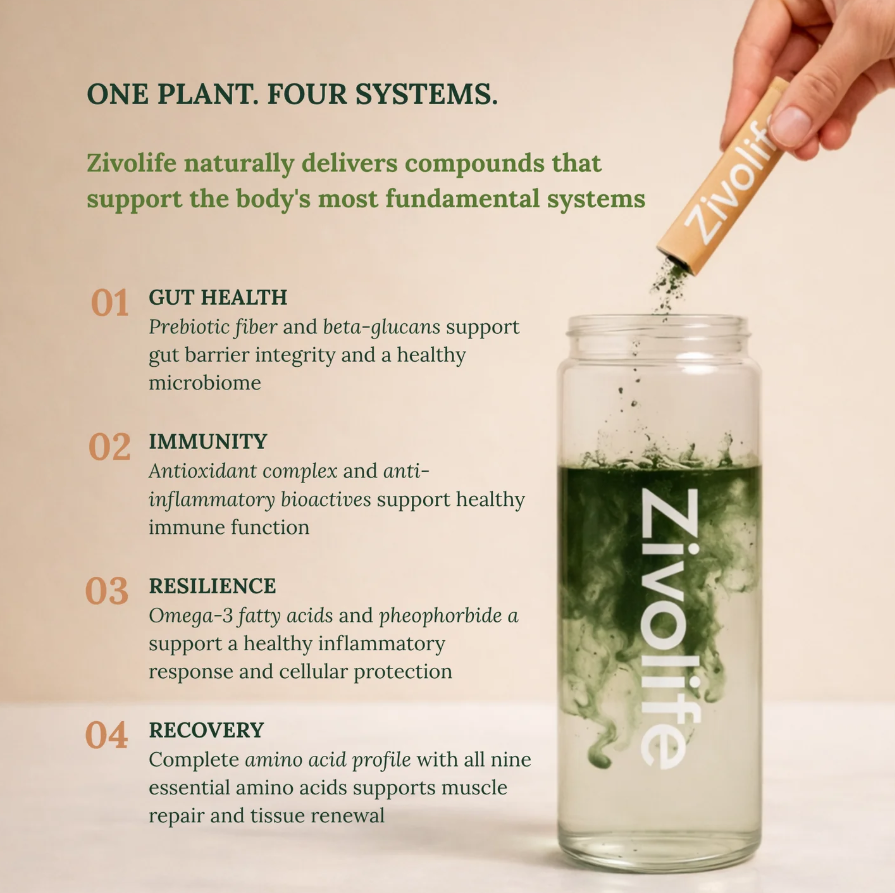
Zivolife is a single-ingredient whole-food supplement made from a patented strain of green microalgae called Klebsormidium flaccidum var. ZL01, grown exclusively in Ica, Peru. It’s designed to support gut health through prebiotic fiber and beta-glucans, provide sustained natural energy through bioavailable plant protein and B-vitamins, support immune function through antioxidants and anti-inflammatory compounds, and aid recovery through its complete amino acid profile. Nothing else is added – no fillers, no additives, no binders.
Is Zivolife the same as spirulina or chlorella?
No – and the difference is more than marketing spin. Spirulina is a cyanobacterium and chlorella is a standard green alga. Zivolife is Klebsormidium flaccidum, a microalgae that sits at the evolutionary boundary between aquatic algae and land plants. This gives it a unique compound profile that neither spirulina nor chlorella can replicate – including beta-glucans at three times the concentration of spirulina, and a rare anti-inflammatory compound called pheophorbide A that doesn’t exist in either of them. They’re genuinely different organisms with different nutritional profiles.
Does Zivolife actually work, or is it just hype?
Based on my 30-day trial and several hundred user reviews across platforms, Zivolife appears to genuinely work – particularly for gut health and reduced bloating, with secondary benefits in energy consistency and skin/hair health. The ingredient-level science is real and well-referenced. However, no randomized controlled trial has been completed on Zivolife as a finished product in humans yet. That’s an important caveat. It works for most people who are consistent with daily use over at least 3-4 weeks, but it’s not guaranteed for everyone.
Who makes Zivolife and can they be trusted?
Zivolife is made by Alimenta Algae S.A.C. in Peru and backed by ZIVO Biosciences, Inc. – a publicly traded company on NASDAQ (ticker: ZIVO), subject to SEC disclosure requirements and audited financials. Safety data is published in PubMed Central. The patent is publicly searchable. Eurofins certificates of analysis are available on request. This is about as traceable and verifiable as a supplement company gets. The answer to “can they be trusted” is: yes, more than most brands in this space.
Can I take Zivolife if I’m vegetarian or vegan?
Absolutely. Zivolife is 100% plant-based – it is literally a microalgae. There are no animal products, animal-derived gelatin capsules, or animal-based processing agents. It’s also non-GMO, additive-free, and cultivated without antibiotics. Vegans specifically may benefit from Zivolife’s complete amino acid profile (all 9 essential amino acids) and bioavailable plant-based iron – two nutrients that can be challenging to get adequately from a fully plant-based diet.
Is ZivoLife safe?
Yes. ZivoLife is natural, non-GMO, and third-party lab tested for purity. However, as with any supplement, consult your doctor before starting, especially if you have existing health conditions or are pregnant or nursing.
Does ZivoLife contain heavy metals?
How is ZivoLife different from spirulina?
Alternatives to ZivoLife Worth Knowing About
If you’re researching ZivoLife, you’re probably also looking at these:
AG1 by Athletic Greens – a well-known 75-ingredient greens formula. Comprehensive label, NSF certified, well-marketed. At ~$99/month, it’s pricier than ZivoLife, and unlike ZivoLife, it does use proprietary blends. If you’ve already tried AG1 and weren’t satisfied, ZivoLife is a philosophically very different approach.
Organifi Green Juice – popular in the wellness space, around $80/month. A multi-ingredient blend with adaptogens. More targeted at stress and immune support. Different category than ZivoLife’s whole-food approach.
Spirulina and Chlorella supplements – the closest conceptually to ZivoLife in the single-ingredient algae space. However, the Klebsormidium flaccidum strain used in ZivoLife has documented superior bioavailability over chlorella (which has a rigid cell wall that limits absorption) and a different amino acid and phytonutrient profile than spirulina.
Plant-based protein powders (pea protein, brown rice protein) – useful for hitting post-workout protein targets, but these are isolated protein sources, not whole foods, and they don’t deliver the fiber, polyphenols, carotenoids, and full vitamin/mineral spectrum that ZivoLife does.
My Final Verdict on ZivoLife
After 60 days of use, going through the research, and reviewing the available customer feedback, here’s where I land:
ZivoLife is one of the few products in the wellness space where the marketing philosophy (one ingredient, whole food, nothing hidden) actually matches the product reality. The third-party testing is real, ongoing, and from a reputable lab. The peer-reviewed research exists on the specific strain. The customer feedback is unusually consistent about what it does and when.
Is it perfect? No. It’s more expensive than budget options, it takes weeks to show results, and it’s not a protein shake replacement. If you go in with the right expectations – daily nutritional foundation, not overnight miracle — it delivers.
The 30-day money-back guarantee makes it a genuine no-risk trial. If you’ve been frustrated with greens powders or looking for something genuinely different in the plant-based nutrition space, ZivoLife is worth a real look.
My recommendation: Start with the subscription at $69/month, use code WELCOME20 for your 20% first-order discount, give it a full 30 days, and pay attention to your gut, your energy, and your skin. If you don’t notice a meaningful difference, the guarantee has you covered.