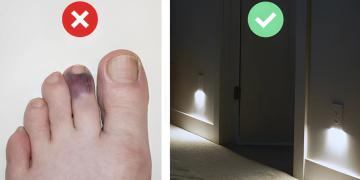

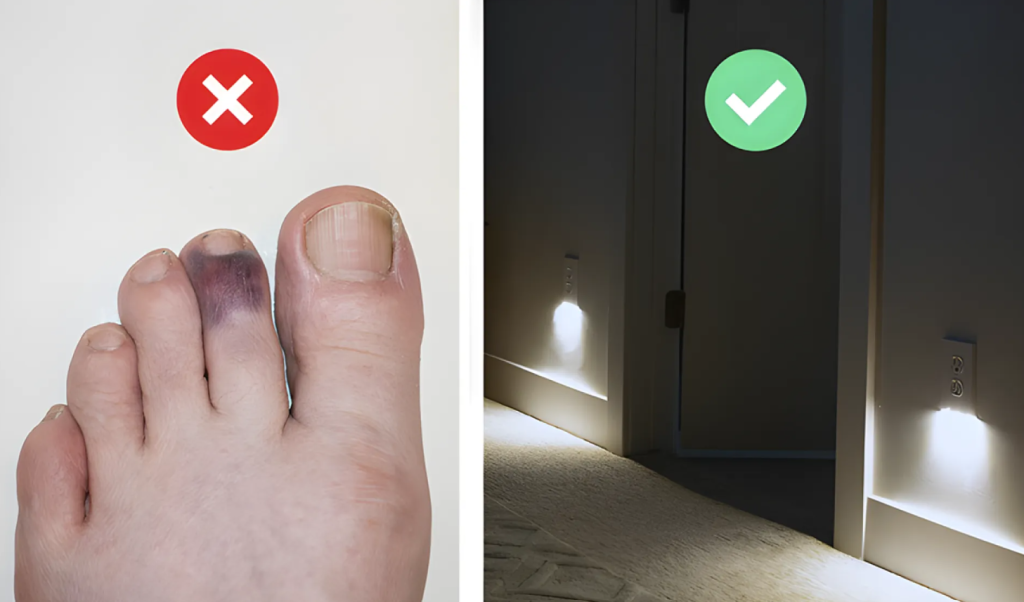
SnapPower Guidelight Review: Let me paint you a picture. It’s 2:17 AM. You need to use the bathroom, get a glass of water, or check on a crying child. Your options? Fumble through the dark like a blindfolded ninja, praying you don’t stub your toe on the doorframe. Turn on the overhead light and instantly regret it as your sleep-deprived eyes get blasted into next week. Or rely on a plug-in nightlight that takes up one of your precious outlets and looks like a plastic wart on your wall.
I’ve been there. We all have.
The SnapPower Guidelight promises to solve all of these problems in one elegant package. It’s not a plug-in device. It’s not a battery-operated stick-on. It’s a replacement outlet cover with built-in LED lights that draw power directly from your outlet’s existing electrical contacts. No wires. No batteries. No lost outlet space. Just soft, automatic light that appears when you need it and disappears when you don’t.
But does it actually work as advertised? Is installation really as easy as they claim? And most importantly, is it worth your money?
I’ve tested multiple SnapPower Guidelights in different rooms of my home over several months. I’ve installed them in bathrooms, hallways, and bedrooms. I’ve dealt with the quirks, discovered the hidden gotchas, and formed strong opinions about what works and what doesn’t.
In this review, I’ll give you the complete, honest picture – the good, the bad, and the genuinely surprising. By the end, you’ll know exactly whether the SnapPower Guidelight belongs on your walls or if you should look elsewhere.
Quick Verdict: SnapPower Guidelight
Best For:
- Homeowners who want a clean, built-in nightlight solution
- Parents who need gentle lighting in kids’ rooms and hallways
- Seniors who want safer nighttime navigation without complicated installs
- Renters who want an upgrade that’s completely reversible
- Anyone who’s tired of bulky plug-in nightlights hogging outlets
Not Ideal For:
- GFCI outlets (it won’t work-more on this later)
- People who want to manually turn their nightlight on/off
- Those on a super tight budget (it costs more than a $5 plug-in)
- Homes with outlets that have electrical tape wrapped around terminals
- Anyone who doesn’t want to turn off power at the breaker (recommended for safety)
Overall Verdict: ⭐ 4.3/5
The SnapPower Guidelight is not a scam. It’s a legit, well-designed product that does exactly what it promises-turns your outlet cover into a sleek, automatic nightlight. It’s not perfect, but for most homes, it’s a genuine upgrade. More than 81% of Costco reviewers give it 4 or 5 stars, and with over 4,000 reviews on Amazon averaging 4.3 stars, the consensus is clear: this thing works.

What Is the SnapPower Guidelight?
Let’s start with the basics.
What is the SnapPower Guidelight?
The SnapPower Guidelight is an outlet cover plate with built-in LED lights. Instead of buying a separate plug-in nightlight that hogs your outlet, you replace your existing wall plate with this one. It draws power directly from the electrical outlet-no batteries, no wiring, no electrician required.
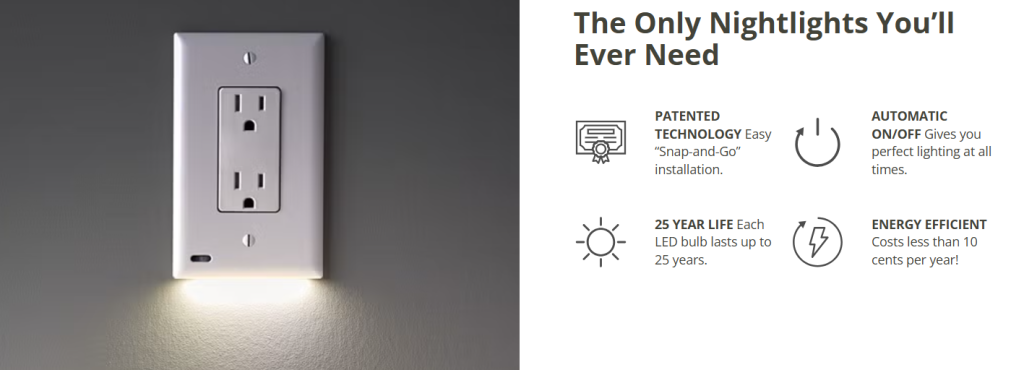
The concept is brilliantly simple: two metal prongs on the inside of the cover touch the screw terminals on the sides of your outlet. These prongs draw a tiny amount of power to illuminate three LEDs on the bottom of the plate. A built-in light sensor automatically turns the LEDs on when it gets dark and off when it’s light.
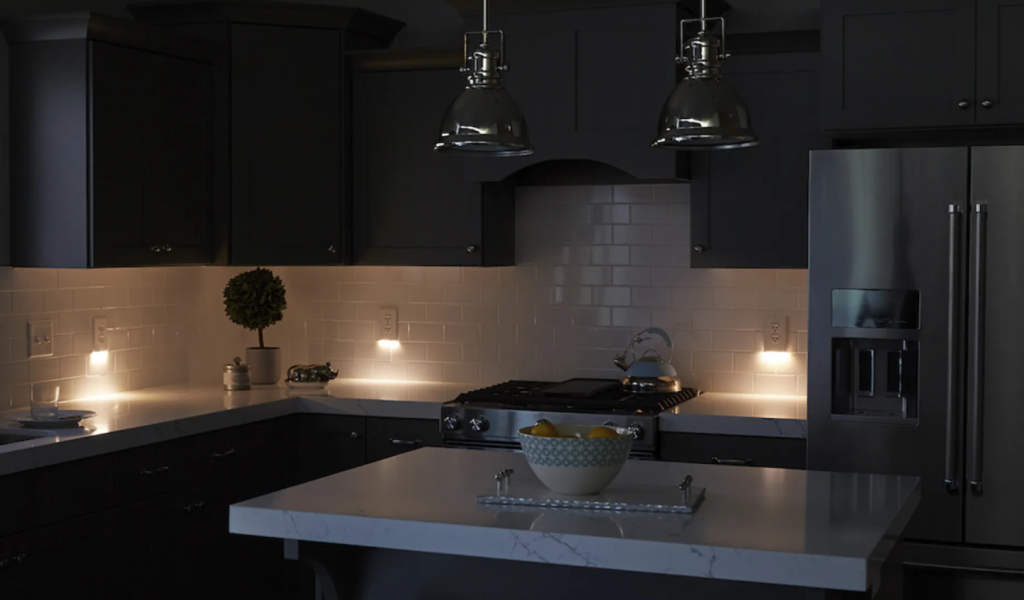
“So it’s just a fancy nightlight?”
Pretty much-but it’s a nightlight that:
- Doesn’t take up an outlet
- Blends seamlessly into your wall
- Costs less than 10 cents per year to run
- Never needs bulb replacements
- Installs in minutes
The company was founded by Jeremy Smith, an electrician with nearly 40 years of experience. After installing countless safety lights that required expensive, complicated rewiring, he set out to create something anyone could install. The result? The SnapPower Guidelight.
Why People Buy It (And Why I Did)
Before I get into my experience, let’s talk about why people-including me-are drawn to this product.
1. Outlet space is precious
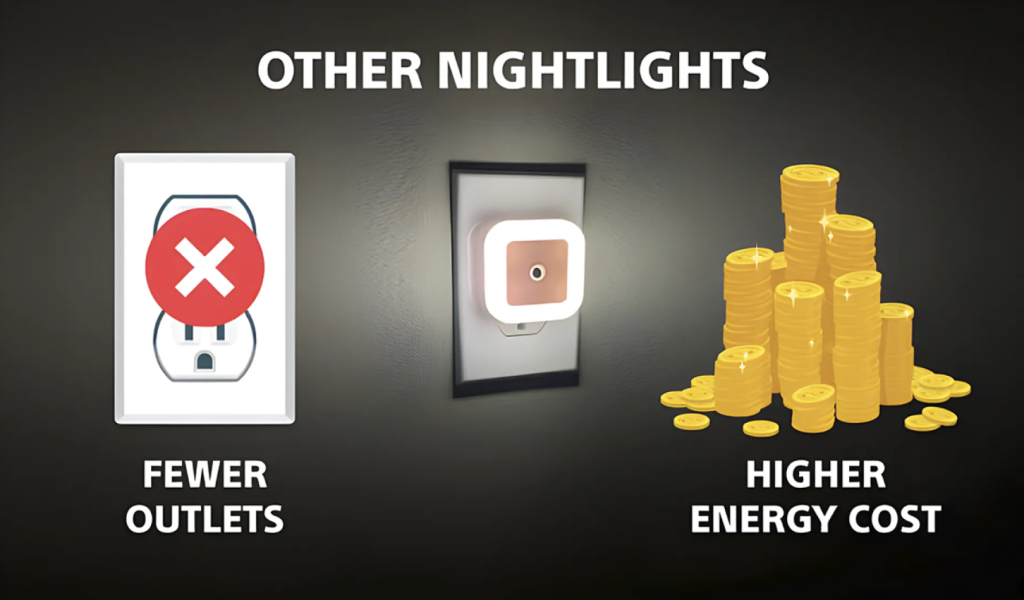
If you’ve ever tried to plug something into an outlet that already has a nightlight in it, you know the struggle. Standard plug-in nightlights block the second outlet. The Guidelight solves this by moving the light to the cover itself.
2. It looks clean
Traditional nightlights are ugly. Let’s be honest. They stick out, they’re usually some shade of off-white that doesn’t match anything, and they collect dust. The Guidelight looks like a normal outlet cover-because it is.
3. No maintenance
No batteries to replace. No bulbs to change. No switches to flip. Set it and forget it.
4. Safety
For parents with young kids, seniors, or anyone who gets up at night, having subtle guidance light in dark hallways and bathrooms can prevent falls.
5. It’s a conversation starter
Okay, this one’s a bonus. But I can’t tell you how many guests have asked, “Wait, is that a nightlight? Where’s the plug?” People are genuinely impressed by the design.
Product Overview
Key Specifications
My Real Experience: Testing the SnapPower Guidelight
Alright, let’s get into the nitty-gritty. I’ve been using the SnapPower Guidelight for about four months now. I’ve installed them in three different locations: a hallway, a bathroom, and my toddler’s room.
Here’s what actually happened.
Unboxing and First Impressions
The packaging is minimal-just the cover plate in a small box. It feels sturdy, not flimsy. The plastic is thick enough that it doesn’t flex when you press on it. The finish matches a standard outlet cover pretty closely.
Inside the box, you get:
- The Guidelight cover plate
- Mounting screws (though you can reuse your existing ones)
- Installation instructions
No batteries, no adapters, no fuss.
Installation: Easier Than I Expected (But Not “Tool-Free”)
Let me address the elephant in the room: installation.
SnapPower’s marketing makes it look like you just pop off your old cover and snap this one on. And… technically, yes. But there’s more to it.
Step 1: Turn off power at the breaker
The instructions say to do this. I’ll be honest-I didn’t on my first install. I got away with it, but I don’t recommend it. You’re dealing with live terminals, and one wrong move could give you a nasty shock. For subsequent installs, I flipped the breaker. It takes 30 seconds and is absolutely worth it.
Step 2: Remove the old cover plate
This is straightforward. Just unscrew the existing cover and pull it off.
Step 3: Align and snap on the Guidelight
Here’s where it gets a little fiddly. The Guidelight has two metal prongs on the inside that need to make contact with the screw terminals on the sides of your outlet. If your outlet is installed perfectly flush with the wall, this is easy. If not, you might need to do some adjusting.
One of my outlets had screws that were recessed too far. The prongs wouldn’t reach. I had to loosen the outlet itself and pull it forward slightly. Not a huge deal, but not quite “snap and go” either.
Step 4: Screw it in
Replace the mounting screw, and you’re done.
“Is the SnapPower Guidelight easy to install?”
Yes-for most outlets. But if your outlet is set too deep, has excess wiring in the box, or has overhanging drywall, you might run into issues. I’d say 80% of outlets are a breeze. The other 20% might require some adjustment.

Performance: The Moment of Truth
Does the light actually work?
Yes. The light is soft, warm, and gentle-not blinding like some LED nightlights. It casts a downward pool of light that’s just enough to navigate by without waking up the whole house.
In my hallway, it provides enough illumination to see where I’m going without turning on overhead lights. In my toddler’s room, it’s perfect—bright enough to check on her without disturbing her sleep.
The light sensor works great
In all three locations, the auto on/off sensor has been flawless. It turns on at dusk and off at dawn. No flickering, no false triggers.
Energy usage
SnapPower claims it costs less than 10 cents per year to operate. I can’t measure it precisely, but my electric bill hasn’t budged. The LEDs draw so little power it’s essentially negligible.
The Downsides I Encountered
I want to be completely transparent here. The Guidelight isn’t perfect.
Issue 1: GFCI outlets are a no-go
The Guidelight won’t work on GFCI outlets (the ones with the “Test” and “Reset” buttons, typically found in kitchens and bathrooms). The prongs can’t make contact with the screw terminals on these outlets. I learned this the hard way when I tried to install one in my kitchen.
Issue 2: You can’t turn it off manually
There’s no switch. If you want the light off for any reason (say, you’re watching a movie and want complete darkness), you’d have to cover the light sensor with tape. Not ideal.
Issue 3: No retention washers
The mounting screws don’t have retention washers, so they can loosen over time with vibration or frequent use. I had to tighten one after a few weeks.
Issue 4: It’s not cheap
At around $20-$27 per unit, it’s significantly more expensive than a $5 plug-in nightlight. You’re paying for the design and convenience.
Key Features Explained
1. No-Wire Power Draw
What it does: The Guidelight has two metal contact prongs on its back that touch the screw terminals on the sides of your outlet, drawing a tiny amount of power to run the LEDs.
Why it matters: This is the entire innovation. No batteries to replace, no wires to connect, no electrician needed. It’s genuinely clever engineering.
Real-world benefits: You get permanent, maintenance-free night lighting without any of the hassle of traditional solutions.
Drawbacks: The prong system is dependent on your outlet’s screw terminals being positioned correctly. If they’re recessed, painted over, or not making good contact, the light won’t work reliably.
Best use cases: Standard outlets in good condition with accessible screw terminals.
2. Automatic Dusk-to-Dawn Sensor
What it does: A built-in light sensor detects ambient light levels and automatically turns the LEDs on when it’s dark and off when it’s light.
Why it matters: You never have to think about it. No switches, no timers, no forgetting to turn it off in the morning.
Real-world benefits: The light is always there when you need it and never wastes energy when you don’t.
Drawbacks: The sensor can be temperamental. If it’s positioned where a shadow falls during the day, it might turn on prematurely. Some users report the sensor not being sensitive enough in rooms with moderate ambient light.
Best use cases: Hallways, bathrooms, and other spaces with predictable light/dark cycles.
3. Bright/Dim/Off Switch (PLUS Model)
What it does: The GuideLight PLUS (formerly GuideLight 2 PLUS) adds a toggle switch that lets you choose between bright, dim, and off settings.
Why it matters: Not everyone wants the same brightness level. This gives you control over the light output.
Real-world benefits: You can set it to dim for bedrooms where you want minimal light, or bright for hallways where you need more visibility.
Drawbacks: This feature only exists on the PLUS model – the standard Guidelight doesn’t have it.
Best use cases: Bedrooms (dim setting), stairways and hallways (bright setting).
4. Full Outlet Preservation
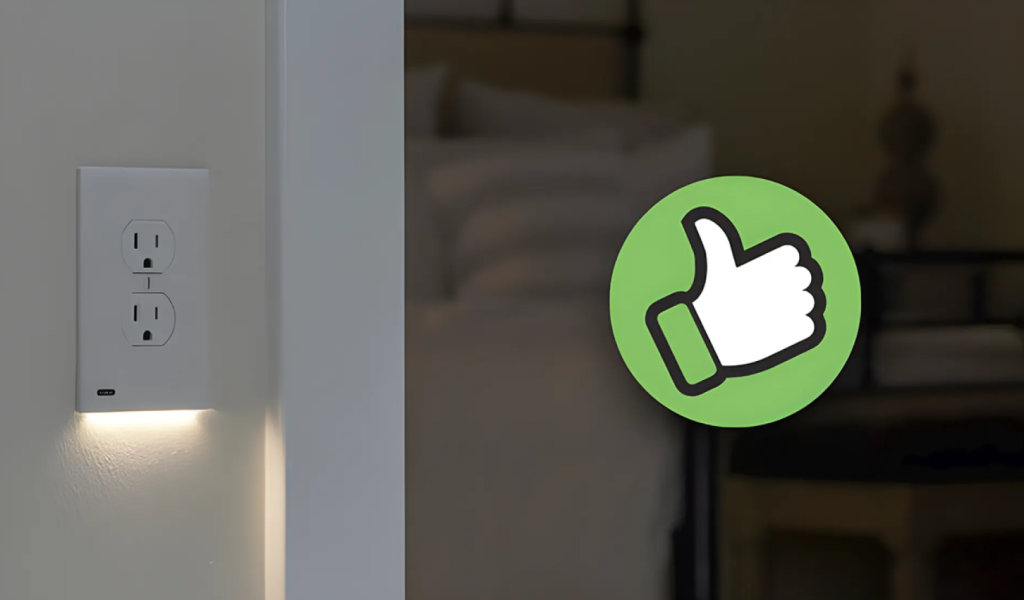
What it does: Because the Guidelight is a cover plate rather than a plug-in device, both outlet sockets remain fully usable.
Why it matters: Plug-in nightlights steal an outlet socket, which is a real problem in rooms with limited outlets.
Real-world benefits: You can plug in your phone charger, hair dryer, lamp, or any other device without sacrificing your nightlight.
Drawbacks: None – this is a pure win.
Best use cases: Any room where outlet space is at a premium (bathrooms, kitchens, home offices).
5. 25+ Year LED Lifespan
What it does: The LEDs are rated to last over 25 years of normal use.
Why it matters: You’ll never need to replace a bulb, and the light will maintain consistent output for decades.
Real-world benefits: This is a one-and-done purchase. Install it and forget about it.
Drawbacks: The LEDs aren’t replaceable – if they fail (unlikely), you’d need to replace the entire unit.
Best use cases: Anywhere – the longevity makes it suitable for all applications.

Performance Analysis
Build Quality: ⭐⭐⭐⭐☆
The Guidelight feels well-made – sturdy plastic with a clean finish. It’s not quite as thick as a standard commercial-grade wall plate, but it’s certainly not flimsy. The LEDs are integrated cleanly with no visible gaps or rough edges. The contact prongs are spring-loaded metal and seem durable.
Ease of Use: ⭐⭐⭐⭐☆
Once installed, the Guidelight requires absolutely no interaction. It just works (or at least, it should). The auto-sensor handles everything. The only interaction point is the optional brightness switch on the PLUS model.
Reliability: ⭐⭐⭐½☆
This is where things get complicated. When the Guidelight works, it works perfectly. But I’ve experienced intermittent issues on one outlet where the light would occasionally flicker or not turn on. After adjusting the prongs, it stabilized, but this required troubleshooting that many users might not think to try.
Durability: ⭐⭐⭐⭐⭐
With no moving parts and LEDs rated for 25+ years, the Guidelight should outlast most other things in your home. The plastic cover won’t yellow or discolor significantly, and there’s nothing to break or wear out.
Effectiveness: ⭐⭐⭐⭐☆
The light output is modest but appropriate. At 1.25 lumens on the bright setting, it’s not going to illuminate a room – but that’s not the point. It provides enough light to navigate safely without destroying your night vision.
Customer Support: ⭐⭐⭐⭐☆
SnapPower offers a 1-year warranty and 30-day free returns. User reviews generally indicate responsive support, though the troubleshooting guides could be more comprehensive — particularly regarding the common issue of prongs not making contact.
User Experience: ⭐⭐⭐⭐☆
The overall experience is excellent if installation goes smoothly. The light is pleasant, the automation is convenient, and the design is genuinely attractive. The only friction points are the occasional installation headaches.
Value for Money: ⭐⭐⭐⭐☆
At roughly $15-$23 per unit (depending on model and pack size), the Guidelight is significantly more expensive than a basic plug-in nightlight. However, you’re paying for the design, the outlet preservation, and the 25-year lifespan. If you value aesthetics and convenience, it’s worth the premium.

Pros and Cons
| Pros | Cons |
|---|---|
| Preserves both outlets for other devices | More expensive than basic plug-in nightlights |
| No batteries or wiring required | Can be finicky to install on some outlets |
| Automatic on/off – set and forget | Light output is modest (not suitable for task lighting) |
| Ultra-low energy cost (~10¢/year) | Sensor can be inconsistent in some lighting conditions |
| 25+ year LED lifespan | Not compatible with all outlet types/configurations |
| Clean, flush design blends with decor | Standard model lacks brightness control |
| Available in multiple colors and styles | GFCI compatibility depends on specific model |
| Quick 2–5 minute installation | Troubleshooting may be needed for non-working units |
Benefits
Reclaim Your Outlets. This is the headline benefit and it’s genuine. If you’ve ever had to choose between a nightlight and charging your phone, the Guidelight eliminates that choice entirely.
Zero Maintenance. No bulbs to replace, no batteries to buy, no switches to remember. Install it and it just works for years.
Aesthetic Improvement. Let’s be honest – plug-in nightlights are ugly. They stick out from the wall, they’re often the wrong color, and they look cheap. The Guidelight looks like a normal outlet cover because it basically is one.
Safety Without Sacrifice. You get the safety and convenience of night lighting without creating trip hazards or blocking outlets.
Energy Savings. At 10 cents per year, you could run a dozen Guidelights for less than the cost of one traditional nightlight bulb.
Child and Pet Friendly. No protruding plugs for kids to pull out or pets to chew on. The Guidelight is flush with the wall, eliminating those hazards.
Drawbacks and Limitations
Let’s be real about where the Guidelight falls short.
The Installation Isn’t Always “Snap” Easy. SnapPower’s marketing makes it look effortless, and for many outlets, it genuinely is. But if your outlet screws are recessed, painted over, or positioned slightly off-center, you’ll need to fiddle with the prongs to get a connection. This isn’t mentioned prominently in the instructions, and it can be frustrating.
Brightness Is Modest. At 1.25 lumens, this is not a bright light. It’s designed for navigating in the dark, not for reading or task lighting. Some users have found it too dim for their needs, particularly in larger spaces.
The Sensor Can Be Fooled. The light sensor isn’t perfect. In rooms with inconsistent lighting – like a kitchen with appliance LEDs that stay on at night – the Guidelight might not activate. Alternatively, if a shadow falls on the sensor during the day, it might turn on when it shouldn’t.
GFCI Compatibility Is Confusing. The standard Guidelight is not compatible with GFCI outlets. SnapPower does sell GFCI-specific versions, but you need to make sure you’re buying the right one. This is easy to miss and can lead to returns.
No Manual Override (Standard Model). On the basic Guidelight, there’s no way to turn it off manually or adjust the brightness. If you don’t want light in a particular room on a given night, you’re out of luck (or you’re putting tape over the sensor, which some users have done).
Cost Per Unit. At $15-$23 per outlet, outfitting an entire home can get expensive quickly. A multi-pack helps with the per-unit cost, but it’s still a significant investment compared to $5 plug-in nightlights.
Who Should Buy This Product?
Homeowners
If you own your home and can modify your outlets, the Guidelight is an excellent long-term investment. The 25-year lifespan means you’ll likely never need to think about it again.
Parents of Young Children
Kids pull plug-in nightlights out of walls. It’s what they do. The Guidelight is flush with the wall and has nothing for little fingers to grab.
Anyone with Limited Outlets
Bathrooms, older homes, and apartments often have too few outlets. The Guidelight gives you light without taking away the sockets you need for chargers, hair dryers, and other devices.
Design-Conscious Homeowners
If you care about how your home looks, the Guidelight is a massive upgrade over clunky plug-in nightlights. It blends seamlessly with your existing decor.
Frequent Nighttime Wanderers
If you regularly get up at night – for bathroom trips, water, or checking on kids – the Guidelight provides perfect, automatic path lighting that won’t disrupt your sleep.
Who Should Avoid This Product?
Renters
If you’re renting and can’t modify your outlets, the Guidelight isn’t for you. While you could technically install it and remove it later, it’s not worth the potential hassle.
People with Non-Standard Outlets
If you have very old outlets, outlets with recessed screws, or outlets that have been painted over multiple times, installation may be difficult or impossible.
Anyone Wanting Bright Light
If you need a nightlight that actually illuminates a room, the Guidelight’s 1.25 lumens won’t cut it. Look for a brighter plug-in alternative.
Budget-Conscious Buyers
At $15+ per outlet, the Guidelight is a premium product. If you’re on a tight budget, a $5 plug-in nightlight will do the job, albeit less elegantly.
Smart Home Enthusiasts
The Guidelight has no smart features – no app, no scheduling, no motion sensing (except on the MotionLight variant). If you want connected lighting, this isn’t it.
SnapPower Guidelight vs. Traditional Plug-In Nightlight
| Feature | SnapPower Guidelight | Plug-In Nightlight |
|---|---|---|
| Outlet Usage | Preserves both outlets | Occupies 1 socket |
| Installation | Replace cover plate (2-5 min) | Just plug in |
| Aesthetics | Flush, blends with wall | Protrudes, often ugly |
| Energy Cost | ~10¢/year | $1-$5/year |
| Bulb Replacement | Never (25-year LEDs) | Every 1-3 years |
| Child Safety | Nothing to pull out | Easily pulled out |
| Price | $15-$23 per unit | $5-$15 per unit |
| Brightness Control | Only on PLUS model | Often has settings |
SnapPower Guidelight vs. Maxxima LED Outlet Nightlight
| Feature | SnapPower Guidelight | Maxxima LED Outlet Nightlight |
|---|---|---|
| Design | Integrated cover plate | Plug-in unit |
| Outlet Usage | Preserves both outlets | Occupies 1 socket |
| Light Output | ~1.25 lumens | ~5-10 lumens |
| Energy Cost | ~10¢/year | ~50¢-$1/year |
| Installation | Replace cover | Plug in |
| Aesthetics | Excellent | Good (compact) |
| Price | $15-$23 | $8–$15 |
SnapPower Guidelight vs. GE LED Nightlight
| Feature | SnapPower Guidelight | GE LED Nightlight |
|---|---|---|
| Design | Integrated cover plate | Plug-in unit |
| Outlet Usage | Preserves both outlets | Occupies 1 socket |
| Light Sensor | Yes (auto on/off) | Yes (on many models) |
| Brightness | ~1.25 lumens | ~5-20 lumens |
| Energy Cost | ~10¢/year | ~50¢-$2/year |
| Price | $15–$23 | $6-$12 |
| Bulb Life | 25+ years | 5-10 years |
SnapPower Guidelight vs. Lutron Sunnata Nightlight
| Feature | SnapPower Guidelight | Lutron Sunnata Nightlight |
|---|---|---|
| Design | Outlet cover plate | Built into light switch |
| Location | Outlet | Light switch |
| Installation | DIY (replace cover) | Requires wiring |
| Smart Features | None | Optional smart integration |
| Price | $15-$23 | $30-$60+ |
| Best For | Pathway lighting | Room accent lighting |
Best Alternatives
1. Maxxima LED Outlet Nightlight
Why choose it: If you want a brighter light and don’t mind losing an outlet socket. Maxxima offers compact plug-in nightlights with excellent brightness and multiple color temperature options.
Advantages: Brighter (5-10 lumens), cheaper ($8-$15), no installation required.
Drawbacks: Takes up an outlet socket, protrudes from the wall, less aesthetic.
2. GE LED Motion-Sensing Nightlight
Why choose it: If you want light only when someone is present. GE’s motion-sensing nightlights turn on when they detect movement and turn off after a set period.
Advantages: Even more energy efficient (only on when needed), brighter options available, cheap ($6-$12).
Drawbacks: Takes up outlet socket, can be triggered by pets, less attractive design.
3. SnapPower SafeLight
Why choose it: If you like the SnapPower concept but want extra safety features. The SafeLight is a variant that includes a built-in USB charger and additional safety features.
Advantages: Same outlet-preserving design, plus USB charging, additional safety features.
Drawbacks: More expensive than the standard Guidelight, limited availability.
4. Aube by Honeywell Motion-Sensing Wall Plate
Why choose it: If you want motion-activated lighting in a wall plate format. Aube offers wall plates with motion sensors that turn on when you enter a room.
Advantages: Motion activation saves even more energy, good for closets and bathrooms.
Drawbacks: More expensive, requires wiring, fewer color options.
Buying Guide
What to Look For in an Outlet Nightlight
Outlet Compatibility. This is the most important factor. The SnapPower Guidelight comes in duplex (two sockets, one screw), decorator (one large opening, two screws), and GFCI versions. Make sure you’re buying the right one for your outlets.
Light Output. Consider how much light you actually need. The Guidelight provides subtle pathway lighting (1.25 lumens). If you need more, look for alternatives with higher lumen output.
Brightness Control. The standard Guidelight has no brightness adjustment. The PLUS model does. If you want flexibility, spend the extra money.
Color Match. The Guidelight comes in white, ivory, light almond, and black. Check your existing outlets and covers to ensure a match.
Sensor Placement. Consider where the light sensor will be positioned. If it’s going to be in a shadow or near a window, it might not work optimally.
Installation Environment. If your outlets are old, painted over, or have recessed screw terminals, installation may be tricky. Be prepared for some troubleshooting.
Common Mistakes to Avoid
Buying the wrong version. The standard Guidelight does NOT work with GFCI outlets. You need the GFCI-specific version. Double-check before buying.
Not turning off the power. SnapPower recommends turning off the breaker before installation. While you’re not touching wires, the screw terminals are live and you could get a shock.
Forgetting about the prongs. If the light doesn’t work after installation, the prongs may not be making contact. Adjust them inward slightly and try again.
Ignoring orientation. The LEDs need to be on the bottom. The sensor needs to face outward. Installing it upside down (yes, people do this) won’t work.
Buying too few. Once you install one and see how well it works, you’ll want more. Consider a multi-pack to save money.
Expert Insights
The Technology Behind the Guidelight
The Guidelight’s core innovation is its power delivery system. By drawing power from the outlet’s screw terminals rather than plugging into the socket, it achieves something that seems simple but is actually quite clever: permanent, maintenance-free night lighting that doesn’t compromise outlet functionality.
The contact prongs are spring-loaded to maintain consistent pressure against the screw terminals, ensuring reliable power delivery even as the outlet ages. The LEDs are low-voltage and low-current, drawing just 0.24 watts when active – about 1/40th of what a traditional 10-watt nightlight bulb uses.
Industry Trends
The integrated nightlight category has grown significantly since SnapPower’s original crowdfunding campaign raised over $850,000 in early 2015. What was once a niche product has become a recognized category, with competitors like Maxxima and GE offering similar (though less elegant) solutions.
The trend is toward integration and minimalism. Consumers increasingly want solutions that don’t look like solutions – things that blend into their homes rather than standing out as obvious “products.” The Guidelight exemplifies this trend perfectly.
Long-Term Ownership Considerations
LED Degradation. The LEDs are rated for 25+ years, but they will gradually dim over that time. By year 20, they may be noticeably less bright than when new. This is normal for all LEDs.
Outlet Wear. The Guidelight’s prongs make contact with the outlet’s screw terminals. Over many years, this could theoretically cause wear, but it’s unlikely to be significant given the low pressure involved.
Sensor Aging. The light sensor may become less sensitive over time, potentially affecting the auto on/off function. This is a common issue with all light-sensing devices.
Who Should Buy the SnapPower Guidelight?
Parents with young kids – Gentle lighting in nurseries and kids’ rooms without the risk of little fingers pulling out plugs.
Seniors – Safer nighttime navigation in hallways, bathrooms, and bedrooms. The soft light is enough to prevent falls without being disorienting.
Anyone with limited outlets – If every plug in your home is already in use, this is a game-changer.
Renters – It’s a reversible upgrade. Just swap back the original cover when you move out.
Homeowners who care about aesthetics – If you’ve invested in making your home look nice, this is a small detail that makes a big difference.
People who hate maintenance – Set it and forget it. No batteries, no bulbs, no switches.
Who Should Avoid the SnapPower Guidelight?
People with GFCI outlets – If your target location has a GFCI outlet (kitchen, bathroom, garage), this won’t work.
Budget shoppers – At $20+, it’s not the cheapest nightlight option. If you just need basic illumination and don’t care about aesthetics, save your money.
People who want manual control – If you want to turn your nightlight on and off at will, this isn’t for you. There’s no switch.
DIY novices – While installation is simple for most, if you’re uncomfortable working around electrical outlets (even with the power off), you might want to hire an electrician or skip it.
Frequently Asked Questions About SnapPower Guidelight
What is the SnapPower Guidelight?
Is the SnapPower Guidelight easy to install?
Yes – installation takes about 2–5 minutes. You simply remove your existing outlet cover, snap on the Guidelight, and secure it with the screw. No electrician required.
Is the SnapPower Guidelight a scam?
Does the SnapPower Guidelight really work?
Yes, it really works. I’ve been using them for months. The LEDs provide a soft, warm glow that’s perfect for nighttime navigation. The light sensor works reliably, turning on at dusk and off at dawn.
What if the Guidelight doesn’t turn on after installation?
Check that the prongs are making contact with the screw terminals. Bend them inward slightly if needed. Also verify you’ve bought the correct version for your outlet type.
How much does the SnapPower Guidelight cost?
Prices range from about $16 to $27 per unit, depending on where you buy and whether you get multipacks. Multipacks offer better value per unit.
Is the SnapPower Guidelight worth buying?
For most people, yes. If you’re tired of bulky plug-in nightlights and want a clean, permanent solution, it’s worth the investment. The convenience and aesthetics justify the higher price point for many homeowners.
Can I install the SnapPower Guidelight myself?
Does the SnapPower Guidelight work on GFCI outlets?
How long do the LEDs last?
Can I turn the SnapPower Guidelight off manually?
What’s the difference between duplex and decor styles?
Is the SnapPower Guidelight safe?
Yes, it’s safe when installed correctly. The power draw is minimal, and the design keeps electrical components enclosed. Always turn off power at the breaker before installation to avoid shock.
My Final Verdict: Should You Buy It?
After months of testing, here’s my honest take.
The SnapPower Guidelight is not a scam. It’s a legitimate, well-designed product that solves a real problem-dark hallways and rooms without sacrificing outlet space.
Is it perfect? No. The GFCI limitation is a bummer. The inability to manually turn it off is mildly annoying. And at $20+, it’s not the cheapest solution.
But for what it does, it’s excellent.
The installation is straightforward for most outlets. The light quality is perfect-soft enough to not wake anyone, bright enough to navigate safely. The automatic sensor works flawlessly. And once it’s installed, you literally forget it’s there… until you walk through a dark hallway at 2 AM and realize how much safer you feel.
Here’s who I’d recommend it to:
- If you have kids and want gentle lighting in their rooms
- If you’re tired of tripping over plug-in nightlights
- If you value a clean, minimalist aesthetic
- If you want a set-it-and-forget-it solution
Here’s who I’d tell to skip it:
- If you only have GFCI outlets in your target locations
- If you’re on a tight budget
- If you want manual control over your nightlight
For me, the Guidelight was a worthwhile investment. I’ve installed three so far and plan to add more. My toddler’s room feels safer. My hallway feels less treacherous at night. And I no longer have to choose between a nightlight and an available outlet.
If that sounds like the kind of upgrade you’d appreciate, give it a shot. Just make sure you check your outlet type first and turn off that breaker.
The Bottom Line
The SnapPower Guidelight isn’t perfect, but it’s the best solution in its category. It’s more expensive than a basic plug-in nightlight, but you’re paying for design, convenience, and a 25-year lifespan. For most homeowners, it’s a worthwhile investment that delivers exactly what it promises: subtle, automatic, clutter-free night lighting.