
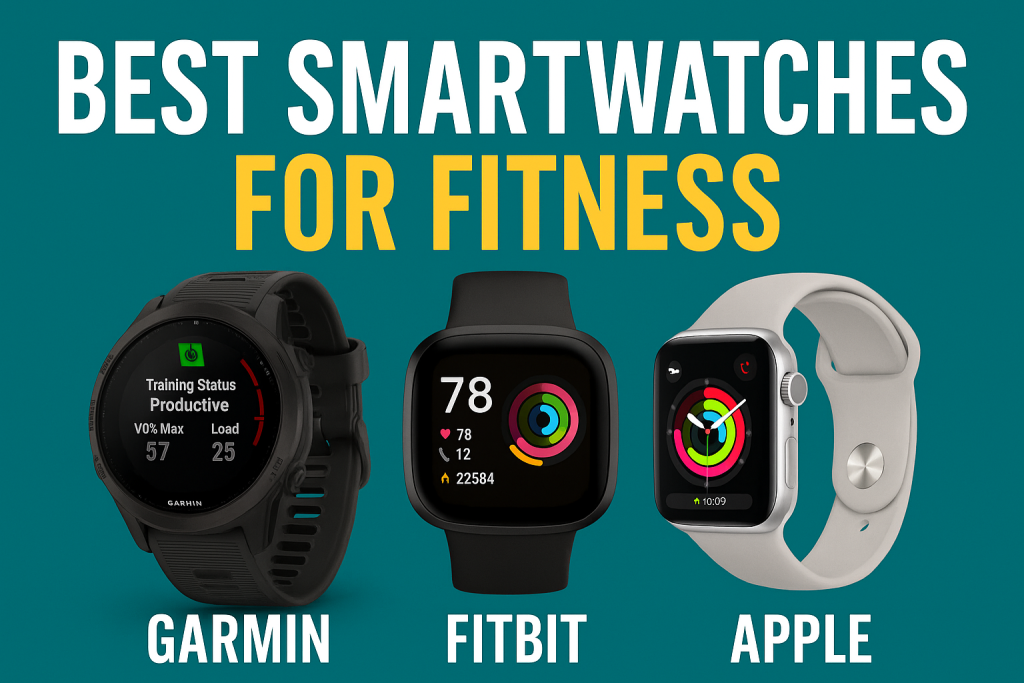
Choosing the right fitness smartwatch can feel overwhelming when you’re standing at the crossroads of three industry giants: Garmin, Fitbit, and Apple Watch. With each brand claiming to offer the ultimate fitness tracking experience, how do you know which one actually delivers on its promises?
Whether you’re a marathon runner tracking split times, a yoga enthusiast monitoring heart rate variability, or someone simply trying to close those daily activity rings, the smartwatch you choose becomes your constant companion on your wellness journey.
This comprehensive guide breaks down the strengths, weaknesses, and unique features of Garmin, Fitbit, and Apple Watch. By the end, you’ll know exactly which fitness smartwatch aligns with your goals, budget, and lifestyle. We’ll explore everything from advanced health metrics and workout tracking to battery longevity and smartphone integration, giving you the clarity you need to make an informed decision.
Understanding the Big Three: Brand Overview and Philosophy
Garmin: The Athletes’ Choice
Garmin built its reputation on GPS technology and outdoor navigation before dominating the fitness wearable market. The brand focuses on serious athletes, outdoor enthusiasts, and endurance training.
Core Strengths:
- Advanced training metrics and performance analytics
- Exceptional GPS accuracy for outdoor activities
- Multi-day battery life (up to 14+ days on some models)
- Specialized sports modes for niche activities
- Offline music storage and maps
Garmin watches are designed for people who prioritize training data, long battery endurance, and rugged durability over lifestyle features.
Fitbit: The Wellness-Focused Tracker
Google-owned Fitbit emphasizes holistic health and wellness tracking with an approachable, user-friendly interface. The brand targets everyday fitness enthusiasts who want comprehensive health insights without overwhelming complexity.
Core Strengths:
- Intuitive health dashboards and wellness tracking
- Strong sleep analysis and stress management features
- Community challenges and social motivation
- Affordable entry-level options
- Integration with Google ecosystem
Fitbit strikes a balance between casual activity tracking and more serious fitness monitoring, making it accessible to beginners and intermediates.
Apple Watch: The All-Rounder Smart Companion
Apple Watch combines fitness tracking with robust smartwatch capabilities, seamless iPhone integration, and an extensive app ecosystem. It’s designed for users who want a complete wrist-based computing experience alongside their fitness goals.
Core Strengths:
- Comprehensive health monitoring (ECG, blood oxygen, temperature)
- Seamless Apple ecosystem integration
- Extensive third-party app support
- Advanced safety features (fall detection, crash detection)
- Premium build quality and customization options
Apple Watch appeals to iPhone users seeking the best of both worlds: powerful fitness tracking and full-featured smart capabilities.
Key Features Comparison: What Matters Most for Fitness
Health and Fitness Tracking Capabilities
Heart Rate Monitoring
All three brands offer continuous heart rate monitoring, but accuracy and features vary.
Garmin provides highly accurate optical heart rate sensors with additional chest strap compatibility for maximum precision during intense workouts. Their HRV (heart rate variability) tracking helps athletes monitor recovery and training readiness.
Fitbit delivers reliable heart rate tracking with emphasis on resting heart rate trends and cardio fitness scores. Their PurePulse technology works well for moderate activities but may struggle with high-intensity interval training.
Apple Watch uses advanced optical sensors combined with electrical heart sensors for medical-grade ECG readings. It excels at detecting irregular heart rhythms and offers FDA-cleared atrial fibrillation notifications.
GPS Accuracy and Tracking
GPS performance is crucial for runners, cyclists, and outdoor enthusiasts.
Comparison Table:
| Feature | Garmin | Fitbit | Apple Watch |
|---|---|---|---|
| GPS Accuracy | Excellent (multi-band on premium models) | Good (standard GPS) | Very Good (dual-frequency on newer models) |
| Route Mapping | Advanced with navigation | Basic route display | Good with Apple Maps integration |
| Satellite Systems | GPS, GLONASS, Galileo | GPS only (most models) | GPS, GLONASS, Galileo, QZSS |
| Offline Maps | Yes (premium models) | No | Limited |
| Battery (GPS mode) | 20-40+ hours | 5-7 hours | 5-6 hours |
Garmin dominates GPS tracking with superior satellite reception, longer battery life in GPS mode, and detailed route navigation features that serious athletes demand.
Sleep Tracking and Recovery Insights
Quality sleep tracking has become a cornerstone of fitness recovery.
Garmin offers comprehensive sleep tracking with sleep stages, sleep scores, and Body Battery energy monitoring. Their morning recovery insights help you decide if it’s a rest day or training day.
Fitbit leads in sleep analysis with detailed sleep stages, sleep scores, estimated oxygen variation, and personalized sleep insights. Their Sleep Profile feature provides monthly sleep animal classifications and improvement recommendations.
Apple Watch provides sleep stage tracking (REM, Core, Deep) with respiratory rate monitoring. Integration with iPhone’s sleep schedule features creates a complete bedtime routine, though battery life requires nightly charging consideration.
Workout Modes and Exercise Tracking
Sports Variety and Specialization
The number and quality of workout modes reveal each brand’s target audience.
Garmin offers the most extensive workout library with 25+ pre-loaded sports apps and highly specialized metrics for activities like swimming (SWOLF scores), golfing (course maps and scorecards), and skiing (run counting). Their Connect IQ store adds even more sport profiles.
Fitbit provides 40+ exercise modes covering common activities from running and cycling to yoga and dance. While not as specialized as Garmin, Fitbit’s SmartTrack feature automatically recognizes and records exercises without manual selection.
Apple Watch includes a strong selection of workout types with automatic workout detection. Third-party fitness apps from the App Store dramatically expand capabilities, making it versatile for virtually any activity through apps like Strava, Nike Run Club, and Peloton.
Swimming and Water Sports
All three brands offer water-resistant designs, but swimming capabilities differ.
Garmin watches feature 5 ATM or higher water resistance with dedicated pool and open water swimming modes. They track stroke type, distance per stroke, SWOLF efficiency scores, and underwater heart rate on compatible models.
Fitbit devices (Versa and Sense series) provide 5 ATM water resistance with basic lap counting and duration tracking. They’re suitable for pool swimming but lack the detailed metrics competitive swimmers need.
Apple Watch (Series 2 and later) offers 5 ATM water resistance with pool and open water swimming workouts. The water lock feature prevents accidental taps, and the watch measures laps, distance, and stroke type with good accuracy.
Battery Life: The Deal Breaker
Battery performance often determines real-world usability more than any other specification.
Garmin Battery Performance:
- Smartwatch mode: 5-14 days (model dependent)
- GPS mode: 20-40+ hours
- Battery saver mode: Up to 24+ days
- Solar charging available on select models
Garmin’s extended battery life means you can track multi-day hiking trips, ultramarathons, or simply avoid the charging routine for over a week.
Fitbit Battery Performance:
- Smartwatch mode: 4-7 days
- GPS mode: 5-7 hours
- Always-on display: Reduces battery by 30-40%
Fitbit offers respectable battery life that covers a typical week of use with moderate activity tracking.
Apple Watch Battery Performance:
- Smartwatch mode: 18-36 hours (depending on model and usage)
- GPS mode: 5-6 hours
- Low Power Mode: Up to 36 hours (Series 8+)
Apple Watch requires daily or every-other-day charging, which may interrupt sleep tracking unless you establish a charging routine.
In-Depth Model Comparisons
Best Garmin Models for Fitness
Garmin Forerunner 265
The Forerunner 265 represents the sweet spot for serious runners who want advanced metrics without breaking the bank.
Key Features:
- AMOLED touchscreen display
- Training Readiness and HRV Status
- Running Power and Running Dynamics
- Multi-band GPS for maximum accuracy
- 13-day battery life (smartwatch mode)
Ideal For: Dedicated runners and triathletes seeking professional-grade training tools
Price Range: $449-$499
Garmin Venu 3
The Venu 3 bridges the gap between fitness focus and lifestyle smartwatch features.
Key Features:
- Bright AMOLED display
- Wheelchair mode for adaptive athletes
- Body Battery energy monitoring
- Sleep coaching and nap detection
- 14-day battery life
Ideal For: All-around fitness enthusiasts who want both health tracking and daily wear appeal
Price Range: $449-$499
Garmin Epix Pro (Gen 2)
The premium choice for outdoor athletes and adventure seekers.
Key Features:
- Sapphire crystal display
- Pre-loaded TopoActive maps
- Multi-band GPS with superior accuracy
- Hill Score and Endurance Score
- Up to 31 days battery (solar models)
Ideal For: Ultra-endurance athletes, hikers, and outdoor adventurers
Price Range: $799-$1,099
Best Fitbit Models for Fitness
Fitbit Charge 6
The latest fitness tracker band with improved accuracy and Google integration.
Key Features:
- Google Maps turn-by-turn directions
- YouTube Music controls
- Heart rate accuracy improvements (40% better during activity)
- Active Zone Minutes tracking
- 7-day battery life
Ideal For: Budget-conscious users wanting core fitness tracking without smartwatch bulk
Price Range: $159
Fitbit Versa 4
A capable fitness smartwatch with comprehensive health features at an accessible price.
Key Features:
- Built-in GPS
- 40+ exercise modes
- Daily Readiness Score
- Sleep Profile analysis
- 6+ day battery life
Ideal For: General fitness enthusiasts wanting balanced features and good battery life
Price Range: $199-$229
Fitbit Sense 2
Fitbit’s premium health-focused smartwatch with advanced stress management.
Key Features:
- Continuous EDA (electrodermal activity) scanning
- All-day stress tracking with Body Response notifications
- ECG app for heart rhythm assessment
- Skin temperature sensor
- 6+ day battery life
Ideal For: Users prioritizing mental wellness and comprehensive health insights
Price Range: $249-$299
Best Apple Watch Models for Fitness
Apple Watch SE (2nd Gen)
The best value Apple Watch for fitness tracking without premium health sensors.
Key Features:
- Crash Detection and Fall Detection
- Heart rate notifications
- Workout app with major activity types
- Swimproof design
- Up to 18 hours battery life
Ideal For: Budget-conscious iPhone users wanting reliable Apple Watch fitness tracking
Price Range: $249-$279 (GPS), $299-$329 (Cellular)
Apple Watch Series 9
The mainstream choice balancing features, performance, and price.
Key Features:
- Blood oxygen monitoring
- ECG app
- Temperature sensing
- Double tap gesture control
- Always-on Retina display
- Up to 18 hours battery life
Ideal For: iPhone users wanting comprehensive health tracking with the latest Apple innovations
Price Range: $399-$429 (GPS), $499-$529 (Cellular)
Apple Watch Ultra 2
Apple’s flagship adventure watch for extreme athletes and outdoor enthusiasts.
Key Features:
- 49mm titanium case
- Action button for quick workout starts
- Dual-frequency GPS for precision tracking
- Up to 36 hours battery life (72 hours in Low Power Mode)
- 100m water resistance with dive computer capabilities
- Siren for emergencies
Ideal For: Endurance athletes, trail runners, divers, and outdoor adventurers
Price Range: $799
Ecosystem and App Integration
Smartphone Compatibility
Garmin works with both iPhone and Android devices through the Garmin Connect app. The platform-agnostic approach means you won’t lose functionality if you switch phones. However, some smart notifications and music controls work better on Android.
Fitbit supports both iOS and Android with full functionality across platforms. Since Google’s acquisition, integration with Google services (Fitbit by Google) has strengthened, particularly for Pixel phone users.
Apple Watch exclusively requires an iPhone (iPhone 8 or later with the latest iOS). This limitation is absolute—there’s no workaround for Android users. However, the integration with iPhone is unmatched in terms of seamlessness and feature depth.
Third-Party App Compatibility
Garmin Connect IQ offers thousands of watch faces, apps, data fields, and widgets. Popular fitness apps like Strava, TrainingPeaks, and MyFitnessPal sync seamlessly with Garmin devices.
Fitbit App Gallery provides a more limited selection compared to competitors but covers essential fitness apps like Strava and Deezer. Google’s influence may expand this ecosystem over time.
Apple Watch App Store dominates with the largest selection of fitness and health apps. From Peloton and Zwift to Calm and Headspace, virtually every major fitness platform offers an Apple Watch app with rich functionality.
Music and Podcast Storage
All three brands support music playback, but implementation varies significantly.
Garmin allows offline music storage from Spotify, Amazon Music, and Deezer (Premium accounts required). You can also transfer MP3 files directly. Storage capacity ranges from 4GB to 32GB depending on the model.
Fitbit supports Spotify and Deezer for offline listening (Premium required), plus direct file transfer. Most models offer around 2.5GB of music storage.
Apple Watch provides the most comprehensive music experience with Apple Music integration, Spotify control (streaming only without Premium), podcast support, and audiobook playback. Storage varies by model (32GB on most current watches).
Training Features and Analytics
Advanced Metrics for Serious Athletes
Garmin’s Training Edge
Garmin excels in providing actionable training intelligence:
Training Status evaluates your recent exercise history and performance indicators to show if you’re training productively, peaking, strained, or detraining.
Training Readiness combines sleep quality, recovery time, training load, HRV status, and stress to give you a daily readiness score.
Performance Condition assesses your real-time performance during a run compared to your average fitness level, helping you gauge effort sustainability.
VO2 Max Estimation tracks your maximum oxygen uptake as a key fitness indicator, with adjustments for heat and altitude.
Lactate Threshold Detection identifies the exercise intensity where lactate accumulates faster than your body can clear it, critical for pacing strategy.
Fitbit’s Accessible Insights
Fitbit simplifies advanced metrics for everyday understanding:
Daily Readiness Score combines recent activity, sleep quality, and HRV to recommend workout intensity or rest.
Cardio Fitness Score estimates your VO2 max and compares it to others in your age and gender category.
Active Zone Minutes replaces simple step counting with intensity-based goals, ensuring you’re working hard enough for health benefits.
Workout Intensity Map (on heart rate-enabled models) visualizes your effort zones during activities.
Apple Watch’s Balanced Approach
Apple Watch provides meaningful metrics without overwhelming users:
Activity Rings (Move, Exercise, Stand) create visual goals that motivate daily movement.
Cardio Fitness Notifications alert you to low VO2 max levels compared to your age group.
Running Power (Series 6+) shows real-time workout intensity in watts.
Pace Alerts help maintain target speeds during runs.
Race Route compares current performance against previous efforts on the same route.
Recovery and Rest Day Recommendations
Garmin leads recovery guidance with Recovery Time predictions (hours until you’re ready for another hard workout), Training Effect scores showing how each workout impacts aerobic and anaerobic fitness, and Body Battery energy monitoring.
Fitbit emphasizes holistic recovery through Daily Readiness recommendations, comprehensive sleep analysis, and stress management reminders that prompt mindful breathing when tension is detected.
Apple Watch focuses on closing activity rings while respecting rest days through adjustable goals and stand reminders that encourage movement without demanding intensive exercise.
Price Comparison and Value Analysis
Budget-Friendly Options (Under $250)
Best Value: Fitbit Charge 6 at $159 delivers exceptional fitness tracking without smartwatch bulk. You get built-in GPS, advanced heart rate monitoring, Active Zone Minutes, and excellent battery life.
Runner-Up: Apple Watch SE (2nd Gen) at $249 offers the complete Apple Watch experience with safety features and reliable fitness tracking, though lacking blood oxygen and ECG.
Garmin Alternative: Entry-level models like the Vivoactive 4 (often on sale around $229) provide solid fitness features and Garmin’s superior battery life.
Mid-Range Champions ($250-$500)
Best All-Rounder: Garmin Forerunner 265 at $449 gives serious runners professional-grade metrics, AMOLED display, and multi-day battery life.
Best for Apple Users: Apple Watch Series 9 at $399-$429 combines comprehensive health sensors, seamless iPhone integration, and robust fitness tracking.
Best for Wellness Focus: Fitbit Sense 2 at $249-$299 emphasizes stress management and daily health insights at an attractive price point.
Premium Performance (Over $500)
For Extreme Athletes: Apple Watch Ultra 2 at $799 offers the longest Apple Watch battery life, rugged durability, and adventure-focused features.
For Outdoor Enthusiasts: Garmin Epix Pro at $799-$1,099 provides topographic maps, extended battery life with solar charging, and unmatched GPS accuracy.
Value Proposition Table:
| Price Range | Garmin Best Pick | Fitbit Best Pick | Apple Watch Best Pick |
|---|---|---|---|
| Under $250 | Vivoactive 4 | Charge 6 ($159) | SE 2nd Gen ($249) |
| $250-$500 | Forerunner 265 ($449) | Sense 2 ($299) | Series 9 ($399) |
| Over $500 | Epix Pro ($799+) | N/A | Ultra 2 ($799) |
Real-World User Experiences and Use Cases
Sarah’s Marathon Training Journey (Garmin User)
Sarah, a 32-year-old marathon runner, switched from Apple Watch to Garmin Forerunner 265 for her Boston Marathon training. The detailed running dynamics helped her identify overstriding issues that were causing shin splints. The Training Readiness feature prevented overtraining during her peak mileage weeks, and the 13-day battery life meant she never missed a long run due to dead battery.
Key Takeaway: Serious athletes benefit from Garmin’s specialized metrics and extended battery performance.
Mike’s Weight Loss Success (Fitbit User)
Mike, a 45-year-old looking to lose 50 pounds, chose Fitbit Versa 4 for its motivational features and simple interface. The community challenges kept him accountable, and Active Zone Minutes made exercise goals feel achievable. After six months, he lost 35 pounds while maintaining a consistent routine guided by Daily Readiness scores.
Key Takeaway: Fitbit’s accessible approach and social features excel for general fitness and weight loss goals.
Emma’s Balanced Lifestyle (Apple Watch User)
Emma, a 28-year-old yoga instructor and iPhone user, loves how Apple Watch Series 9 seamlessly handles fitness, communication, and daily tasks. She uses the Breathe app between classes, tracks outdoor walks with friends via GPS, and appreciates fall detection for safety during solo hikes. The ecosystem integration means her calendar, messages, and fitness data work together effortlessly.
Key Takeaway: Apple Watch shines for iPhone users wanting comprehensive smart features alongside solid fitness tracking.
Making Your Decision: Which Brand Fits You?
Choose Garmin If You:
- Train for endurance events like marathons, triathlons, or ultramarathons
- Need multi-day battery life without daily charging
- Prioritize GPS accuracy and outdoor navigation
- Want highly specialized sports metrics and analytics
- Prefer detailed training plans and performance tracking
- Don’t mind a learning curve for advanced features
- Use Android or switch between phone platforms
Best Garmin Starting Point: Forerunner 265 for runners, Venu 3 for all-around fitness
Choose Fitbit If You:
- Focus on general wellness and daily health habits
- Want user-friendly interfaces with gentle motivation
- Prioritize sleep tracking and stress management
- Enjoy community challenges and social fitness
- Need affordable entry-level options
- Prefer week-long battery life
- Value holistic health insights over specialized sports data
Best Fitbit Starting Point: Charge 6 for budget tracking, Sense 2 for comprehensive health focus
Choose Apple Watch If You:
- Own an iPhone and value ecosystem integration
- Want the most versatile smartwatch functionality
- Need advanced health sensors (ECG, blood oxygen)
- Prefer extensive third-party app selection
- Value safety features like fall and crash detection
- Appreciate frequent software updates and new features
- Don’t mind daily or every-other-day charging
- Want premium build quality and customization
Best Apple Watch Starting Point: SE (2nd Gen) for value, Series 9 for balanced features, Ultra 2 for extreme fitness
Frequently Overlooked Factors
Durability and Build Quality
Garmin watches feature fiber-reinforced polymer bezels on standard models and titanium or sapphire crystal on premium versions. They’re built to withstand harsh outdoor conditions with military-standard durability (MIL-STD-810).
Fitbit devices use aluminum cases with Gorilla Glass displays on premium models. They’re durable for daily wear but not as rugged as Garmin for extreme outdoor activities.
Apple Watch offers aluminum, stainless steel, and titanium case options with Ion-X glass or sapphire crystal displays. The Ultra 2 features the most rugged Apple Watch design with 49mm titanium case rated for diving to 100 meters.
Display Quality and Readability
Garmin recently upgraded to AMOLED displays on many models (Forerunner 265, Venu 3, Epix Pro), offering vibrant colors and excellent outdoor visibility. Some models still use transflective MIP displays that excel in direct sunlight but lack color vibrancy.
Fitbit uses AMOLED displays on Sense and Versa series with adjustable brightness. Outdoor visibility is good but not exceptional in bright sunlight.
Apple Watch features the brightest displays in the smartwatch market (up to 2000 nits on Ultra 2), ensuring excellent visibility in all conditions. The always-on Retina displays provide constant glanceable information.
Software Updates and Longevity
Garmin provides firmware updates for years after purchase, often adding new features to older models. The Connect app receives regular improvements.
Fitbit under Google ownership has shown commitment to updates, though the future roadmap remains somewhat uncertain as Google integrates Wear OS features.
Apple Watch receives iOS updates for typically 4-5 years after release, adding new watch faces, workout types, and features. The update cadence is industry-leading.
Tips for Maximizing Your Fitness Smartwatch
Accuracy Optimization
Wear Positioning: Keep your watch snug but comfortable on your wrist, approximately one finger-width behind your wrist bone. Loose watches reduce heart rate sensor accuracy.
GPS Signal Acquisition: Before starting outdoor workouts, wait for strong GPS signal confirmation (usually 30-60 seconds). Starting too quickly leads to inaccurate distance and pace data.
Regular Calibration: Manually log your height, weight, age, and gender accurately. These factors significantly impact calorie burn estimates and fitness calculations.
Sensor Maintenance: Clean the sensor area weekly with a soft, damp cloth to remove sweat, lotions, and debris that interfere with optical readings.
Battery Life Extension Strategies
Garmin: Enable Battery Saver mode for ultra-long activities, disable continuous pulse oximetry when not needed, reduce GPS tracking frequency from “Every Second” to “Smart,” and consider solar charging models for outdoor adventures.
Fitbit: Turn off always-on display when unnecessary, reduce screen brightness, disable all-day sync in favor of periodic syncing, and use GPS sparingly for known routes.
Apple Watch: Enable Low Power Mode for workouts to extend GPS tracking, charge during your morning routine instead of overnight for sleep tracking, disable always-on display, and adjust haptic feedback intensity.
Data Interpretation Best Practices
Don’t Obsess Over Single Metrics: Look at trends over weeks, not daily fluctuations. One poor sleep score or low HRV reading doesn’t require immediate concern.
Context Matters: Recovery scores factor in many variables. A low readiness score after intentional hard training differs from low scores due to poor sleep and stress.
Calibrate Zones Properly: Use lab-tested or field-tested heart rate zones rather than age-based formulas for accurate training intensity.
Cross-Reference Data: Combine your watch metrics with how you actually feel. Technology provides insights, but your body offers the final word.
The Future of Fitness Smartwatches
Emerging Technologies
Non-Invasive Glucose Monitoring is rumored for future smartwatch generations, potentially revolutionizing diabetes management and general metabolic insights.
Advanced Blood Pressure Monitoring beyond current stress detection could provide medical-grade cardiovascular health tracking.
Hydration Sensing through skin conductivity or other methods may help athletes optimize fluid intake.
Improved Battery Technology including solid-state batteries could deliver week-long battery life even with always-on displays and continuous GPS.
Market Trends to Watch
Google’s Pixel Watch Series now competes directly with Fitbit (since Google owns Fitbit), potentially causing strategic shifts in Fitbit’s future roadmap.
Samsung Galaxy Watch continues innovating with body composition analysis and extended battery life, pressuring competitors to match capabilities.
Budget Market Growth sees increasing competition from brands like Amazfit, Coros, and Huawei offering impressive features at lower price points.
Conclusion: Your Fitness Journey Starts with the Right Tool
Choosing between Garmin, Fitbit, and Apple Watch ultimately depends on your specific needs, budget, and fitness goals. There’s no universally “best” option—only the best option for you.
Choose Garmin if you’re a serious athlete who demands precise data, extended battery life, and specialized training tools. The Forerunner 265 or Venu 3 offers exceptional value for dedicated fitness enthusiasts.
Choose Fitbit if you want accessible wellness tracking with emphasis on sleep, stress management, and daily health habits. The Charge 6 delivers outstanding value, while the Sense 2 provides comprehensive health insights at a reasonable price.
Choose Apple Watch if you own an iPhone and want the most versatile smartwatch that balances fitness tracking with communication, safety, and entertainment features. The Series 9 offers the best all-around experience for most iPhone users.
Remember that the best fitness smartwatch is the one you’ll actually wear consistently. Consider visiting retail stores to try each brand’s interface, comfort, and size before committing. Many retailers offer generous return policies, allowing you to test devices during real workouts.
Your fitness journey deserves a companion that motivates you, provides actionable insights, and seamlessly fits into your lifestyle. Whether you choose the athletic precision of Garmin, the wellness focus of Fitbit, or the smart versatility of Apple Watch, you’re investing in a tool that can transform your health and performance.
Ready to start tracking? Evaluate your priorities, set your budget, and choose the brand that aligns with your fitness vision. Your perfect smartwatch is waiting.
FAQs About Best Smartwatches for Fitness
Q1: Can I use a Garmin, Fitbit, or Apple Watch without a smartphone?
Yes, but with limitations. Garmin watches offer the most standalone functionality—you can track workouts, monitor health metrics, store music, and view data entirely without a phone. However, you’ll need a smartphone for initial setup and syncing data to the Garmin Connect app. Fitbit devices also work independently for tracking but require a phone for setup and detailed analysis. Apple Watch has a GPS-only version that tracks workouts without iPhone nearby, but setup requires an iPhone. The cellular models can receive calls, messages, and stream music independently, though they still need an iPhone for initial configuration. All three brands ultimately require smartphones for full feature access and software updates.
Q2: Which smartwatch is most accurate for calorie tracking during workouts?
Accuracy varies by activity type, but Garmin generally leads for calorie burn precision during intense workouts due to superior heart rate tracking and consideration of additional metrics like running power, cadence, and VO2 max. Apple Watch provides very accurate calorie estimates for standard activities like running and cycling, especially when you’ve calibrated it through multiple GPS workouts. Fitbit offers reasonable accuracy for moderate-intensity activities but tends to overestimate calories during high-intensity workouts. For maximum accuracy across all brands, manually input your accurate height, weight, age, and gender, wear the watch snugly during exercise, and consider pairing with a chest strap heart rate monitor for activities like spinning or HIIT where wrist-based sensors struggle.
Q3: Do these smartwatches work with gym equipment like treadmills and ellipticals?
Yes, with varying compatibility. Apple Watch connects to compatible gym equipment via Bluetooth or NFC (GymKit protocol), allowing seamless data sharing between watch and machine for synchronized metrics. Many modern treadmills, ellipticals, and indoor bikes from brands like Life Fitness, Technogym, and Matrix support GymKit. Garmin and Fitbit can pair with Bluetooth-enabled gym equipment, though compatibility is less standardized. All three brands also allow manual entry of gym equipment workouts or use their accelerometer and heart rate sensors to estimate effort when equipment connection isn’t available. For spinning classes, all three integrate well with apps like Peloton and Zwift through their smartphone apps, bringing structured workouts to your wrist.
Q4: How do these watches handle swimming pool workouts versus open water swimming?
All three brands distinguish between pool and open water swimming with different tracking approaches. For pool swimming, you manually enter pool length at workout start, and the watch uses accelerometer data to count laps and estimate distance. Garmin excels here with detailed stroke type identification, SWOLF efficiency scores, and drill logging. Apple Watch and Fitbit both track pool swimming well with lap counting and stroke detection, though with less analytical depth. Open water swimming requires GPS functionality, which all three provide. Garmin’s multi-band GPS offers the most accurate open water tracking, crucial for triathletes. Apple Watch (Series 2+) and Fitbit (Versa and Sense series) both handle open water swimming capably but with slightly less GPS precision. All three are water-resistant to 5 ATM (50 meters), suitable for swimming but not scuba diving—except Apple Watch Ultra 2, which is dive-rated to 100 meters.
Q5: What happens to my fitness data if I switch smartwatch brands?
Switching brands means you’ll lose direct continuity in your dashboard trends, but you can maintain historical data through workarounds. Most fitness platforms like Strava, MyFitnessPal, and TrainingPeaks integrate with all three brands, so if you’ve been syncing workouts to these third-party services, your training history remains accessible regardless of watch brand. You can also export data from Garmin Connect, Fitbit app, or Apple Health. Garmin allows CSV exports of activities; Fitbit provides data export through their account settings; Apple Health lets you export all health data as XML files. Some third-party services like FitnessSyncer or SyncMyTracks facilitate data migration between platforms. While you can preserve workout history, unique metrics like Garmin’s Training Status or Apple’s Activity Rings won’t transfer since they’re proprietary calculations. Starting fresh also has benefits—it establishes new baseline measurements for your current fitness level with more accurate sensors.